Introduction
You want an agentic MVP that does real work, not a demo that collapses the first time a user clicks the wrong button.
The hard part is not picking a model. It is scoping: what the agent is allowed to do, what it must never do, and what “production ready” means on day one.
This MVP scoping guide is built for early stage founders who need speed, a clean story for investors, and a scope that can ship in 4 to 8 weeks without turning into a support nightmare.
You will leave with:
- A fit gate to decide if you should build now or clarify first
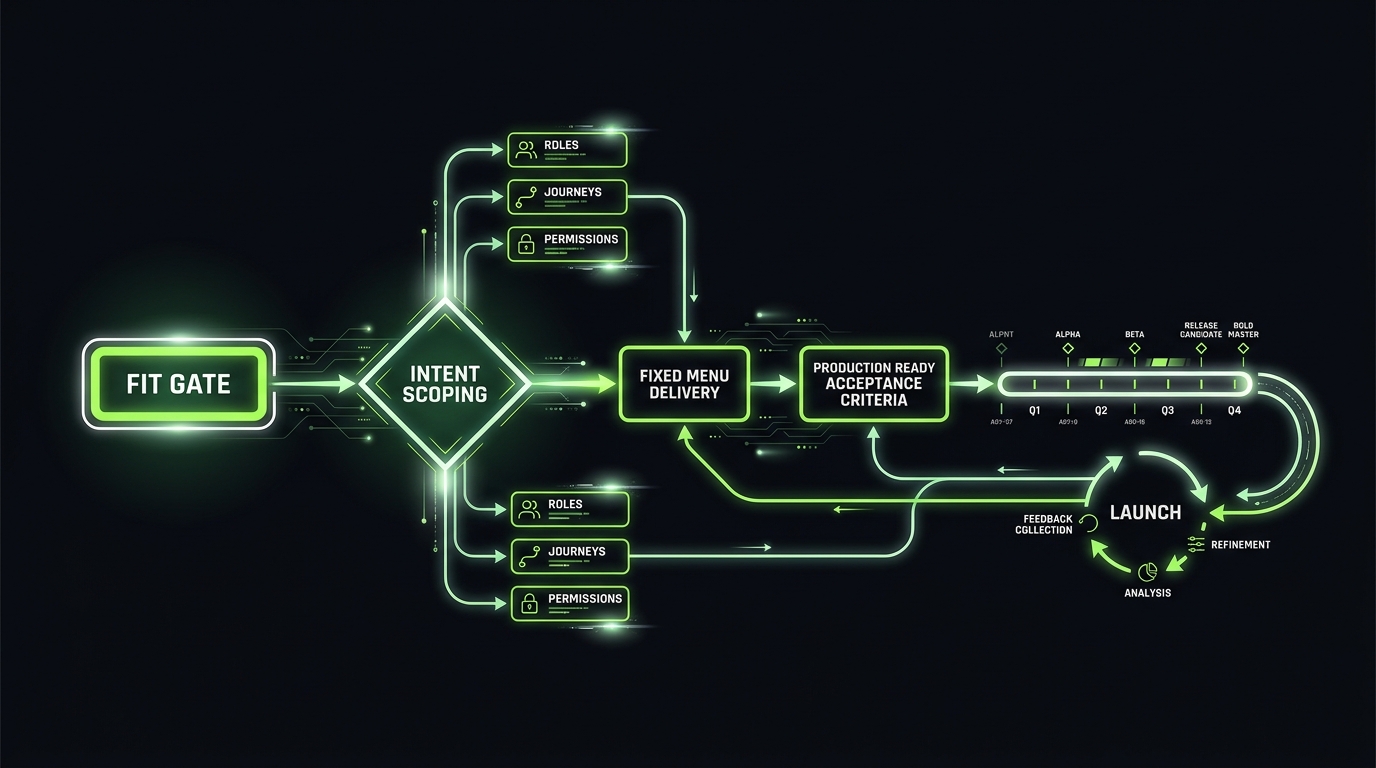
- An intent scoping method: roles, journeys, permissions, acceptance examples
- A fixed menu delivery model: what accelerates and what stays human led
- The hidden last 20% that kills timelines: integrations, failure handling, ops
- Evidence dimensions to prove the MVP is production ready
Insight: Most “agentic MVP” failures are scope failures. The agent is asked to do too much, with too little permission design, and no plan for the messy edges.
What we mean by agentic MVP
An agentic MVP is not “chat with my app.” It is a system that can:
- Interpret intent (what the user wants)
- Take actions across tools (create, update, notify, schedule)
- Ask for clarification when needed
- Fail safely and leave an audit trail
A production ready MVP still has a small scope. It just has a real bar:
- Authentication and permissions
- Clear journeys
- Failure handling
- Observability
- Ownership and on call expectations (even if it is lightweight)
Key Stat: In our delivery work across 360+ projects, the fastest teams ship when they define acceptance criteria before they write features.
_> Delivery reality check
Numbers that keep scoping honest
Fit gate: build now or clarify
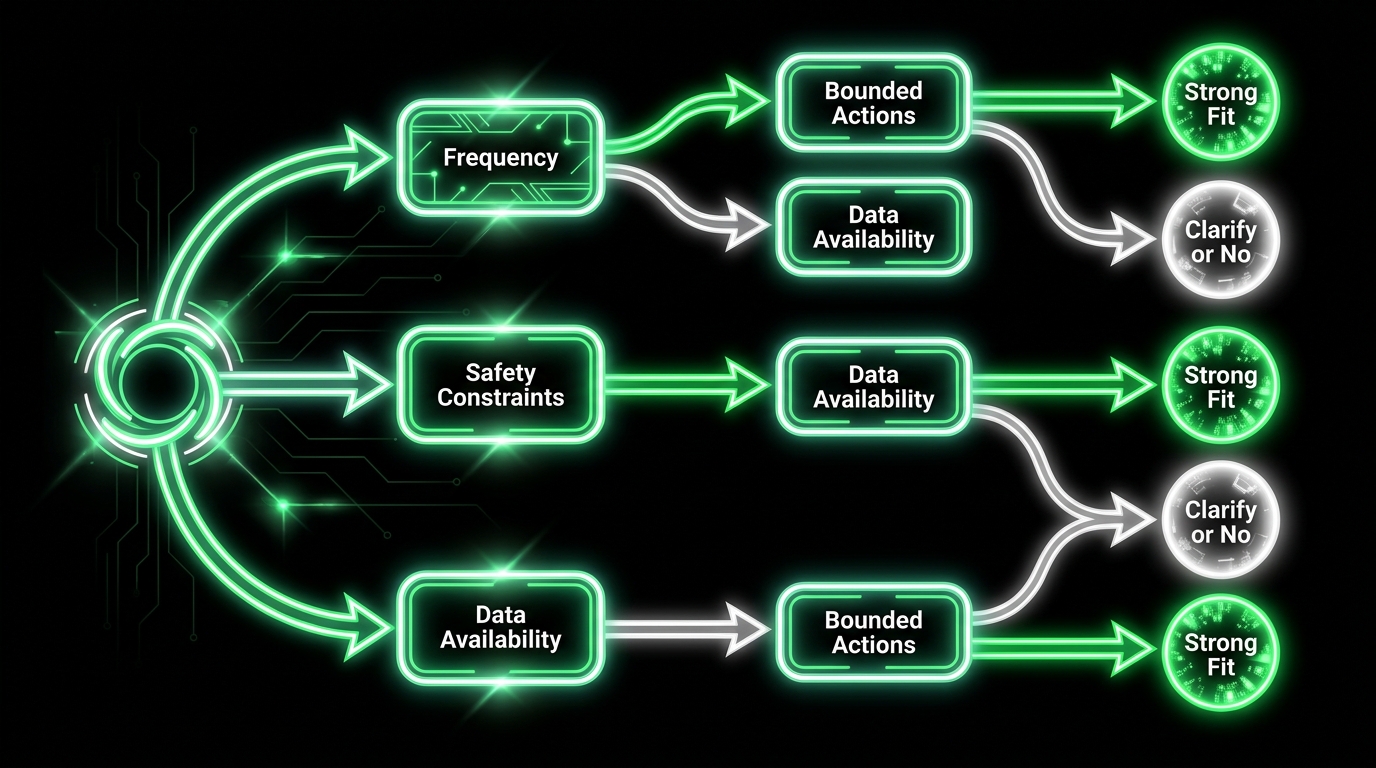
Founders waste weeks building the wrong thing because they skip the gate. You need a simple classification: strong fit vs clarify or no.
Use this gate before you scope an agentic MVP:
- If you cannot name the user, the moment, and the action, stop.
- If the agent needs broad autonomy to be useful, stop.
- If you cannot define “wrong output” and “unsafe action,” stop.
Insight: If your MVP requires perfect prompts and founder babysitting, it is not a product. It is a prototype.
Strong fit product class
A strong fit agentic MVP has these traits:
- High frequency workflow: daily or weekly usage
- Clear action surface: create ticket, draft reply, reconcile record, route request
- Structured data nearby: CRM, helpdesk, product catalog, internal docs
- Measurable win: time saved, fewer errors, faster cycle time
Examples that tend to fit:
- Support triage agent that drafts replies and tags tickets, with approval
- Sales ops agent that updates CRM fields from call notes, with audit log
- Commerce assistant that guides selection and creates a cart, no payment autonomy
Clarify or no product class
These usually fail as production ready MVPs:
- “General assistant for my company” with no bounded tasks
- “Agent that runs the business” with vague success criteria
- Anything that requires the model to infer permissions from context
If you are here, your next step is not more engineering. It is clarity:
- Pick one role.
- Pick one journey.
- Define one action that matters.
Fit gate checklist
Answer these in writing. If any are “not sure,” you are in clarify mode.
- Who is the primary user role?
- What is the top job they are trying to get done?
- What is the single action the agent will take?
- What data sources does it read from?
- What systems does it write to?
- What are the top 3 unsafe outcomes?
- What is the fallback when the agent is unsure?
A simple scoring model (use it in your founder MVP scope doc):
- Frequency: 0 to 2
- Bounded actions: 0 to 2
- Data access: 0 to 2
- Safety constraints defined: 0 to 2
- Measurable outcome: 0 to 2
Score 8 to 10: build. Score 5 to 7: clarify for a week. Score below 5: stop or reframe.
Intent scoping in 7 steps
_> A repeatable way to scope an agentic MVP
→ Scroll to see all steps
Plan left of code: Product Blueprint
Coding got cheaper. Committing the wrong product did not. Before a team writes volume, you need a short plan that seniors can defend: what ships, what waits, and what “done” means when a customer depends on it.
On Agentic MVP, that plan is the Product Blueprint. It sits after the fit gate and before Validate or Launch work. It is not a 40-page PRD theater. It is the minimum artifact set that keeps a fixed menu honest.
- Problem and user: one primary role, one job to be done
- Journeys: primary, variation, and failure path (the same three you will test)
- Permissions and integrations: read/write/trigger bounds, 1 to 2 systems max for MVP
- Acceptance examples: given/when/then for happy path and unsafe outcomes
- Package recommendation: Validate (1 to 2 weeks, Blueprint + prototype, no production claim) vs Launch (production bar on the earned slice)
Insight: Plan left of code does not mean plan forever. It means freeze the decisions that protect runway, then build inside that boundary.
If the fit gate says clarify, stop here and rewrite the Blueprint. If it says strong fit, the Blueprint becomes the contract for delivery. For the capital sequence that follows, see Validate before you hire an engineering team.
Already have a Cursor or vibe-coded SaaS-shaped demo to harden rather than a greenfield first slice? See Prototype to Production.
Intent scoping: roles, journeys, permissions
Intent scoping is where most agentic MVP plans get sloppy.
You need three artifacts:
- Roles: who can do what
- Journeys: step by step user flows
- Permissions: what the agent can read, write, and trigger
If you do this well, acceptance criteria becomes easy.
Insight: “The agent can do X” is not a requirement. “Role Y can approve X, with audit log Z” is.
Roles first, not features
Start with a small set. Most production ready MVPs need only 2 to 4 roles.
Typical roles:
- Admin
- Operator (daily user)
- Reviewer (approves actions)
- Read only stakeholder
Journeys: pick 3, not 30
A founder MVP scope should name the journeys you will ship.
Pick:
- 1 primary journey (the money path)
- 1 secondary journey (common variation)
- 1 failure journey (what happens when it goes wrong)
Permissions: design the action surface
Permissions are not just “admin vs user.” For an agentic MVP, permissions are about capability and blast radius.
Define:
- Read permissions: which systems and which fields
- Write permissions: which objects can be created or updated
- Trigger permissions: emails, messages, refunds, deletions, escalations
- Approval rules: what requires a human click
- Rate limits: per user, per workspace, per time window
Acceptance examples for intent scoping
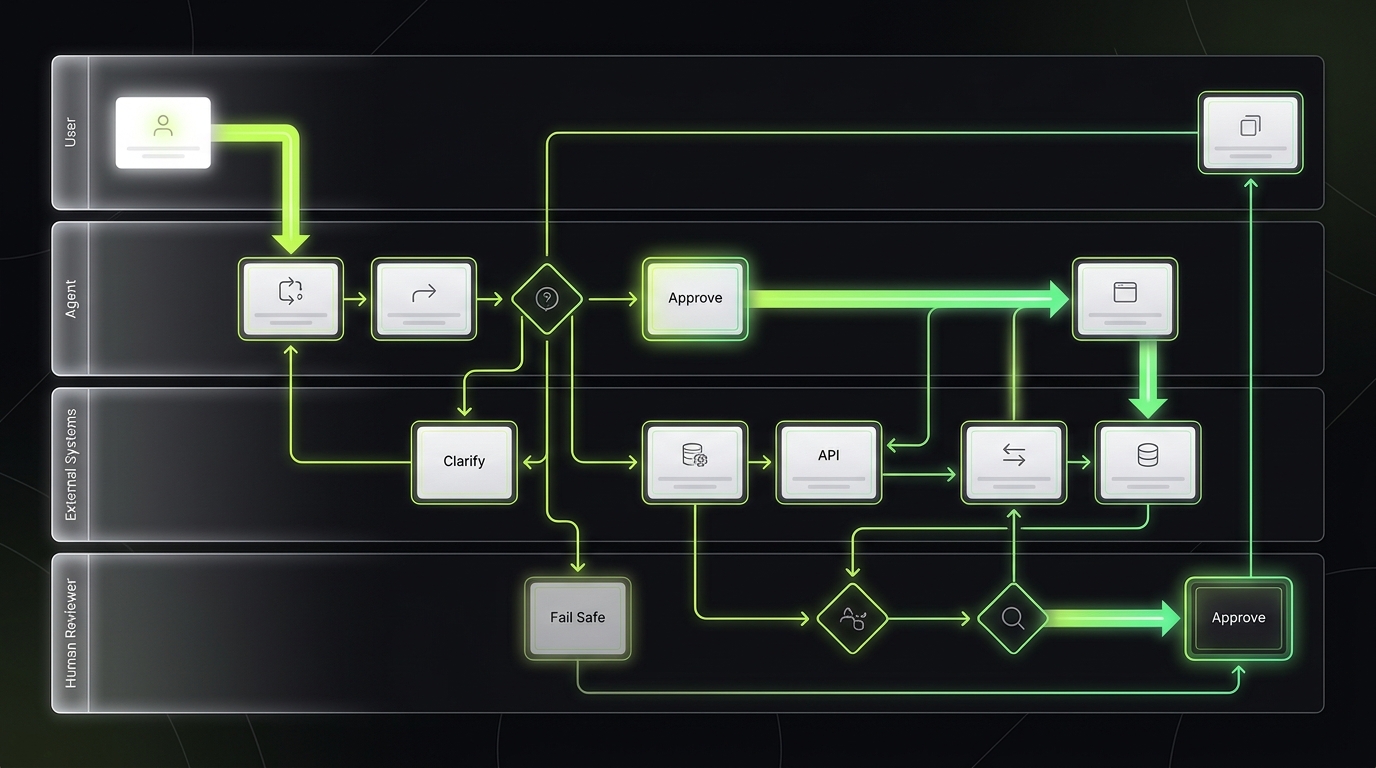
Use concrete examples. They prevent prompt wars later.
Example: Support triage journey
- Input: “Customer says they were charged twice and wants a refund.”
- Expected agent output:
- Classify: billing, duplicate charge
- Draft reply: apology, next steps, request order ID
- Action proposal: create refund request ticket
- Confidence: show signals (matched order, duplicate charge pattern)
- Permissions:
- Read: Stripe charge list, helpdesk ticket history
- Write: helpdesk internal note, tag ticket
- Trigger: no refunds without human approval
Example: Sales ops journey
- Input: call notes pasted or pulled from transcription
- Expected agent output:
- Update CRM fields (stage, next step, close date)
- Create tasks for follow up
- Flag missing data
- Permissions:
- Write allowed only for specific fields
- All changes logged with before and after
Case note: In conversational commerce work like Shopthat, the MVP moved faster when the bot’s actions were limited to guided selection and handoff, not end to end checkout autonomy.
Small enough that you can write acceptance criteria for every journey on one page. If you cannot list the safe defaults and failure paths, it is too big.
You can, but you will be blind. At minimum, ship structured logs, correlation IDs, and dashboards for error rate and latency. Otherwise you will debug from screenshots.
For any action with financial, legal, or reputational impact, yes. Start with propose then approve. Expand autonomy only after you have evidence.
Lock one journey, one integration, and one role. Skip secondary journeys until the primary path is stable and measurable.
Boilerplate, tests for well scoped functions, and documentation drafts. They hurt when used to design permissions, security controls, or integration contracts without senior review.
Fixed menu delivery: what accelerates vs stays human led
A fixed menu delivery model works well for an agentic MVP because it turns chaos into repeatable work.
The rule: automate the repeatable parts, keep judgment calls with senior humans.
Here is what typically accelerates with AI coding tools and templates:
- Boilerplate scaffolding for services and UI
- Test generation for well scoped functions
- Documentation drafts and API client code
- Data mapping and schema migrations (with review)
Here is what stays human led if you want enterprise grade outcomes:
- Permission model design
- Security controls and threat modeling
- Integration contracts and failure modes
- Production readiness checks
- Reviewing AI generated code for subtle bugs
Insight: AI tools are great at speed on well scoped tasks. They are also great at producing confident nonsense. Senior review is not optional.
Comparison table: fixed menu vs custom build
| Dimension | Fixed menu delivery | Fully custom delivery |
|---|---|---|
| Scope clarity | High, bounded by menu items | Variable, often expands |
| Timeline predictability | Higher | Lower |
| Founder time | Lower if feedback lane is disciplined | Higher, more decisions |
| Best for | Production ready MVP scope with known journeys | Novel R and D, unclear journeys |
| Main risk | Over constraining a genuinely new product | Scope creep and late surprises |
What “fixed menu” looks like in practice
A practical menu for an agentic MVP might include:
- Auth and roles (basic RBAC)
- 1 to 2 core integrations (read and write)
- Agent orchestration pattern (tools, guardrails, memory policy)
- Observability baseline (logs, traces, eval set)
- Deployment pipeline (CI, staging, production)
If you need 6 integrations, complex multi tenant billing, and HIPAA on day one, call it what it is. That is not an MVP.
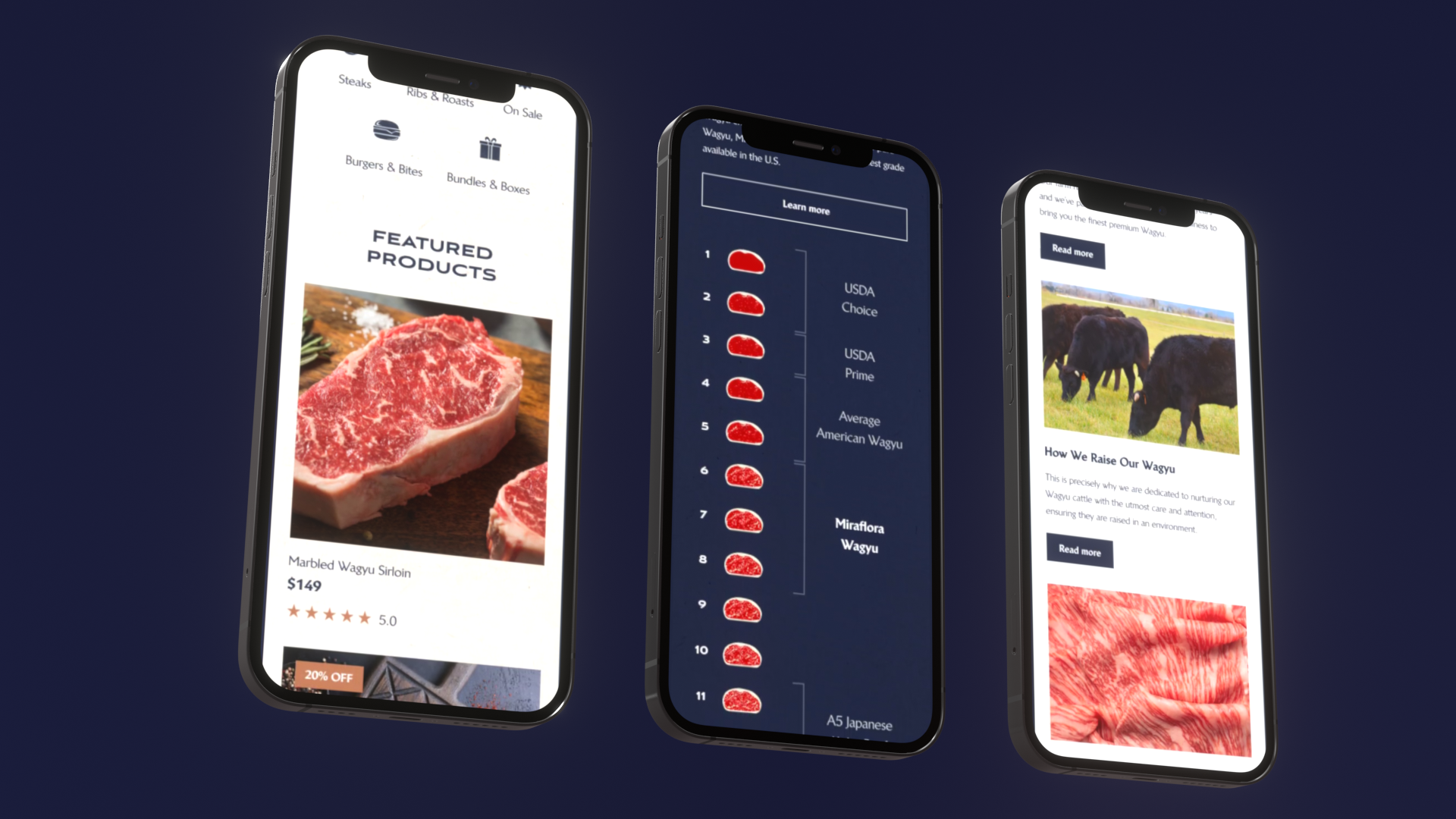
Example: For Miraflora Wagyu, the store shipped in 4 weeks because the scope was clear and the feedback loop was tight, even with a team spread across time zones. The lesson is not “Shopify is fast.” The lesson is “bounded scope ships.”
Founder load model: 2 to 3 hours per week
You do not need to be in daily standups. You do need a reliable feedback lane.
A model that works:
- 30 minutes: weekly scope check (what changed, what is out)
- 60 minutes: review the preview build and top journeys
- 30 minutes: approve or reject agent behaviors and copy
- 30 minutes: integration access and stakeholder unblock
Total: 2 to 3 hours per week.
If you cannot commit that time, reduce scope. The team will otherwise fill the gaps with assumptions.
Practical guardrails:
- One decision maker
- One shared scope doc
- One place for acceptance criteria
- One place for bugs and edge cases
Insight: Fast delivery is a scheduling problem as much as an engineering problem.
Production ready MVP checklist
_> The bar that prevents demo debt
Roles and RBAC
At least 2 roles, least privilege by default, and explicit approval rules for risky actions.
Audit trail
Before and after snapshots for writes, plus who approved and when.
Failure handling
Retries with backoff, idempotent writes, and human escalation paths.
Observability baseline
Structured logs, traces for tool calls, and dashboards for error rate and latency.
Eval set for intent
A small dataset of real requests to test classification and action proposals over time.
Delivery safety
CI checks, staging environment, and a rollback plan you have practiced.
The hidden last 20%: what breaks timelines
Most MVP plans cover the first 80%: screens, prompts, basic flows.
The last 20% is where production readiness lives. It is also where timelines die.
Common hidden work:
- Integrations with messy data and rate limits
- Permissions and audit logs
- Failure handling and retries
- Operational tooling: dashboards, alerts, runbooks
- Compliance basics: secrets, access control, data retention
Insight: If you cannot explain how the system fails, you do not have a production ready MVP. You have a demo.
Integrations: contract first
Before you build, write down:
- Source of truth per field
- Sync direction (read only vs write back)
- Rate limits and pagination strategy
- Error taxonomy (auth error, validation error, timeout)
- Idempotency approach for writes
Failure handling: define the safe default
For each agent action, define:
- What counts as “uncertain”
- What the agent does next (ask, escalate, stop)
- What gets logged
- What the user sees
A simple pattern that works:
- Propose actions, do not execute
- Require approval for high risk actions
- Keep an audit trail with before and after
Ops: someone owns the system
Even for an MVP, you need ownership. Decide:
- Who gets paged when a core integration fails?
- What is the max acceptable downtime?
- What is the rollback plan?
Key Stat: In SaaS work, “we use cloud so it is secure” fails fast. Security depends on identity, secrets, logging, and deployment discipline.
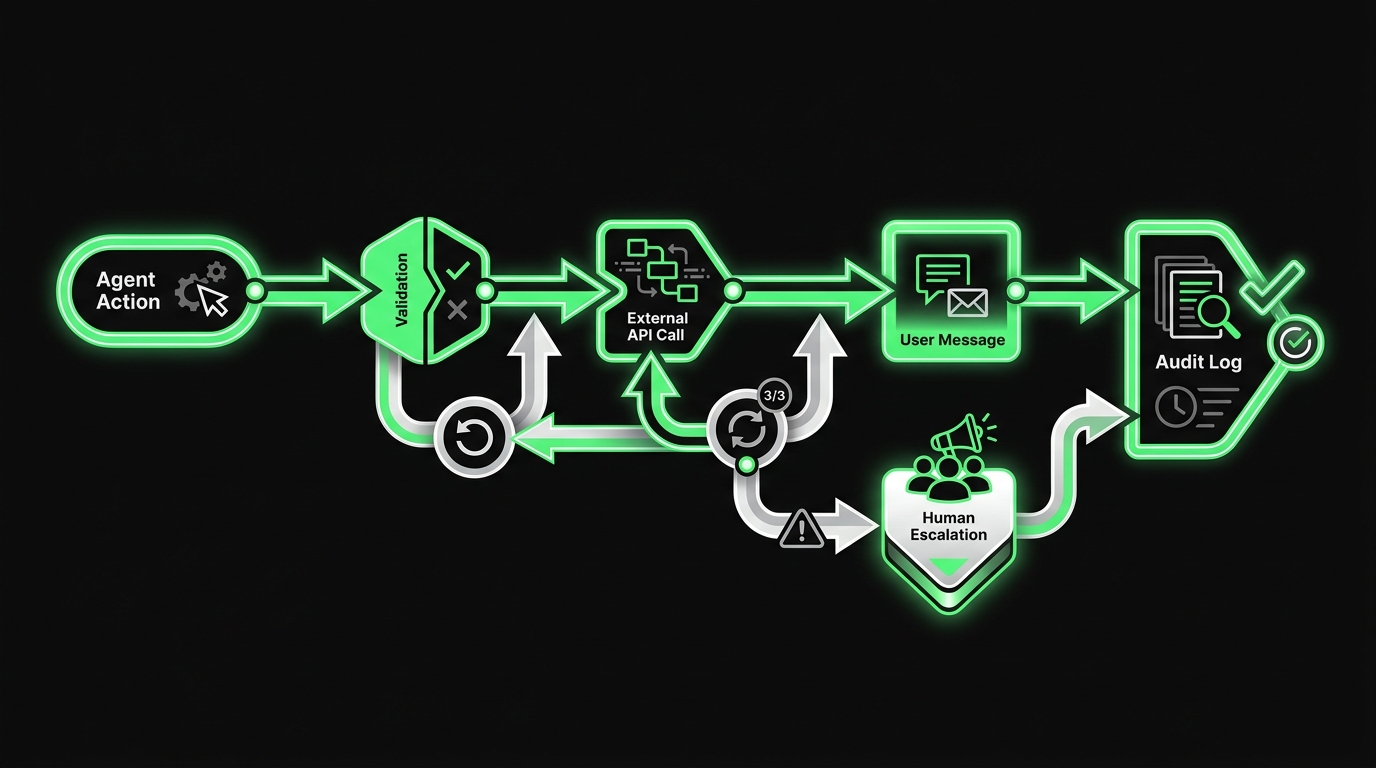
Evidence dimensions: what to prove before launch
A founder MVP scope should include evidence, not just features. Here are the dimensions that matter.
Intent
- Eval set of real user requests
- Pass rate on classification and action proposals
- Clear “I don’t know” behavior
Security
- RBAC and least privilege
- Secrets management
- Basic threat model for top actions
Quality
- Unit tests for core logic
- Integration tests for critical flows
- Regression checklist for top journeys
Delivery safety
- CI checks
- Staging environment
- Rollback plan
Observability
- Structured logs with correlation IDs
- Traces for tool calls
- Dashboards for latency and error rate
Ownership
- Named owner
- Runbook for top incidents
- Support workflow for user reported issues
What to measure in week one after launch (hypotheses until you have data):
- Task completion rate per journey
- Escalation rate to humans
- Time saved per user
- Error rate per integration
- Retention: week 1 to week 2
Insight: Investors do not need perfection. They do need evidence that you can ship safely and learn fast.
What a tight scope buys you
Faster learning
You can measure completion, escalation, and time saved within the first week.
Cleaner investor narrative
You can show evidence and safety constraints, not just a demo video.
Lower support load
Failure paths and permissions reduce surprise behaviors and user confusion.
Easier iteration
With bounded journeys and acceptance criteria, you can change one thing at a time.
Conclusion
A production ready MVP is not big. It is bounded, safe, and measurable.
If you take one thing from this agentic MVP scoping guide, let it be this: scope the agent like you would scope a junior teammate. Clear role. Clear permissions. Clear acceptance criteria. A plan for what happens when things go wrong.
Next steps you can do today:
- Run the fit gate and classify your product as strong fit or clarify or no
- Write 3 journeys and 1 failure journey
- Define permissions as read, write, trigger, approve
- Add evidence dimensions to your founder MVP scope doc
- Commit to the 2 to 3 hours per week feedback lane
Final insight: Speed comes from constraints. The fastest teams are the ones that say “no” early, then ship the “yes” with discipline.