01
Baseline the system
Map ticket to production. Capture flow, review load, quality, and AI spend before any uplift claim.
We install a harness your team owns: written plans, CI gates and human review on every change. On Teamdeck, about 60 pull requests went through it in nine weeks.
For CTOs and engineering leaders who answer for quality and delivery cost.
2 weeks
Implementation
6 months
Managed adoption
100%
Client-owned harness
How it runs
We measure your baseline first. The harness goes into one repo in two weeks. Six months of managed adoption show whether the economics hold.
Step 1 of 3
Map ticket to production. Capture flow, review load, quality, and AI spend before any uplift claim.
Shared context, skills, verification, PR evidence, and autonomy boundaries on a real repository.
Six months of monthly cycles: coach the team, fix what breaks, extend what works and report cost per verified change.
Teams we have built for
Once the licences are rolled out, the gap shows up at three levels.
01
Developers prompt faster and automate isolated tasks. This part is visible and feels productive.
02
Inconsistent rules, duplicated prompts, bigger pull requests, uneven review and rework nobody tracks.
03
Nobody can connect AI spend and adoption to delivery speed, quality or business results.
A harness in your repository: shared context, team skills, verification, pull request gates and autonomy limits, plus coaching and cost tracking. Models will change. The harness stays with you.
01
Autonomy is set by risk, part of the codebase by part. Architecture, security and release always go through a person.
02
We record where you start, then track accepted production changes, human leverage, quality guardrails and cost per verified change.
03
We set up the delivery process around your agents on live backlog work in a pilot repository. We don't run prompt workshops on their own.
What founders, CTOs and consulting leaders get out of it
Your team already uses the tools. You need adoption you can measure, security controls and a way to roll it out across squads.
What you get
Several engagements need the same rules, review quality and auditable handoffs, without rebuilding them each time.
What you get
If you are still building your first product, start with Agentic MVP. Agentic SDLC fits once you have a delivery team and a sponsor.
What you get
What changes for you, in plain terms
We baseline flow, quality, control and cost first. Every cycle ends with a call to scale, adjust or stop.
Standards, skills, guardrails and gates live in your repositories. When models change, the process stays.
The install takes two weeks. Managed adoption runs for six more months, so the harness keeps up as models, repositories and people change.
It works best with active delivery, AI coding tools already in use, an engineering sponsor and a real repository for the pilot.
Four groups of measures, each compared to your baseline. Throughput never gets reported without quality next to it.
Lead time, cycle time, review wait and normalized throughput against the agreed baseline.
Change failure rate, escaped defects, rework and rollbacks, shown next to any throughput number.
Autonomy limits, required approvals, policy compliance and handoffs you can audit.
AI spend and total cost per verified change or accepted complexity point.
BUILT WITH APPTENSION SDLC
A production infant-care PWA we built on the same harness we install for client teams.
0
Merged PRs in 11 days
0
Closed issues shipped
0+
Cited knowledge articles
GITHUB PROOF · JUL 31 – AUG 11, 2026
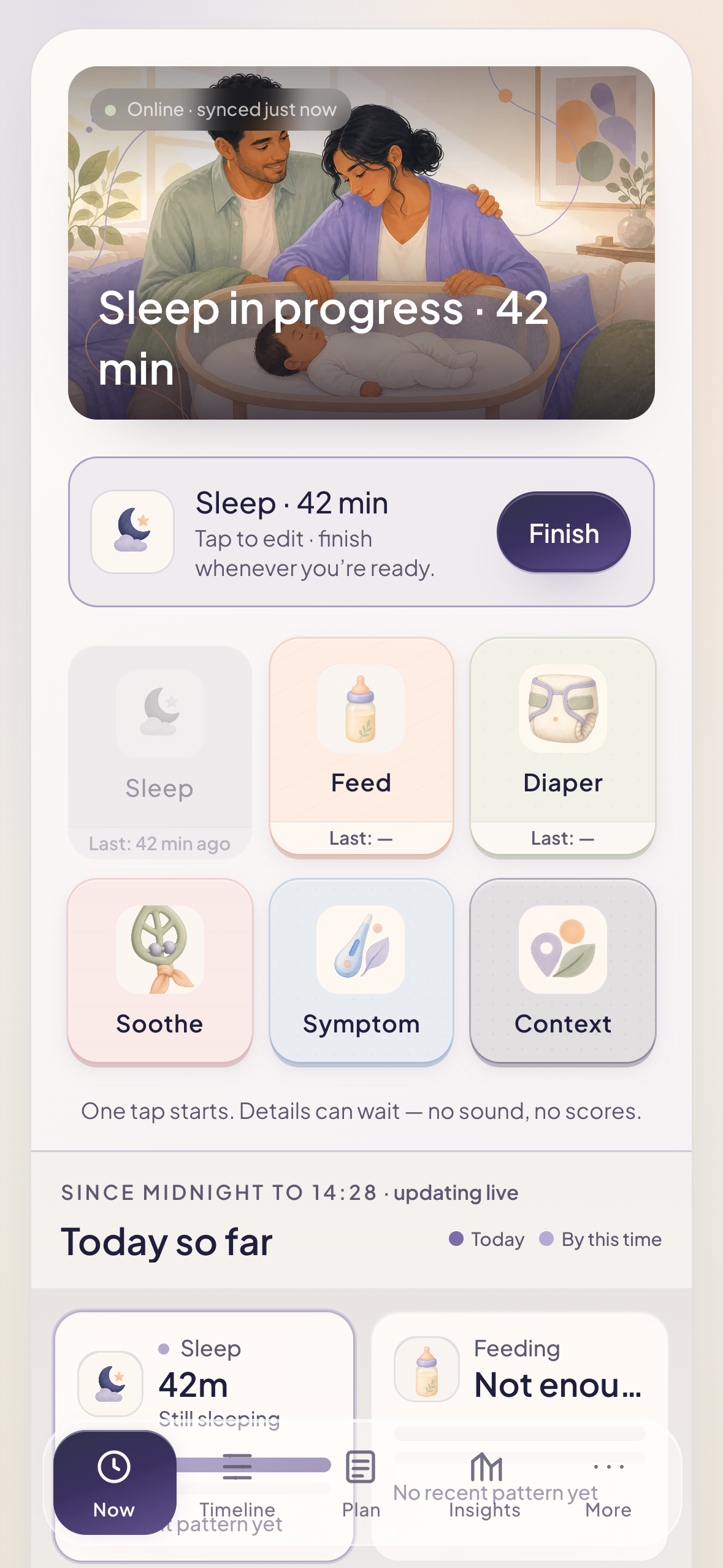
Installable PWA shell with care logging and bottom navigation
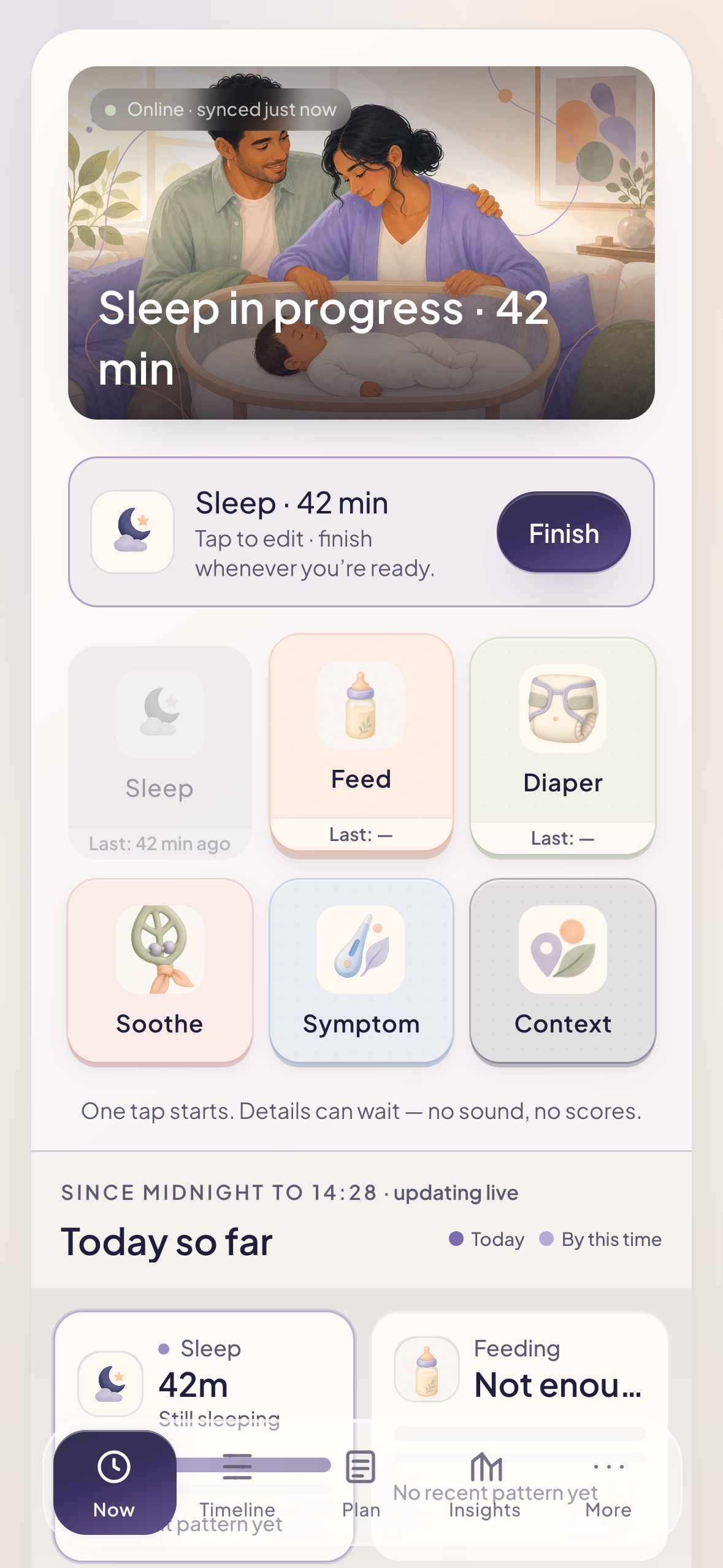
QUICK LOG
One-tap timers with recent stats
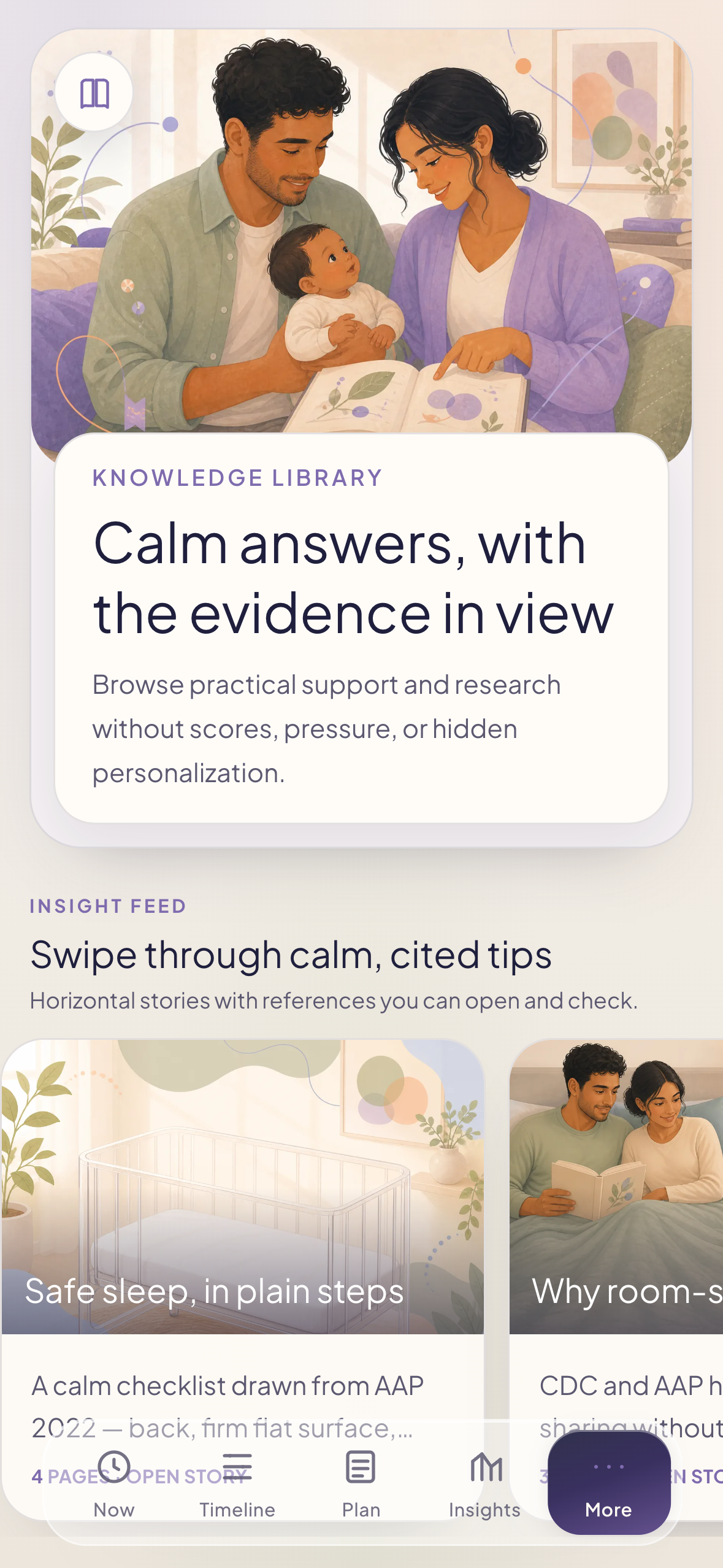
KNOWLEDGE
Cited, swipeable guidance cards

VISUAL LANGUAGE
In-app illustration system for every screen and guidance card
Delivery outcomes
41 PRs merged on day one, 50 on Aug 1, 2026. Every agent branch passed Vitest, review and repository rules before merging.
Rhythm orbit wheel, offline outbox sync, OTP auth, Neon Postgres, PWA install shell, and CMS-seeded knowledge library in one continuous delivery run.
Installable at nini.bot today. The delivery loop, context packs and verification gates behind it are what we set up for client engineering teams.
SECOND PROOF · PLATFORM MODERNIZATION
Staging now runs on Temporal, Pulumi and ECS, and product work never paused. Production cutover is still ahead. What we can show today is the process and its gates.
0
PRs in ~5.5 weeks of GitHub history
0h
Median PR open → merge
~0k
Lines of plans, specs, ADRs, runbooks
Bindings table, docs map, and path-scoped rules so agents and humans share one source of truth for branch, CI, and verification.
Twelve workflows and thirteen tested gate scripts. Release-line merges, promotion ancestry, drift detection, and first-pass review on every PR.
Stage is live end to end. Prod cutover is planned, not done. Cost parity waits for measured post-cutover numbers.
Production projects delivered on the same harness
A two-week install gets the harness working. Six months of managed adoption keep it working as models, repositories and teams change.
→ Scroll to see all steps
Pricing depends on team size, scope and risk. We agree it with you before the engagement starts.
2 weeks
Fixed scope for one team and one repository: a working harness, baseline, pilot results, a playbook and a 90-day roadmap.
The harness covers every place your team uses AI, from the editor to CI.
Completion, chat and inline edits that follow shared rules.
Repository-wide tasks, tools and tests.
Sandboxed tasks that come back as branches and pull requests.
CI and review, issue triage, releases, maintenance.
Shared skills and controls, metrics, budgets.
Process tables, the measurement model and the ROI calculator at /agentic-sdlc.
Fit, measurement, security and what your team keeps
A software delivery lifecycle where AI coding agents do implementation work inside a harness: shared context, team skills, verification gates, pull request evidence and an autonomy matrix. People keep intent, architecture, review and acceptance. The harness lives in your repository, so it outlasts any single tool.
Licences speed up individuals. Without shared rules, gates and measurement, the gains stay uneven and review load grows. We install the harness around the tools your team already uses, so everyone works the same way and you can measure the result.
Two weeks in one real repository, coaching the team on live work. It ends with a working harness, a baseline, pilot evidence, a playbook and a 90-day roadmap. Six months of managed adoption follow to keep the harness current as models, repositories and teams change.
We capture a baseline from your historical delivery data before claiming any uplift. Then we measure accepted production outcomes: adoption, flow, human leverage, quality, AI effectiveness and cost per verified change. The ROI model on our Agentic SDLC hub shows the calculation.
No. The autonomy matrix sets what agents may do in each part of the codebase, and every change passes automated verification and human review. If the goal is to remove architecture or review accountability, this engagement is not a fit.
Teams of 5–50 engineers to start (larger organizations begin with one team) that already use coding assistants, feel pressure on lead time, review load, quality or cost, and have an accountable sponsor and a pilot repository.
On Teamdeck, about 60 pull requests went through written plans, go/no-go gates and CI-enforced process in roughly nine weeks, moving staging to Temporal, Pulumi and ECS while product work kept shipping. On nini.bot, the same harness produced 159 merged pull requests in 11 days.
You do. Context files, skills, gates, dashboards and the playbook stay in your repositories and tools.
Also see
Building AI features into your product rather than changing how your team delivers? See Generative AI Solutions.