
Agentic MVPs fail early for boring reasons. Not because “AI is hard,” but because the first conversation skips the parts that make delivery possible: scope boundaries, integration limits, and safety rules. The result is a plan that cannot survive contact with a sprint board.
At Apptension we use a fit gate before we commit a team. It is not a sales trick. It is a short, structured way to decide whether an MVP can be built in weeks (not quarters) without shipping a liability. When the fit gate fails, we try to turn it into a clear “not now,” a narrower “yes,” or a different shape of prototype.
Building got easier. Focus did not. When generation is cheap, the scarce inputs are taste and attention: which one product has a right to win, which journeys stay out of scope, and which integrations can wait. The fit gate is how we operationalize that focus. It protects runway as much as it protects engineering quality.
This article explains the patterns that fail the fit gate most often and how we run the conversation. You will see concrete scope examples for B2B SaaS, workflow products, and internal tools, plus the metrics we use to keep the MVP honest.
The pre sprint failure modes we see most often
Most agentic MVPs fail before sprint 1 because the ask is not an MVP. It is a product roadmap disguised as a demo. The team gets a vague goal (“automate our ops with agents”), no hard constraints, and a list of “must integrate with everything.” That combination makes planning impossible because you cannot estimate what you cannot bound.
We see three failure modes repeat. First: native mobile first expectations for an agentic workflow that actually needs desktop level visibility, audit trails, and fast iteration. Second: unbounded integrations, where “connect to our stack” means 12 systems, unclear ownership, and no stable APIs. Third: safety critical domains where the agent can cause real harm, and the project needs a clarify or no decision before any build work.
- Mobile first ask: “It must be a native iOS and Android app from day one.” In practice, the MVP needs rapid UI changes, verbose logs, and admin tools that are painful to ship through app store review cycles.
- Integration sprawl: “Integrate with Slack, Gmail, Jira, Salesforce, NetSuite, our data warehouse, and our custom ERP.” Each integration has auth, rate limits, data mapping, and failure handling that can swallow the whole MVP.
- Safety critical workflow: “Let the agent approve refunds,” “change firewall rules,” or “draft clinical advice.” These are not “just add a disclaimer” situations. They need policy, human review, and auditability designed in.
Agentic MVPs rarely fail because the model is wrong. They fail because the system boundaries are missing.

What we mean by a fit gate (and why it happens before sprint planning)
A fit gate is a short decision process that answers one question: Can we ship a meaningful MVP within a fixed time and risk budget? It happens before sprint planning because sprint planning assumes you already have bounded work. If the work is unbounded, the sprint becomes an argument, not a plan.
At Apptension, a fit gate typically produces one of three outcomes. A “go” means we have a narrow user, a narrow workflow, and a narrow set of integrations, plus a safety approach that matches the domain. A “go with changes” means we can proceed if we cut scope, change platform assumptions (often web first), or move risky automation behind human approval. A “no” means the MVP cannot be delivered responsibly in the requested shape and timeline.
We treat the fit gate as an engineering and product exercise, not a slide deck. We ask for artifacts we can test: sample tickets, real documents, a sandbox API key, a list of roles and permissions, and 20 to 50 real examples of the inputs the agent will see (emails, forms, chat transcripts). Without those, the team is guessing.
Fit gate inputs we ask for (so we can stop guessing)
We ask for inputs that reduce uncertainty fast. For an agentic MVP, uncertainty hides in data shape, tool access, and “what happens when it is wrong.” If we do not surface those early, they show up later as rework, support load, and blocked releases.
Typical inputs include:
- User and job story: a single primary user and a single job, for example “Support lead triages escalations in under 5 minutes.” A job story is better than a persona because it includes context and outcome.
- Workflow trace: 5 to 10 real examples of the workflow end to end, including edge cases. For example, “refund request with missing order ID” or “invoice approval with split cost center.”
- Integration inventory: a list of systems, owners, auth type (OAuth, SSO, API key), and whether a sandbox exists. “We have Salesforce” is not enough; we need “Salesforce with Connected App approved and a partial sandbox.”
- Risk classification: what the agent is allowed to do. “Draft only” is different from “execute actions,” and “execute with human approval” is a third category.
The three scope traps: mobile first, integration sprawl, safety critical
These traps are not inherently wrong. Native mobile can be the right choice. Many integrations can be required. Safety critical domains can still ship useful MVPs. The failure happens when the first version tries to do all of it at once.
The fit gate forces each trap into a concrete decision. If you want native mobile, we ask what you lose by not shipping weekly. If you want many integrations, we ask which two create 80% of the value. If you are in a safety critical area, we ask what the agent is allowed to do without a human in the loop, and how you will prove it later.
Trap 1: native mobile first (and why it breaks agent iteration)
Agentic MVPs change fast because prompts, tool calls, and UI feedback loops change fast. On web, you can ship small changes daily. On native mobile, you often ship less frequently due to app store review, release coordination, and device specific issues. That slows learning, which is the whole point of an MVP.
We push for a web first control surface when the agent needs explainability and debugging. A web UI can show a full trace: user request, retrieved context, tool calls, and the final output. On mobile, teams often hide that detail to fit the screen, which makes failures harder to diagnose and harder to trust.
- Good MVP compromise: web app for operations and audit, plus a lightweight mobile companion for notifications and approvals.
- Bad MVP pattern: full native app with offline mode, push notifications, and biometric auth before the workflow is stable.
- Concrete example: for an internal approvals agent, ship a web dashboard for review and a mobile deep link that opens a single “approve or reject” screen.
Trap 2: unbounded integrations (and how to cap them)
Integrations are where MVP timelines go to die. Each system adds authentication, permission scoping, data mapping, pagination, rate limits, and failure handling. Two “simple” integrations can be manageable. Ten becomes a platform project.
In the fit gate we cap integrations using a value and risk filter. We ask: which integration provides the primary source of truth, and which one is the primary action target? For example, “read from Zendesk, write to Jira.” Everything else becomes a phase two candidate unless it is required for compliance or security.
- Value filter: pick the two integrations that cover the majority of daily volume. Example: 70% of requests live in Gmail, and 80% of tasks end in Jira.
- Risk filter: avoid brittle systems early. Example: a legacy ERP with no sandbox and manual CSV exports is a poor MVP dependency.
- Operational filter: choose systems with clear owners who can grant access in days, not weeks.
Trap 3: safety critical domains (where “demo” can still cause harm)
Safety critical does not only mean health care. It includes finance operations (payments, refunds), security operations (access control, firewall rules), and legal workflows (contract clauses). In these domains, a wrong action can create direct loss, not just a bad user experience.
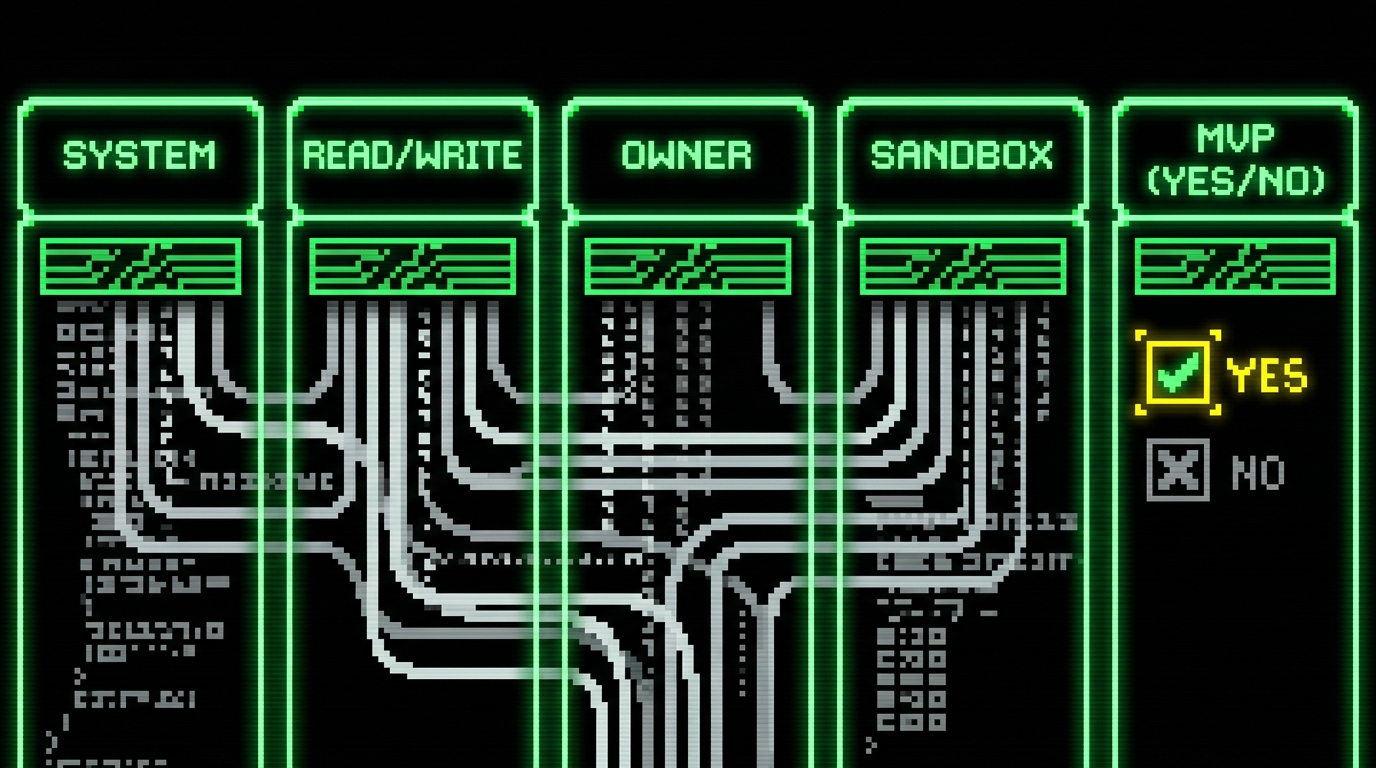
For these projects, the fit gate includes a “clarify or no” conversation. We define the allowed action set and the required controls. Controls are concrete mechanisms, not promises. Examples include: human approval before execution, role based access control (RBAC) so only certain roles can trigger actions, and immutable audit logs that record who approved what and when.
- Draft only mode: the agent writes a suggestion, a human copies it into the target system. This is slow but safe for early learning.
- Execute with approval: the agent prepares an action payload, a human reviews and confirms, then the system executes via API. This is common for refunds, account changes, and vendor payments.
- Execute autonomously: only acceptable for low risk actions, like tagging tickets or scheduling a meeting, and even then with rate limits and rollback.
If the agent can move money, change access, or give advice, the MVP must include approval and audit. Otherwise it is not an MVP, it is a liability.
Apptension’s fit gate: the checks we run and what “pass” means
Our fit gate is a set of checks that turn a narrative into a buildable plan. Each check ends with a binary outcome: clear enough to proceed, or not clear enough. The goal is not perfection. The goal is to remove the unknowns that cause sprint zero to become sprint forever.
We also make the checks measurable. If a project passes, we can define success metrics that are observable within the MVP window. If it fails, we can point to the missing artifact or the unbounded decision, not a vague “it feels risky.”
Check 1: one user, one workflow, one definition of done
We start by forcing a single workflow into focus. “Automate support” becomes “triage billing escalations and draft the first response.” “Help sales” becomes “generate first call notes and create CRM tasks.” Without this, the agent becomes a general assistant with no acceptance criteria.
Definition of done must include observable outputs. Examples: “A draft reply with three cited facts from the knowledge base,” “A Jira ticket created with component and priority,” or “A purchase order prepared with vendor ID and cost center.” If you cannot write down the output, you cannot test it.
Check 2: tool boundaries and failure handling
Agentic systems call tools. Tools fail. The MVP must define what happens when they do. We ask for explicit fallback behavior: retry limits, user messaging, and safe defaults. “If Salesforce is down, queue the action and notify the user” is a plan. “It will handle it” is not.
We also define which tools are in scope. For example, an MVP might allow “search knowledge base” and “create ticket,” but not “issue refund.” Or it might allow “issue refund” only after approval. These boundaries become acceptance tests and permission rules.
Check 3: safety controls you can audit
Safety controls must be implementable in the first version. We prefer controls that are simple and enforceable: RBAC, approval queues, and immutable logs. An immutable log is a record that cannot be edited after the fact, which matters when you need to explain an incident later.
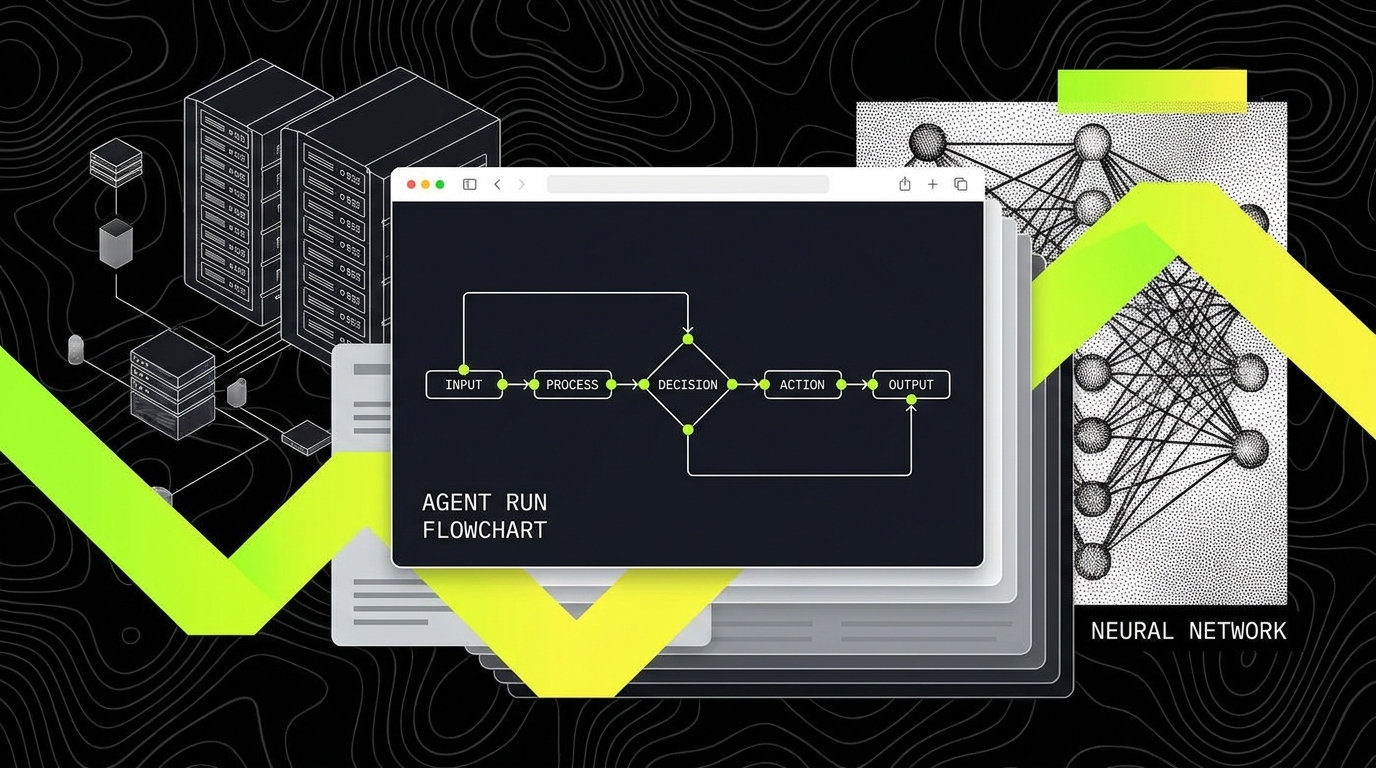
Concrete examples of audit data we capture in an MVP include: request ID, user ID, model version, prompt template version, retrieved document IDs, tool calls, and the final action payload. This is not “nice to have.” It is how you debug and how you defend decisions in regulated or high risk environments.
Check 4: delivery metrics that protect the MVP from scope creep
We do not use “velocity” as the primary success metric because it measures output, not outcomes. Instead we track a mix of delivery and product metrics. Delivery metrics keep the team honest about flow. Product metrics keep the MVP honest about user value.
Examples of delivery metrics we use in weekly reviews:
- Cycle Time: median time from “in progress” to “deployed.” For an MVP, we often target a median of 2 to 5 days per item, not 2 to 5 weeks.
- Spillover Rate: percentage of sprint items not finished. If spillover is consistently above 30%, the scope is not stable or the work is not sliced thin enough.
- Change Failure Rate: percentage of deploys that cause rollback or hotfix. A rising rate often signals missing test coverage or unclear acceptance criteria.
Examples of product metrics we define for agentic MVPs:
- Task Success Rate: percentage of runs that produce an acceptable output without manual rework. “Acceptable” must be defined, for example “contains correct order ID and policy citation.”
- Human Review Time: median time a reviewer needs to approve or correct an action. If review takes 6 minutes, you did not save time.
- Deflection or Throughput: for support workflows, “tickets resolved per agent per day,” or “percentage of escalations handled within SLA.”
Concrete scope examples that pass the fit gate
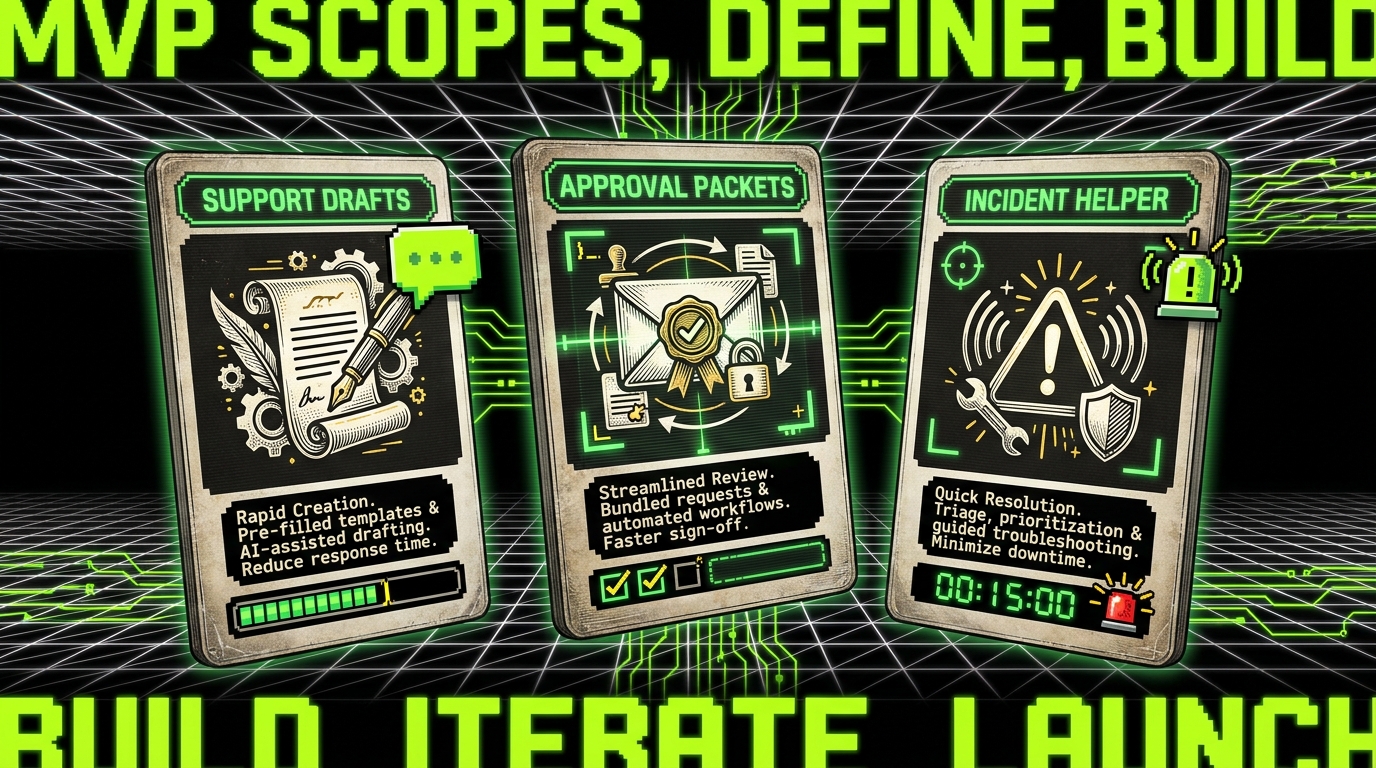
Scope examples matter because “agentic MVP” can mean anything from a chat UI to a tool executing financial operations. Below are three shapes we often see succeed because they are bounded: two integrations, one workflow, and an explicit safety posture.
Each example includes what we build, what we postpone, and how we measure success. That separation is the difference between a buildable MVP and a wishlist.
B2B SaaS: customer support triage and response drafts
MVP goal: reduce time to first response for a specific ticket category, like billing issues or access problems. The agent reads the ticket, retrieves relevant policy or knowledge base articles, drafts a reply, and suggests internal tags. A human agent reviews and sends.
In scope: one ticketing system (for example Zendesk) and one knowledge source (for example a Notion export or a help center database). The UI is a web sidebar that shows the draft, the cited sources, and a “send” button. The system logs which sources were used so support leads can spot bad retrieval.
- Out of scope (phase two): auto sending replies, multi language support, and syncing labels to CRM.
- Success metrics: Time to First Response (median minutes), Task Success Rate (percent of drafts sent with minor edits), and Customer Effort Score (CES) on resolved tickets where the draft was used.
- Safety control: “draft only” plus a blocklist of topics (refunds, legal threats) that forces escalation.
Workflow product: approvals agent for finance or procurement
MVP goal: speed up approvals without letting the agent move money on its own. The agent summarizes a request, checks it against a policy checklist (for example “vendor exists,” “amount under threshold,” “cost center present”), and prepares an approval packet. A manager approves or rejects.
In scope: one request intake channel (a form or Slack command) and one system of record (for example NetSuite sandbox or a staging database). The MVP includes an approval queue, RBAC roles (requester, approver, admin), and an audit log that records the policy checks that passed or failed.
- Out of scope (phase two): multi entity accounting rules, automatic vendor onboarding, and cross system reconciliation.
- Success metrics: Approval Cycle Time (median hours from request to decision), Rework Rate (percent of requests sent back for missing info), and Policy Violation Rate (percent of approvals that later require correction).
- Safety control: execute with approval, plus hard limits like “cannot approve above $5,000” in MVP.
Internal tool: engineering incident helper (low risk, high speed)
MVP goal: reduce time spent during incidents by gathering context and proposing next steps. The agent pulls recent deploys, error spikes, and relevant runbook sections, then drafts an incident update. A human incident commander posts it.
In scope: two integrations such as GitHub (deploy history) and an observability tool (alerts), plus a runbook repository. The UI is a web page or Slack message that includes a timeline, suspected change, and suggested checks. This is a good agentic MVP because the action is informational, not destructive.
- Out of scope (phase two): auto rollback, infrastructure changes, and paging rules updates.
- Success metrics: MTTR (mean time to recover), Time to First Update (minutes), and Incident Update Quality (review score from on call engineers, for example 1 to 5).
- Safety control: no execute permissions in MVP, only read access and draft outputs.
How we run the clarify or no conversation (especially for risky domains)
Some projects should not start as agentic MVPs. Not because the idea is bad, but because the first step should be a narrower proof: data readiness, policy mapping, or a human in the loop workflow without automation. The clarify or no conversation is where we make that call.
We do it by turning risk into decisions. “Can the agent execute actions?” becomes “Which actions, under which roles, with which approval step?” “Can it access customer data?” becomes “Which fields, masked or unmasked, and logged under which retention policy?” This is where many projects fail the fit gate, and that is a good thing.
Questions that decide whether we can ship responsibly
These questions sound strict because they have to be. If the domain is regulated or high impact, ambiguity is the enemy. The goal is not to block progress, but to force a safe MVP shape.
- What is the worst plausible failure? Example: “refund sent to wrong customer,” “access granted to the wrong role,” or “incorrect medical guidance.”
- What control prevents that failure? Example: approval queue, RBAC, field level masking, or topic blocklists that force escalation.
- How will we detect it fast? Example: monitoring alert on unusual refund volume, anomaly detection on permission changes, or weekly audit sampling of 50 agent actions.
- Who owns the policy? Example: finance lead signs off on thresholds, security lead signs off on permissions, legal signs off on disclaimers and retention.
When these answers do not exist, we recommend a different first step. For example, build a “draft and review” tool with strong logging, then add execution later. That still delivers value and builds trust without betting the company on a first version.
Conclusion: a fit gate is a kindness to your roadmap
Agentic MVPs fail early when teams confuse ambition with scope. Native mobile first slows iteration. Unbounded integrations turn an MVP into a platform build. Safety critical domains demand controls that cannot be bolted on later. None of these are deal breakers, but they require explicit decisions before sprint planning starts.
Focus is the founder job agents cannot own. Fifteen half-finished products are not progress. A fit gate forces one user, one workflow, bounded tools, auditable safety controls, and metrics that measure flow and value. When a project passes, the first sprint is about shipping, not renegotiating reality. When it fails, you still leave with a clearer plan: what to cut, what to prove first, and what “safe enough” means for your domain.
Ready to pressure-test a bounded first product? Start with Agentic MVP and a fit conversation.
If you already have a working prototype and the job is hardening, not greenfield scoping, start with Prototype to Production instead of forcing a Validate menu.