Introduction
You need to ship. You also need to stay secure, keep latency down, and avoid a hiring plan that collapses under budget review.
That is the real tension behind build vs buy software decisions. It is rarely about ideology. It is about speed to market, total cost of ownership, and risk you can actually carry.
This playbook gives you practical models you can run in a spreadsheet:
- TCO math for hiring vs contractors vs agencies
- Onboarding time and delivery velocity modeling
- A risk model for external execution
- Quality gates and acceptance criteria you can enforce
- An exit plan and handover strategy that does not trap you
Proof point: Across 360+ delivered projects (including regulated and enterprise contexts), the pattern is consistent: the best outcomes happen when scope, quality gates, and ownership boundaries are explicit from day one.
A simple definition set
Let’s align terms. Most teams use these interchangeably, and that creates bad decisions.
- Build: your employees deliver and run it. You own delivery management, hiring, and ops.
- Buy: you adopt a product (SaaS, platform, component). You configure and integrate.
- Partner: an external team ships with you. You still own the product, roadmap, and long term outcomes.
Outsourcing vs in house engineering is not binary. Many CTOs run a hybrid: internal core, partner for bursts, and buy for non differentiating capabilities.
_> Delivery realities
Numbers that shape planning and expectations
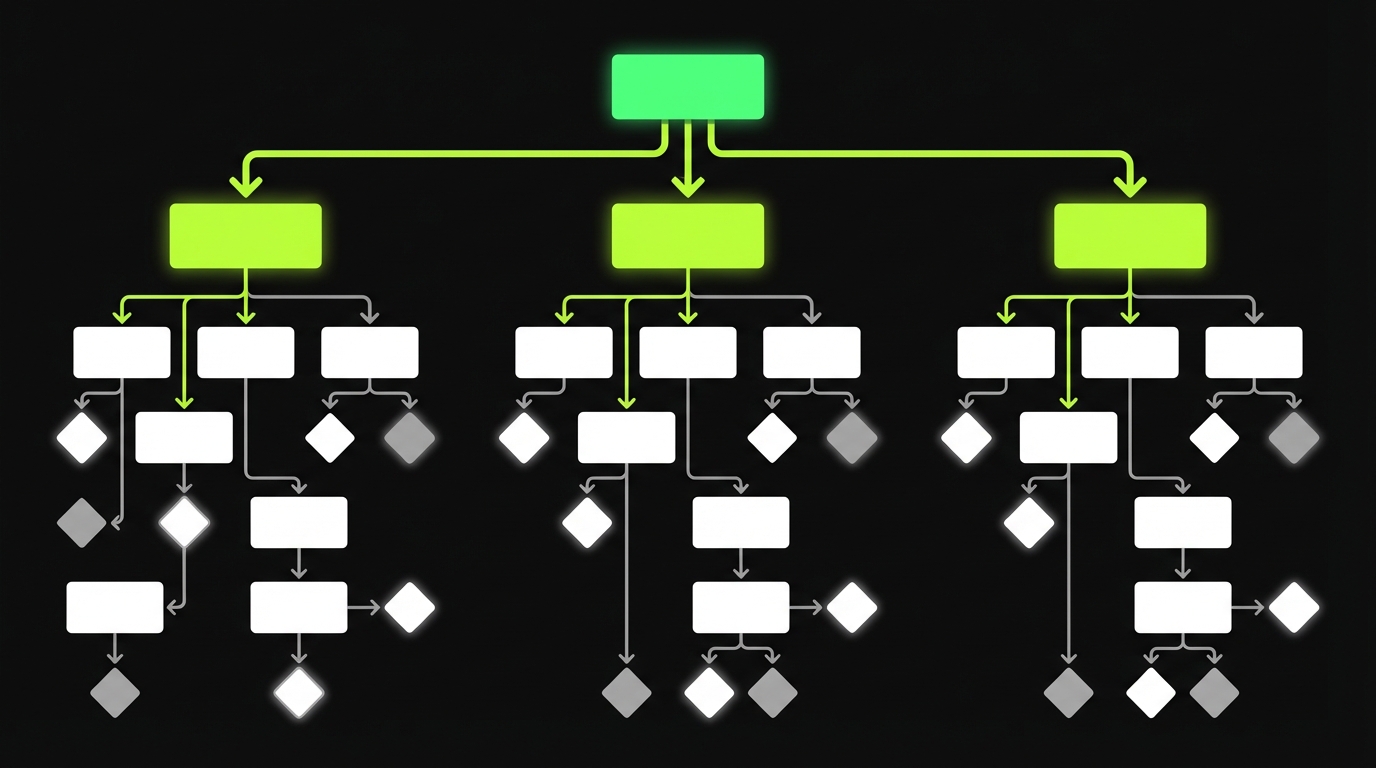
Build vs buy vs partner process
_> A repeatable flow for CTO decision making
→ Scroll to see all steps
Choose the right path
Start with constraints, not preferences. The decision is usually obvious once you quantify what matters.
Here are the most common drivers:
- Differentiation: does this capability win deals or reduce churn?
- Compliance by design: do you need audit trails, data residency, SOC 2, HIPAA, or strict access controls?
- Performance: are you solving latency, throughput, or cost per request at scale?
- Roadmap volatility: will requirements change weekly based on user feedback?
- Internal capacity: do you have staff who can own architecture and code reviews?
Insight: Teams get burned when they treat “buy” as zero engineering. Integration, data migration, security review, and change management often cost more than the first year of licenses.
Quick comparison table
| Dimension | Build | Buy | Partner |
|---|---|---|---|
| Speed to first release | Medium | Fast | Fast |
| Custom fit | High | Medium | High |
| Long term flexibility | High | Low to Medium | High |
| Upfront cost | High | Low to Medium | Medium |
| Ongoing cost predictability | Medium | High | Medium |
| Compliance control | High | Medium | High |
| Talent dependency | High | Low | Medium |
When each option wins
- Build wins when the feature is differentiating, long lived, and you can staff it with seniors who will stay.
- Buy wins when the capability is commodity and the vendor’s constraints are acceptable.
- Partner wins when time matters, hiring is slow, or you need specialist execution (for example, AI feature delivery with dedicated QA gates).

A practical hybrid pattern
A common pattern that holds up:
- Internal team owns architecture, security posture, and critical paths.
- Partner team owns delivery throughput on defined epics.
- You buy commodity tooling (auth provider, analytics, billing) and integrate.
This keeps core knowledge in house while avoiding the cost to hire dev team vs agency debate turning into a religious war.
What good partnering looks like
_> Force multiplier patterns that keep ownership in house
Faster time to first release
A self directed senior team can ship a thin slice quickly when scope and gates are explicit.
Predictable throughput
Velocity becomes measurable when work lands in your repos under your CI and release cadence is fixed.
Reduced hiring pressure
You can delay permanent headcount decisions until you have real usage data and a stable roadmap.
Better risk control
Security, quality, and exit terms are enforceable when they are written as acceptance criteria and handover milestones.
Total cost of ownership
TCO is where most build vs buy software conversations get real. Not because CTOs love spreadsheets. Because budgets are finite.
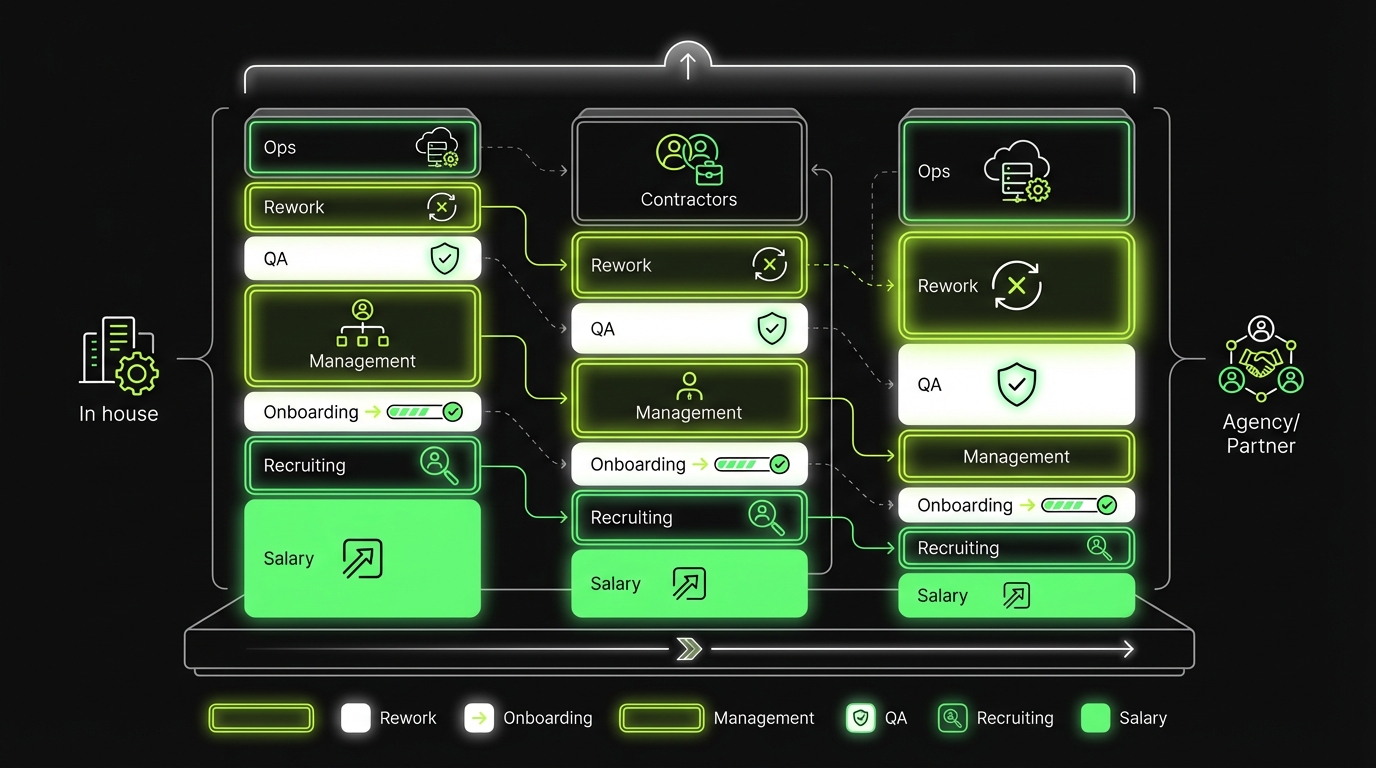
You need to model fully loaded cost, not salary. And you need to include the hidden work: onboarding, management overhead, rework, and operational load.
TCO: hiring vs contractors vs agencies
Key cost buckets to include:
- Compensation and taxes
- Recruiting fees and time cost (your engineers interviewing)
- Equipment, tools, and cloud environments
- Engineering management and product overhead
- QA and release management
- Security and compliance work
- Attrition and backfill
Key stat: If you do not model onboarding and management overhead, your plan will look 20% to 40% cheaper than it will feel in execution. Treat that range as a hypothesis and validate it by tracking time spent in interviews, onboarding, and rework.
ROI calculator logic and inputs
Use this as spreadsheet logic. Keep it boring. Boring ships.
Inputs:
- Scope size: estimated story points or person weeks for v1
- Target launch date: weeks until first usable release
- Internal capacity: available engineer weeks per sprint (after support and meetings)
- Ramp time: weeks to reach expected throughput
- Cost per FTE month: fully loaded
- External rate: blended rate for contractor or agency
- Defect cost: expected rework percentage
- Opportunity value: revenue pulled forward or churn reduced per month
Core formulas:
- Delivery time (weeks) = Scope / (Velocity per week)
- Velocity per week = (Team size) x (Productive hours per week) x (Efficiency factor)
- Total cost = (Internal cost x duration) + (External cost x duration) + one time onboarding
- ROI (simple) = (Opportunity value x months pulled forward) - Total cost
A minimal pseudo formula you can paste into a doc:
months_pulled_forward = max(0, (internal_delivery_months - chosen_option_delivery_months))
roi = (opportunity_value_per_month * months_pulled_forward) - total_cost
Cost to hire dev team vs agency: what to compare
Do not compare a single salary to an agency invoice. Compare a production unit.
A typical production unit for product delivery includes:
- 1 Tech lead or staff engineer
- 1 to 3 engineers
- 0.5 QA (or shared QA function)
- 0.25 to 0.5 product or delivery management
If you cannot staff that unit internally, you will pay for it in delays and defects.
TCO traps that show up at scale
Watch these when you have performance and compliance constraints:
- Security review debt: external code lands, but no one budgets for threat modeling, pen tests, or access reviews.
- Platform cost drift: rushed architecture increases cloud spend. Track cost per active user or cost per request.
- Bus factor risk: one senior holds the system in their head. That is not a staffing plan.
Mitigation is simple but not easy: define ownership boundaries, set quality gates, and enforce documentation as part of “done”.
Onboarding time and velocity
The fastest team is rarely the largest. It is the team that reaches predictable throughput quickly.
You can model onboarding time with simple math. The goal is not precision. The goal is avoiding fantasy timelines.
Onboarding time math
Break onboarding into phases:
- Access and environments: accounts, repos, CI, secrets, staging
- Architecture orientation: domains, data flows, critical paths
- Delivery alignment: backlog, definition of done, release process
- First production change: the real start of learning
A rough model:
- Week 1: 20% throughput
- Week 2: 50% throughput
- Week 3 to 4: 70% to 90% throughput
If you have heavy compliance requirements, add time for:
- secure laptop and MDM
- least privilege access
- audit logging
- data handling training
Insight: Your onboarding bottleneck is usually not code. It is access, unclear ownership, and missing test environments.
Delivery velocity modeling
Use a conservative throughput model:
- Productive hours per engineer per week: 20 to 28 (meetings, reviews, support are real)
- Efficiency factor: 0.6 to 0.8 depending on domain maturity
- Rework factor: add 10% to 30% unless you have strong quality gates
A quick checklist to make velocity real:
- Define what counts as “shipped” (production, monitored, documented)
- Track cycle time from “in progress” to “released”
- Track escaped defects per release
- Track performance budgets (p95 latency, error rate)
30 60 90 day ramp plan
You want a ramp plan for internal hires and for external execution. Same principle. Different levers.
- Days 0 to 30: ship a thin slice to production. Build trust. Establish CI, environments, and quality gates.
- Days 31 to 60: increase scope. Reduce cycle time. Add observability and performance budgets.
- Days 61 to 90: harden. Add compliance controls. Plan the handover and reduce key person risk.
This is where outsourcing vs in house engineering becomes measurable. If an option cannot ship a thin slice in 30 days, it will not magically accelerate later.
A concrete ramp example
In our experience building a real time conversational AI avatar with a brand experience agency, the delivery constraint was latency and “feels natural” interaction. The timeline was four weeks.
What made it possible was not heroics. It was focus:
- narrow scope for v1
- strict performance targets
- fast feedback loops
Example: A four week timeline is achievable when you treat the first release as a controlled experiment with explicit acceptance criteria, not a full product.
External execution risk
Partnering can compress timelines. It can also create a new class of risk. Model it explicitly.
Risk model for external execution
Score each risk 1 to 5 for likelihood and impact. Multiply for a risk score.
Common risks:
- Domain misunderstanding: wrong assumptions, wrong abstractions
- Security posture mismatch: weak access controls, missing audit trails
- IP and licensing issues: unclear ownership, dependencies with restrictive licenses
- Hidden subcontracting: unknown engineers touching your code
- Delivery opacity: progress reports without working software
- Quality debt: shipping without tests, observability, or performance budgets
Mitigations you can enforce:
- Require a working increment every sprint
- Require code to land in your repos under your CI
- Enforce least privilege access and audit logging
- Make architecture decisions explicit and reviewed
Key stat: If you cannot see code, tests, and deployment history in your own systems, you are not managing risk. You are hoping.
Vendor red flags checklist
Treat these as stop signs or at least renegotiation triggers:
- They avoid naming who will do the work
- They cannot explain their QA approach beyond “we test it”
- They push for long fixed scope before discovery
- They refuse to work in your repos or under your CI
- They do not ask about compliance, data classification, or threat models
- They promise exact dates without showing assumptions
- They treat documentation as “nice to have”
Evaluation scorecard template
Use a simple weighted scorecard. Keep it visible.
| Criteria | Weight | Score 1 to 5 | Notes |
|---|---|---|---|
| Seniority and stability of team | 20 | ||
| Security and compliance by design | 20 | ||
| Delivery transparency and cadence | 15 | ||
| Quality gates and test strategy | 15 | ||
| Architecture and scalability chops | 15 | ||
| Communication and time zones | 10 | ||
| Exit plan and handover | 5 |
Add one rule: if security scores under 4, it is a no.

A real delivery constraint example
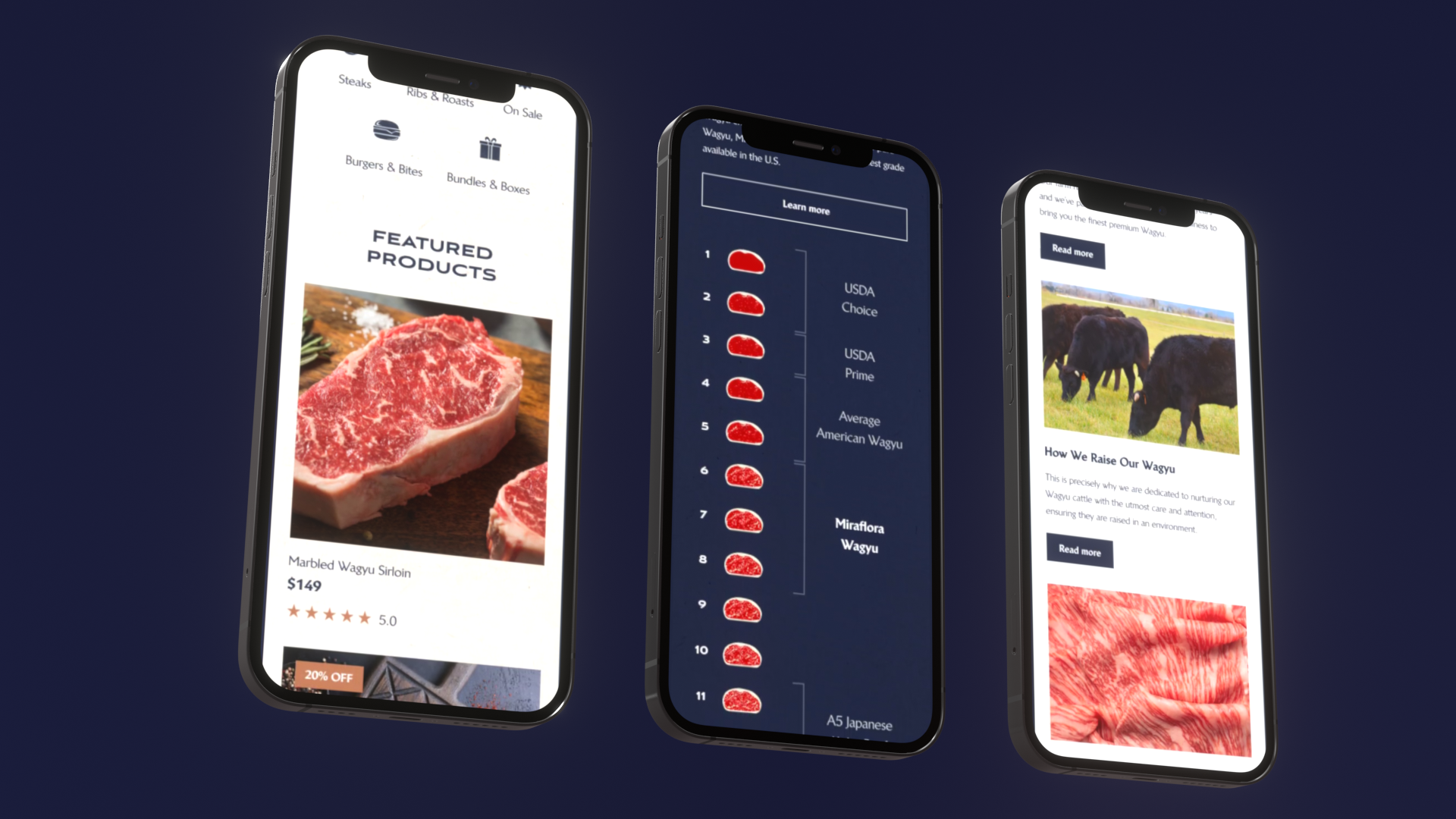
When we delivered a custom Shopify experience for Miraflora Wagyu in four weeks, the risk was not “can we build Shopify pages.” It was coordination across time zones and fast feedback.
The mitigation was process:
- async first communication
- short decision loops
- clear acceptance criteria for each weekly milestone
That is the kind of risk you should surface early. Not after the timeline slips.
Quality gates that prevent rework
_> What to require regardless of delivery model
Security checks in CI
SAST and dependency scanning with fail conditions. Secrets never stored in code or tickets.
Performance budgets
Define p95 latency and error rate targets per critical flow. Alert on regressions.
Observability by default
Dashboards and alerts ship with features. On call has runbooks, not tribal knowledge.
AI specific evaluation
If you ship LLM features, maintain test datasets, regression checks, and drift monitoring.
Release hygiene
Feature flags, staged rollouts, and clear rollback steps. Every release has notes and owners.
Acceptance criteria
Ticket level criteria that product and engineering can both sign off. No “looks good to me” releases.
Quality gates and exit plans
Most delivery failures are not caused by bad intent. They come from vague definitions of “done” and no plan for what happens after launch.
Quality gates and acceptance criteria
Make quality gates part of the contract and part of sprint acceptance.
Minimum acceptance criteria for production ready work:
- Functional: meets user story, edge cases covered
- Testing: unit and integration tests for critical paths
- Security: threat model for sensitive flows, secrets handling, access reviews
- Performance: latency and error budgets defined and measured
- Observability: logs, metrics, traces, dashboards, alerts
- Documentation: runbooks for on call and common incidents
A simple “definition of done” checklist:
- Code merged into main under your CI
- Tests green, coverage meets agreed floor
- Security checks passed (SAST, dependency scan)
- Deployed to staging with release notes
- Product sign off using acceptance criteria
- Deployed to production with monitoring
Insight: If QA is only manual at the end, you will pay for it twice. Once in delays. Once in incidents.
Exit plan and handover strategy
Assume you will change the delivery model later. Plan for it now.
Exit plan components:
- Repo ownership: code in your org, not theirs
- Access: remove vendor access within 24 hours when needed
- Documentation: architecture decision records, runbooks, onboarding docs
- Knowledge transfer: recorded walkthroughs, pairing sessions, Q and A backlog
- Operational handover: alert ownership, incident process, SLOs
A clean handover timeline:
- Week 1: documentation baseline and system map
- Week 2: shadow on call and incident drills
- Week 3: internal team runs releases, partner supports
- Week 4: partner steps back, only advisory
What to do with AI features
If your product includes LLM or ML behavior, add AI specific gates:
- evaluation datasets for correctness and safety
- prompt and retrieval regression tests
- drift monitoring and alerting
- latency budgets for model calls
This mirrors what we do in AI QA delivery: treat AI behavior as a product inside the product. Test it like one.
Example: For AI features, two runs can differ even with the same input. Your acceptance criteria must include variance, not just “it worked once.”
Acceptance criteria you can paste into tickets
Use this format to reduce ambiguity:
- Given [context], when [action], then [expected outcome]
- Performance: p95 under [target] for [endpoint or flow]
- Security: data classified as [level], stored in [location], access limited to [roles]
- Observability: dashboard link, alert thresholds, runbook link
It looks strict. It saves you later.
When license cost plus integration and operational overhead exceeds the cost of a small internal ownership team. Track integration hours, vendor constraints that create workarounds, and ongoing admin load.
It can be, if you enforce compliance by design: least privilege access, audit logging, documented threat models, and clear repo ownership. If a vendor cannot operate under those constraints, do not proceed.
Compare a production unit. Include recruiting time, management overhead, QA, and rework. Then compare time to first production release and the cost of delays.
That is what the exit plan is for. Require code in your repos, documentation as part of done, and a handover timeline with pairing sessions and recorded walkthroughs.
Add evaluation datasets, regression tests for prompts and retrieval, drift monitoring, and latency budgets for model calls. Treat AI behavior as a first class surface in QA, not a demo artifact.
Conclusion
Build vs buy software is a delivery strategy decision. Not a philosophy.
If you want one rule: choose the option that gets you to a monitored production release fastest, with a clear path to ownership.
A practical next step checklist:
- Run the TCO model with fully loaded costs and onboarding time
- Model delivery velocity with conservative productive hours
- Use a risk scorecard for external execution
- Write acceptance criteria and quality gates before sprint 1
- Put an exit plan in writing, including repo ownership and handover milestones
Final insight: The best CTOs do not avoid tradeoffs. They make them explicit, measure them, and revisit them when the data changes.