01
Fit before build
3–5 days. Boundary, risks, package, and timeline. Credited when the build proceeds.
Built by AI agents and senior engineers. Start with Validate to test the idea with real users, or go straight to Launch when customers will depend on it. You own the code, the cloud account and the data.
For founders and innovation teams without spare engineering capacity.
4–8 weeks
Typical launch
2–3 hrs/wk
Founder load
100%
Client ownership
How it runs
A paid 3–5 day fit gate sets the scope and the price. Validate tests the idea; Launch ships it to production. Each phase leaves something you keep.
Step 1 of 3
3–5 days. Boundary, risks, package, and timeline. Credited when the build proceeds.
Journeys, permissions, acceptance examples, and exclusions. The brief for build and verification.
Production setup, quality evidence, ops handover, and a 30-day defect warranty on agreed scope.
Teams we have built for
Usually not for lack of ideas. They stall between the demo and the version customers can depend on.
01
Hiring and managing a team takes months you would rather spend learning from customers.
02
An AI-built demo proves the flow. Security, data handling, edge cases and deployment still stand between it and paying users.
03
In a classic agency setup, a project manager translates what you need for designers and developers, and detail gets lost at each step.
04
Integrations, permissions, failure handling, tests and monitoring are what let real customers use the MVP.
AI agents write most of the code. You and a senior engineer decide scope, architecture, security and when to launch. Code, cloud and data are yours from day one.
01
Turning discovery notes into specs, standard architecture, SaaS foundations, implementation, tests, preview environments, deployment and docs.
02
Product scope, customer insight, architecture trade-offs, security, acceptance and the launch call.
03
Validate (1–2 weeks) tests feasibility and produces the Blueprint, with no production launch. Launch (4–6 weeks) ships to production. Scale adds journeys once the first version earns them.
What founders, CTOs and consulting leaders get out of it
You have a real customer problem and limited runway. Validate first, then Launch, with senior engineers and software you own.
What you get
Short engagements need a fixed scope and foundations a client's security team will accept.
What you get
A new product line needs a bounded build while your platform team stays on the roadmap.
What you get
What changes for you, in plain terms
Validate takes 1–2 weeks, Launch 4–6. The paid fit gate sets scope and price first, so you are not buying a production promise nobody has checked.
Your time goes on decisions: reviewing previews, answering product questions, accepting features. We run the delivery.
Code, cloud accounts and data are yours, with tests, monitoring and handover docs. There is no platform to get locked into.
The menu works because it is narrow. If your product is outside it, we tell you in the fit gate, before you have spent the build budget.
We check six things before launch. Each one leaves evidence you can inspect.
Agreed journeys and roles, with permissions and acceptance examples.
Authentication and authorization, secrets management and data boundaries.
Unit, integration and end-to-end tests linked to requirements.
Preview and production environments, health checks, migrations and rollback.
Logs and monitoring, backups, cost visibility and an incident contact.
Your code, cloud and data, plus documentation and a transfer plan.
BUILT WITH APPTENSION SDLC
A production infant-care PWA we built on the same harness we install for client teams.
0
Merged PRs in 11 days
0
Closed issues shipped
0+
Cited knowledge articles
GITHUB PROOF · JUL 31 – AUG 11, 2026
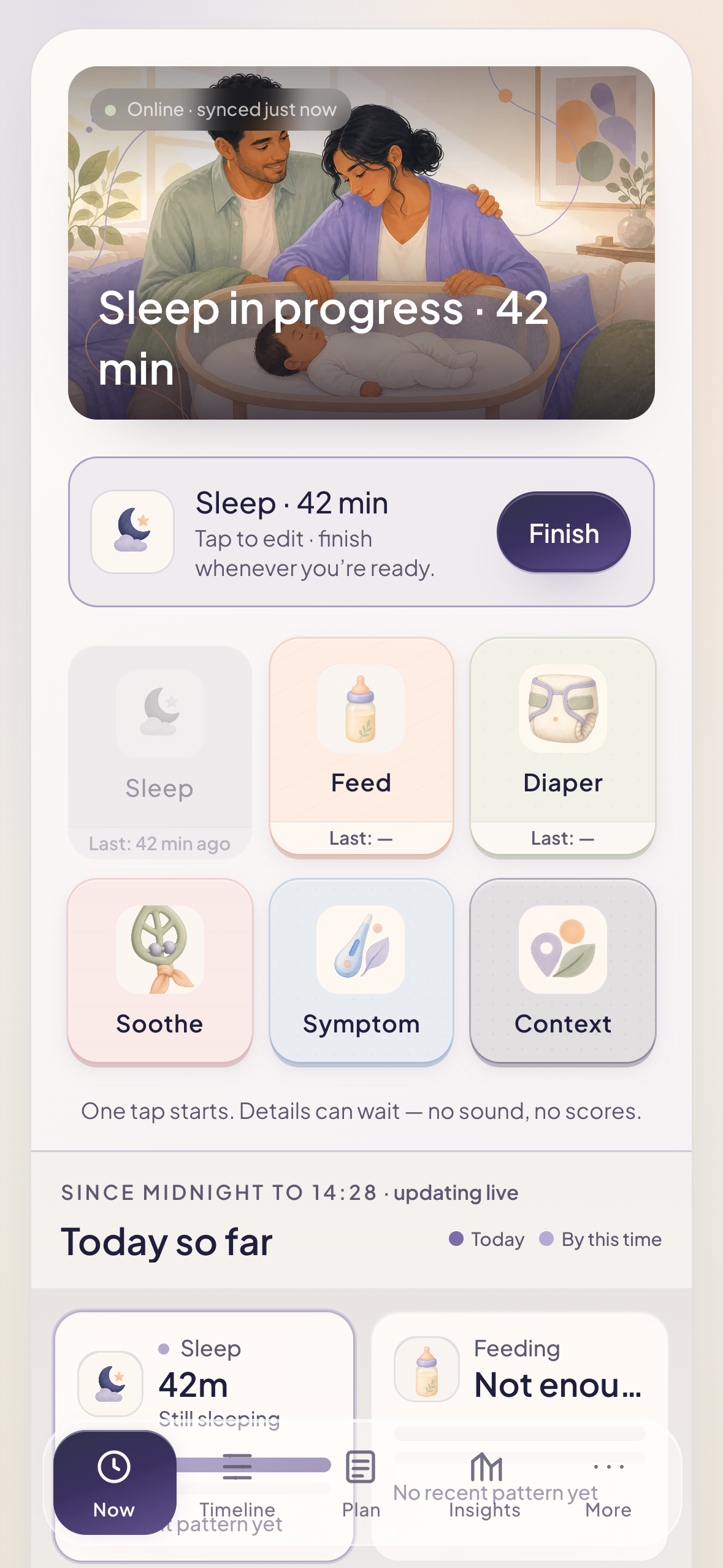
Installable PWA shell with care logging and bottom navigation
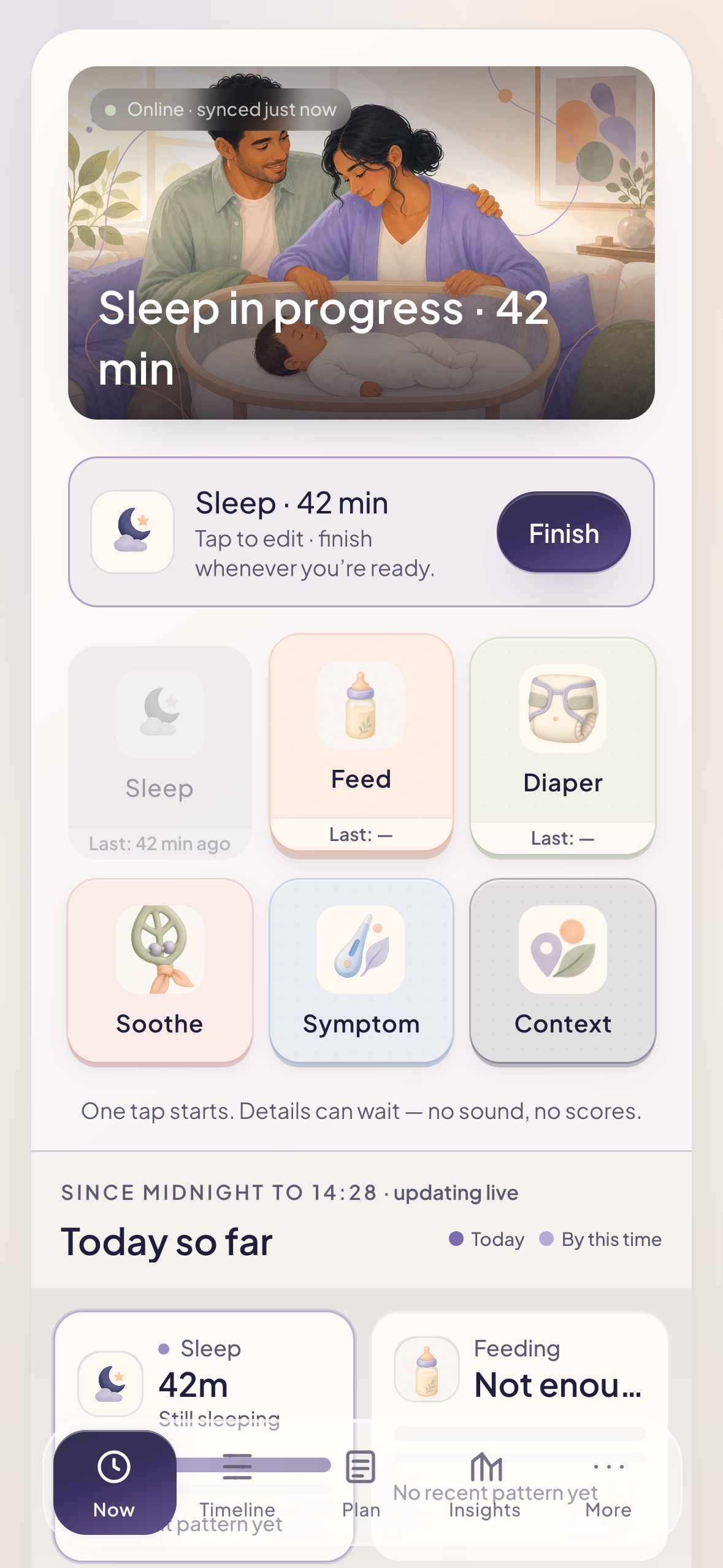
QUICK LOG
One-tap timers with recent stats
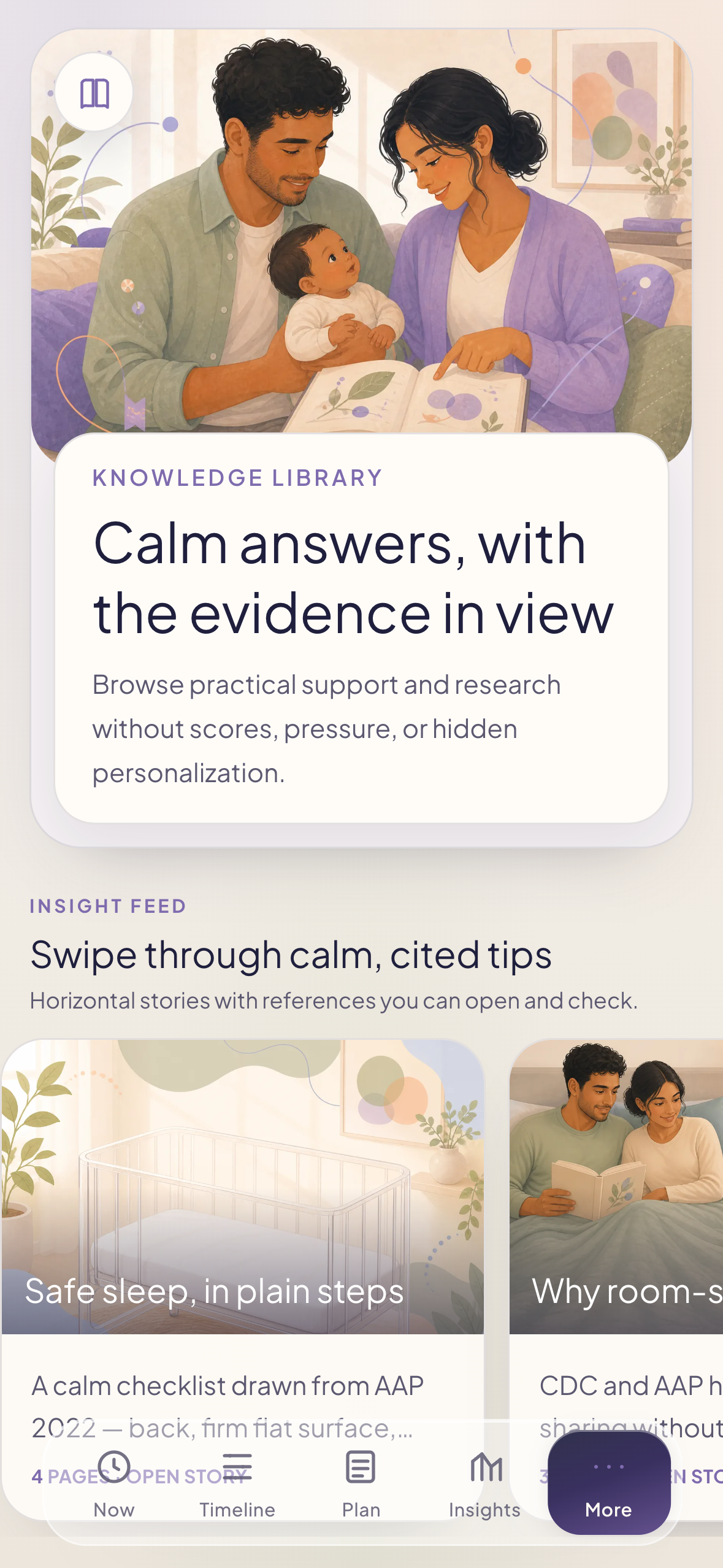
KNOWLEDGE
Cited, swipeable guidance cards

VISUAL LANGUAGE
In-app illustration system for every screen and guidance card
Delivery outcomes
41 PRs merged on day one, 50 on Aug 1, 2026. Every agent branch passed Vitest, review and repository rules before merging.
Rhythm orbit wheel, offline outbox sync, OTP auth, Neon Postgres, PWA install shell, and CMS-seeded knowledge library in one continuous delivery run.
Installable at nini.bot today. The delivery loop, context packs and verification gates behind it are what we set up for client engineering teams.
Timelines and scope from published case studies
Four phases. Each one ends with something you keep, even if you stop there.
→ Scroll to see all steps
Validate is for learning. Launch is for serving customers. Timelines are typical, and the price is set in the fit memo.
1–2 weeks
Product Blueprint, a feasibility check, a clickable or working prototype and our recommendation on what to build next. No production launch.
Typical first products that fit the menu.
Forms and documents, approval steps, an audit trail.
Secure files and data, status updates, messaging.
Questionnaire and evidence upload, review, reporting.
One domain workflow, ready for subscriptions.
Data entry and workflow, with alerts and reports.
Upload and extract, human review, answers grounded in the source.
Availability and requests, confirmations, admin.
Profiles and listings, requests, matching.
Cost, timeline, ownership and what happens after launch
Validate takes 1–2 weeks and ends with a working prototype and a Product Blueprint. Launch takes 4–6 weeks and ships to production. Scale takes 6–10 weeks for up to 5 roles and 3 integrations. A 3–5 day fit gate comes first. For reference, nini.bot went from intent to an installable production PWA in 11 days, and The Grassroots Coach went from idea to launch in 5 weeks.
Each package has a fixed scope (roles, workflows, integrations), and the price is set in the fit memo at the end of the 3–5 day paid fit gate. The fit gate fee is credited when the build goes ahead, so you know the price before the build starts. To get a written scope first, describe the product in Scope Studio and it drafts a PRD and engagement plan.
Senior engineers direct AI coding agents inside a controlled delivery harness: written plans, tests linked to requirements, preview environments and review gates. Agents speed up implementation. People own scope, architecture, security, acceptance and the launch decision. nini.bot was built this way, with 159 merged pull requests in 11 days.
Both, on purpose. Validate is the proof of concept: a clickable or working prototype and a feasibility verdict, with no production launch. Launch meets the production bar: authentication and authorization, tests, monitoring, backups, rollback, documentation and a 30-day defect warranty for the agreed scope.
You do, 100%. Code, cloud accounts, data and documentation are yours from the start, with a transfer plan at handover. There is no proprietary platform to stay locked into.
About 2–3 hours a week, spent on decisions: reviewing previews, answering product questions and accepting features. Apptension runs the delivery.
Yes. If it is a SaaS-shaped app that needs security, tests and operations before customers rely on it, that is our vibe-code-to-production rescue: we audit what can be kept, harden it and ship it. If the prototype only proved the idea, a fresh Launch build is often faster.
Native-mobile-first apps, complex real-time collaboration, high-volume streaming or compute, safety-critical or heavily regulated systems, major legacy migrations, and products with an open-ended list of integrations. We say so in the fit gate rather than halfway through the build.
Defects in the agreed scope are covered for 30 days. After that you can add journeys with the Scale package, keep a few senior engineers month to month through Hybrid Teams, or hand the repository to your own team.
Next paths