Services
About
Portfolio
Careers
Blog
Get in touch
OverviewProcessMeasurementROI calculatorPlaybookMaturityScorecard

_>APPTENSION SDLC · AGENTIC SDLC

Agentic SDLC framework: how we run AI coding agents in production delivery.

The Agentic SDLC framework is how we get more accepted production work from the same team without more defects, more risk or longer senior review queues. Two projects run on it: nini.bot (new product) and Teamdeck (legacy modernization).

2 weeks

IMPLEMENTATION

6 months

MANAGED ADOPTION

100%

CLIENT-OWNED HARNESS

>>Why AI coding tools alone don't speed up delivery

_> Individual speed is easy to see. Team delivery, review capacity and return on spend are not. These are the four gaps we see most often.

01

Review becomes the bottleneck

AI moves the constraint from writing code to reviewing it. More output without more review capacity just builds a queue.

02

Personal gains don't show up in results

Developers feel faster. Few companies can connect AI spend to delivery or business numbers without a process around the tools.

03

AI pull requests need more checking

Generated diffs often look right and still need careful review. Smaller pull requests, repository context and automated pre-checks reduce that cost.

04

Governance trails adoption

Teams adopt agents faster than they add policies, CI gates and traceability. In production, every change should trace back to its ticket, the checks it passed and the person who approved it.

How it runs

SCATTER

How the engagement runs

We measure your baseline first. The harness goes into one repo in two weeks. Six months of managed adoption show whether the economics hold.

Step 1 of 3

  1. 01

    Baseline the system

    Map ticket to production. Capture flow, review load, quality, and AI spend before any uplift claim.

  2. 02

    Install in two weeks

    Shared context, skills, verification, PR evidence, and autonomy boundaries on a real repository.

  3. 03

    Adopt and measure

    Six months of monthly cycles: coach the team, fix what breaks, extend what works and report cost per verified change.

>>What changes with a harness in place

_> More verified production work from the same team. People keep the final say on architecture, security and releases.

01

Throughput you can back up

We baseline flow and quality first, then report review wait and cost per verified change next to any throughput number.

02

Senior time back

Repeatable senior knowledge goes into context files, checks and gates, so routine work needs less of your strongest engineers' time.

03

A harness you own

Shared skills, rules, telemetry and cost data live in your repository. Models change; the process stays.

How does an engagement run?

_> The question we answer: does the same team deliver more accepted production work per dollar, without more defects, risk or senior supervision?

01

Assess

Find where review wait, defect risk and AI spend sit today, so any later ROI claim has a baseline behind it.

02

Install

In two weeks, one real team and repository get a working harness your engineers own.

03

Embed

Run the live backlog through shared skills and verification, so seniors stop repeating the same standards in every pull request.

04

Measure

Count accepted production changes and cost per verified change. Tokens, commits and generated lines don't count.

05

Improve

Turn each failure into a rule, skill or test, so the same mistake doesn't cost senior time twice.

06

Scale

Roll out only the workflows that have already shown value.

→ Swipe through the process

START HERE

Your developers already use AI. Can you show the team got faster?

Take the two-minute maturity diagnostic, then see how each scorecard metric is measured before and after an engagement.

Run maturity diagnosticOpen measurement model

BUILT WITH APPTENSION SDLC

>>nini.bot: 159 merged PRs in 11 days

_> A production infant-care PWA we built on the same harness we install for client teams.

0

Merged PRs in 11 days

0

Closed issues shipped

0+

Cited knowledge articles

GITHUB PROOF · JUL 31 – AUG 11, 2026
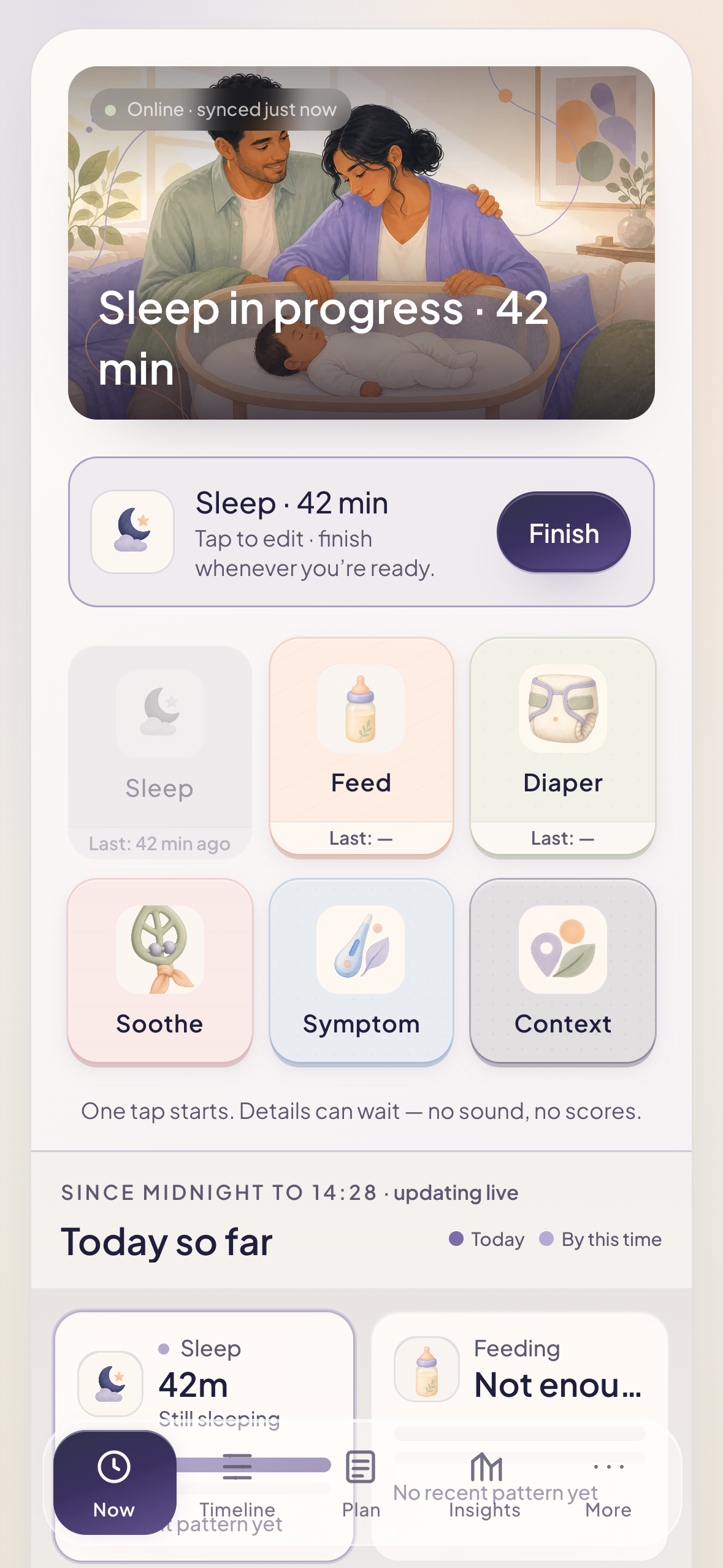
Nini Now screen inside mobile PWA shell with bottom navigation

Installable PWA shell with care logging and bottom navigation
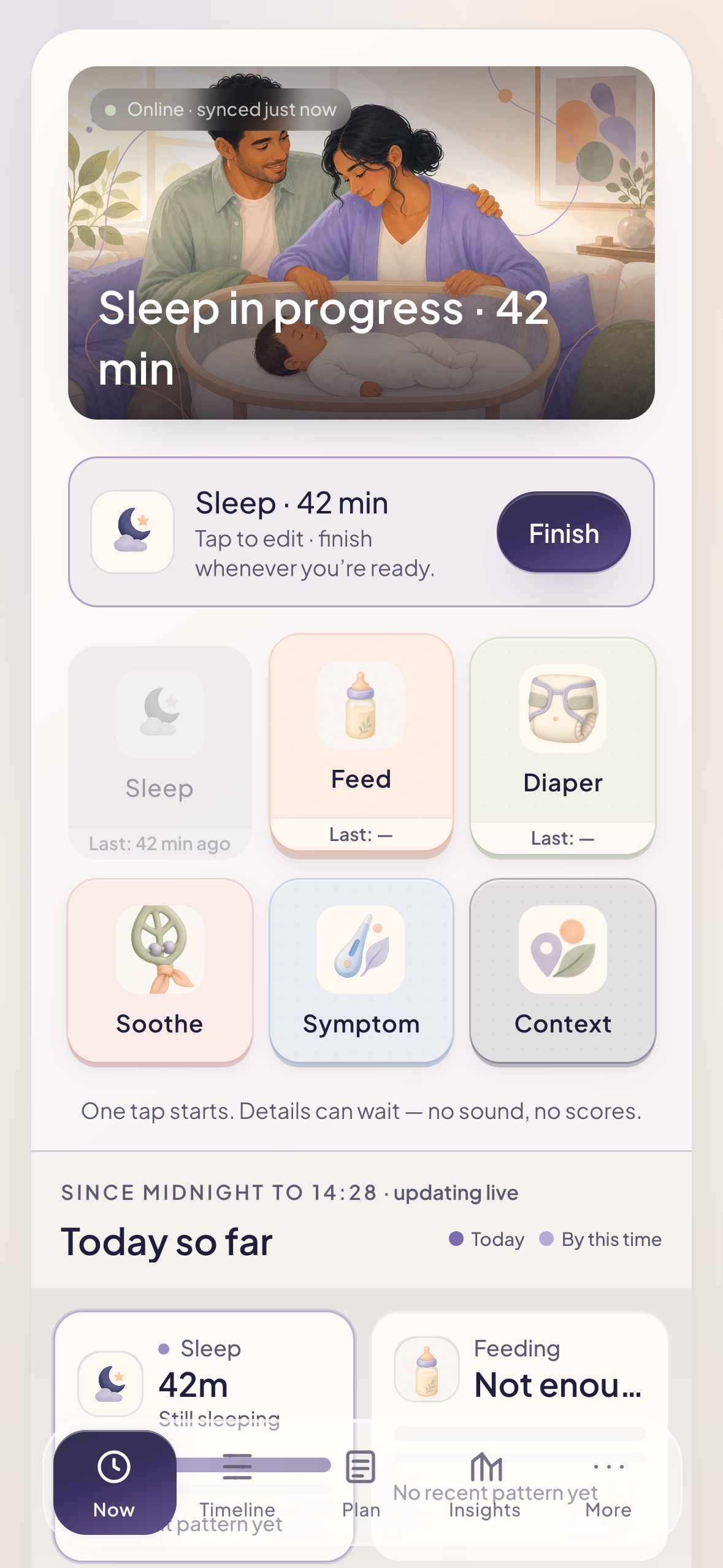
Nini one-tap care quick log tiles

QUICK LOG

One-tap timers with recent stats
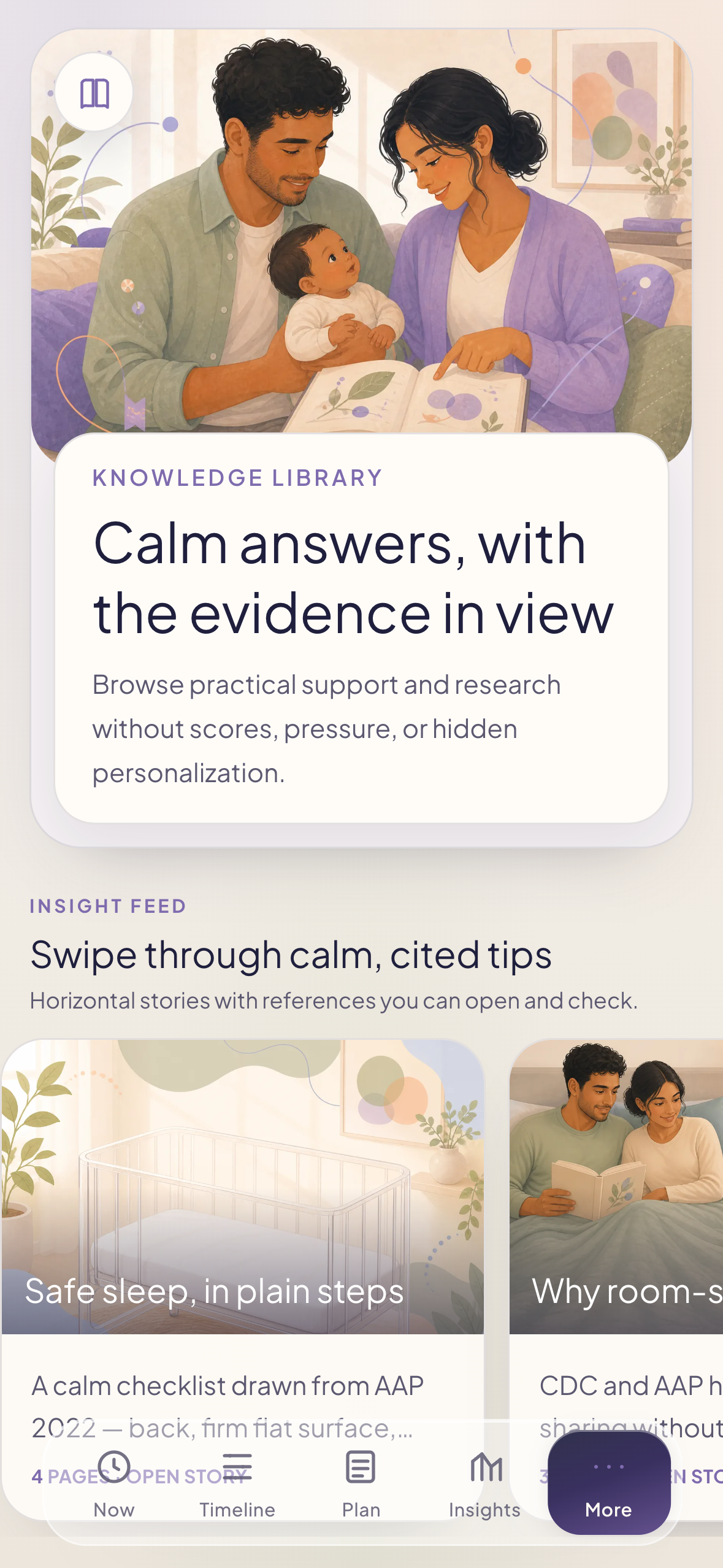
Nini knowledge article carousel with cited parenting guidance

KNOWLEDGE

Cited, swipeable guidance cards

Nini morning rhythm family illustration

VISUAL LANGUAGE

In-app illustration system for every screen and guidance card

Delivery outcomes

  • 01

    Fast merges, with every gate in place

    41 PRs merged on day one, 50 on Aug 1, 2026. Every agent branch passed Vitest, review and repository rules before merging.

  • 02

    Production scope from the start

    Rhythm orbit wheel, offline outbox sync, OTP auth, Neon Postgres, PWA install shell, and CMS-seeded knowledge library in one continuous delivery run.

  • 03

    A live product you can install

    Installable at nini.bot today. The delivery loop, context packs and verification gates behind it are what we set up for client engineering teams.

Read the case study
nini.bot

SECOND PROOF · PLATFORM MODERNIZATION

>>Teamdeck: 60 PRs of governed legacy change

_> Staging now runs on Temporal, Pulumi and ECS, and product work never paused. Production cutover is still ahead. What we can show today is the process and its gates.

0

PRs in ~5.5 weeks of GitHub history

0h

Median PR open → merge

~0k

Lines of plans, specs, ADRs, runbooks
Editorial illustration of Teamdeck platform modernization on a governed AI SDLC

A codebase agents can read

Bindings table, docs map, and path-scoped rules so agents and humans share one source of truth for branch, CI, and verification.

CI that enforces the process

Twelve workflows and thirteen tested gate scripts. Release-line merges, promotion ancestry, drift detection, and first-pass review on every PR.

Where the program stands

Stage is live end to end. Prod cutover is planned, not done. Cost parity waits for measured post-cutover numbers.

Read the case studyRead how the process works

>>What is in the framework?

_> Process, measurement and ROI for anyone evaluating the approach. Playbook, maturity diagnostic and scorecard for sponsors and platform leads.

Process

What happens on each day of the two-week install, and in each month after.

Measurement

Which metrics we track, how each is calculated, and cost per verified change.

ROI calculator

Estimate capacity gained and hiring avoided for your team size and costs.

Playbook

The full operating manual: install, measurement, autonomy rules, coaching and adoption.

Maturity

Answer questions on five dimensions and get a recommended starting package.

Scorecard

The monthly scorecard, with a before-and-after walkthrough for each metric.

NEXT STEP

Talk to us about a pilot

A first call with your engineering sponsor covers goals, constraints, risk appetite and which repository to pilot in. The two-week implementation is the place to start.

Talk to usSee the commercial offer

Apptension site footer

Taking new projects

Have a product to build, fix or scale?

Apptension is a senior-only software development company headquartered in Poznań, Poland. Since 2012 our engineers have shipped 360+ AI and SaaS products for startups, scale-ups and enterprises across the US, UK and EU: agentic MVPs, RAG and voice AI systems, multi-tenant SaaS and legacy modernization.

Projects shipped
360+
Founded
2012
Senior engineers
30+
Client CSAT
100%

Send a few lines about your product. A person from our team replies within one business day.

Start a projectScope it in Scope Studio
  • Emailcontact@apptension.com
  • Phone+48 533 352 052Poznań, Poland

  • Agentic MVP developmentNew
  • Agentic SDLC implementation
  • Product & SaaS development
  • Legacy modernization
  • Generative AI development
  • SaaS development company
  • Vibe-coded prototype to production
  • End-to-end software development
  • Senior engineering team extension
  • Product consulting & discovery
  • Tech due diligence for investors
  • All services

  • LLM application engineering
  • RAG & retrieval engineering
  • Voice AI agent development
  • MCP server development
  • LangGraph & LangChain agents
  • AI agent evaluation & observability
  • Node.js development company
  • Python & Django development
  • React & Next.js development
  • React Native app development
  • All expertise

  • Open-source SaaS Boilerplate
  • SaaS P&L model template
  • Walkthrough Studio
  • Agentic SDLC playbook
  • AI SDLC maturity assessment
  • Agentic SDLC ROI calculator
  • Founder resources
  • Events & exec dinners
  • Open source
  • Builder's Toolkit

  • Boutique vs large software house
  • Build vs buy vs partner
  • How to choose an AI & RAG partner
  • Team augmentation without chaos
  • Django vs Node.js for SaaS
  • React Native vs Flutter
  • AI in regulated industries
  • All guides

  • About Apptension
  • Case studies
  • Careers
  • Blog
  • Tech Radar
  • Agentic SDLC hub
  • Contact

Senior AI engineers shipping enterprise-grade AI and SaaS with startup speed.

Headquarters

Apptension sp. z o.o.23 Lutego 26
61-743 Poznań, Poland (opens Google Maps)

VAT-ID PL7831720203 · REGON 360404804
KRS 0000534235

Follow Apptension

Client reviews on Clutch

© 2012–2026 Apptension sp. z o.o. All rights reserved.

Privacy policySitemapllms.txt
  • 01Services
  • 02Portfolio
  • 03About
  • 04Careers
  • 05Blog

Services

All services

New · AI-native delivery

Senior engineers with AI coding agents

Ship a production MVP in weeks, or install agents into the team you already have.

Agentic MVPNewA production MVP your customers can rely on. Validate in 1–2 weeks, launch in 4–8, own all of it.Explore
  • Agentic SDLCAI coding agents installed into your delivery process in two weeks, with guardrails and metrics.
Agentic SDLC hub
>_ProductScope StudioFrom an idea to a shareable PRD_> Open_> Open
Emailcontact@apptension.comCall+48 533 352 052

HQ in Poznań, Poland

Start a project