• 01Services
  • 02Portfolio
  • 03About
  • 04Careers
  • 05Blog

Services

All services

New · AI-native delivery

Senior engineers with AI coding agents

Ship a production MVP in weeks, or install agents into the team you already have.

Agentic MVPNewA production MVP your customers can rely on. Validate in 1–2 weeks, launch in 4–8, own all of it.Explore
  • Agentic SDLCAI coding agents installed into your delivery process in two weeks, with guardrails and metrics.
Agentic SDLC hub
>_ProductScope StudioFrom an idea to a shareable PRD_> Open_> Open
Emailcontact@apptension.comCall+48 533 352 052

HQ in Poznań, Poland

Start a project
Services
About
Portfolio
Careers
Blog
Get in touch
All technology hubs

Stack hub/Reviewed 16 November 2026/16 min read

AWS Development

AWS infrastructure that survives real traffic and real audits: containers on ECS Fargate, Lambda for event work, Aurora or RDS for data, and Bedrock for AI features. Everything is defined in CDK or Terraform, so environments are reproducible and reviewable.

Short answer

Choose AWS when you need managed containers, serverless, relational data and AI models under one account structure that auditors already understand. We build SaaS infrastructure as code with senior ownership only: no click-ops, cost and security guardrails from day one. 360+ projects since 2012.

Clue 01$46.0BAWS segment sales in one quarter, up 39% year over year

Shake for the next clue

Source: ir.aboutamazon.com ↗
1 / 4
AWS in numbers
$46.0B AWS segment sales in one quarter, up 39% year over year (source: ir.aboutamazon.com)
Up to 66% savings from Compute Savings Plans, which cover EC2, Fargate and Lambda (source: aws.amazon.com)
Up to 70% discount for interruption-tolerant ECS tasks on Fargate Spot (source: aws.amazon.com)
2x a year AWS issues its SOC 2 report, each covering the previous 12 months, via AWS Artifact (source: aws.amazon.com)

Your route through this hub

CoversAWSAWS CDKTerraformECS FargateLambdaAurora PostgreSQLAmazon BedrockControl Tower

  1. Stage 1 · Understand

    Is it right for our product?

    • 01What it isThe plain-words version
    • 02Where it pays off6 proven patterns
    • 03How it fits7 steps, one request
    • 04How it got here9 milestones
  2. Stage 2 · Choose

    What would we build it with?

    • 05Toolkit17 tools mapped
    • 06Who runs it12 teams in production
    • 07Alternativesvs 3 options
  3. Stage 3 · Ship

    How do we go live without surprises?

    • 08Readiness check26 checks, scored
    • 09What breaks6 mistakes and fixes
  4. Stage 4 · Decide

    What would you do in our place?

    • 10Should you use it?Our verdict, scope and rollout
    • 11What we shipped3 case studies
    • 12Questions we get7 straight answers
    • 13Sources14 cited, 9 terms

__> Teams we have built for

AWS
01What it is02Where it pays off03How it fits04How it got here05Toolkit06Who runs it07Alternatives08Readiness check09What breaks10Should you use it?11What we shipped12Questions we get13Sources
01What it is

What is AWS?

AWS (Amazon Web Services) is Amazon's cloud platform: on-demand compute, databases, storage, networking and AI services billed by usage. For a SaaS product it typically means containers on ECS Fargate or functions on Lambda, a managed relational database such as Aurora or RDS, and infrastructure defined as code with CDK or Terraform.

Why teams adopt it

AWS is still the default cloud for venture-backed SaaS: its segment revenue grew 39% year over year in Q3 2026, and enterprise buyers and auditors know its controls. Managed services such as Fargate, Aurora and Bedrock let a small team run production without operating servers, and AWS publishes its own SOC reports that your audit can rely on for the infrastructure layer.

How it works

  1. 1

    Accounts and guardrails

    An AWS Organization separates workloads into accounts (production, staging, security, logs). Control Tower or Organizations policies apply guardrails across all of them.

  2. 2

    Infrastructure as code

    CDK, Terraform or Pulumi describe networks, services and databases in code. CI synthesizes and applies changes, so every environment is reproducible.

  3. 3

    Compute

    Long-running APIs and workers run as containers on ECS with Fargate. Event-driven and spiky work runs on Lambda, often coordinated by Step Functions or SQS.

  4. 4

    Data and AI

    Aurora or RDS PostgreSQL holds transactional data, S3 holds files, ElastiCache holds hot state. Amazon Bedrock exposes foundation models through the same IAM and VPC controls.

  5. 5

    Observe, secure, optimize

    CloudWatch and CloudTrail record metrics and API calls, Security Hub and Config flag misconfigurations, and Cost Explorer and Savings Plans keep spend predictable.

02Where it pays off

Where AWS pays off

The jobs it does best in real products: the problem you would have, how we would build it, and who already runs it that way.

Containerized SaaS API on Fargate

Problemstep 1
The team needs a long-running API and workers without operating EC2 hosts or Kubernetes.
Patternstep 2
Run the API and Celery or BullMQ workers as ECS services on Fargate behind an Application Load Balancer, with RDS Proxy in front of PostgreSQL and deployments driven by CDK or Terraform.
In the wildstep 3
Apptension's open-source SaaS Boilerplate deploys its Django API, Celery workers and migrations as Fargate services with an RDS PostgreSQL database and RDS Proxy, all defined in AWS CDK.

Event-driven and serverless backends

Problemstep 1
Workloads are spiky or triggered by events, so paying for idle servers wastes money.
Patternstep 2
Use API Gateway, Lambda, SQS and EventBridge, with Step Functions or Lambda durable functions for multi-step flows that need retries and checkpoints.
In the wildstep 3
Stedi runs a fully serverless B2B transaction platform with Step Functions and EventBridge.

Cost-aware queue processing

Problemstep 1
High-volume asynchronous jobs make Lambda or on-demand compute expensive.
Patternstep 2
Move steady queue consumers to Fargate Spot with SQS-based auto scaling, keep idempotent handlers, and cover the baseline with Compute Savings Plans.
In the wildstep 3
Upside cut compute costs by 80% moving SQS workloads to Fargate and Fargate Spot.

AI features with Bedrock

Problemstep 1
Product teams want LLM features without sending tenant data to a new vendor outside the existing compliance boundary.
Patternstep 2
Call Bedrock models through IAM-scoped roles and VPC endpoints, apply Bedrock Guardrails, and run tool calls in Lambda or agents on AgentCore with per-tenant usage metering.
In the wildstep 3
Autohive executes agent tool calls in Lambda against Bedrock models.

Multi-account landing zone for SOC 2

Problemstep 1
A single shared account mixes production data, experiments and admin access, which auditors flag.
Patternstep 2
Set up Control Tower with separate log archive, audit, production and non-production accounts, IAM Identity Center for SSO, organization-wide CloudTrail and Security Hub, and feed evidence to a compliance platform.

Scaling PostgreSQL on RDS and Aurora

Problemstep 1
A single primary database becomes the bottleneck as tenants and data grow.
Patternstep 2
Add read replicas and connection pooling first, partition large tables by tenant, and move to application-level sharding only when vertical limits are close.
In the wildstep 3
Notion and Figma both sharded Postgres on Amazon RDS by workspace or table group.
03How it fits

How a request travels through a SaaS stack on AWS

One real request, step by step: which part of the system handles it, and why that part is there.

01 Edge02 Ingress03 Compute04 Data and AI05 Governance
Step 1/7·Request
Hover a part for detail
04How it got here

Is AWS a safe bet?

The releases and decisions that matter when you are betting a product on it, in order.

  1. 2014Nov

    AWS Lambda launches

    AWS introduces Lambda, running code in response to events without provisioning servers.

    aws.amazon.com
  2. 2017Nov

    AWS Fargate launches

    Fargate lets teams run ECS containers without managing EC2 instances or clusters.

    aws.amazon.com
  3. 2019Jun

    Control Tower is generally available

    AWS ships a managed way to set up and govern a multi-account environment with guardrails.

    aws.amazon.com
  4. 2019Jul

    AWS CDK is generally available

    The Cloud Development Kit reaches GA for TypeScript and Python, bringing real programming languages to infrastructure as code.

    aws.amazon.com
  5. 2023Sep

    Amazon Bedrock is generally available

    Bedrock offers foundation models from several providers through one managed API inside AWS.

    aws.amazon.com
  6. 2025May

    Aurora DSQL is generally available

    AWS releases a serverless distributed SQL database with PostgreSQL compatibility that scales without manual sharding.

    aws.amazon.com
  7. 2025Oct

    Bedrock AgentCore is generally available

    AWS ships managed runtime, identity, memory and observability services for deploying AI agents.

    aws.amazon.com
  8. 2025Dec

    Lambda durable functions and ECS Express Mode

    At re:Invent 2025 AWS adds checkpointed multi-step Lambda workflows, Lambda Managed Instances and one-command ECS deployments.

    aws.amazon.com
  9. 2026Apr

    Audit Manager enters maintenance mode

    From April 30, 2026 new accounts can no longer set up AWS Audit Manager; AWS points customers to Config conformance packs and partners such as Vanta and Drata.

    docs.aws.amazon.com
05Toolkit

What you would build AWS with

The libraries and services we would actually put in your stack, and when each one earns its place. Filter by layer or language.

Language
  • Framework · TypeScript

    AWS CDK

    Define AWS infrastructure in TypeScript, Python, Java, C# or Go and deploy via CloudFormation; pick it for AWS-only stacks with high-level patterns like Fargate services.

    AWS13k
  • Tooling · Go

    Terraform AWS Provider

    The Terraform provider for AWS resources; pick it when your team already runs Terraform or manages more than one provider.

    HashiCorp11k
  • Tooling · Go

    OpenTofu

    Open-source fork of Terraform that works with the same AWS provider; pick it if you want a community-governed licence.

    Linux Foundation31k
  • Tooling · Any

    Pulumi

    Infrastructure as code in general-purpose languages without CloudFormation underneath; pick it for multi-cloud TypeScript or Python teams.

    Pulumi26k
  • Tooling · HCL

    terraform-aws-modules

    Widely used community Terraform modules for VPC, ECS, RDS and more; start here instead of writing networking from scratch.

    community3.3k for the VPC module
  • Framework · TypeScript

    SST

    Framework for deploying full-stack TypeScript apps (Next.js, APIs, queues) to AWS with a short config file.

    SST26k
  • Framework · TypeScript

    Serverless Framework

    Long-standing YAML-based framework for Lambda functions and their event sources; check its current licence terms before adopting.

    Serverless Inc.47k
  • Tooling · Python

    AWS SAM CLI

    Build, test locally and deploy serverless apps defined in SAM templates; good for Lambda-heavy services without CDK.

    AWS6.7k
  • SDK · Python

    Powertools for AWS Lambda (Python)

    Structured logging, tracing, metrics, idempotency and batch helpers for production Lambda functions.

    AWS3.3k
06Who runs it

Who already bets on AWS

Companies running it in production, and what for. Every entry links to their own write-up, so you can check our homework.

  • Runs its no-code agent platform on Amazon Bedrock models, with every custom agent tool call executed inside AWS Lambda.

    aws.amazon.com
  • Uses Amazon Bedrock as a single inference layer for its finance-automation agents, with Amazon EKS for compute and Amazon RDS for data.

    aws.amazon.com
  • Built fully serverless from day one, with Step Functions orchestrating transaction flows, DynamoDB, EventBridge and infrastructure deployed through AWS CDK.

    aws.amazon.com
  • Moved SQS-driven transaction processing from Lambda to ECS on Fargate and Fargate Spot, cutting compute costs by 80%.

    aws.amazon.com
  • Runs web servers on ECS with Fargate and uses Aurora Global Database and ElastiCache Global Datastore for a warm-standby multi-region setup.

    startups.aws.com
  • Trains and serves its own models on SageMaker HyperPod and offers Anthropic Claude models to users through Amazon Bedrock.

    aws.amazon.com
  • Uses AWS CDK to let engineers provision pre-approved Fargate services, databases and roles without deep CloudFormation knowledge.

    aws.amazon.com
  • Adopted AWS CDK to provision common infrastructure patterns through CI/CD and migrated a complex backend in under two weeks.

    aws.amazon.com
  • Runs a baseline of 25 production tasks on AWS Fargate and scales up from there under load.

    aws.amazon.com
  • Runs all of its Amazon ECS workloads on Fargate to offload operational overhead while scaling.

    aws.amazon.com
  • Sharded its Postgres on Amazon RDS into 480 logical shards across 32 physical databases, partitioned by workspace ID.

    notion.com
  • Horizontally sharded its Amazon RDS Postgres fleet behind a custom query-routing service, DBProxy, after outgrowing AWS's largest instance.

    figma.com
Startup · AI automation01 / 12

Autohive

Runs its no-code agent platform on Amazon Bedrock models, with every custom agent tool call executed inside AWS Lambda.

Source: aws.amazon.com
07Alternatives

AWS CDK vs Terraform vs Pulumi vs console click-ops

No option wins every row. Find the row that matters most for your product and the choice usually makes itself.

AWS CDK vs Terraform vs Pulumi vs console click-ops
CriterionAWS CDKTerraform / OpenTofuPulumiConsole click-ops
LanguageTypeScript, Python, Java, C#, GoHCLTypeScript, Python, Go, C#, JavaNone
Cloud scopeAWS onlyAny providerAny providerOne account at a time
StateManaged by CloudFormationState file you host (S3 plus locking)Pulumi Cloud or self-hosted backendNone, so no history
High-level patternsStrong L2/L3 constructs, e.g. load-balanced Fargate serviceCommunity modulesComponent packagesWizards only
Review in pull requestscdk diffterraform planpulumi previewNot possible
Audit evidenceGit history plus CloudFormation eventsGit history plus plan logsGit history plus update logsCloudTrail only
Best fitAWS-only TypeScript or Python teamsOps teams and multi-cloud estatesDevelopers wanting code-first multi-cloudThrowaway experiments
AWS CDK vs
  • Language

    AWS CDK

    TypeScript, Python, Java, C#, Go

    Terraform / OpenTofu

    HCL

  • Cloud scope

    AWS CDK

    AWS only

    Terraform / OpenTofu

    Any provider

  • State

    AWS CDK

    Managed by CloudFormation

    Terraform / OpenTofu

    State file you host (S3 plus locking)

  • High-level patterns

    AWS CDK

    Strong L2/L3 constructs, e.g. load-balanced Fargate service

    Terraform / OpenTofu

    Community modules

  • Review in pull requests

    AWS CDK

    cdk diff

    Terraform / OpenTofu

    terraform plan

  • Audit evidence

    AWS CDK

    Git history plus CloudFormation events

    Terraform / OpenTofu

    Git history plus plan logs

  • Best fit

    AWS CDK

    AWS-only TypeScript or Python teams

    Terraform / OpenTofu

    Ops teams and multi-cloud estates

08Readiness check

Is your AWS setup ready for real traffic?

The checks teams that run it well have in place before launch. Tick what you already have and see where you stand. Your answers stay on this device.

0%

0 / 26

Tick what you already have

  • Accounts and identity0/4
  • Infrastructure as code0/4
  • Compute and data0/4
  • Cost control0/5
  • Security and SOC 2 evidence0/5
  • AI on Bedrock0/4
Accounts and identity

01 · Accounts and identity

Infrastructure as code

02 · Infrastructure as code

Compute and data

03 · Compute and data

Cost control

04 · Cost control

Security and SOC 2 evidence

05 · Security and SOC 2 evidence

AI on Bedrock

06 · AI on Bedrock

09What breaks

Where AWS projects go wrong

What we find most often when we audit or inherit a codebase, and how we fix it.

  • !

    Everything in one AWS account

    Fix · Split production, non-production, security and logs into separate accounts early. Moving later means migrating live data and IAM.

  • !

    Surprise NAT gateway and data transfer bills

    Fix · Add VPC gateway endpoints for S3 and DynamoDB, interface endpoints for chatty services, and review data transfer in Cost Explorer each month.

  • !

    Lambda exhausting database connections

    Fix · Put RDS Proxy in front of PostgreSQL or move steady database-heavy work to containers with a fixed pool.

  • !

    Click-ops changes drifting from code

    Fix · Remove console write access in production accounts and make CI the only path to change, with drift detection on a schedule.

  • !

    Planning SOC 2 evidence around Audit Manager

    Fix · AWS stopped onboarding new Audit Manager accounts on April 30, 2026. Use Config, Security Hub and Control Tower controls for technical checks and a compliance platform for the full control set.

  • !

    Buying Savings Plans too early

    Fix · Right-size and switch to Graviton first, then commit only to the stable baseline you have measured for a few months.

Minimal load-balanced Fargate API in AWS CDK

>_ $
1
2
3
4
5
6
7
8
9
10
11
12
13
14
15
16
17
18
19
20
21
22
23
24
25
26
27
28
29
30
31
32
33
34
35
36
37
38
39
40
41
42
43
44
45
import {
  App,
  Stack
} from 'aws-cdk-lib';
import * as ec2 from 'aws-cdk-lib/aws-ec2';
import * as ecs from 'aws-cdk-lib/aws-ecs';
import * as ecsPatterns from 'aws-cdk-lib/aws-ecs-patterns';

const app = new App();
const stack = new Stack(app, 'ApiStack');
const vpc = new ec2.Vpc(stack, 'Vpc', {
  maxAzs: 2
});
const cluster = new ecs.Cluster(stack, 'Cluster', {
  vpc
});

const api = new ecsPatterns.ApplicationLoadBalancedFargateService(stack,
'Api', {
  cluster,
  cpu: 512,
  memoryLimitMiB: 1024,
  desiredCount: 2,
  runtimePlatform: {
    cpuArchitecture: ecs.CpuArchitecture.ARM64
  },
  taskImageOptions: {
    image: ecs.ContainerImage.fromAsset('./api'),
    containerPort: 8000
  },
  circuitBreaker: {
    rollback: true
  },
});

api.targetGroup.configureHealthCheck({
  path: '/health'
});
api.service
  .autoScaleTaskCount({
    maxCapacity: 10
  })
  .scaleOnCpuUtilization('Cpu', {
    targetUtilizationPercent: 60
  });
10Should you use it?

When AWS is the right call, and how we ship it

Our engineers' view after building on it: where it earns its place, where something simpler wins, and the rollout we run.

Strong fit

  • B2B SaaS products that need multi-tenant infrastructure and a path to SOC 2
  • Teams moving from click-ops consoles to CDK or Terraform with CI/CD
  • Products adding AI features on Amazon Bedrock inside an existing AWS estate
  • Startups with growing AWS bills that need cost visibility and right-sizing

Weak fit

  • Static sites or prototypes where a single managed platform is enough
  • Staffing requests that expect juniors billed as seniors
  • Multi-cloud mandates with no workload that actually needs a second provider

What we deliver

  • 01

    Infrastructure as code

    CDK or Terraform stacks for every environment, reviewed in pull requests and deployed from CI, never from a laptop.

  • 02

    Containers and serverless

    ECS Fargate services for APIs and workers, Lambda and Step Functions for events, chosen per workload rather than by fashion.

  • 03

    Accounts and compliance

    Multi-account landing zones, least-privilege IAM, audit logging and controls mapped to SOC 2 evidence before the auditor asks.

  • 04

    Cost and AI on AWS

    Tagging, budgets, Graviton and Savings Plans for spend, plus Bedrock integrations with guardrails, quotas and per-tenant metering.

How we deliver AWS work

How we would roll it out

Every phase ends at a gate. Nothing moves on until it passes, so you always know what you have and what is next.

    010203Live
  1. 01

    Phase 1

    Audit and architecture

    Review accounts, IAM, spend and data flows. Lock non-negotiables: regions, data classes, RTO and RPO, compliance scope.

    You walk away with

    An audit of accounts, IAM, spend and data flows, with regions, data classes, RTO and RPO locked.

    Gate Non-negotiables and compliance scope signed

  2. 02

    Phase 2

    Codify one environment

    Ship one production path in code end to end: network, compute, database, pipeline, alarms. Then clone it for staging and preview.

    You walk away with

    One production path in CDK or Terraform: network, compute, database, pipeline, alarms, cloned to staging.

    Gate Staging rebuilt from code with no manual steps

  3. 03

    Phase 3

    Harden and hand over

    Add guardrails, backups, cost alerts and runbooks. Document ownership so your team can operate it without us.

    You walk away with

    Guardrails, tested backups, cost alerts and runbooks, with named owners on your team.

    Live when Restore drill passed and owners named

Related projects

Projects where we did this work

Explore our portfolio
Teamdeck legacy modernization with a governed AI SDLC

SaaS · AI Development · Backend Development

Teamdeck legacy modernization with a governed AI SDLC

Teamdeck stage moved to Temporal, Pulumi and ECS in about nine weeks: 60 pull requests through written plans and CI gates, no feature freeze. Prod is next.

View project
mTab Marketplace: data marketplace for market research
Playing

Data Management · Product Design · Product Discovery

mTab Marketplace: data marketplace for market research

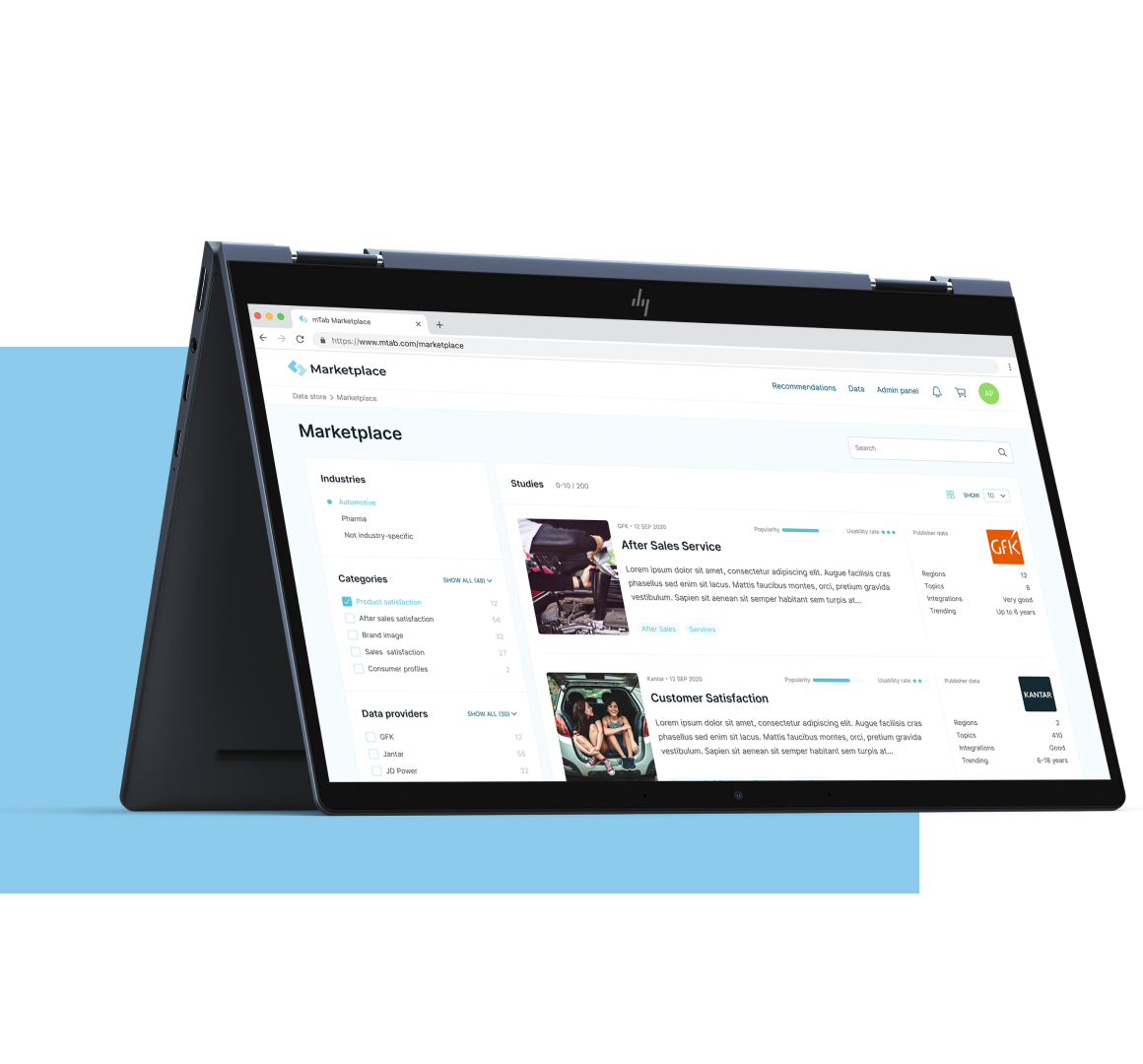
Since 2020 we've built mTab Marketplace on Django, React and AWS, so clients buy market research studies without mTab installing each one by hand.

View project
Adquesto: an ad-based paywall built over 34 sprints
Playing

Entertainment · Product Design · Product Discovery

Adquesto: an ad-based paywall built over 34 sprints

Readers open an article by answering one question about an ad. We built Adquesto's paywall, ad pricing and publisher tools over 34 two-week sprints.

View project
12Questions we get

What teams ask us about AWS

Straight answers from the engineers who build with it. Missing yours?

Ask an engineer

7 questions

Use ECS on Fargate for long-running APIs, WebSockets and steady background workers, where per-request Lambda pricing and cold starts add cost and complexity. Use Lambda for spiky, event-driven work such as webhooks, file processing and scheduled jobs. Most production SaaS products end up running both, defined in the same CDK or Terraform codebase.

AWS CDK suits AWS-only teams that already write TypeScript or Python and want high-level constructs such as a load-balanced Fargate service in a few lines. Terraform or OpenTofu suits teams that manage several providers or already have Terraform skills and modules. Both are fine for SOC 2 as long as every change goes through code review and CI.

No. AWS's own SOC 2 report covers the infrastructure AWS operates, and you can download it from AWS Artifact for your auditor. You remain responsible for your controls: IAM, logging, encryption, change management, vendor reviews and policies. Control Tower, Config, Security Hub and CloudTrail produce much of the technical evidence, and a compliance platform usually ties it to the full control set.

Only if your account already had it set up. AWS moved Audit Manager to maintenance mode and stopped new setups on April 30, 2026. AWS points new customers to Config conformance packs, Security Hub and Control Tower controls, and notes there is no SOC 2 conformance pack, so it recommends partners such as Vanta or Drata for full SOC 2 evidence.

As soon as you hold customer data in production or start preparing for SOC 2. Separate accounts for production, staging, security and logs limit blast radius and give auditors a clear boundary. Control Tower sets up that landing zone with guardrails and an account factory, and it is far easier to do before production data exists.

Tag every resource and review Cost Explorer by service and environment first. Then remove idle resources, add VPC endpoints to cut NAT data charges, move to Graviton, and run interruption-tolerant work on Fargate Spot, which AWS prices up to 70% below on-demand Fargate. Commit to Compute Savings Plans, up to 66% off, only for the baseline you have measured.

Bedrock makes sense when your product already runs on AWS and you want model calls governed by the same IAM, VPC, logging and billing as the rest of your stack. Calling a provider directly can give earlier access to new model features. Many teams use Bedrock for production traffic and keep provider SDKs behind an internal interface so they can switch.

13Sources

AWS glossary and sources

Reviewed by our engineers. Last updated 16 November 2026.

Fargate
Serverless compute for ECS and EKS containers, billed per vCPU and memory second with no EC2 hosts to manage.
Aurora
AWS's managed MySQL- and PostgreSQL-compatible database with storage replicated across Availability Zones.
RDS Proxy
A managed connection pooler that sits between applications and RDS or Aurora to absorb connection spikes.
AWS CDK
A framework for defining AWS infrastructure in general-purpose languages that synthesizes to CloudFormation.
Landing zone
A baseline multi-account AWS environment with shared logging, security and guardrails, usually built with Control Tower.
Service control policy (SCP)
An AWS Organizations policy that caps the maximum permissions available in member accounts.
Amazon Bedrock
A managed service that exposes foundation models from several providers through one API inside your AWS account boundary.
AWS Artifact
The self-service portal where customers download AWS compliance reports such as SOC 1 and SOC 2 under NDA.
Savings Plans
A one- or three-year spend commitment that lowers EC2, Fargate and Lambda rates in exchange for predictable usage.

Sources

  1. [1]Amazon.com Announces Third Quarter 2026 Resultsir.aboutamazon.com ↗
  2. [2]What Is AWS Control Tower?docs.aws.amazon.com ↗
  3. [3]AWS Audit Manager availability changedocs.aws.amazon.com ↗
  4. [4]AWS Audit Manager: SSAE-18 SOC 2 frameworkdocs.aws.amazon.com ↗
  5. [5]AWS SOC FAQsaws.amazon.com ↗
  6. [6]Compute Savings Plans pricingaws.amazon.com ↗
  7. [7]AWS Fargate pricingaws.amazon.com ↗
  8. [8]AWS Fargate customersaws.amazon.com ↗
→Keep exploring

Built alongside it

  • Related hubNode.js DevelopmentProduction Node.js APIs and real-time backends with senior ownership only.
  • Related hubPython & Django DevelopmentMulti-tenant SaaS on Python and Django. Same stack as our open-source boilerplate.
  • Related hubPostgreSQL DevelopmentPostgreSQL schemas, tenant isolation and scaling for SaaS with senior ownership only.
  • Related hubTemporal DevelopmentDurable workflows and AI agents on Temporal that survive crashes, retries and deploys.

Longer reads

  • Cost Optimization for Cloud at Scale: A Practical FinOps PlaybookA practical FinOps playbook to reduce AWS costs at scale with tagging discipline, rightsizing, autoscaling, caching, and governance plus templates and checklists.
  • Terraform Cloud vs Pulumi vs Spacelift: SaaS IaC tool comparisonA practical comparison of Terraform Cloud, Pulumi, and Spacelift for SaaS IaC and cloud automation, with tradeoffs, pitfalls, and rollout steps.
  • Platform Engineering Golden Paths for Faster, Safer DeliveryPlatform engineering golden paths, policy as code, paved road CI/CD and observability by default: how they cut lead time, MTTR and change failure rate.
  • SBOM by Design for SaaS: Supply Chain Compliance That ShipsA practical guide to SBOM pipelines, dependency governance, CI enforcement, and audit evidence. Build software supply chain compliance without slowing releases.

How we deliver it

  • SaaS Development
  • Hybrid Teams
  • End-to-end Software Development
  • Agentic SDLC

Cloud infrastructure

Own your AWS foundation

Infrastructure as code, cost control and audit-ready accounts with senior ownership only.

Apptension site footer

Taking new projects

Have a product to build, fix or scale?

Apptension is a senior-only software development company headquartered in Poznań, Poland. Since 2012 our engineers have shipped 360+ AI and SaaS products for startups, scale-ups and enterprises across the US, UK and EU: agentic MVPs, RAG and voice AI systems, multi-tenant SaaS and legacy modernization.

Projects shipped
360+
Founded
2012
Senior engineers
30+
Client CSAT
100%

Send a few lines about your product. A person from our team replies within one business day.

Start a projectScope it in Scope Studio
  • Emailcontact@apptension.com
  • Phone+48 533 352 052Poznań, Poland

  • Agentic MVP developmentNew
  • Agentic SDLC implementation
  • Product & SaaS development
  • Legacy modernization
  • Generative AI development
  • SaaS development company
  • Vibe-coded prototype to production
  • End-to-end software development
  • Senior engineering team extension
  • Product consulting & discovery
  • Tech due diligence for investors
  • All services

  • LLM application engineering
  • RAG & retrieval engineering
  • Voice AI agent development
  • MCP server development
  • LangGraph & LangChain agents
  • AI agent evaluation & observability
  • Node.js development company
  • Python & Django development
  • React & Next.js development
  • React Native app development
  • All expertise

  • Open-source SaaS Boilerplate
  • SaaS P&L model template
  • Walkthrough Studio
  • Agentic SDLC playbook
  • AI SDLC maturity assessment
  • Agentic SDLC ROI calculator
  • Founder resources
  • Events & exec dinners
  • Open source
  • Builder's Toolkit

  • Boutique vs large software house
  • Build vs buy vs partner
  • How to choose an AI & RAG partner
  • Team augmentation without chaos
  • Django vs Node.js for SaaS
  • React Native vs Flutter
  • AI in regulated industries
  • All guides

  • About Apptension
  • Case studies
  • Careers
  • Blog
  • Tech Radar
  • Agentic SDLC hub
  • Contact

Senior AI engineers shipping enterprise-grade AI and SaaS with startup speed.

Headquarters

Apptension sp. z o.o.23 Lutego 26
61-743 Poznań, Poland (opens Google Maps)

VAT-ID PL7831720203 · REGON 360404804
KRS 0000534235

Follow Apptension

Client reviews on Clutch

© 2012–2026 Apptension sp. z o.o. All rights reserved.

Privacy policySitemapllms.txt