Services
About
Portfolio
Careers
Blog
Get in touch
>Services
>About
>Portfolio
>Careers
>Blog

>> Browse services

>_ProductScope StudioFrom an idea to a shareable PRD_> Open_> Open
>>>Build new0 to 1: MVPs, SaaS, AI features
>>View Build path>Generative AI Solutions>PoC/MVP Development>SaaS Development
>>>Modernize and scale1 to 100: prototype-to-prod, backlog, hybrid
>>View Modernize path>End-to-end Software Development>Prototype to Production>Hybrid Teams
>>>Cross-cuttingStrategy and investor support
>For Investors>Product Consulting
All services hub
Get in touch

Contact

contact@apptension.com+48 793 925 552sales@apptension.com

Company Information

Apptension sp. z o.o.
Górecka 1
60-201 Poznań, Poland
VAT-ID: PL7831720203
REGON: 360404804
KRS: 0000534235

Follow Us

SaaSAI DevelopmentBackend Development

Governed agent delivery against an un-upgradeable estate

Teamdeck stage now runs on Temporal, Pulumi, and ECS. In about nine weeks, 60 pull requests landed through written plans, go/no-go gates, and CI that enforces the process. Product work never froze. Production cutover is still ahead. This is the process proof for Agentic SDLC on a real legacy estate.

Teamdeck: AI SDLC for eight years of infrastructure debt

_>About

Teamdeck is Apptension’s own resource-management SaaS. By mid-2026 the product still ran on a 2017-shaped estate: four repositories, three generations of infrastructure-as-code, a RabbitMQ cluster that could not be upgraded in place, and a deploy path that hopped across two version-control systems into Elastic Beanstalk.

This case study is not “AI wrote the infrastructure.” It is what happens when a governed AI SDLC makes the expensive parts of legacy work (reading four repos end to end, writing the map down, sequencing cutovers) cheap enough to run in the margins of a working week, while two AI engineers keep shipping product features with no freeze.

It is the second live proof for Apptension SDLC, next to nini.bot. Nini shows greenfield product velocity on the harness. Teamdeck shows the same class of gates on an estate that had been deferred for eight years because it never justified a staffed program on its own.

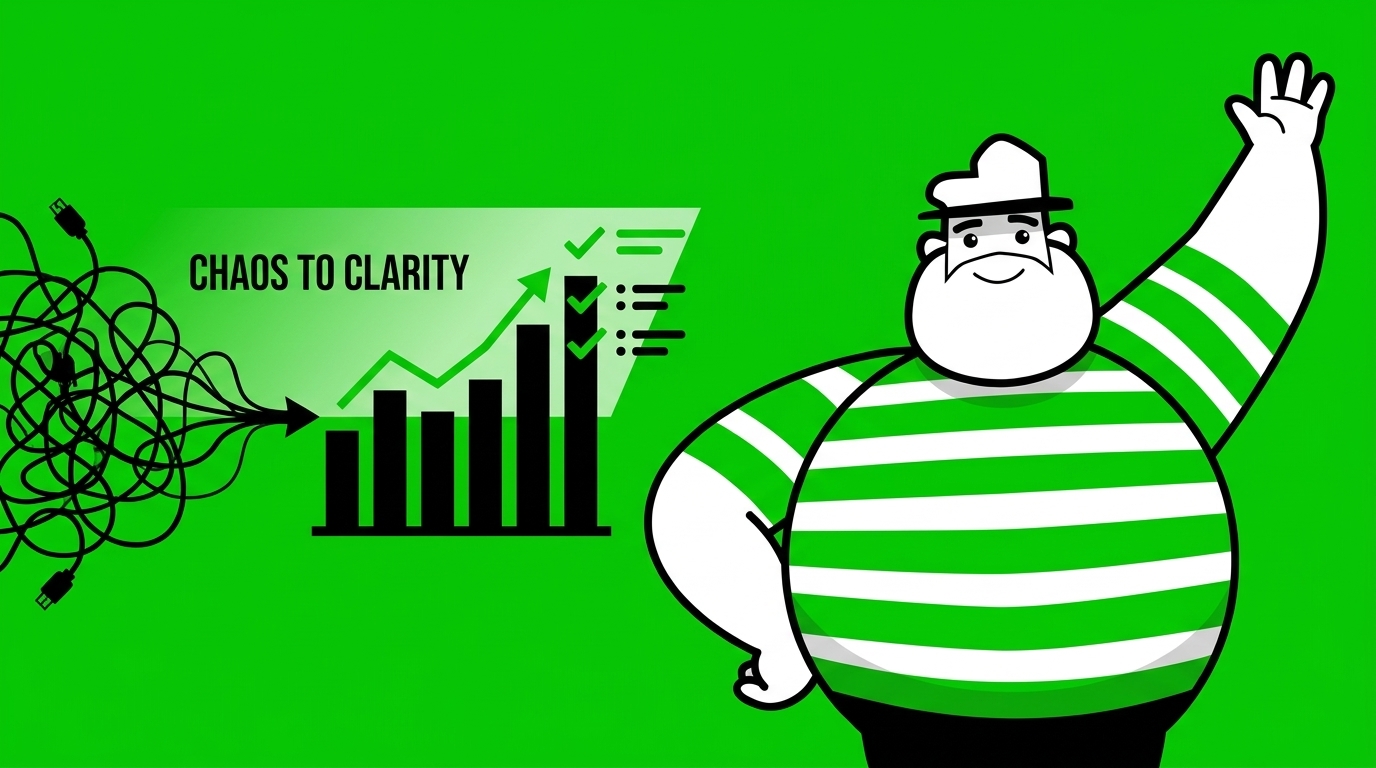
ESTATE COLLAPSE
Editorial illustration of Teamdeck platform before and after modernization

Four repos and three IaC generations into one Pulumi program.

DELETION FIRST

Editorial illustration of message broker decommission as net deletion

RabbitMQ decommission removed more lines than it added.

>_Challenge

The RabbitMQ cluster was the clearest trap. Five independent locks held the door: Terraform that no modern binary can parse, an AMI filter pinned to 2017 Amazon Linux, launch configurations AWS no longer creates, classic mirrored queues removed in RabbitMQ 4.x, and a floating broker image tag. Fixing any one lock was not enough.

Around it: one shared AWS account for prod and stage, unreproducible Terraform variables that lived only on former operators’ laptops, and a four-hop deploy ending in a hand-forked Beanstalk tool. The binding product constraint made it worse: ordinary feature work had to continue. Modernization could not buy a feature freeze.

The first unlock was not a rewrite. It was an audit with severity-ranked findings and citations, produced in a day from reading four repositories end to end. Critical hygiene issues were found by reading, not by an incident. A human then re-sequenced the roadmap: migrate workers to Temporal on the current infrastructure first, so the later account cutover could be data and DNS only.

>>>Process

The unlock was process with enforcement, not a better prompt. That is the transferable lesson for any engineering org evaluating Agentic SDLC.

The repository became machine-readable: a hard-capped entry-point map, path-scoped conventions, and bindings for branch strategy, CI, and verification commands. Non-trivial work got a written spec first. Multi-week programs got phase plans. Choices that constrained the future became ADRs with rejected alternatives recorded. Across this program: 30 phase plans, 20 design specs, 7 ADRs, and 6 runbooks, roughly 37,000 lines of written thinking beside ~96,000 lines of shipped code.

Three explicit gates (worker platform, foundations live, cutover readiness) blocked phases whose entry criteria were unmet. Twelve GitHub Actions workflows and thirteen scripts enforce titles, release-line merges, promotion ancestry, drift detection, and first-pass review. Every gate script has its own test file. AI review jobs hold no write token; validators check out from the base SHA, never the PR head.

When the model was wrong, the fix was procedural. A Pulumi provider major that previewed clean and failed on apply produced a runbook rule and a drift workflow. A silent “merge to master without an image” failure mode produced a required check. Those traps are why gates exist, and why we install the same class of harness for client teams on /agentic-sdlc.

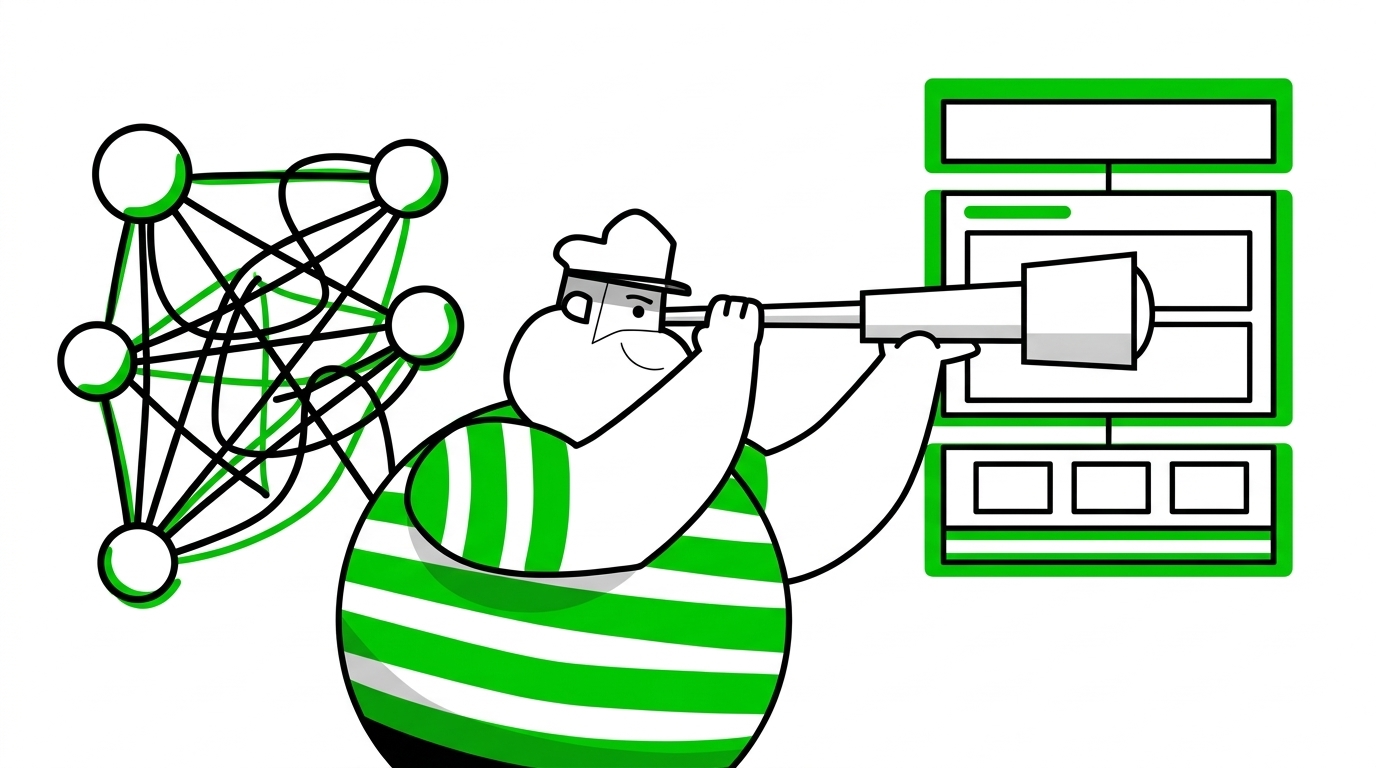
ENFORCED SDLC

Editorial illustration of AI SDLC gates and CI enforcement

Bindings, written plans, gates, and tested CI with an AI trust model.

MARGINS OF THE WEEK

Editorial illustration of evening-heavy commit cadence during modernization

Over half of commits after 18:00. Ordinary product work continued in parallel.

__>Solution

On stage, the new platform is live end to end: Temporal Cloud with nine task queues replacing RabbitMQ and the cron container, Pulumi/TypeScript across environment stacks in one repo, ECS/Fargate, GitHub Actions with build-once and promote-by-retag, and a rebuilt Vite console with Google sign-in and a generated OpenAPI client.

Measured in the same window: about nine weeks from audit to mid-September, 60 pull requests (56 merged), median open-to-merge 1.2 hours, and 57 ordinary product commits from other authors with no feature freeze. Over half of modernization commits landed at or after 18:00. The RabbitMQ decommission alone was a net deletion of roughly 2,300 lines.

What is still ahead, stated plainly: production still runs on the legacy Elastic Beanstalk path. Cutover is planned and rehearsed on paper, not executed. Cost parity against the prior monthly baseline is a target until post-cutover numbers exist. Publish the process. Hold the victory lap.

For engineering leaders: start with the harness (context, gates, verification), then read the companion deep dive on what an AI SDLC actually enforces. When you want the same operating system installed in your org, that is Agentic SDLC.

_> Built with Apptension SDLC

Same harness class as client enablement

See how written plans, CI-enforced gates, and an AI trust model turn agent speed into reviewable delivery on legacy estates. Pair this with the nini.bot greenfield proof.

Explore Agentic SDLCRead the process article

60

PRS IN ~5.5 WEEKS OF GITHUB HISTORY

1.2h

MEDIAN PR OPEN → MERGE

~37k

LINES OF PLANS, SPECS, ADRS, RUNBOOKS

__> Technologies & Expertise

TemporalPulumiTypeScriptAWS ECSGitHub ActionsPHPReactVite
AI DevelopmentBackend DevelopmentCloud InfrastructureDevOps

Related projects

_> See how we've applied our expertise

See all projects
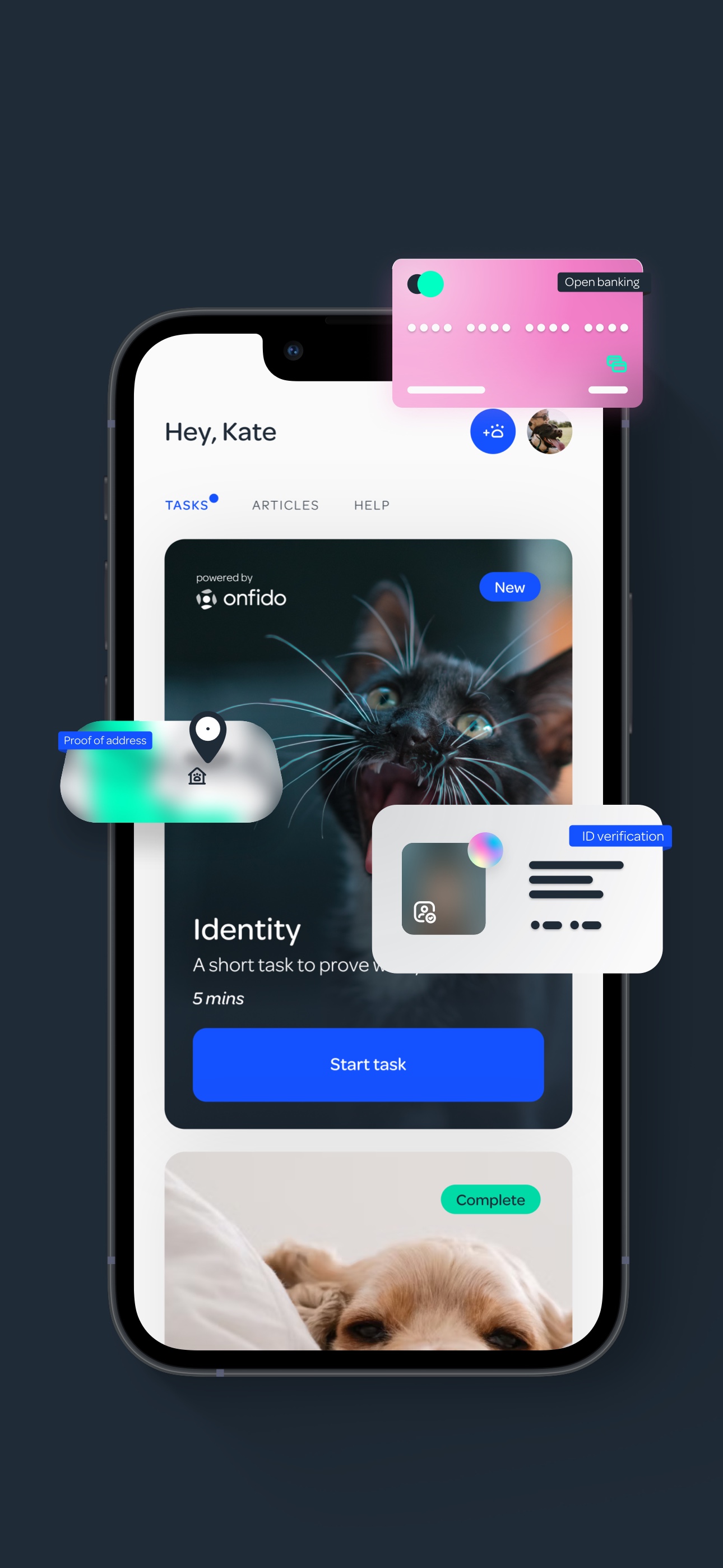
Building trust in pet transactions with secure identity verification
Playing
View project
Pet CareBackend DevelopmentMobile Development

Building trust in pet transactions with secure identity verification

Partnering with PetProov to develop a secure, scalable mobile pet transaction platform in 6 months.

Case Study
•Read More
Real-time AI Avatar: Cutting-edge tech for instant user engagement
Playing
View project
Data ManagementAI DevelopmentProduct Discovery

Real-time AI Avatar: Cutting-edge tech for instant user engagement

Partnering with a leading brand experience agency to develop a high-speed AI avatar in just 4 weeks.

Case Study
•Read More
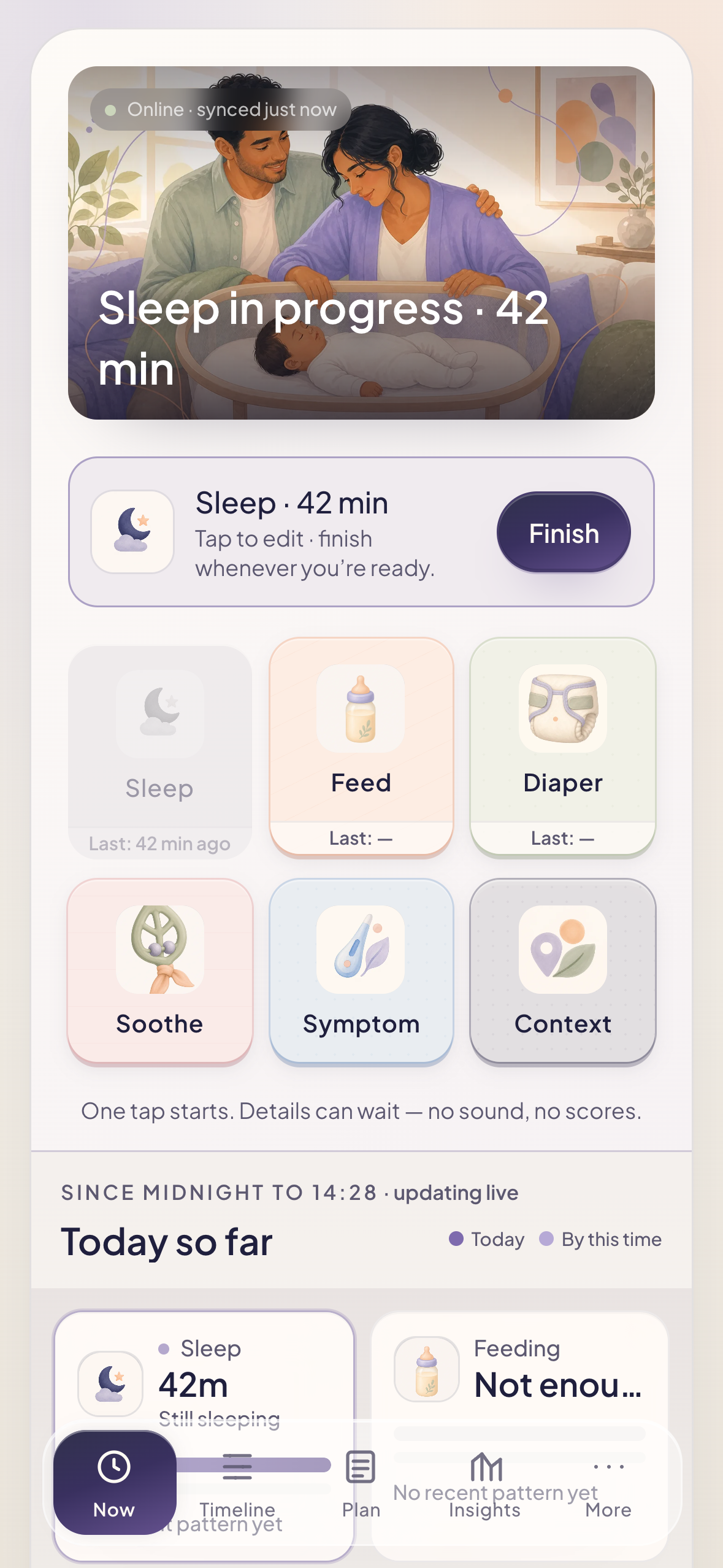
Shared infant care rhythm in a few taps for every caregiver
View project
HealthAI DevelopmentMobile Development

Shared infant care rhythm in a few taps for every caregiver

Two exhausted parents needed a calm shared rhythm app, not another tracker. In 11 active days we shipped a production PWA with orbit predictions, offline sync, and 29 cited articles on the same governed Apptension SDLC harness we install for client teams. 159 merged PRs. Zero improvisation.

Case Study
•Read More

>>>Let's build something great_

Interested in a similar solution? Let's discuss how we can help.

contact@apptension.com+48 533 352 052

Services

  • Generative AI Solutions
  • PoC/MVP Development
  • End-to-end Software Development
  • Prototype to Production
  • SaaS Development
  • Hybrid Teams
  • For Investors
  • Product Consulting

Builder's Toolkit

  • Builder's Toolkit
  • SaaS Boilerplate
  • SaaS P&L Model
  • Agentic SDLC
  • Resources
  • Guides
  • Events
  • Open Source
  • Discord Community

Company

  • About Us
  • Portfolio
  • Expertise
  • Careers
  • Blog
  • Get in touch

Company Information

Apptension sp. z o.o.
Górecka 1
60-201 Poznań, Poland
VAT-ID: PL7831720203
REGON: 360404804
KRS: 0000534235

Follow Us

© 2026 Apptension. All rights reserved.

Privacy PolicyTech Radar