• 01Services
  • 02Portfolio
  • 03About
  • 04Careers
  • 05Blog

Services

All services

New · AI-native delivery

Senior engineers with AI coding agents

Ship a production MVP in weeks, or install agents into the team you already have.

Agentic MVPNewA production MVP your customers can rely on. Validate in 1–2 weeks, launch in 4–8, own all of it.Explore
  • Agentic SDLCAI coding agents installed into your delivery process in two weeks, with guardrails and metrics.
Agentic SDLC hub
>_ProductScope StudioFrom an idea to a shareable PRD_> Open_> Open
Emailcontact@apptension.comCall+48 533 352 052

HQ in Poznań, Poland

Start a project
Services
About
Portfolio
Careers
Blog
Get in touch
All technology hubs

Stack hub/Reviewed 16 November 2026/15 min read

PostgreSQL Development

PostgreSQL schemas, tenancy and query paths designed for the product you will have in two years, not just the MVP. We run on RDS, Aurora, Neon or Supabase and plan pooling, indexing and upgrades before traffic forces the issue.

Short answer

Choose PostgreSQL as the default database for SaaS: one engine covers relational data, JSON, vectors, search and job queues until you have measured a reason to split. We design and scale Postgres data layers with senior engineers only, tenant isolation and migration safety built in. 360+ projects since 2012.

Clue 0158.2%of professional developers use PostgreSQL

Shake for the next clue

Source: survey.stackoverflow.co ↗
1 / 4
PostgreSQL in numbers
58.2% of professional developers use PostgreSQL (source: survey.stackoverflow.co)
~50 read replicas behind a single primary for ChatGPT (source: infoq.com)
80%+ of Neon databases created by AI agents, not humans (source: databricks.com)
~100x growth of Figma's Postgres stack from 2020 to 2024 (source: figma.com)

Your route through this hub

CoversPostgreSQLpgvectorPgBouncerAWS RDSAuroraSupabaseNeonDrizzle

  1. Stage 1 · Understand

    Is it right for our product?

    • 01What it isThe plain-words version
    • 02Where it pays off6 proven patterns
    • 03How it fits7 steps, one request
    • 04How it got here9 milestones
  2. Stage 2 · Choose

    What would we build it with?

    • 05Toolkit17 tools mapped
    • 06Who runs it11 teams in production
    • 07Alternativesvs 3 options
  3. Stage 3 · Ship

    How do we go live without surprises?

    • 08Readiness check20 checks, scored
    • 09What breaks6 mistakes and fixes
  4. Stage 4 · Decide

    What would you do in our place?

    • 10Should you use it?Our verdict, scope and rollout
    • 11What we shipped3 case studies
    • 12Questions we get8 straight answers
    • 13Sources15 cited, 9 terms

__> Teams we have built for

PostgreSQL
01What it is02Where it pays off03How it fits04How it got here05Toolkit06Who runs it07Alternatives08Readiness check09What breaks10Should you use it?11What we shipped12Questions we get13Sources
01What it is

What is PostgreSQL?

PostgreSQL is an open-source relational database known for strict SQL compliance, transactional integrity and an extension system that adds vectors, time series, queues and search. As of November 2026 the current major version is PostgreSQL 18 (18.7), with PostgreSQL 19 scheduled for general availability on November 19, 2026.

Why teams adopt it

Most SaaS teams can run relational data, JSON documents, embeddings, full-text search and background jobs in one Postgres database, which means one backup, one security model and one set of transactions. It is the most used database among professional developers in the 2025 Stack Overflow survey, every major cloud offers it managed, and 2025 acquisitions by Databricks (Neon) and Snowflake (Crunchy Data) show where the data platforms are betting. OpenAI, Notion and Figma have published how far a well-run Postgres fleet scales before anything exotic is needed.

How it works

  1. 1

    Clients connect

    Each client connection is served by its own backend process, so production setups put a pooler like PgBouncer in front to cap connection counts.

  2. 2

    Queries are planned

    The planner uses table statistics to choose indexes, join orders and parallel workers, which you inspect with EXPLAIN ANALYZE.

  3. 3

    MVCC handles concurrency

    Updates write new row versions so readers never block writers; autovacuum later reclaims dead rows and prevents transaction ID wraparound.

  4. 4

    WAL makes it durable

    Every change is written to the write-ahead log first, which also feeds streaming replicas, logical replication and point-in-time recovery.

  5. 5

    Extensions add capabilities

    Extensions such as pgvector, pg_partman or pg_cron add data types, indexes and jobs inside the same transactional engine.

02Where it pays off

Where PostgreSQL pays off

The jobs it does best in real products: the problem you would have, how we would build it, and who already runs it that way.

Multi-tenant isolation with row-level security

Problemstep 1
One missing WHERE tenant_id clause leaks another customer's data.
Patternstep 2
Add tenant_id to every tenant table, enable and force RLS, and set the tenant per transaction with set_config so policies filter every query.
In the wildstep 3
Supabase's data API, which relies on RLS for authorization

Vector search next to product data

Problemstep 1
A separate vector database duplicates data, adds a network hop and complicates deletes and permissions.
Patternstep 2
Store embeddings in a pgvector column with an HNSW index and filter by tenant and metadata in the same SQL query.
In the wildstep 3
Chatbase, Vecstore and Firecrawl

Postgres as a job queue

Problemstep 1
Adding Redis, SQS or Temporal for background jobs adds another system to operate and loses transactional enqueueing.
Patternstep 2
Store jobs in a table and claim them with SELECT ... FOR UPDATE SKIP LOCKED, or use pg-boss, River or pgmq on top.
In the wildstep 3
Nango, Ente and Hatchet

Scaling reads before sharding

Problemstep 1
Read traffic outgrows the primary long before write volume does.
Patternstep 2
Pool connections with PgBouncer, route reads to replicas, cache hot paths, and move only shardable write-heavy workloads elsewhere.
In the wildstep 3
OpenAI (one primary, about 50 replicas)

Partitioning large, time-ordered tables

Problemstep 1
Event and audit tables reach billions of rows and vacuum and index maintenance fall behind.
Patternstep 2
Use native range partitioning by time with pg_partman, so old partitions are detached or dropped instead of deleted row by row.

Application-level sharding by tenant

Problemstep 1
A single primary cannot absorb write volume or table size even after vertical partitioning.
Patternstep 2
Choose a shard key such as workspace ID, map many logical shards onto fewer physical hosts, and route queries in the app or a proxy.
In the wildstep 3
Notion and Figma
03How it fits

How a request reaches Postgres in a SaaS stack

One real request, step by step: which part of the system handles it, and why that part is there.

01 App02 Pooler03 Primary04 Replicas05 Platform
Step 1/7·Request
Hover a part for detail
04How it got here

Is PostgreSQL a safe bet?

The releases and decisions that matter when you are betting a product on it, in order.

  1. 2021Oct

    Notion shards Postgres

    Notion split its monolith into 480 logical shards on 32 physical Postgres databases, keyed by workspace ID.

    notion.com
  2. 2023Jul

    Notion triples its shard fleet

    Notion moved from 32 to 96 database machines using logical replication and split PgBouncer into per-group clusters.

    notion.com
  3. 2023Aug

    pgvector adds HNSW indexes

    pgvector 0.5.0 added HNSW indexing, making approximate nearest neighbor search in Postgres practical for production RAG.

    github.com
  4. 2024Mar

    Figma details horizontal sharding on RDS

    Figma described its in-house sharding on RDS Postgres with a Go query proxy, after its stack grew almost 100x since 2020.

    figma.com
  5. 2025May

    Databricks agrees to acquire Neon

    Databricks announced it would acquire serverless Postgres provider Neon, citing AI agents creating most new databases.

    databricks.com
  6. 2025Jun

    Snowflake acquires Crunchy Data

    Snowflake announced the acquisition of Crunchy Data to launch Snowflake Postgres for transactional workloads.

    techtarget.com
  7. 2025Sep

    PostgreSQL 18 released

    PostgreSQL 18 added asynchronous I/O, uuidv7(), virtual generated columns, OAuth authentication and skip scan.

    postgresql.org
  8. 2026Jan

    OpenAI publishes its Postgres playbook

    OpenAI described running ChatGPT on one Postgres primary with about 50 replicas, PgBouncer and strict workload isolation.

    infoq.com
  9. 2026Nov

    PostgreSQL 14 end of life, 19 RC 2

    PostgreSQL 14 stopped receiving fixes on November 12, 2026, alongside 19 RC 2 with GA planned for November 19.

    postgresql.org
05Toolkit

What you would build PostgreSQL with

The libraries and services we would actually put in your stack, and when each one earns its place. Filter by layer or language.

Language
  • Server · C

    pgvector

    Vector type plus HNSW and IVFFlat indexes for embedding search inside Postgres; the default for RAG on existing Postgres data.

    community (Andrew Kane)24k
  • Tooling · C

    PgBouncer

    Lightweight connection pooler; run it in transaction mode in front of any Postgres that serves many app instances or serverless functions.

    community4.5k
  • Tooling · Rust

    PgDog

    Pooler, load balancer and sharding proxy; consider it when you need query routing across replicas or shards.

    PgDog5.6k
  • Hosting · Any

    Supabase

    Managed Postgres with auth, storage, realtime and an auto-generated API built on row-level security; fast path for startups.

    Supabase115k
  • Hosting · Rust

    Neon

    Serverless Postgres with separated storage and compute, scale to zero and instant branches for previews and tests.

    Neon (Databricks)23k
  • Hosting · Go

    CloudNativePG

    Kubernetes operator for running highly available Postgres clusters yourself, with failover and backups built in.

    CloudNativePG community9.6k
  • Server · C

    Citus

    Extension that distributes tables across nodes by a shard key; fits multi-tenant SaaS that has outgrown one primary.

    Microsoft13k
  • Server · C

    TimescaleDB

    Time-series extension with automatic time partitioning, compression and continuous aggregates for metrics and event data.

    Tiger Data24k
  • Server · C

    pg_partman

    Automates creation and retention of native time or ID range partitions so large tables stay manageable.

    community2.9k
06Who runs it

Who already bets on PostgreSQL

Companies running it in production, and what for. Every entry links to their own write-up, so you can check our homework.

  • Runs database, auth, storage and vector search on one Supabase Postgres primary, having moved embeddings from Pinecone to pgvector so deletes cascade in one database.

    supabase.com
  • Replaced Temporal with a Postgres task queue of about 300 lines of TypeScript using SELECT ... FOR UPDATE SKIP LOCKED, handling many millions of tasks per month.

    nango.dev
  • Builds its open-source task orchestration platform on Postgres, with fair multi-tenant queues implemented by assigning per-tenant ID blocks at write time.

    hatchet.run
  • Consolidated AWS RDS and Pinecone into Neon Postgres with pgvector, cutting search latency from about 200ms to 80ms across four regions.

    neon.com
  • Uses a Postgres table with FOR UPDATE SKIP LOCKED and partial indexes as a persistent queue for replicating encrypted files across three storage providers.

    ente.com
  • Moved vector search from Pinecone to Supabase pgvector to keep metadata next to embeddings in one Postgres database.

    supabase.com
  • Replit Agent provisioned a serverless Neon Postgres database per app and generated Alembic migrations for each schema change.

    neon.com
  • Upgraded its 4 TB main application database from Postgres 9.6 to 13 using logical replication and parallel copying to keep the cutover short.

    retool.com
  • Shards its block data by workspace ID across 480 logical shards, re-sharded from 32 to 96 machines in 2023 with PgBouncer clusters per shard group.

    notion.com
  • Runs RDS Postgres with vertical partitioning and in-house horizontal sharding, routed by DBProxy, a Go service in front of PgBouncer.

    figma.com
  • Serves ChatGPT from one Azure Postgres primary with nearly 50 read replicas, PgBouncer in transaction mode, and shardable write-heavy workloads moved to other systems.

    infoq.com
Startup · AI customer support01 / 11

Chatbase

Runs database, auth, storage and vector search on one Supabase Postgres primary, having moved embeddings from Pinecone to pgvector so deletes cascade in one database.

Source: supabase.com
07Alternatives

PostgreSQL vs MySQL vs MongoDB vs distributed SQL for SaaS

No option wins every row. Find the row that matters most for your product and the choice usually makes itself.

PostgreSQL vs MySQL vs MongoDB vs distributed SQL for SaaS
CriterionPostgreSQLMySQLMongoDBDistributed SQL (CockroachDB, Spanner)
Data modelRelational plus JSONB, arrays, vectorsRelational, JSON supportDocument-firstRelational, Postgres-like SQL
Tenant isolationNative row-level securityNo native RLS, app-enforcedApp-enforced or per-tenant DBsApp-enforced, varies by product
Vector searchpgvector, HNSW and IVFFlatNewer, less mature ecosystemAtlas Vector SearchVaries by product
Write scalingSingle primary; shard via Citus or appSingle primary; Vitess for shardingBuilt-in shardingBuilt-in horizontal scaling
Managed optionsRDS, Aurora, Neon, Supabase, Azure, GCPRDS, Aurora, PlanetScale, GCPAtlasVendor cloud services
Best forDefault choice for most SaaSTeams with deep MySQL operations experienceHighly variable document shapesGlobal multi-region writes from day one
PostgreSQL vs
  • Data model

    PostgreSQL

    Relational plus JSONB, arrays, vectors

    MySQL

    Relational, JSON support

  • Tenant isolation

    PostgreSQL

    Native row-level security

    MySQL

    No native RLS, app-enforced

  • Vector search

    PostgreSQL

    pgvector, HNSW and IVFFlat

    MySQL

    Newer, less mature ecosystem

  • Write scaling

    PostgreSQL

    Single primary; shard via Citus or app

    MySQL

    Single primary; Vitess for sharding

  • Managed options

    PostgreSQL

    RDS, Aurora, Neon, Supabase, Azure, GCP

    MySQL

    RDS, Aurora, PlanetScale, GCP

  • Best for

    PostgreSQL

    Default choice for most SaaS

    MySQL

    Teams with deep MySQL operations experience

08Readiness check

Is your PostgreSQL setup ready for real traffic?

The checks teams that run it well have in place before launch. Tick what you already have and see where you stand. Your answers stay on this device.

0%

0 / 20

Tick what you already have

  • Tenant isolation0/4
  • Connections0/4
  • Migrations0/4
  • Performance0/4
  • Operations0/4
Tenant isolation

01 · Tenant isolation

Connections

02 · Connections

Migrations

03 · Migrations

Performance

04 · Performance

Operations

05 · Operations

09What breaks

Where PostgreSQL projects go wrong

What we find most often when we audit or inherit a codebase, and how we fix it.

  • !

    RLS that the app silently bypasses

    Fix · Table owners, superusers and BYPASSRLS roles skip policies. Connect as a dedicated non-owner role and use FORCE ROW LEVEL SECURITY.

  • !

    Connection exhaustion under load

    Fix · Every Postgres connection is a process. Put a transaction-mode pooler in front of the database before scaling app instances or serverless functions.

  • !

    Migrations that lock hot tables

    Fix · An ALTER TABLE waiting for a lock blocks every query behind it. Set lock_timeout, build indexes concurrently, and split risky changes into expand and contract steps.

  • !

    Sharding too early, or too late

    Fix · Exhaust indexing, pooling, replicas and vertical partitioning first, but plan a shard key early. Notion said sharding earlier would have made its migration easier.

  • !

    Filtered vector queries returning too few rows

    Fix · With approximate indexes, filters apply after the index scan. Use pgvector 0.8+ iterative index scans or partial indexes per filter value.

  • !

    Ignoring vacuum and transaction ID age

    Fix · Stalled vacuum on big tables risks wraparound, which is what pushed Notion to shard. Monitor dead tuples and XID age and tune autovacuum per table.

Minimal multi-tenant table with row-level security (PostgreSQL 18)

>_ $
1
2
3
4
5
6
7
8
9
10
11
12
13
14
15
16
17
18
19
20
21
22
23
24
CREATE TABLE invoices (
  id           uuid PRIMARY KEY DEFAULT uuidv7(),
  tenant_id    uuid NOT NULL,
  amount_cents bigint NOT NULL CHECK (amount_cents > 0),
  created_at   timestamptz NOT NULL DEFAULT now()
);
CREATE INDEX invoices_tenant_created ON invoices (tenant_id, created_at);

ALTER TABLE invoices ENABLE ROW LEVEL SECURITY;
ALTER TABLE invoices FORCE ROW LEVEL SECURITY;

-- Missing tenant setting returns NULL, so no rows match (fail closed).
CREATE POLICY tenant_isolation ON invoices
  USING (tenant_id = current_setting('app.tenant_id', true)::uuid)
  WITH CHECK (tenant_id = current_setting('app.tenant_id', true)::uuid);

CREATE ROLE app_user LOGIN;  -- not the table owner, no BYPASSRLS
GRANT SELECT, INSERT, UPDATE, DELETE ON invoices TO app_user;

-- Per request, transaction-scoped (safe behind PgBouncer transaction mode):
BEGIN;
SELECT set_config('app.tenant_id', '0192f0c1-7a4e-7cc0-9d1a-2b3c4d5e6f70', true);
SELECT id, amount_cents FROM invoices ORDER BY created_at DESC LIMIT 20;
COMMIT;
10Should you use it?

When PostgreSQL is the right call, and how we ship it

Our engineers' view after building on it: where it earns its place, where something simpler wins, and the rollout we run.

Strong fit

  • Multi-tenant B2B SaaS that needs enforceable tenant isolation
  • AI features that need embeddings next to relational data with pgvector
  • Postgres databases hitting connection, vacuum or query latency limits
  • Major version upgrades and schema migrations that cannot take the product down

Weak fit

  • Analytics over billions of events where a columnar warehouse is the right tool
  • Staffing requests that expect juniors billed as seniors
  • Teams that want a database chosen before the access patterns are known

What we deliver

  • 01

    Multi-tenant data design

    Tenant keys, row-level security policies and indexes designed together so isolation holds and queries stay fast.

  • 02

    Performance and scaling

    Query plans, indexing, PgBouncer pooling, read replicas and partitioning, applied in the order your metrics justify.

  • 03

    Postgres for AI and search

    pgvector embeddings, full-text and hybrid search in the same database as your product data, with filters that respect tenancy.

  • 04

    Safe migrations and upgrades

    Expand and contract schema changes, lock timeouts, and major version upgrades with logical replication or pg_upgrade.

How we deliver PostgreSQL work

How we would roll it out

Every phase ends at a gate. Nothing moves on until it passes, so you always know what you have and what is next.

    010203Live
  1. 01

    Phase 1

    Model and measure

    Map entities, tenancy and access patterns, or for an existing database, profile the slowest queries and biggest tables.

    You walk away with

    An entity and tenancy model, or a profile of your slowest queries and largest tables.

    Gate Access patterns and tenancy model agreed

  2. 02

    Phase 2

    Prove the critical path

    Ship schema, policies, indexes and migrations for one real workflow with load tests and monitoring in place.

    You walk away with

    Schema, RLS policies, indexes and migrations for one real workflow, load tested and monitored.

    Gate Load test meets latency targets

  3. 03

    Phase 3

    Scale and hand over

    Add pooling, replicas or partitioning where data shows the need, and document runbooks your team can operate.

    You walk away with

    Pooling, replicas or partitioning where data shows the need, plus runbooks your team operates.

    Live when Failover and restore drills passed

Related projects

Projects where we did this work

Explore our portfolio
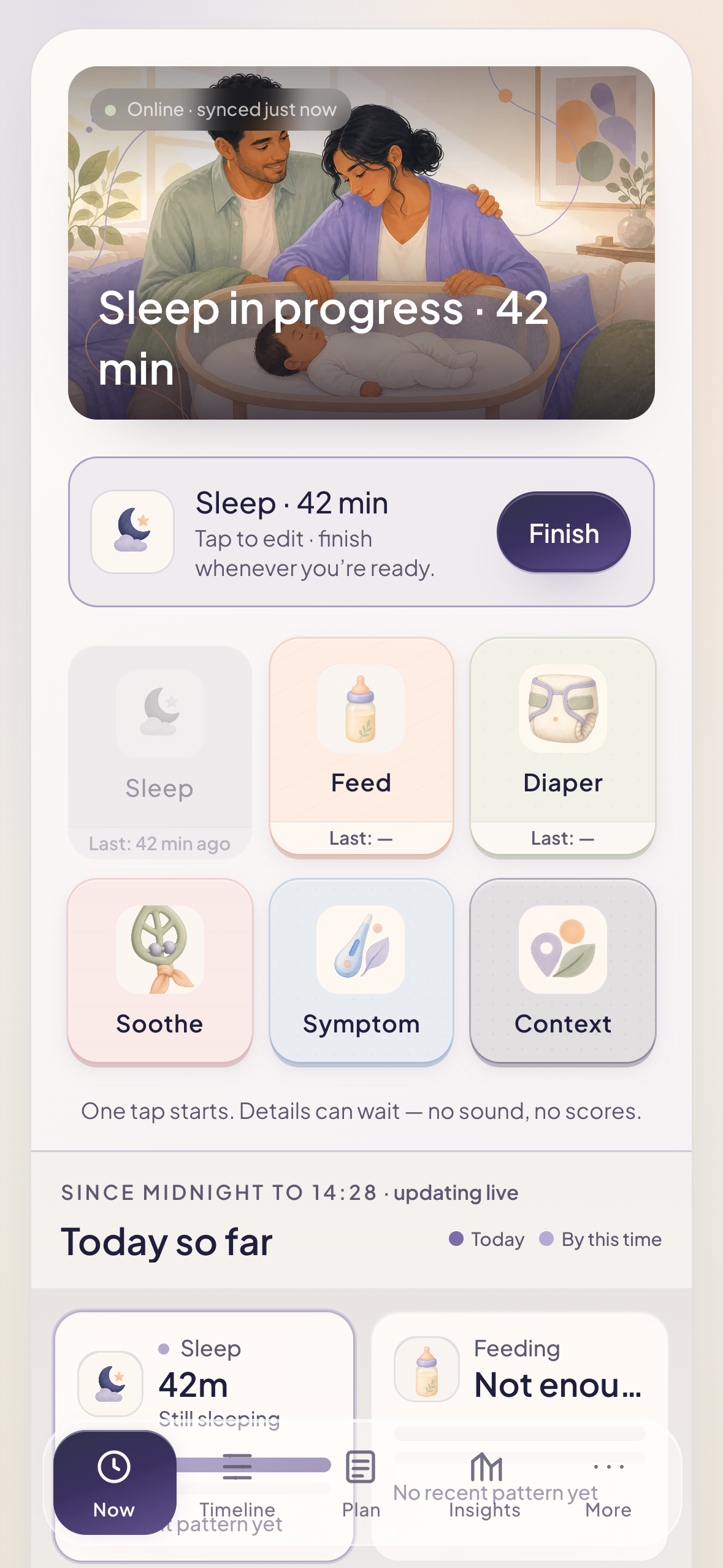
nini.bot: shared baby-care PWA shipped in 11 days

Health · AI Development · Mobile Development

nini.bot: shared baby-care PWA shipped in 11 days

A shared baby-care app for two caregivers, live as an installable PWA after 11 active days and 159 merged PRs through the harness we install for clients.

View project
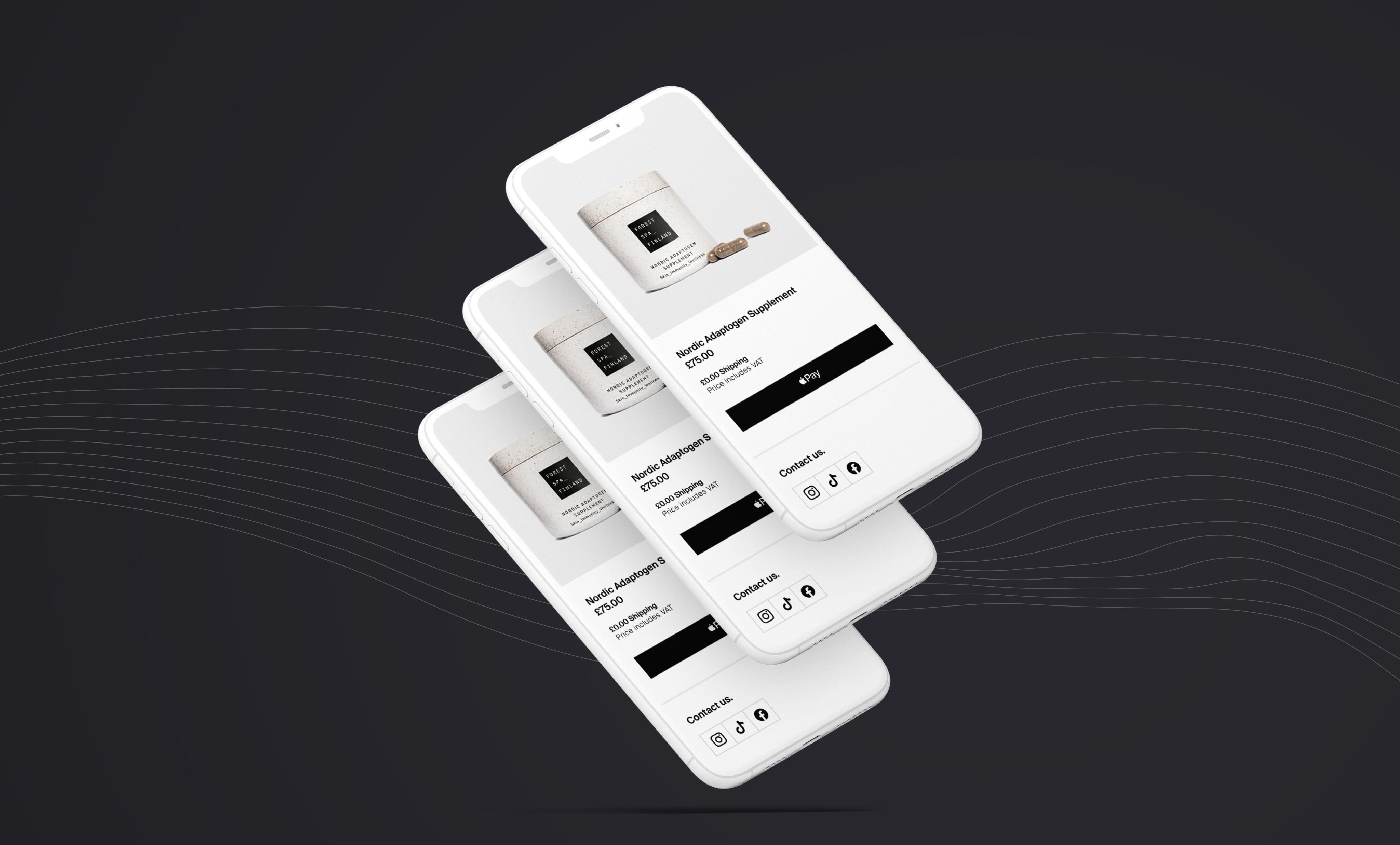
blkbx: one-click checkout app built on SaaS Boilerplate
Playing

Finance · Mobile Development · Product Design

blkbx: one-click checkout app built on SaaS Boilerplate

blkbx lets sellers take payment from a link or QR code in one click with Apple Pay, Google Pay or card. We built it on our SaaS Boilerplate and Stripe.

View project
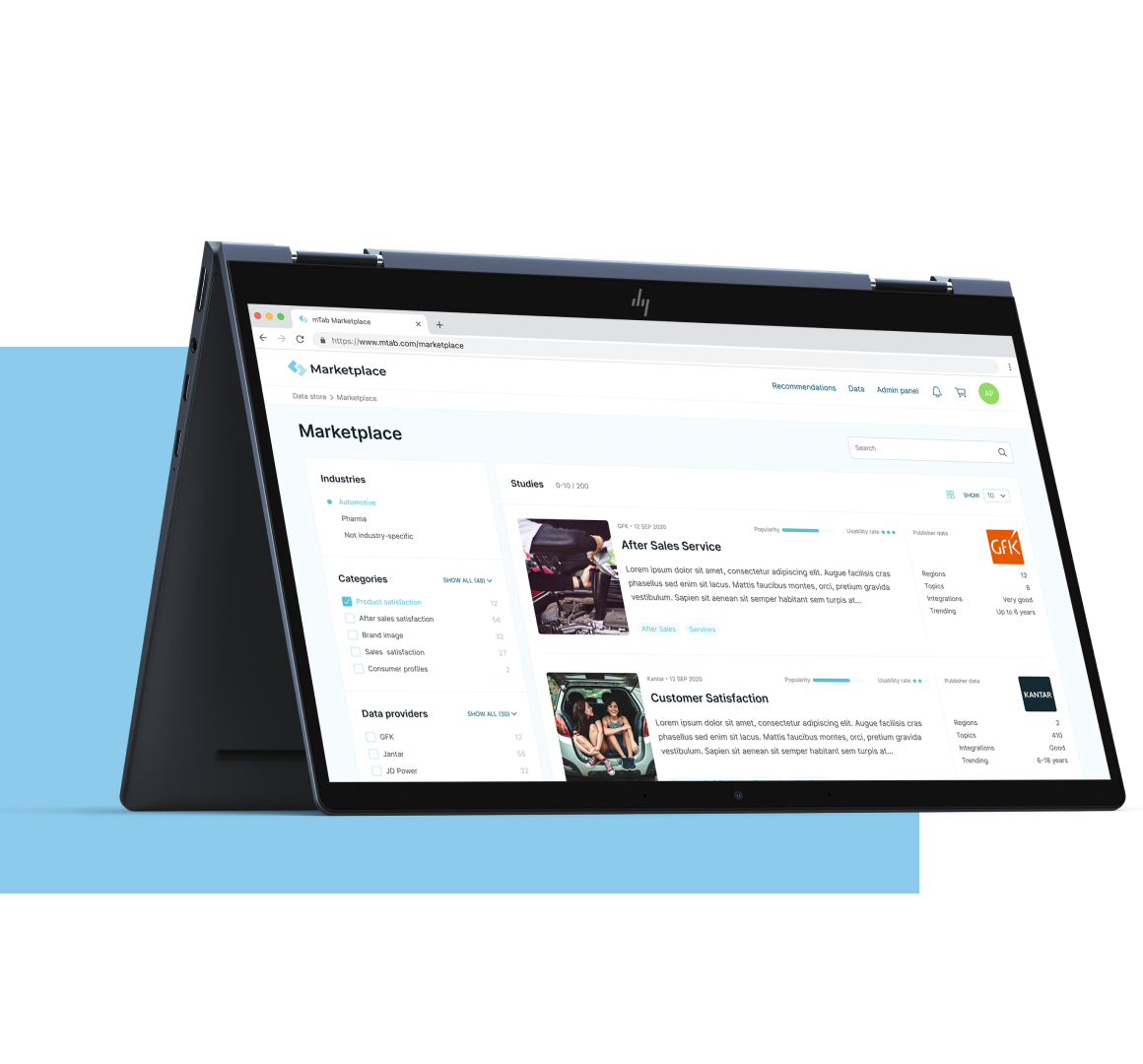
mTab Marketplace: data marketplace for market research
Playing

Data Management · Product Design · Product Discovery

mTab Marketplace: data marketplace for market research

Since 2020 we've built mTab Marketplace on Django, React and AWS, so clients buy market research studies without mTab installing each one by hand.

View project
12Questions we get

What teams ask us about PostgreSQL

Straight answers from the engineers who build with it. Missing yours?

Ask an engineer

8 questions

PostgreSQL 18 is the current stable major version, at minor release 18.7 as of November 12, 2026. PostgreSQL 19 is at Release Candidate 2 with general availability planned for November 19, 2026. PostgreSQL 14 reached end of life on November 12, 2026, so teams still on it should upgrade.

Yes. Most B2B SaaS products run well on a shared schema with a tenant_id column on every table and row-level security policies that the database enforces on every query. Index columns used by policies, connect as a non-owner role, and set the tenant per transaction. Move large tenants to dedicated databases or shards only when data shows the need.

For most SaaS RAG and semantic search workloads, yes: pgvector supports HNSW and IVFFlat indexes, half-precision and sparse vectors, and filtering in the same SQL query as your relational data. Startups such as Chatbase, Vecstore and Firecrawl moved from Pinecone to pgvector to keep embeddings next to their data. Very large, vector-only workloads may still justify a dedicated engine.

Further than most teams expect for read-heavy products. OpenAI serves ChatGPT's 800 million users from one Azure Postgres primary with nearly 50 read replicas, using PgBouncer, caching and workload isolation, and moved only shardable write-heavy workloads elsewhere. Write volume and single-table size are what eventually force sharding, as at Notion and Figma.

Usually yes in production. Each Postgres connection is a separate process, so many app instances or serverless functions can exhaust connections and memory. Use PgBouncer or your platform's pooler in transaction mode, avoid session-level state, and enable max_prepared_statements if your driver relies on prepared statements.

For most SaaS background work, yes. A jobs table claimed with SELECT ... FOR UPDATE SKIP LOCKED, or a library like pg-boss, River or pgmq, lets you enqueue jobs in the same transaction as the data change. Nango replaced Temporal this way and handles many millions of tasks per month; move to a dedicated broker only for very high throughput fan-out.

Supabase bundles Postgres with auth, storage and an RLS-based API, which suits small teams moving fast. Neon offers serverless Postgres with scale to zero and instant branches for preview environments. RDS and Aurora fit teams already on AWS that want mature operations, networking and compliance controls; all three are standard Postgres, so the schema stays portable.

Set lock_timeout so a blocked ALTER fails fast, create indexes with CREATE INDEX CONCURRENTLY, and add constraints as NOT VALID before validating them. For renames and type changes use expand and contract: add the new column, backfill, switch reads and writes, then drop the old one. Tools like pgroll and Atlas automate and lint these steps.

13Sources

PostgreSQL glossary and sources

Reviewed by our engineers. Last updated 16 November 2026.

Row-level security (RLS)
Table policies that filter which rows each role can read or write, enforced by the database on every query.
MVCC
Multi-version concurrency control: updates create new row versions so readers and writers do not block each other.
Autovacuum
Background process that removes dead row versions and freezes old transaction IDs to prevent wraparound.
WAL
Write-ahead log: the durable record of every change, used for crash recovery, replication and point-in-time restore.
Transaction pooling
A PgBouncer mode that assigns a server connection only for the length of a transaction, letting many clients share few connections.
Declarative partitioning
Splitting one logical table into child tables by range, list or hash so large tables stay fast to query and maintain.
HNSW
Hierarchical Navigable Small World, a graph index pgvector uses for fast approximate nearest neighbor search.
SKIP LOCKED
A row-locking option that lets concurrent workers skip rows already claimed by others, the basis of Postgres job queues.
Logical replication
Streaming row-level changes to another database, used for zero-downtime major upgrades and feeding analytics.

Sources

  1. [1]PostgreSQL Versioning Policypostgresql.org ↗
  2. [2]PostgreSQL 18 Releasedpostgresql.org ↗
  3. [3]PostgreSQL 18.7, 17.12, 16.16, 15.20, 14.25 and 19 RC 2 Releasedpostgresql.org ↗
  4. [4]PostgreSQL 19 Release Notespostgresql.org ↗
  5. [5]PostgreSQL docs: Row Security Policiespostgresql.org ↗
  6. [6]PgBouncer featurespgbouncer.org ↗
  7. [7]pgvector repositorygithub.com ↗
  8. [8]Supabase docs: Row Level Securitysupabase.com ↗
→Keep exploring

Built alongside it

  • Related hubPython & Django DevelopmentMulti-tenant SaaS on Python and Django. Same stack as our open-source boilerplate.
  • Related hubNode.js DevelopmentProduction Node.js APIs and real-time backends with senior ownership only.
  • Related hubRAG & RetrievalCiteable RAG with ACL-aware retrieval and eval gates that block weak releases.
  • Related hubAWS DevelopmentSaaS infrastructure on AWS in CDK or Terraform: Fargate, Lambda, Aurora, Bedrock and SOC 2-ready accounts.

Longer reads

  • Multi tenant SaaS for AI workloads with Apptension SaaS BoilerplateHow to design multi tenant SaaS with AI workloads using Apptension SaaS Boilerplate. Practical patterns for isolation, scaling, and cost control with examples.
  • Django vs Node.js for Multi-Tenant SaaSChoose Django or Node.js for multi-tenant SaaS with a clear decision table: tenancy, real-time needs, TypeScript monorepos, AI/data services, and when each backend is the wrong fit.
  • RAG for SaaS: Add Retrieval Augmented Generation to a Boilerplate AppA practical guide to adding RAG to a SaaS boilerplate: data ingestion, chunking, embeddings, evals, security, and production patterns that hold up under load.
  • Supabase vs Firebase vs Hasura for fast SaaS backend developmentA practical comparison of Supabase, Firebase, and Hasura for rapid SaaS builds. Learn tradeoffs, pitfalls, and a decision process based on real delivery patterns.

How we deliver it

  • SaaS Development
  • Hybrid Teams
  • End-to-end Software Development
  • Agentic MVP

Data layer delivery

Get your data layer right early

PostgreSQL design, tenancy and scaling led by senior engineers only.

Apptension site footer

Taking new projects

Have a product to build, fix or scale?

Apptension is a senior-only software development company headquartered in Poznań, Poland. Since 2012 our engineers have shipped 360+ AI and SaaS products for startups, scale-ups and enterprises across the US, UK and EU: agentic MVPs, RAG and voice AI systems, multi-tenant SaaS and legacy modernization.

Projects shipped
360+
Founded
2012
Senior engineers
30+
Client CSAT
100%

Send a few lines about your product. A person from our team replies within one business day.

Start a projectScope it in Scope Studio
  • Emailcontact@apptension.com
  • Phone+48 533 352 052Poznań, Poland

  • Agentic MVP developmentNew
  • Agentic SDLC implementation
  • Product & SaaS development
  • Legacy modernization
  • Generative AI development
  • SaaS development company
  • Vibe-coded prototype to production
  • End-to-end software development
  • Senior engineering team extension
  • Product consulting & discovery
  • Tech due diligence for investors
  • All services

  • LLM application engineering
  • RAG & retrieval engineering
  • Voice AI agent development
  • MCP server development
  • LangGraph & LangChain agents
  • AI agent evaluation & observability
  • Node.js development company
  • Python & Django development
  • React & Next.js development
  • React Native app development
  • All expertise

  • Open-source SaaS Boilerplate
  • SaaS P&L model template
  • Walkthrough Studio
  • Agentic SDLC playbook
  • AI SDLC maturity assessment
  • Agentic SDLC ROI calculator
  • Founder resources
  • Events & exec dinners
  • Open source
  • Builder's Toolkit

  • Boutique vs large software house
  • Build vs buy vs partner
  • How to choose an AI & RAG partner
  • Team augmentation without chaos
  • Django vs Node.js for SaaS
  • React Native vs Flutter
  • AI in regulated industries
  • All guides

  • About Apptension
  • Case studies
  • Careers
  • Blog
  • Tech Radar
  • Agentic SDLC hub
  • Contact

Senior AI engineers shipping enterprise-grade AI and SaaS with startup speed.

Headquarters

Apptension sp. z o.o.23 Lutego 26
61-743 Poznań, Poland (opens Google Maps)

VAT-ID PL7831720203 · REGON 360404804
KRS 0000534235

Follow Apptension

Client reviews on Clutch

© 2012–2026 Apptension sp. z o.o. All rights reserved.

Privacy policySitemapllms.txt