• 01Services
  • 02Portfolio
  • 03About
  • 04Careers
  • 05Blog

Services

All services

New · AI-native delivery

Senior engineers with AI coding agents

Ship a production MVP in weeks, or install agents into the team you already have.

Agentic MVPNewA production MVP your customers can rely on. Validate in 1–2 weeks, launch in 4–8, own all of it.Explore
  • Agentic SDLCAI coding agents installed into your delivery process in two weeks, with guardrails and metrics.
Agentic SDLC hub
>_ProductScope StudioFrom an idea to a shareable PRD_> Open_> Open
Emailcontact@apptension.comCall+48 533 352 052

HQ in Poznań, Poland

Start a project
Services
About
Portfolio
Careers
Blog
Get in touch
All technology hubs

AI system hub/Reviewed 16 November 2026/16 min read

Anthropic Claude

We build products on the Claude API, from single tool-calling features to agents on the Claude Agent SDK or Managed Agents. Model routing, cached prefixes, and strict tool schemas keep cost and behavior predictable in production.

Short answer

Claude fits products built on long tool-using tasks, large documents, or coding agents. We ship Claude features with effort set per route, prompt caching from day one, and evals that rerun on every model release.

Clue 01200M+monthly PyPI downloads of the anthropic Python SDK

Shake for the next clue

Source: pypistats.org ↗
1 / 4
Anthropic Claude in numbers
200M+ monthly PyPI downloads of the anthropic Python SDK (source: pypistats.org)
70M+ weekly npm downloads of @anthropic-ai/sdk (source: npmjs.com)
1M tokens context window on every current Claude model (source: platform.claude.com)
Up to 90% lower cost with prompt caching on long prompts (source: claude.com)

Your route through this hub

CoversClaude APIOpus 5.5Sonnet 5.5Haiku 5.5Agent SDKPrompt cachingMCPBedrock

  1. Stage 1 · Understand

    Is it right for our product?

    • 01What it isThe plain-words version
    • 02Where it pays off6 proven patterns
    • 03How it fits6 steps, one request
    • 04How it got here8 milestones
  2. Stage 2 · Choose

    What would we build it with?

    • 05Toolkit16 tools mapped
    • 06Who runs it13 teams in production
    • 07Alternativesvs 2 options
  3. Stage 3 · Ship

    How do we go live without surprises?

    • 08Readiness check20 checks, scored
    • 09What breaks6 mistakes and fixes
  4. Stage 4 · Decide

    What would you do in our place?

    • 10Should you use it?Our verdict, scope and rollout
    • 11What we shipped3 case studies
    • 12Questions we get7 straight answers
    • 13Sources13 cited, 10 terms

__> Teams we have built for

Anthropic Claude
01What it is02Where it pays off03How it fits04How it got here05Toolkit06Who runs it07Alternatives08Readiness check09What breaks10Should you use it?11What we shipped12Questions we get13Sources
01What it is

What is Anthropic Claude?

Building on Claude means using Anthropic's Claude models through the Claude API, Amazon Bedrock, Google Cloud, or Microsoft Foundry to power product features and agents. The main building blocks are tool use, prompt caching, adaptive thinking with an effort control, the Message Batches API, and the Claude Agent SDK.

Why teams adopt it

Every current Claude model has a 1M-token context window and 128K output, so whole codebases, contract sets, or long agent transcripts fit in one call. Prompt caching and batch discounts make that context affordable at volume, and availability on Bedrock, Google Cloud, and Foundry lets teams adopt Claude without a new cloud subprocessor. Companies such as Replit, Lovable, and Zendesk run production agents on it.

How it works

  1. 1

    Pick a model and effort

    Opus 5.5 is Anthropic's default recommendation, Sonnet 5.5 trades some depth for speed, Haiku 5.5 handles high-volume routing and extraction, and Fable 5.2 covers the hardest long-horizon work. The effort parameter (low to max) sets how many tokens Claude spends.

  2. 2

    Describe tools

    Client tools are JSON-schema functions your code runs; strict mode guarantees calls match the schema. Server tools such as web search and code execution run on Anthropic's infrastructure.

  3. 3

    Run the loop

    Claude returns stop_reason tool_use with tool_use blocks, your code executes them and sends tool_result blocks back. The SDK tool runner, the Agent SDK, or Managed Agents can drive this loop for you.

  4. 4

    Cache and batch

    Mark the stable prefix (tools, system prompt, documents) with cache_control so repeat calls read it at a fraction of the input price. Send non-urgent work through the Message Batches API at 50% off.

  5. 5

    Deploy where your data lives

    The same model IDs are served on the Claude API, Claude Platform on AWS, Amazon Bedrock, Google Cloud, and Microsoft Foundry, though feature support differs by platform.

02Where it pays off

Where Anthropic Claude pays off

The jobs it does best in real products: the problem you would have, how we would build it, and who already runs it that way.

Coding agents inside the product

Problemstep 1
Users want working software from a description, not snippets they must assemble.
Patternstep 2
A planning agent splits the build, subagents edit files and run checks, and vision or browser tools verify the running app before handing back.
In the wildstep 3
Replit Agent 4 and Lovable

Support agents that take actions

Problemstep 1
Deflection bots answer FAQs but cannot resolve refunds, account changes, or duplicates.
Patternstep 2
Knowledge retrieval plus scoped action tools, with a router that sends simple requests to one call and harder ones to a planning loop, and logs for every tool call.
In the wildstep 3
Intercom Fin and Zendesk custom agents

Document-heavy analysis

Problemstep 1
Analysts review hundreds of long filings or contracts where most of the prompt repeats.
Patternstep 2
Put the document set and instructions in a cached prefix, fan out per-row questions in parallel, and route metadata extraction to Haiku.
In the wildstep 3
Hebbia Matrix

Cost-aware model routing

Problemstep 1
Running every step on the largest model makes unit economics fail at volume.
Patternstep 2
Classify each step by complexity and send it to Haiku, Sonnet, Opus, or Fable, with evals rerun on every new release.
In the wildstep 3
Qonto and Impel

Bulk offline processing

Problemstep 1
Classification, enrichment, and eval runs over large datasets do not need real-time answers.
Patternstep 2
Submit up to 100,000 requests per batch to the Message Batches API at 50% off, combined with cached shared instructions, and collect results within 24 hours.

Ops agents in chat

Problemstep 1
Production alerts pile up in Slack while engineers triage by hand.
Patternstep 2
An agent with read access to logs and the warehouse investigates alerts, writes a root-cause note, and opens a PR that a human reviews.
In the wildstep 3
Carvana with Claude Tag
03How it fits

How a Claude-powered feature is layered

One real request, step by step: which part of the system handles it, and why that part is there.

01 Product02 Harness03 Tools04 Claude API05 Platform
Step 1/6·Request
Hover a part for detail
04How it got here

Is Anthropic Claude a safe bet?

The releases and decisions that matter when you are betting a product on it, in order.

  1. 2024Oct

    Computer use enters public beta

    Claude 3.5 Sonnet could view a screen and control mouse and keyboard through the API, also on Bedrock and Vertex AI.

    anthropic.com
  2. 2024Nov

    Model Context Protocol open-sourced

    Anthropic released MCP with SDKs and reference servers as a standard way to connect assistants to data and tools.

    anthropic.com
  3. 2024Dec

    Prompt caching generally available

    Prompt caching became GA on the Anthropic API on December 17, 2024.

    claude.com
  4. 2025Feb

    Extended thinking and Claude Code preview

    Claude 3.7 Sonnet shipped as a hybrid reasoning model with a thinking budget, alongside a limited research preview of Claude Code.

    anthropic.com
  5. 2025May

    Claude 4 and Claude Code GA

    Claude Code became generally available, and the API added a code execution tool, MCP connector, Files API, and one-hour prompt caching.

    anthropic.com
  6. 2025Sep

    Claude Agent SDK

    With Claude Sonnet 4.5, Anthropic offered the infrastructure behind Claude Code as the Claude Agent SDK for agents beyond coding.

    anthropic.com
  7. 2026Sep

    Claude Opus 5.5

    The first Claude 5.5 model launched at $4/$20 per million input/output tokens, 20% below Opus 5, on all major clouds.

    anthropic.com
  8. 2026Nov

    Claude Fable 5.2 and Mythos 5.2

    Anthropic released Fable 5.2 for demanding reasoning and long-horizon agentic work, with Mythos 5.2 limited to verified organizations.

    anthropic.com
05Toolkit

What you would build Anthropic Claude with

The libraries and services we would actually put in your stack, and when each one earns its place. Filter by layer or language.

Language
  • SDK · Python

    Anthropic Python SDK

    Official client for the Messages, Batches, and Files APIs with streaming and a beta tool runner; the default for Python backends.

    Anthropic4.1k
  • SDK · TypeScript

    Anthropic TypeScript SDK

    Official Node and edge client (@anthropic-ai/sdk) for the same API surface; pick it for TypeScript services.

    Anthropic2.2k
  • SDK · Go

    Anthropic Go SDK

    Official typed Go client for Go services calling Claude.

    Anthropic1.2k
  • SDK · Java

    Anthropic Java SDK

    Official JVM client for teams running Claude from Java or Kotlin backends.

    Anthropic0.4k
  • Framework · Python

    Claude Agent SDK (Python)

    Claude Code's agent loop as a library, with built-in file, shell, and web tools, hooks, subagents, permissions, and sessions.

    Anthropic8.6k
  • Framework · TypeScript

    Claude Agent SDK (TypeScript)

    The TypeScript edition of the Agent SDK (@anthropic-ai/claude-agent-sdk) for Node-based agents.

    Anthropic1.9k
  • Tooling · Any

    Claude Code

    Agentic coding tool for the terminal and IDEs; also runs headless in scripts and CI.

    Anthropic156k
  • Tooling · Any

    Claude Code Action

    GitHub Action that runs Claude Code on PRs and issues for reviews and code changes, with API, Bedrock, Vertex AI, or Foundry auth.

    Anthropic10k
  • Tooling · Any

    Agent Skills

    Public repository of Agent Skills, packaged instructions and scripts that Claude loads on demand.

    Anthropic196k
06Who runs it

Who already bets on Anthropic Claude

Companies running it in production, and what for. Every entry links to their own write-up, so you can check our homework.

  • A main agent plans each build and hands smaller tasks to subagents matched to the best-suited Claude model, and every new Claude release is tested for broken-app rate before rollout.

    claude.com
  • Exposes its marketing data through an MCP server behind a Claude connector, with write actions on six ad platforms gated by human approval and new campaigns created paused.

    claude.com
  • Uses Sonnet for internal meta-prompting and Haiku for document metadata, and leans on prompt caching because about 95% of tokens repeat across document analysis.

    claude.com
  • A/B tested Claude 3 Haiku against its previous LLM, then shipped it for AI presentation and website generation, reporting a 20% lift in free-to-paid conversion.

    claude.com
  • Its Droids take tickets from Jira or Linear to pull requests and review PRs, using Claude 3 Opus for heavy reasoning and Claude 3 Haiku for high-volume steps.

    claude.com
  • Offers Claude models across Assistant, Vault, and Workflows, and chose Claude's instruction-following for guided legal Workflows with human checkpoints.

    claude.com
  • Agent 4 uses Sonnet 4.6 for sustained development, Opus 4.7 for architecture and multi-file refactors, and Claude vision to click through and test the apps it builds.

    claude.com
  • Routes agent steps by complexity across Opus 4.5, Sonnet, and Haiku on Amazon Bedrock, using structured outputs and prompt caching for agents that prepare transfers, invoices, and payroll.

    claude.com
  • Splits work between Fable for complex reasoning and code generation, Opus, and Sonnet as the executor for proven tasks, with MCP-based workflows over Gong, Salesforce, and Snowflake data.

    claude.com
  • Powers its Fin AI agent with Claude for knowledge-grounded answers and actions such as refunds, reporting resolution of up to 86% of support volume.

    claude.com
  • Uses prompt caching to cut Notion AI cost and latency, Opus for agent workflows, and Claude Managed Agents behind board-driven agent tasks.

    claude.com
  • Built its custom agent builder with Claude Code and the Claude Agent SDK on Sonnet 4.6 via Amazon Bedrock, reaching 1 million agent executions in seven weeks of early access.

    claude.com
  • Runs Claude Tag in Slack under scoped identities to investigate production alerts, write root-cause analyses, and open pull requests for human review.

    claude.com
Startup · AI app builder01 / 13

Lovable

A main agent plans each build and hands smaller tasks to subagents matched to the best-suited Claude model, and every new Claude release is tested for broken-app rate before rollout.

Source: claude.com
07Alternatives

Messages API vs Claude Agent SDK vs Managed Agents

No option wins every row. Find the row that matters most for your product and the choice usually makes itself.

Messages API vs Claude Agent SDK vs Managed Agents
CriterionMessages APIClaude Agent SDKManaged Agents
Who runs the loopYour code, or the SDK tool runnerA library in your process (bundled Claude Code binary)Anthropic's hosted harness
Built-in toolsServer tools plus your own schemasRead, Edit, Bash, Glob, Grep, web search, MCP, subagentsBash, file ops, web search and fetch, MCP
Where tools executeYour servers (client tools) or Anthropic (server tools)Your machine, container, or CI runnerAnthropic cloud sandbox or a self-hosted sandbox
StateYou store and resend messagesSessions you can resume or forkServer-side sessions with full event history
PlatformsClaude API, Bedrock, Google Cloud, Foundry, Claude Platform on AWSAPI key, Bedrock, Claude Platform on AWS, Google Cloud, FoundryClaude API, Claude Platform on AWS, Google Cloud (Anthropic managed)
MaturityStableVersioned Python and TypeScript SDKs with public changelogsBeta (managed-agents-2026-04-01 header)
Best forProduct features and custom loops with fine controlFile and shell-heavy agents you host yourselfLong-running async tasks with minimal infrastructure
Messages API vs
  • Who runs the loop

    Messages API

    Your code, or the SDK tool runner

    Claude Agent SDK

    A library in your process (bundled Claude Code binary)

  • Built-in tools

    Messages API

    Server tools plus your own schemas

    Claude Agent SDK

    Read, Edit, Bash, Glob, Grep, web search, MCP, subagents

  • Where tools execute

    Messages API

    Your servers (client tools) or Anthropic (server tools)

    Claude Agent SDK

    Your machine, container, or CI runner

  • State

    Messages API

    You store and resend messages

    Claude Agent SDK

    Sessions you can resume or fork

  • Platforms

    Messages API

    Claude API, Bedrock, Google Cloud, Foundry, Claude Platform on AWS

    Claude Agent SDK

    API key, Bedrock, Claude Platform on AWS, Google Cloud, Foundry

  • Maturity

    Messages API

    Stable

    Claude Agent SDK

    Versioned Python and TypeScript SDKs with public changelogs

  • Best for

    Messages API

    Product features and custom loops with fine control

    Claude Agent SDK

    File and shell-heavy agents you host yourself

08Readiness check

Is your Anthropic Claude setup ready for real traffic?

The checks teams that run it well have in place before launch. Tick what you already have and see where you stand. Your answers stay on this device.

0%

0 / 20

Tick what you already have

  • Models and effort0/4
  • Prompt caching0/4
  • Tools0/4
  • Agent safety0/4
  • Platform and data0/4
Models and effort

01 · Models and effort

Prompt caching

02 · Prompt caching

Tools

03 · Tools

Agent safety

04 · Agent safety

Platform and data

05 · Platform and data

09What breaks

Where Anthropic Claude projects go wrong

What we find most often when we audit or inherit a codebase, and how we fix it.

  • !

    Carrying over budget_tokens

    Fix · Manual extended thinking with budget_tokens returns a 400 error on Claude 5-series models. Use adaptive thinking and steer depth with output_config.effort.

  • !

    Silent cache misses

    Fix · Timestamps, per-request IDs, or reordered tools before the breakpoint break the prefix match. Move volatile content after the last breakpoint and monitor cache read tokens.

  • !

    Truncated answers from small max_tokens

    Fix · Thinking counts toward max_tokens even when its text is hidden. At high effort and above, set a large max_tokens and stream the response.

  • !

    Assuming the default effort

    Fix · Opus 5.5 defaults to medium, one level lower than Opus 5, so an upgraded request can behave differently. Set effort explicitly and rerun evals after any model change.

  • !

    Trusting what the agent reads

    Fix · Claude may follow instructions embedded in web pages or screenshots. Isolate computer and browser use, restrict network access, and require human approval for consequential actions.

  • !

    Assuming cloud parity

    Fix · Features ship at different times across the Claude API, Bedrock, Google Cloud, and Foundry. Check each feature's platform table before committing an architecture.

Minimal Claude call with a strict tool, caching, and effort

>_ $
1
2
3
4
5
6
7
8
9
10
11
12
13
14
15
16
17
18
19
20
21
22
23
24
import anthropic

client = anthropic.Anthropic()  # reads ANTHROPIC_API_KEY

get_order = {
    "name": "get_order",
    "description": "Look up an order by ID and return its status and items.",
    "strict": True,
    "input_schema": {"type": "object", "additionalProperties": False,
                     "properties": {"order_id": {"type": "string"}}, "required": ["order_id"]},
}

response = client.messages.create(
    model="claude-sonnet-5-5",
    max_tokens=4096,
    cache_control={"type": "ephemeral"},  # automatic prompt caching
    output_config={"effort": "medium"},
    system="You are Acme's support agent. Check orders with tools before answering.",
    tools=[get_order],
    messages=[{"role": "user", "content": "Where is order A-1042?"}],
)
for block in response.content:
    if block.type == "tool_use":  # stop_reason is "tool_use"
        print(block.name, block.input)
10Should you use it?

When Anthropic Claude is the right call, and how we ship it

Our engineers' view after building on it: where it earns its place, where something simpler wins, and the rollout we run.

Strong fit

  • Products built on long, tool-using tasks such as coding, research, or document review
  • Large shared context (policies, codebases, contracts) that pays off with prompt caching
  • Teams on AWS, Google Cloud, or Azure that need Claude inside existing cloud agreements
  • Workloads that mix real-time calls with bulk jobs suited to the Batch API

Weak fit

  • One-off prompt wrappers with no tools, evals, or volume worth optimizing
  • Teams that will not keep an eval set to rerun when models change

What we deliver

  • 01

    Model routing and effort

    Haiku, Sonnet, Opus, or Fable per route, with effort levels tuned on your evals instead of carried over.

  • 02

    Tools and MCP

    Strict JSON-schema tools, server tools like web search and code execution, and MCP servers with scoped access.

  • 03

    Agent runtimes

    Agents on the Claude Agent SDK in your infrastructure, or Managed Agents for long-running hosted sessions.

  • 04

    Cost engineering

    Cached prefixes, Batch API jobs, and token telemetry so unit cost is known before traffic grows.

Claude rollout

How we would roll it out

Every phase ends at a gate. Nothing moves on until it passes, so you always know what you have and what is next.

    010203Live
  1. 01

    Phase 1

    Evals and model sweep

    Build a task set from real inputs. Sweep models and effort levels before writing product code.

    You walk away with

    A task set built from real inputs and a sweep showing which model and effort level meet the bar.

    Gate Model and effort chosen per task

  2. 02

    Phase 2

    Ship one cached path

    One route in production with prompt caching, strict tools, tracing, and spend alerts.

    You walk away with

    One route in production with prompt caching, strict tools, tracing and spend alerts.

    Gate Cache hit rate and cost per call known

  3. 03

    Phase 3

    Scale with routing

    Add model routing, batch jobs for offline work, and an upgrade checklist for each new model.

    You walk away with

    Model routing, batch jobs for offline work and an upgrade checklist your team runs on each new model.

    Live when Routing beats single-model cost on evals

Related projects

Projects where we did this work

Explore our portfolio
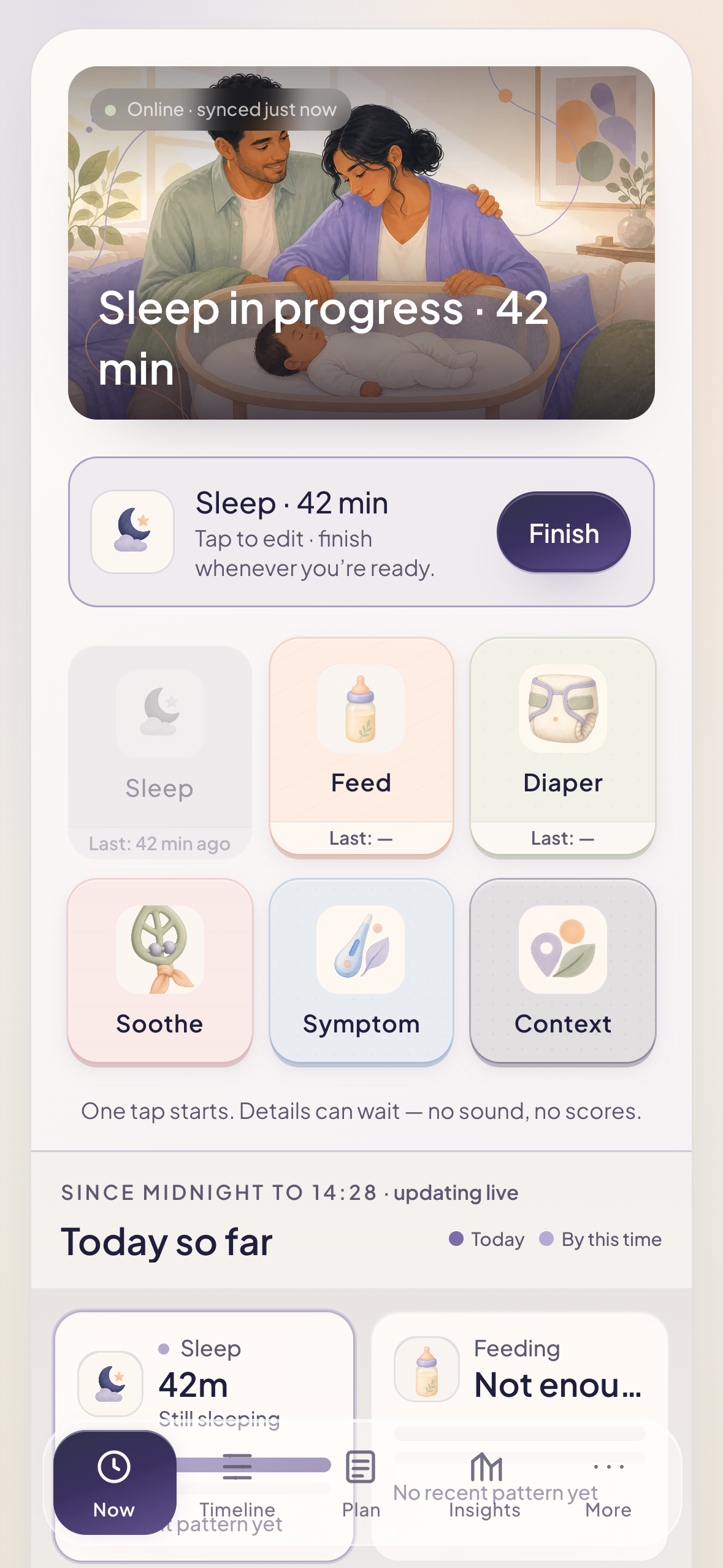
nini.bot: shared baby-care PWA shipped in 11 days

Health · AI Development · Mobile Development

nini.bot: shared baby-care PWA shipped in 11 days

A shared baby-care app for two caregivers, live as an installable PWA after 11 active days and 159 merged PRs through the harness we install for clients.

View project
LEDA: AI exploratory data analysis for retail analysts
Playing

Data Management · AI Development

LEDA: AI exploratory data analysis for retail analysts

LEDA lets retail analysts run exploratory data analysis by asking questions in plain English. We built the multi-agent LLM proof of concept in 10 weeks.

View project
Real-time AI voice avatar with ~1.5s perceived latency
Playing

Data Management · AI Development · Product Discovery

Real-time AI voice avatar with ~1.5s perceived latency

For a brand experience agency we built a voice AI avatar in three weeks: about 1s speech-to-text, 0.5s text-to-speech, ~1.5s perceived reply.

View project
12Questions we get

What teams ask us about Anthropic Claude

Straight answers from the engineers who build with it. Missing yours?

Ask an engineer

7 questions

Anthropic recommends Claude Opus 5.5 for most workloads at $4/$20 per million input/output tokens. Use Sonnet 5.5 when speed matters, Haiku 5.5 for high-volume classification, extraction, and routing, and Fable 5.2 for the hardest long-horizon reasoning. All four have a 1M-token context window and 128K max output.

Yes. Current Claude models are served on Amazon Bedrock, Google Cloud, Microsoft Foundry, and Claude Platform on AWS, as well as the Claude API. Partner platforms set their own lifecycle dates and some features arrive later or differ, so check each feature's platform table before you design around it.

Claude 5-series models use adaptive thinking, where Claude decides how much to reason, and you steer depth with output_config.effort from low to max. Requests that set thinking type enabled with budget_tokens return a 400 error on those models. Thinking tokens are billed as output and count toward max_tokens.

Cache reads cost 10% of the base input price on most models, 5% on Opus 5.5 and Sonnet 5.5, and 2.5% on Fable 5.2. Cache writes cost 1.25x for the five-minute TTL or 2x for the one-hour TTL. Anthropic reports up to 90% lower cost and up to 85% lower latency for long prompts.

Use the Messages API when you want full control over a custom loop inside your product. Use the Agent SDK when the agent needs files, shell, and Claude Code's permissions and sessions on infrastructure you run. Use Managed Agents, currently in beta, when you want Anthropic to host long-running sessions in a sandbox.

Use it for work that does not need an immediate answer, such as classification, enrichment, or eval runs. It costs 50% of standard pricing, accepts up to 100,000 requests or 256 MB per batch, usually finishes within an hour, and expires unprocessed requests after 24 hours.

Yes, through the computer use toolset, which Claude drives with screenshots, clicks, and keystrokes in an environment you run. Anthropic advises a dedicated VM or container, a domain allowlist, no sensitive credentials, and human confirmation for consequential actions because pages can carry prompt injection. For web-only tasks, the browser use tool is the recommended choice.

13Sources

Anthropic Claude glossary and sources

Reviewed by our engineers. Last updated 16 November 2026.

Messages API
The core Claude endpoint (/v1/messages) that takes a system prompt, messages, and tools and returns content blocks.
Tool use
Claude returning a structured tool_use call that your code (client tool) or Anthropic (server tool) executes, with results sent back as tool_result.
Strict tool use
Setting strict: true on a tool so Claude's calls always match its JSON schema.
Prompt caching
Reusing a processed prompt prefix marked with cache_control, read at 2.5% to 10% of the base input price depending on the model.
Adaptive thinking
Claude deciding when and how much to reason before answering; it replaces manual extended thinking on Claude 5-series models.
Effort
The output_config.effort setting (low, medium, high, xhigh, max) that controls how many tokens Claude spends on thinking, tool calls, and text.
Message Batches API
Asynchronous processing of up to 100,000 requests per batch at 50% of standard price, with results within 24 hours.
Claude Agent SDK
Python and TypeScript libraries that embed Claude Code's agent loop, tools, permissions, hooks, and sessions in your application.
Managed Agents
Anthropic's hosted agent harness, in beta, that runs sessions in a managed or self-hosted sandbox and streams events back.
Computer use
A client toolset that lets Claude take screenshots and drive mouse and keyboard in a desktop environment you run.

Sources

  1. [1]Claude models overviewplatform.claude.com ↗
  2. [2]Tool use with Claudeplatform.claude.com ↗
  3. [3]Prompt caching docsplatform.claude.com ↗
  4. [4]Thinking docsplatform.claude.com ↗
  5. [5]Effort docsplatform.claude.com ↗
  6. [6]Batch processing docsplatform.claude.com ↗
  7. [7]Computer use tool docsplatform.claude.com ↗
  8. [8]Agent SDK overviewcode.claude.com ↗
→Keep exploring

Built alongside it

  • Related hubModel Context Protocol (MCP)MCP tool servers that pass security review on the 2026-07-28 core.
  • Related hubAgentic Harness EngineeringCoding agent harnesses with MCP, CI guardrails, and measurable delivery ROI.
  • Related hubLLM Application EngineeringLLM features engineered for tenancy, cost, and production failure modes.
  • Related hubMulti-Agent SystemsMulti-agent systems: orchestrator-worker designs, LangGraph, agent SDKs, A2A, cost control.
  • Related hubAI Agent Evaluation & ObservabilityTraces, offline evals, and CI gates so agent quality can fail a merge.

Longer reads

  • Integrating LLMs into SaaS Boilerplates: Prompts, Tools, GuardrailsA practical guide to add LLM features to a SaaS boilerplate: prompt management, tool calling, and guardrails. Includes patterns, pitfalls, and metrics to track.
  • Managing AI Costs in SaaS: Token Budgets, Caching, and RoutingA practical CTO guide to managing AI costs in SaaS with token budgets, caching, batching, and model routing. Includes metrics, pitfalls, and rollout steps.
  • CLI Coding Agents in 2026: What Engineering Leaders StandardizeA practical guide to CLI coding agents 2026: OpenCode vs Copilot CLI, control planes, cost and security guardrails, and a 90 day rollout plan.
  • LLM Security Playbook: OWASP Ready Controls for Production AppsA practical LLM security playbook mapped to OWASP LLM Top 10: prompt injection mitigation, safe RAG, tool sandboxing, red teaming, and go live evidence.

How we deliver it

  • Generative AI Solutions
  • Agentic MVP
  • Agentic SDLC
  • Hybrid Teams

Model layer

Claude features with a known cost curve

Effort per route, cached prefixes, strict tools, evals on every model release.

Apptension site footer

Taking new projects

Have a product to build, fix or scale?

Apptension is a senior-only software development company headquartered in Poznań, Poland. Since 2012 our engineers have shipped 360+ AI and SaaS products for startups, scale-ups and enterprises across the US, UK and EU: agentic MVPs, RAG and voice AI systems, multi-tenant SaaS and legacy modernization.

Projects shipped
360+
Founded
2012
Senior engineers
30+
Client CSAT
100%

Send a few lines about your product. A person from our team replies within one business day.

Start a projectScope it in Scope Studio
  • Emailcontact@apptension.com
  • Phone+48 533 352 052Poznań, Poland

  • Agentic MVP developmentNew
  • Agentic SDLC implementation
  • Product & SaaS development
  • Legacy modernization
  • Generative AI development
  • SaaS development company
  • Vibe-coded prototype to production
  • End-to-end software development
  • Senior engineering team extension
  • Product consulting & discovery
  • Tech due diligence for investors
  • All services

  • LLM application engineering
  • RAG & retrieval engineering
  • Voice AI agent development
  • MCP server development
  • LangGraph & LangChain agents
  • AI agent evaluation & observability
  • Node.js development company
  • Python & Django development
  • React & Next.js development
  • React Native app development
  • All expertise

  • Open-source SaaS Boilerplate
  • SaaS P&L model template
  • Walkthrough Studio
  • Agentic SDLC playbook
  • AI SDLC maturity assessment
  • Agentic SDLC ROI calculator
  • Founder resources
  • Events & exec dinners
  • Open source
  • Builder's Toolkit

  • Boutique vs large software house
  • Build vs buy vs partner
  • How to choose an AI & RAG partner
  • Team augmentation without chaos
  • Django vs Node.js for SaaS
  • React Native vs Flutter
  • AI in regulated industries
  • All guides

  • About Apptension
  • Case studies
  • Careers
  • Blog
  • Tech Radar
  • Agentic SDLC hub
  • Contact

Senior AI engineers shipping enterprise-grade AI and SaaS with startup speed.

Headquarters

Apptension sp. z o.o.23 Lutego 26
61-743 Poznań, Poland (opens Google Maps)

VAT-ID PL7831720203 · REGON 360404804
KRS 0000534235

Follow Apptension

Client reviews on Clutch

© 2012–2026 Apptension sp. z o.o. All rights reserved.

Privacy policySitemapllms.txt