














• 01Services
  • 02Portfolio
  • 03About
  • 04Careers
  • 05Blog

Services

All services

New · AI-native delivery

Senior engineers with AI coding agents

Ship a production MVP in weeks, or install agents into the team you already have.

Agentic MVPNewA production MVP your customers can rely on. Validate in 1–2 weeks, launch in 4–8, own all of it.Explore
  • Agentic SDLCAI coding agents installed into your delivery process in two weeks, with guardrails and metrics.
Agentic SDLC hub
>_ProductScope StudioFrom an idea to a shareable PRD_> Open_> Open
Emailcontact@apptension.comCall+48 533 352 052

HQ in Poznań, Poland

Start a project
Services
About
Portfolio
Careers
Blog
Get in touch
All technology hubs

AI system hub/Reviewed 16 November 2026/16 min read

Agentic Harness Engineering

AI-assisted delivery needs a governed operating system: repo conventions, permissioned tools, and CI boundaries that keep velocity from becoming review debt. We design the harness your teams actually run.

Short answer

Coding agents without a harness create review debt faster than they clear backlog. We design agents.md, MCP tool access and CI guardrails so AI-assisted delivery stays reviewable. The same harness took nini.bot from a blank repo to production in 11 days, with 159 merged PRs.

Clue 0160,000+open-source projects using AGENTS.md

Shake for the next clue

Source: linuxfoundation.org ↗
1 / 4
Agentic Harness in numbers
60,000+ open-source projects using AGENTS.md (source: linuxfoundation.org)
1,000+ agent-written PRs merged per week at Stripe (source: stripe.dev)
84% fewer permission prompts with sandboxing (source: anthropic.com)
100% vs 79% eval pass rate: AGENTS.md docs index vs skills (source: vercel.com)

Your route through this hub

CoversCoding agentsagents.mdMCPCI guardrailsSDLCDeveloper experience

  1. Stage 1 · Understand

    Is it right for our product?

    • 01What it isThe plain-words version
    • 02Where it pays off6 proven patterns
    • 03How it fits7 steps, one request
    • 04How it got here9 milestones
  2. Stage 2 · Choose

    What would we build it with?

    • 05Toolkit18 tools mapped
    • 06Who runs it10 teams in production
    • 07Alternativesvs 2 options
  3. Stage 3 · Ship

    How do we go live without surprises?

    • 08Readiness check20 checks, scored
    • 09What breaks6 mistakes and fixes
  4. Stage 4 · Decide

    What would you do in our place?

    • 10Should you use it?Our verdict, scope and rollout
    • 11What we shipped3 case studies
    • 12Questions we get10 straight answers
    • 13Sources15 cited, 10 terms

__> Teams we have built for

Agentic Harness
01What it is02Where it pays off03How it fits04How it got here05Toolkit06Who runs it07Alternatives08Readiness check09What breaks10Should you use it?11What we shipped12Questions we get13Sources
01What it is

What is Agentic Harness?

Agentic harness engineering is the practice of designing the environment around a coding or autonomous agent: its instructions (AGENTS.md), tools (MCP), sandbox, permission hooks, verification loops and evals. Engineers spend less time writing code and more time designing the system that lets agents ship reviewable changes reliably.

Why teams adopt it

The same model performs very differently depending on its harness: Vercel's evals went from 53% to 100% pass rate by changing how docs reached the agent. Companies running agents at scale, such as Stripe with 1,000+ agent-written merged PRs a week, credit isolated environments, curated tools and fast feedback loops rather than the model alone. Without a harness, agent output turns into review debt and security risk faster than it clears backlog.

How it works

  1. 1

    Give the repo a map

    A short AGENTS.md or CLAUDE.md tells agents how to build, test and lint, how the codebase is laid out and where the boundaries are, with nested files for subdirectories.

  2. 2

    Scope tools and credentials

    Agents get a curated set of MCP tools and CLI access through a gateway, with no production credentials and keys injected server-side.

  3. 3

    Run in a sandbox

    Each session runs in an isolated devbox, container or OS-level sandbox with restricted filesystem and network access, so agents can work without constant approval prompts.

  4. 4

    Enforce rules deterministically

    Hooks, linters and structural tests block forbidden actions and architecture violations instead of relying on the model to follow instructions.

  5. 5

    Verify, then hand off

    The agent runs tests, checks telemetry or the UI, gets a bounded number of CI rounds, and opens a pull request for human review; evals track whether harness changes help.

02Where it pays off

Where Agentic Harness pays off

The jobs it does best in real products: the problem you would have, how we would build it, and who already runs it that way.

Background agents from Slack or tickets

Problemstep 1
Small fixes and chores sit in the backlog because nobody has time to context-switch.
Patternstep 2
A message or ticket launches an agent in a pre-warmed sandbox with repo context and scoped tools; it verifies its work and opens a PR for review.
In the wildstep 3
Stripe Minions; Ramp Inspect.

Fleet-wide migrations

Problemstep 1
Dependency upgrades and API migrations across hundreds of repos take engineering quarters.
Patternstep 2
Replace deterministic codemod scripts with an agent prompt, keep the existing targeting, PR and merge machinery, and add LLM-judge and lint checks.
In the wildstep 3
Spotify Honk on Fleet Management; Cursor's in-place Solid-to-React migration.

AI code review in CI

Problemstep 1
Review becomes the bottleneck once agents increase PR volume.
Patternstep 2
A CI job runs a coordinator that assigns a risk tier and delegates to specialized review agents that cite the team's written standards.
In the wildstep 3
Cloudflare's AI Code Reviewer on every merge request.

Long-running builds across context windows

Problemstep 1
Agents lose track of multi-day work when context fills up.
Patternstep 2
An initializer agent writes a JSON feature list, progress file and init script; each later session does one feature, tests it and commits.
In the wildstep 3
Anthropic's long-running harness pattern.

Organization-wide rollout with central control

Problemstep 1
Every team configures agents differently, with keys on laptops and no cost visibility.
Patternstep 2
Route model traffic through one gateway, provision clients and MCP servers with a single CLI or MDM, and ship shared plugins and skills.
In the wildstep 3
Cloudflare AI Gateway; Uber AIFX CLI; Intercom plugins via JAMF.

Retrieval-led repo context

Problemstep 1
Agents rely on stale training data for fast-moving frameworks and internal conventions.
Patternstep 2
Keep a compact docs index and conventions in AGENTS.md, generate and lint those files, and flag them when they go stale.
In the wildstep 3
Vercel's AGENTS.md docs index; Cloudflare's AGENTS.md generator.
03How it fits

Layers of a coding agent harness

One real request, step by step: which part of the system handles it, and why that part is there.

01 Triggers02 Agent03 Guardrails04 Sandbox05 Verify
Step 1/7·Request
Hover a part for detail
04How it got here

Is Agentic Harness a safe bet?

The releases and decisions that matter when you are betting a product on it, in order.

  1. 2025Feb

    Claude Code research preview

    Anthropic released Claude Code, a terminal agent that searches code, edits files, runs tests and commits.

    anthropic.com
  2. 2025May

    Claude Code GA and SDK

    Claude Code became generally available with GitHub Actions background tasks and an SDK for building custom agents on the same core.

    anthropic.com
  3. 2025Aug

    AGENTS.md released

    OpenAI released AGENTS.md as an open, tool-neutral format for agent instructions.

    linuxfoundation.org
  4. 2025Sep

    Context engineering named

    Anthropic described compaction, structured note-taking, sub-agents and just-in-time retrieval as ways to manage context rot.

    anthropic.com
  5. 2025Oct

    OS-level sandboxing

    Claude Code added filesystem and network isolation using bubblewrap and macOS seatbelt, cutting permission prompts by 84% internally.

    anthropic.com
  6. 2025Nov

    Harnesses for long-running agents

    Anthropic published an initializer-plus-coding-agent pattern with a JSON feature list, progress file and git history to carry work across context windows.

    anthropic.com
  7. 2025Dec

    AGENTS.md joins the AAIF

    AGENTS.md, MCP and goose became founding projects of the Linux Foundation's Agentic AI Foundation.

    linuxfoundation.org
  8. 2026Jan

    Hundreds of agents on one project

    Cursor ran planner, worker and judge agents for close to a week to build a browser exceeding one million lines of code.

    cursor.com
  9. 2026Feb

    Harness engineering at OpenAI and Stripe

    OpenAI described building a roughly one-million-line product with no hand-written code over five months, and Stripe published its Minions harness.

    infoq.com
05Toolkit

What you would build Agentic Harness with

The libraries and services we would actually put in your stack, and when each one earns its place. Filter by layer or language.

Language
  • Framework · TypeScript

    Claude Code

    Terminal and IDE coding agent with hooks, sub-agents, skills, plugins, MCP and OS-level sandboxing; strong choice when you need deterministic guardrails.

    Anthropic156k
  • Framework · Rust

    Codex CLI

    OpenAI's local coding agent; reads layered AGENTS.md files and shares MCP config with the Codex IDE extension and app.

    OpenAI135k
  • Framework · TypeScript

    OpenCode

    Open-source agent built as a server with clients, a typed SDK and plugins; Ramp built its background agent on it.

    community227k
  • Framework · TypeScript

    Gemini CLI

    Google's open-source terminal agent with MCP support and AGENTS.md compatibility.

    Google109k
  • Framework · Rust

    goose

    Extensible, model-agnostic agent; Stripe forked it as the core loop of its Minions.

    Agentic AI Foundation (originally Block)56.7k
  • Framework · TypeScript

    OpenHands

    Open-source autonomous coding agent platform you can self-host for background work.

    OpenHands93.6k
  • Framework · TypeScript

    Cline

    Autonomous coding agent available as an SDK, IDE extension or CLI.

    Cline71.7k
  • SDK · Python

    Claude Agent SDK (Python)

    Embeds the Claude Code agent loop, tools and hooks in your own harness; also available for TypeScript.

    Anthropic8.6k
  • Tooling · Any

    AGENTS.md

    The open instruction-file format read by Codex, Cursor, Copilot, Gemini CLI, Claude Code and others.

    Agentic AI Foundation25.5k
06Who runs it

Who already bets on Agentic Harness

Companies running it in production, and what for. Every entry links to their own write-up, so you can check our homework.

  • Runs Inspect, a background agent on OpenCode in Modal sandbox VMs rebuilt from repo snapshots every 30 minutes; it wrote about 30% of merged frontend and backend PRs.

    builders.ramp.com
  • Coordinates hundreds of concurrent agents with planners that create tasks, workers that complete them and a judge that decides whether to continue each cycle.

    cursor.com
  • Measured agent performance on Next.js 16 tasks and found an 8KB compressed docs index in AGENTS.md beat on-demand skills, 100% to 79%.

    vercel.com
  • Ships 13 internal Claude Code plugins and 100+ skills, uses PreToolUse hooks to force PRs through a create-pr skill, and sends OpenTelemetry events to Honeycomb.

    ideas.fin.ai
  • Runs one-shot Minions on a goose fork in isolated devboxes with a 400+ tool internal MCP server and a cap of two CI rounds per run.

    stripe.dev
  • Replaced hand-written migration scripts in Fleet Management with Honk background agents, which have merged more than 1,500 PRs with 60-90% time savings on migrations.

    engineering.atspotify.com
  • Routes all LLM traffic through AI Gateway, generated AGENTS.md files for about 3,900 repos and runs a multi-agent AI code reviewer on every merge request.

    blog.cloudflare.com
  • Provisions Claude Code, Codex and Cursor through an internal AIFX CLI, runs a Minion background agent platform and an MCP Gateway; agents opened 11% of PRs.

    newsletter.pragmaticengineer.com
  • Built a roughly one-million-line beta product with Codex and no hand-written code, using structured docs, enforced architecture layers, linters and agent-readable observability.

    infoq.com
  • Reports a 67% increase in merged PRs per engineer per day after adopting Claude Code, with autonomous tool-call chains growing from 9.8 to 21.2 steps.

    anthropic.com
Scale-up · Fintech01 / 10

Ramp

Runs Inspect, a background agent on OpenCode in Modal sandbox VMs rebuilt from repo snapshots every 30 minutes; it wrote about 30% of merged frontend and backend PRs.

Source: builders.ramp.com
07Alternatives

Interactive agents vs background agents vs a custom harness

No option wins every row. Find the row that matters most for your product and the choice usually makes itself.

Interactive agents vs background agents vs a custom harness
CriterionInteractive agent (Claude Code, Cursor, Codex)Managed background agentCustom harness on an agent SDK
Human in the loopContinuous, at the keyboardAt PR reviewConfigurable per workflow
Where it runsDeveloper machine, optionally sandboxedVendor cloud sandboxYour devboxes or cloud sandboxes
Setup effortLow: instruction files, hooks, MCP configLow to moderateHigh: sandboxes, triggers, state, CI wiring
Access to internal contextWhat the developer has locallyLimited to configured integrationsFull: internal tools, telemetry, flags
ParallelismA few sessions per personManyMany, bounded by your infra
Best fitDaily feature work and debuggingSmall, well-scoped tasksHigh-volume orgs with strong CI
Public examplesIntercom, AnthropicGitHub Copilot coding agentStripe Minions, Ramp Inspect, Spotify Honk
Interactive agent (Claude Code, Cursor, Codex) vs
  • Human in the loop

    Interactive agent (Claude Code, Cursor, Codex)

    Continuous, at the keyboard

    Managed background agent

    At PR review

  • Where it runs

    Interactive agent (Claude Code, Cursor, Codex)

    Developer machine, optionally sandboxed

    Managed background agent

    Vendor cloud sandbox

  • Setup effort

    Interactive agent (Claude Code, Cursor, Codex)

    Low: instruction files, hooks, MCP config

    Managed background agent

    Low to moderate

  • Access to internal context

    Interactive agent (Claude Code, Cursor, Codex)

    What the developer has locally

    Managed background agent

    Limited to configured integrations

  • Parallelism

    Interactive agent (Claude Code, Cursor, Codex)

    A few sessions per person

    Managed background agent

    Many

  • Best fit

    Interactive agent (Claude Code, Cursor, Codex)

    Daily feature work and debugging

    Managed background agent

    Small, well-scoped tasks

  • Public examples

    Interactive agent (Claude Code, Cursor, Codex)

    Intercom, Anthropic

    Managed background agent

    GitHub Copilot coding agent

08Readiness check

Is your Agentic Harness setup ready for real traffic?

The checks teams that run it well have in place before launch. Tick what you already have and see where you stand. Your answers stay on this device.

0%

0 / 20

Tick what you already have

  • Context0/5
  • Guardrails and isolation0/4
  • Verification0/4
  • Tools0/3
  • Evals and observability0/4
Context

01 · Context

Guardrails and isolation

02 · Guardrails and isolation

Verification

03 · Verification

Tools

04 · Tools

Evals and observability

05 · Evals and observability

09What breaks

Where Agentic Harness projects go wrong

What we find most often when we audit or inherit a codebase, and how we fix it.

  • !

    Rules that live only in prompts

    Fix · Move anything that must never happen into hooks, permission deny rules or CI checks; Claude Code's docs say instruction files are context, not enforced configuration.

  • !

    Bloated instruction files

    Fix · Keep AGENTS.md as a map with pointers and nested files, and compress reference material into an index; oversized files get truncated or ignored.

  • !

    Agents declaring victory early

    Fix · Require a passing test or end-to-end check against a fixed feature list before work counts as done.

  • !

    Unbounded retry loops

    Fix · Cap CI rounds and hand back to a human after the limit; extra rounds show diminishing returns and burn tokens.

  • !

    Agents with production reach

    Fix · Isolate sessions from production data and the internet, and grant write tools explicitly per task.

  • !

    No measurement

    Fix · Run evals on every harness change and track merged PRs, review time and reverts so you can tell whether the harness is helping.

Minimal Claude Code PreToolUse hook that blocks edits to protected files

>_ $
1
2
3
4
5
6
7
8
9
10
11
12
13
14
15
16
17
18
19
20
21
#!/bin/bash
# .claude/hooks/protect-files.sh
# Register in .claude/settings.json:
# {"hooks":{"PreToolUse":[{"matcher":"Edit|Write",
#   "hooks":[{"type":"command",
#   "command":"\"$CLAUDE_PROJECT_DIR\"/.claude/hooks/protect-files.sh"}]}]}}

INPUT=$(cat)
FILE_PATH=$(echo "$INPUT" | jq -r '.tool_input.file_path // empty')

PROTECTED_PATTERNS=(".env" "package-lock.json" ".git/")

for pattern in "${PROTECTED_PATTERNS[@]}"; do
  if [[ "$FILE_PATH" == *"$pattern"* ]]; then
    # Exit code 2 blocks the tool call; stderr goes back to the agent
    echo "Blocked: $FILE_PATH matches protected pattern '$pattern'" >&2
    exit 2
  fi
done

exit 0
10Should you use it?

When Agentic Harness is the right call, and how we ship it

Our engineers' view after building on it: where it earns its place, where something simpler wins, and the rollout we run.

Strong fit

  • Engineering orgs adopting coding agents across multiple repos
  • Leaders who need guardrails, auditability, and ROI measurement
  • Teams connecting agents to internal tools via MCP safely

Weak fit

  • Unrestricted agent access to production credentials
  • Tool rollouts with no review or CI ownership

What we deliver

  • 01

    Harness design

    agents.md, prompts, and repo conventions that keep agents consistent across teams.

  • 02

    MCP tool access

    Permissioned tools for tickets, docs, and internal APIs with contract tests.

  • 03

    SDLC guardrails

    CI checks, review policy, and secret boundaries that survive agent speed.

  • 04

    Adoption measurement

    Baselines and pilots that prove cycle-time gains without quality loss.

Harness engagement

How we would roll it out

Every phase ends at a gate. Nothing moves on until it passes, so you always know what you have and what is next.

    010203Live
  1. 01

    Phase 1

    Baseline and risk map

    Measure current delivery and identify where agents help vs create blast radius.

    You walk away with

    A baseline of current delivery metrics and a risk map of where agents help or widen blast radius.

    Gate Pilot repo and risk limits agreed

  2. 02

    Phase 2

    Pilot harness

    One team, one repo class, MCP tools, and CI gates.

    You walk away with

    One team running agents on one repo class with AGENTS.md, scoped MCP tools and CI gates.

    Gate Pilot PRs merge at an agreed review cost

  3. 03

    Phase 3

    Scale with governance

    Roll out playbooks, training, and measurable ROI reviews.

    You walk away with

    Playbooks, training and permission policies across teams, with ROI reviewed on a set schedule.

    Live when Owners named and ROI review in place

Related projects

Projects where we did this work

Explore our portfolio
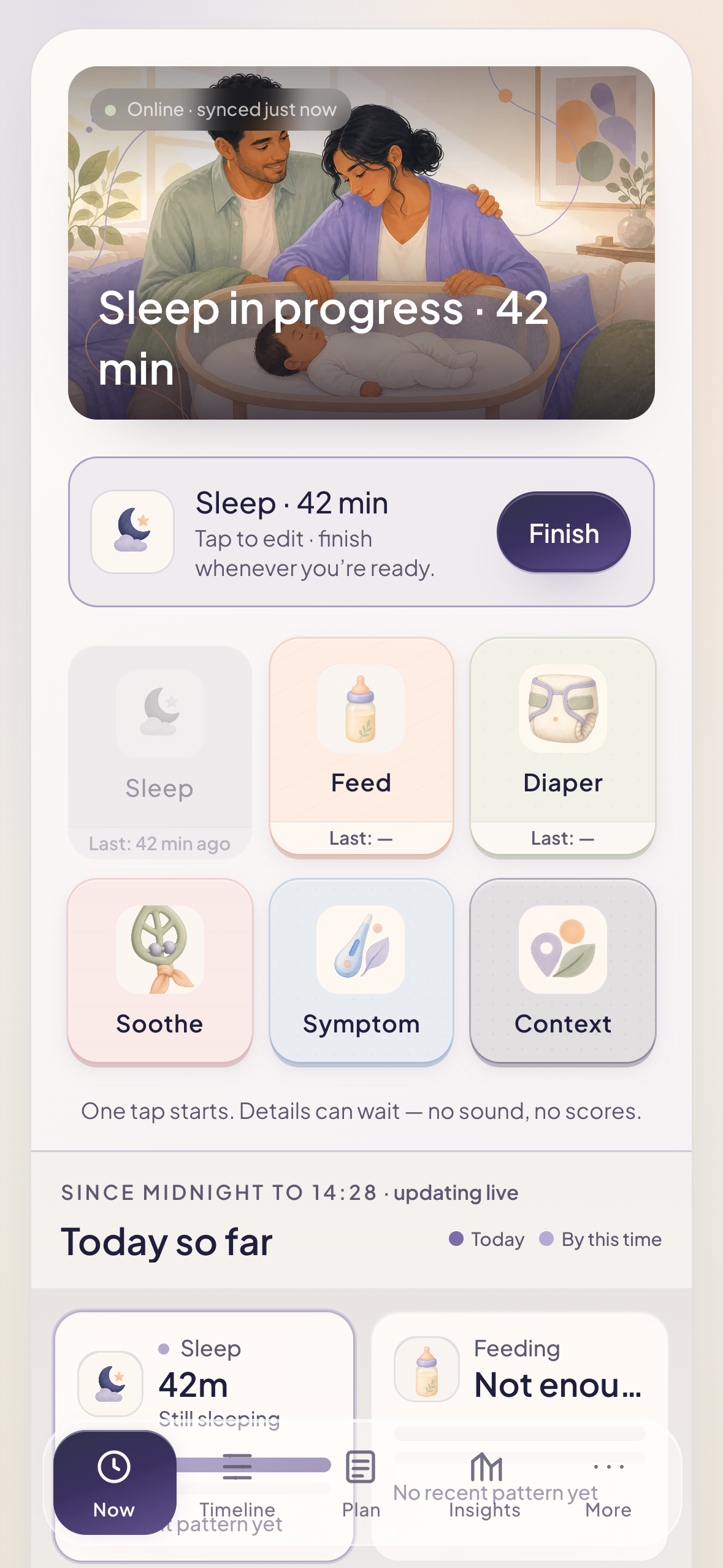
nini.bot: shared baby-care PWA shipped in 11 days

Health · AI Development · Mobile Development

nini.bot: shared baby-care PWA shipped in 11 days

A shared baby-care app for two caregivers, live as an installable PWA after 11 active days and 159 merged PRs through the harness we install for clients.

View project
Teamdeck legacy modernization with a governed AI SDLC

SaaS · AI Development · Backend Development

Teamdeck legacy modernization with a governed AI SDLC

Teamdeck stage moved to Temporal, Pulumi and ECS in about nine weeks: 60 pull requests through written plans and CI gates, no feature freeze. Prod is next.

View project
Real-time AI voice avatar with ~1.5s perceived latency
Playing

Data Management · AI Development · Product Discovery

Real-time AI voice avatar with ~1.5s perceived latency

For a brand experience agency we built a voice AI avatar in three weeks: about 1s speech-to-text, 0.5s text-to-speech, ~1.5s perceived reply.

View project
12Questions we get

What teams ask us about Agentic Harness

Straight answers from the engineers who build with it. Missing yours?

Ask an engineer

10 questions

Related. Agentic SDLC is the offer-shaped engagement. This expertise page is the technology and harness depth buyers and LLMs search for.

No. We standardize the harness and guardrails so your approved tools plug in without chaos.

Harness engineering is designing the system around a coding agent so its output is reliable and reviewable: instruction files, scoped tools, sandboxes, hooks, CI feedback and evals. The engineer's job shifts from writing each change to defining intent, constraints and checks. OpenAI, Stripe, Ramp and Cloudflare have all published how they run such harnesses in 2026.

AGENTS.md is an open, tool-neutral instruction format read by Codex, Cursor, Copilot, Gemini CLI and many others. CLAUDE.md is Claude Code's own instruction file. Current Claude Code versions read AGENTS.md when no CLAUDE.md is present, and a CLAUDE.md can import AGENTS.md, so teams can keep one shared file and add Claude-specific rules on top.

Yes for anything beyond supervised, step-by-step use. A sandbox limits the files and network hosts an agent can reach, which lets it work without constant approval prompts; Anthropic saw 84% fewer prompts internally. Stripe and Ramp run agents in isolated devboxes or VMs with no production access.

Instructions are context the model may or may not follow. Hooks are commands the harness runs at fixed points, for example before every tool call, and can deterministically block an action. Use instruction files for conventions and hooks or permission rules for anything that must never happen.

Use sub-agents for work that produces a lot of intermediate output, such as codebase search, log analysis or review, so only a short summary returns to the main agent's context. They also let you restrict tools and route cheaper tasks to smaller models. Anthropic's guidance notes sub-agents often return summaries of 1,000 to 2,000 tokens.

Build when you have strong CI, many repos and internal context that off-the-shelf tools cannot reach, as Stripe, Ramp, Spotify and Uber did. Most teams should start with an interactive agent plus instruction files, hooks and MCP tools, and only build once they can measure where the managed options fall short.

Track merged pull requests per engineer, review time, revert and incident rates, and cost per merged change rather than lines of code or suggestions accepted. Run a repo-specific eval suite so harness and model changes can be compared. Anthropic reported a 67% increase in merged PRs per engineer per day after adopting Claude Code.

Keep it small and bounded. Stripe caps its Minions at two CI rounds per run because further rounds show diminishing returns, and runs fast local lint checks on each push before CI. After the cap, hand the task back to a human.

13Sources

Agentic Harness glossary and sources

Reviewed by our engineers. Last updated 16 November 2026.

Harness
Everything around the model that turns it into a working agent: instructions, tools, sandbox, hooks, feedback loops and evals.
AGENTS.md
An open Markdown format for project instructions to coding agents, stewarded by the Agentic AI Foundation.
Context engineering
Curating which tokens enter the model's limited context window at each step of an agent's run.
Context rot
The decline in a model's recall accuracy as its context window fills up.
Compaction
Summarizing a conversation near the context limit and continuing in a fresh window with the summary.
Sub-agent
A specialized agent with its own context window, prompt and tool set that returns a condensed result to the main agent.
Hook
A user-defined command that runs at a fixed point in the agent lifecycle, such as before a tool call, and can block or modify the action.
Background agent
An agent that runs unattended in a cloud sandbox from a trigger such as a Slack message and delivers a pull request.
Devbox
A pre-warmed, isolated development environment an agent runs in, separated from production resources.
Agent skill
A packaged folder of instructions and scripts an agent loads on demand for a specific task.

Sources

  1. [1]AGENTS.mdagents.md ↗
  2. [2]Linux Foundation announces the Agentic AI Foundationlinuxfoundation.org ↗
  3. [3]Effective harnesses for long-running agents (Anthropic)anthropic.com ↗
  4. [4]Effective context engineering for AI agents (Anthropic)anthropic.com ↗
  5. [5]Claude Code sandboxing (Anthropic)anthropic.com ↗
  6. [6]Claude Code hooks referencecode.claude.com ↗
  7. [7]Claude Code sub-agentscode.claude.com ↗
  8. [8]Codex AGENTS.md discoverylearn.chatgpt.com ↗
→Keep exploring

Built alongside it

  • Related hubVoice AI SystemsInbound and outbound voice agents judged on latency, barge-in, and handoff.
  • Related hubOpenAI RealtimeSpeech-to-speech agents on OpenAI Realtime with WebRTC, SIP, and live tools.
  • Related hubLangChainProduction agents and RAG on LangChain, with a clean path into LangGraph.
  • Related hubLangGraphDurable LangGraph workflows: checkpoints, interrupts, multi-agent control.
  • Related hubModel Context Protocol (MCP)MCP tool servers that pass security review on the 2026-07-28 core.

Longer reads

  • AI Coding Harness Setup: AGENTS.md, MCP, and Team GuardrailsA practical guide to AI coding harness setup in 2026. Use AGENTS.md, MCP coding agents, and CLI coding agent governance to ship faster with safer merges.
  • CLI Coding Agents in 2026: What Engineering Leaders StandardizeA practical guide to CLI coding agents 2026: OpenCode vs Copilot CLI, control planes, cost and security guardrails, and a 90 day rollout plan.
  • Measuring Agentic Engineering ROI: Baselines, Pilots, ScaleA practical guide to AI coding ROI: capture baselines, run pilots, track flow, quality, control, and economics, then decide to scale, adjust, or stop.

How we deliver it

  • Generative AI Solutions
  • Agentic MVP
  • Agentic SDLC
  • Hybrid Teams

Agentic SDLC

Harness coding agents before they sprawl

agents.md, MCP tools, CI guardrails, and ROI you can measure.

Apptension site footer

Taking new projects

Have a product to build, fix or scale?

Apptension is a senior-only software development company headquartered in Poznań, Poland. Since 2012 our engineers have shipped 360+ AI and SaaS products for startups, scale-ups and enterprises across the US, UK and EU: agentic MVPs, RAG and voice AI systems, multi-tenant SaaS and legacy modernization.

Projects shipped
360+
Founded
2012
Senior engineers
30+
Client CSAT
100%

Send a few lines about your product. A person from our team replies within one business day.

Start a projectScope it in Scope Studio
  • Emailcontact@apptension.com
  • Phone+48 533 352 052Poznań, Poland

  • Agentic MVP developmentNew
  • Agentic SDLC implementation
  • Product & SaaS development
  • Legacy modernization
  • Generative AI development
  • SaaS development company
  • Vibe-coded prototype to production
  • End-to-end software development
  • Senior engineering team extension
  • Product consulting & discovery
  • Tech due diligence for investors
  • All services

  • LLM application engineering
  • RAG & retrieval engineering
  • Voice AI agent development
  • MCP server development
  • LangGraph & LangChain agents
  • AI agent evaluation & observability
  • Node.js development company
  • Python & Django development
  • React & Next.js development
  • React Native app development
  • All expertise

  • Open-source SaaS Boilerplate
  • SaaS P&L model template
  • Walkthrough Studio
  • Agentic SDLC playbook
  • AI SDLC maturity assessment
  • Agentic SDLC ROI calculator
  • Founder resources
  • Events & exec dinners
  • Open source
  • Builder's Toolkit

  • Boutique vs large software house
  • Build vs buy vs partner
  • How to choose an AI & RAG partner
  • Team augmentation without chaos
  • Django vs Node.js for SaaS
  • React Native vs Flutter
  • AI in regulated industries
  • All guides

  • About Apptension
  • Case studies
  • Careers
  • Blog
  • Tech Radar
  • Agentic SDLC hub
  • Contact

Senior AI engineers shipping enterprise-grade AI and SaaS with startup speed.

Headquarters

Apptension sp. z o.o.23 Lutego 26
61-743 Poznań, Poland (opens Google Maps)

VAT-ID PL7831720203 · REGON 360404804
KRS 0000534235

Follow Apptension

Client reviews on Clutch

© 2012–2026 Apptension sp. z o.o. All rights reserved.

Privacy policySitemapllms.txt