Introduction
Adding an LLM feature to a SaaS product built on a boilerplate feels easy on day one. You wire up an API key, ship a chat screen, and call it done.
Then users show up with messy inputs, partial context, and expectations you did not design for. The model hallucinates. Tool calls fail. Costs spike. And your support inbox becomes the new eval suite.
This article is about the unglamorous part: prompt management, tool calling, and guardrails that hold up in production. It is written from the perspective of teams shipping under time pressure, often on top of an existing boilerplate.
- We will treat prompts like code, not copy
- We will make tool calling observable and testable
- We will add guardrails that reduce risk without killing usefulness
Insight: If you cannot explain why the model answered the way it did, you do not have an AI feature yet. You have a demo.
What we mean by a boilerplate in this context
A boilerplate usually gives you the basics:
- Auth, roles, and user management
- Billing and subscriptions
- A standard backend stack and database
- UI components and routing
- Logging and deployment defaults
Those defaults are helpful, but they are also opinionated. LLM features tend to cut across boundaries: auth, data access, background jobs, analytics, and support tooling.
That is why prompt management, tool calling, and guardrails need a first class place in the architecture, not a couple of helper functions tucked into a controller.
Track these from day one:
- Task success rate: percent of sessions where the user reaches the intended outcome
- Tool success rate: percent of tool calls that return valid results
- Fallback rate: percent of sessions that hit refusal, clarification, or human handoff
- Latency: p50 and p95 for end to end response time
- Cost per successful task: total tokens and tool compute divided by successful outcomes
- User rating: a simple thumbs up or down with optional comment
Add a weekly review sample:
- 20 to 50 sessions
- label: correct, partially correct, incorrect, unsafe
- note: prompt version, tools used, and missing context
This is enough to drive real iteration without building a full research program.
Where LLM features break first in a boilerplate product
Most failures are not “the model is dumb”. They are product and engineering problems.
Common break points we see:
- Context drift: the app passes too much text, or the wrong text, and the answer becomes generic
- Permission leaks: the model gets access to data it should not see through retrieval or tools
- Silent tool failures: the model calls a tool, the tool errors, and the user gets a confident answer anyway
- Prompt sprawl: prompts live in five places, no versioning, no review process
- Cost surprises: a feature that looked cheap in testing becomes expensive under real usage patterns
Key Stat: 76% of consumers get frustrated when organizations fail to deliver personalized interactions.
Personalization is not just “use their name”. It is about using the right context, safely, at the right time.
What we learned building LLM products under real timelines
In our work on L.E.D.A., we built an AI powered exploratory data analysis tool in 10 weeks. The hard part was not wiring an LLM. The hard part was making outputs reliable enough that analysts would trust them.
In Mobegí, we built an internal knowledge assistant in 12 weeks. The technical tension was constant: give the model enough context to be useful, but not so much that it leaks sensitive data or makes up answers.
If you are integrating LLMs into a SaaS boilerplate, assume you will hit the same tension. Plan for it.
- Use a narrow first use case
- Instrument everything
- Add guardrails early, not after the first incident
Prompts as code
Versioned and reviewed
Prompts live in one place, ship with changelogs, and are tied to eval cases.
Tools as APIs
Strict schemas and permissions
Tool calls validate inputs, enforce tenant isolation, and return structured results.
Guardrails with metrics
Measured, not assumed
Every block, refusal, and fallback is logged so you can tune without guessing.
Prompt management that scales past the first release
Prompt management is not a fancy UI. It is a set of habits.
The moment you have:
- more than one prompt
- more than one environment
- more than one person editing prompts
…you need structure.
A simple prompt lifecycle
- Draft the prompt with a clear job and constraints
- Run it against a small, representative eval set
- Review changes like code
- Ship behind a feature flag
- Monitor quality and cost
- Iterate with versioned changes
Insight: Treat prompts as product logic. If you would not hot edit business rules in production, do not hot edit prompts either.
A prompt template that does not rot immediately
You want prompts that are:
- explicit about role and scope
- explicit about allowed tools
- explicit about refusal behavior
- explicit about output format
Here is a pattern that holds up better than “be helpful”.
SYSTEM
You are an assistant inside {product_name}. Your job is to help the user complete {task}.

Rules:
- Use only the provided context and tool results.
- If you are missing required data, ask one question.
- If the user asks for restricted data, refuse and explain briefly.
- Output must be valid JSON matching the schema.

CONTEXT
{retrieved_context}

USER
{user_message}
This is not magic. It just makes failure modes visible. When the model breaks the rules, you can detect it.
To keep prompts maintainable, store:
- prompt name
- version
- owner
- changelog
- expected output schema
- links to eval cases
If you already use a SaaS boilerplate with migrations and seed data, you can store prompts in the database and load them at runtime. Or store them in code and ship with the app. Both work. The key is versioning and review.
featuresGrid:Prompt management checklist
- Single source of truth: one repository or table for prompts
- Versioning: every change increments a version and keeps history
- Schema first outputs: JSON or strict markdown sections, not free form text
- Eval set: 20 to 100 examples that represent real user requests
- Rollbacks: ability to pin a prompt version per environment
- Ownership: one person accountable for each prompt
Tool calling: make it boring, observable, and safe
Tool calling is where LLM features stop being chat and start being product.
It is also where most production incidents happen.
Typical tool calling stack inside a SaaS:
- LLM decides it needs data or an action
- It calls a tool with structured arguments
- Your backend executes the tool
- You return results to the LLM
- The LLM composes a user facing answer
If any step is fuzzy, you get flaky behavior.
Example: In L.E.D.A., natural language queries had to turn into concrete analytical steps. Reliability depended on strict tool schemas and defensive execution, not on “smarter prompts”.
Design tools like public APIs, not internal helpers
A tool should have:
- a narrow purpose
- a strict input schema
- clear error states
- permission checks
- rate limits n A good tool is boring. It does one thing. It returns structured output.
Here is a minimal example of a tool schema in TypeScript style.
type GetSalesSummaryArgs = {
  startDate: string; // ISO
  endDate: string; // ISO
  granularity: "day" | "week" | "month";
};

type GetSalesSummaryResult = {
  currency: string;
  total: number;
  buckets: Array;
  warnings ? : string[];
};
Then build the tool executor like you would any endpoint:
- validate args
- enforce tenant isolation
- log inputs and outputs (with redaction)
- return typed errors
If you do this, your prompts get simpler because the tool contract carries the complexity.
processSteps:Tool calling flow we use in production
- Classify intent: is this a pure answer, retrieval, or an action?
- Select tools: restrict the model to a small allowed set for this intent
- Validate arguments: reject invalid args before execution
- Execute with permissions: tenant checks, role checks, row level filters
- Return structured results: no prose, only data
- Compose final answer: model explains what it did and cites tool results
- Log and measure: latency, tool error rate, retries, user satisfaction
Hallucinated facts
- Mitigation: require citations from retrieval or tool results, validate output schema
Wrong tool arguments
- Mitigation: JSON schema validation, retry with a constrained repair prompt
Permission leaks
- Mitigation: enforce tenant and role checks in tools, not in prompts
Prompt drift over time
- Mitigation: version prompts, run evals on every change, keep a rollback path
Costs creep up
- Mitigation: cap context size, cache retrieval, measure cost per successful task
Guardrails: what to block, what to allow, and how to measure it
Guardrails get framed as censorship. In practice, they are basic product quality.
You need guardrails because:
- users will paste sensitive data
- users will ask the model to do unsafe actions
- the model will sometimes invent facts
- retrieval will sometimes surface the wrong document
The goal is not perfect safety. The goal is predictable behavior.
Insight: A guardrail that triggers too often is just a bug with better branding.
A practical guardrail stack
We usually layer guardrails. Each layer catches a different failure mode.
- Input filtering: detect secrets, personal data, or prohibited content
- Context controls: limit what retrieval can return, apply tenant scoping, redact fields
- Tool gating: allow only safe tools for the user role and current state
- Output validation: enforce JSON schema, length limits, and citation requirements
- Human fallback: if confidence is low, ask a clarifying question or route to support
For regulated industries, add:
- audit logs for every tool call
- configurable retention for prompts and completions
- policy driven access rules (zero trust principles)
This lines up with the same thinking we use in enterprise architecture work: isolate sensitive data, enforce policy at boundaries, and make actions auditable.
benefits:Guardrails that improve UX, not just compliance
- Fewer dead ends: the assistant asks one good question instead of guessing
- Less support load: fewer “it said the wrong thing” tickets with no reproduction steps
- Safer defaults: actions require explicit confirmation
- More trust: users see what data was used and what tools ran
- Faster debugging: structured logs tie an answer to prompt version and tool results
Putting it together: an integration plan that fits a boilerplate
If you try to retrofit everything at once, you will stall. If you ship without structure, you will pay later.
Here is a plan that usually works.
A phased rollout with clear checkpoints
Pick one job to automate
- Example: “summarize a report”, “answer questions from internal docs”, “draft an analysis plan”
Define success metrics before you write prompts
- task completion rate
- hallucination rate (manual review at first)
- tool success rate
- median latency
- cost per successful task
Build the LLM gateway layer
- one module that handles prompt loading, tool calling, logging, and policy checks
- avoid sprinkling LLM calls across controllers
Add prompt versioning and an eval set
- start small, but make it repeatable
Ship behind a feature flag
- enable for internal users first
Run UAT like you mean it
- treat the model like a new teammate that needs onboarding and supervision
Insight: Your first production users are your test suite. The difference is whether you instrumented the feature so you can learn from them.
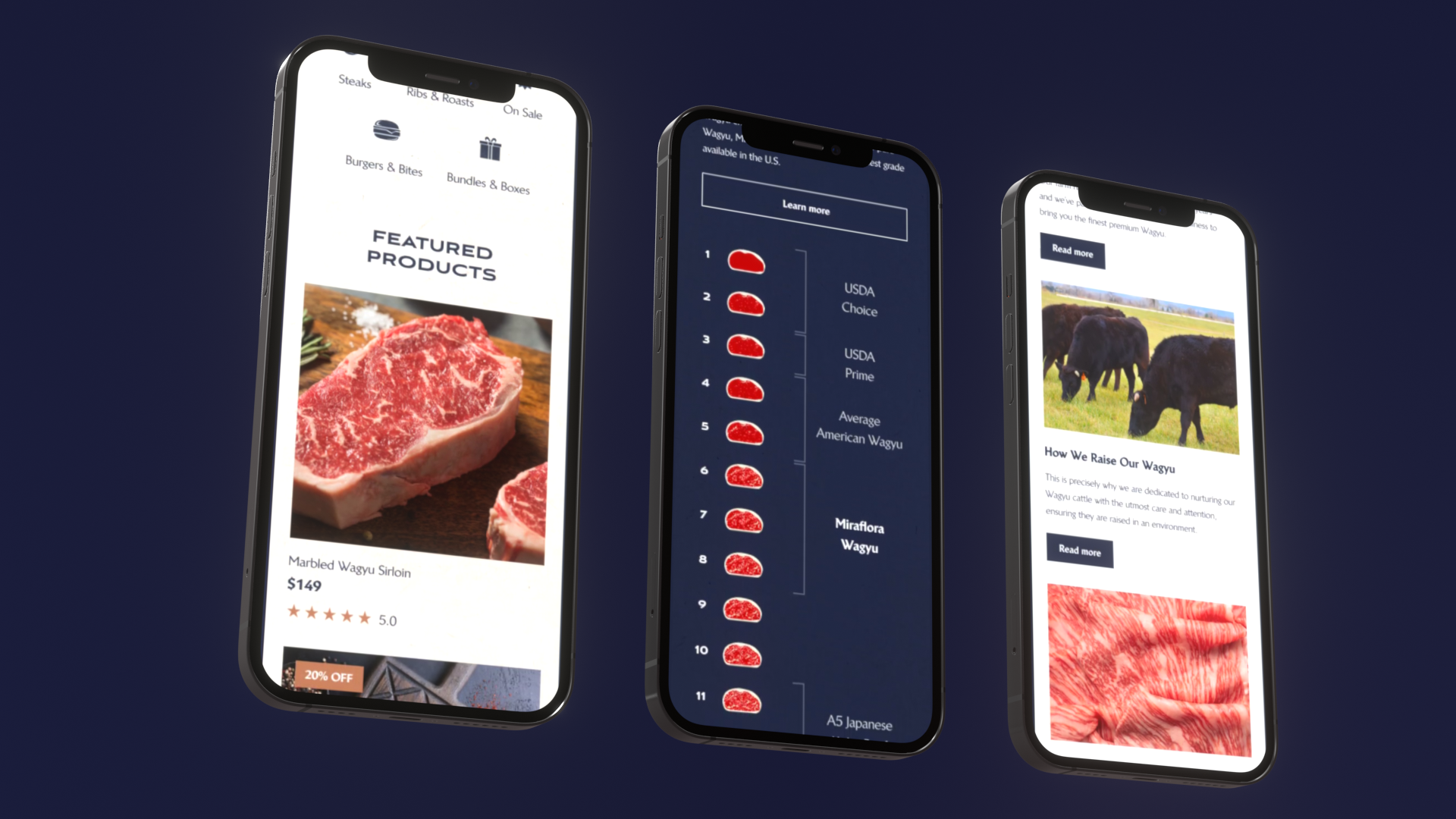
To ground this in delivery reality: we have shipped full products in tight windows like 4 weeks for Miraflora Wagyu’s custom Shopify build. Speed is possible, but only if you keep scope tight and choose defaults that do not create hidden work later.
A comparison table: where to put prompts and policies
| Decision | Option A | Option B | What breaks first |
|---|---|---|---|
| Prompt storage | In code repo | In database | Code: slower iteration. DB: risky hot edits without review |
| Tool execution | In app server | Separate service | App: tight coupling. Service: more ops, but cleaner isolation |
| Guardrails | Prompt only | Multi layer enforcement | Prompt only: easy to bypass, hard to audit |
| Observability | Basic logs | Structured traces per request | Basic logs: you cannot reproduce failures |
| Release strategy | Ship to all | Feature flag + cohorts | Ship to all: noisy failures, no learning loop |
Conclusion
Integrating LLMs into a SaaS boilerplate is not hard. Integrating them without turning your product into an expensive science project is the hard part.
If you take one thing from this, make it this: LLM features need the same discipline as any other production system. Versioning. Observability. Permissions. Rollbacks.
Next steps that tend to pay off fast:
- Create a single LLM gateway in your backend for prompts, tools, and logging
- Version prompts and tie every response to a prompt version and eval set
- Design tools as strict APIs with permission checks and typed errors
- Add layered guardrails and measure how often they trigger
- Track metrics weekly and prune features that do not justify cost
Hypothesis to test: If you add structured tool schemas and output validation early, you will reduce “confident wrong answers” more than you would by prompt tweaking alone. Measure it with a weekly review sample and a simple hallucination rubric.