• 01Services
  • 02Portfolio
  • 03About
  • 04Careers
  • 05Blog

Services

All services

New · AI-native delivery

Senior engineers with AI coding agents

Ship a production MVP in weeks, or install agents into the team you already have.

Agentic MVPNewA production MVP your customers can rely on. Validate in 1–2 weeks, launch in 4–8, own all of it.Explore
  • Agentic SDLCAI coding agents installed into your delivery process in two weeks, with guardrails and metrics.
Agentic SDLC hub
>_ProductScope StudioFrom an idea to a shareable PRD_> Open_> Open
Emailcontact@apptension.comCall+48 533 352 052

HQ in Poznań, Poland

Start a project
Services
About
Portfolio
Careers
Blog
Get in touch
All technology hubs

AI system hub/Reviewed 16 November 2026/16 min read

Multi-Agent Systems

We design multi-agent systems where an orchestrator plans, workers run in isolated contexts, and results merge through structured outputs. Token budgets, durable state, and per-agent traces keep cost and failures visible in production.

Short answer

Most products need one well-equipped agent; multi-agent pays off when work splits into parallel, read-heavy subtasks worth the extra tokens. We measure that first, then ship orchestrator-worker systems with budgets, tracing, and checkpointed recovery.

Clue 0190.2%better than a single agent on Anthropic's internal research eval

Shake for the next clue

Source: anthropic.com ↗
1 / 4
Multi-Agent in numbers
90.2% better than a single agent on Anthropic's internal research eval (source: anthropic.com)
~15x tokens used by multi-agent systems compared with chat (source: anthropic.com)
14 distinct failure modes in the MAST taxonomy (source: arxiv.org)
150+ organizations supporting the A2A protocol (source: linuxfoundation.org)

Your route through this hub

CoversOrchestrator-workerLangGraphClaude Agent SDKOpenAI Agents SDKGoogle ADKA2AMCPPython

  1. Stage 1 · Understand

    Is it right for our product?

    • 01What it isThe plain-words version
    • 02Where it pays off7 proven patterns
    • 03How it fits7 steps, one request
    • 04How it got here9 milestones
  2. Stage 2 · Choose

    What would we build it with?

    • 05Toolkit18 tools mapped
    • 06Who runs it10 teams in production
    • 07Alternativesvs 3 options
  3. Stage 3 · Ship

    How do we go live without surprises?

    • 08Readiness check24 checks, scored
    • 09What breaks6 mistakes and fixes
  4. Stage 4 · Decide

    What would you do in our place?

    • 10Should you use it?Our verdict, scope and rollout
    • 11What we shipped3 case studies
    • 12Questions we get8 straight answers
    • 13Sources12 cited, 10 terms

__> Teams we have built for

Multi-Agent
01What it is02Where it pays off03How it fits04How it got here05Toolkit06Who runs it07Alternatives08Readiness check09What breaks10Should you use it?11What we shipped12Questions we get13Sources
01What it is

What is Multi-Agent?

A multi-agent system is an LLM application in which several agents, each with its own instructions, tools, and context window, cooperate on one task, usually with an orchestrator that plans, delegates to worker agents, and merges their results. It trades higher token use for parallelism and context isolation.

Why teams adopt it

Some tasks exceed what one context window and one sequential loop can handle: broad research, many independent data sources, or dozens of specialized tools. Anthropic measured a 90.2% gain from an orchestrator-worker design on research tasks, but also roughly 15x the tokens of a chat, so in 2026 the real skill is knowing when the split pays. Standard protocols such as A2A and MCP and stable frameworks such as LangGraph 1.0 and Microsoft Agent Framework 1.0 now make these systems maintainable.

How it works

  1. 1

    Plan

    An orchestrator (lead agent) analyzes the request and decides how many workers it needs, scaling effort to complexity instead of following a fixed workflow.

  2. 2

    Brief

    Each worker gets an explicit objective, output format, tool guidance, and task boundary. Vague briefs are the main cause of duplicated or conflicting work.

  3. 3

    Run in parallel

    Workers execute in separate context windows, often concurrently, and return condensed results rather than full transcripts.

  4. 4

    Merge and verify

    The orchestrator synthesizes results, and a verifier or citation step checks the output before it reaches the user.

  5. 5

    Persist and recover

    State is checkpointed so a failed worker can be retried or resumed without restarting the whole run.

02Where it pays off

Where Multi-Agent pays off

The jobs it does best in real products: the problem you would have, how we would build it, and who already runs it that way.

Deep research and due diligence

Problemstep 1
Broad questions need dozens of searches across sources that do not fit one context window.
Patternstep 2
A lead agent splits the question, parallel subagents search and condense findings, and the lead writes the report with a citation pass at the end.
In the wildstep 3
Anthropic Claude Research and Exa

Support with specialist and safety agents

Problemstep 1
One prompt cannot hold every policy, account tool, and compliance check.
Patternstep 2
A supervisor routes by intent to tools and specialists, while an independent classifier agent screens messages and hands risky cases to humans.
In the wildstep 3
Fanatics Betting and Gaming

Structured intake to a plan

Problemstep 1
Free-text requests must become valid, fully specified records such as campaigns or orders.
Patternstep 2
A router checks which fields are present, small extractor agents resolve each field in parallel against real reference data, and a planner agent assembles the result.
In the wildstep 3
Spotify Ads AI

Enterprise operations across many systems

Problemstep 1
A single agent with access to every internal system picks the wrong one for similar-sounding requests.
Patternstep 2
One sub-agent per system or data source with its own scoped tools, coordinated by a supervisor that handles intent recognition and scheduling.
In the wildstep 3
SciOne AI and LinkedIn Hiring Assistant

Coding agents with a verifier

Problemstep 1
Long autonomous coding runs drift and compound errors in later steps.
Patternstep 2
A manager scopes small tasks, editors make changes, and a verifier checks results and asks the user when unsure, with commits at each step for rollback.
In the wildstep 3
Replit Agent

Test generation pipelines

Problemstep 1
Raising coverage by hand costs engineers minutes per covered line.
Patternstep 2
Separate stages prepare context, generate tests, execute builds, and validate or repair, gated by coverage deltas and mutation checks.
In the wildstep 3
Uber AutoCover

Bulk catalog and integration work

Problemstep 1
Mapping large catalogs and writing partner integrations takes months of manual effort.
Patternstep 2
Many parallel agents handle catalog mapping and file checks, while a separate crew writes, tests, and deploys integration code.
In the wildstep 3
Gelato
03How it fits

How an orchestrator-worker request flows

One real request, step by step: which part of the system handles it, and why that part is there.

01 Entry02 Orchestrator03 Workers04 Tools05 Runtime
Step 1/7·Request
Hover a part for detail
04How it got here

Is Multi-Agent a safe bet?

The releases and decisions that matter when you are betting a product on it, in order.

  1. 2024Dec

    Building effective agents

    Anthropic catalogued agentic patterns including orchestrator-workers and evaluator-optimizer, and advised starting with the simplest design that works.

    anthropic.com
  2. 2025Mar

    Why Do Multi-Agent LLM Systems Fail?

    The MAST paper introduced a failure taxonomy for multi-agent systems and found minimal gains on popular benchmarks.

    arxiv.org
  3. 2025Apr

    Google launches A2A

    Google introduced the Agent2Agent protocol with more than 50 partners as a complement to MCP for agent-to-agent collaboration.

    developers.googleblog.com
  4. 2025Jun

    Anthropic publishes its multi-agent research system

    Anthropic detailed the orchestrator-worker design behind Claude Research, including token costs, prompting rules, and production reliability lessons.

    anthropic.com
  5. 2025Jun

    A2A moves to the Linux Foundation

    Google contributed A2A to the Linux Foundation for vendor-neutral governance, with more than 100 companies supporting it.

    linuxfoundation.org
  6. 2025Oct

    Microsoft Agent Framework announced

    Microsoft combined AutoGen's orchestration patterns with Semantic Kernel's enterprise features in one open-source multi-agent framework.

    devblogs.microsoft.com
  7. 2025Oct

    LangGraph 1.0

    LangGraph reached 1.0 with durable state, built-in persistence, and human-in-the-loop APIs, citing Uber, LinkedIn, and Klarna as production users.

    langchain.com
  8. 2026Mar

    A2A v1.0

    The A2A project shipped v1.0.0, its first stable specification, followed by v1.0.1 in May 2026.

    github.com
  9. 2026Apr

    Microsoft Agent Framework 1.0 GA

    Microsoft declared Agent Framework 1.0 generally available for .NET and Python, with stable sequential, group chat, and Magentic orchestrations.

    techcommunity.microsoft.com
05Toolkit

What you would build Multi-Agent with

The libraries and services we would actually put in your stack, and when each one earns its place. Filter by layer or language.

Language
  • Framework · Python

    LangGraph

    Graph-based agent runtime with durable state, checkpoints, and human-in-the-loop; pick it when you need explicit control over multi-agent flow.

    LangChain45k
  • Framework · Python

    LangGraph Supervisor

    Prebuilt hierarchical supervisor on LangGraph; LangChain now recommends building the supervisor pattern directly via tools for most cases.

    LangChain1.7k
  • Framework · Python

    CrewAI

    Role-playing agents organized into crews; quick to prototype role-oriented business workflows.

    CrewAI61k
  • Framework · Python

    Microsoft Agent Framework

    Successor to AutoGen and Semantic Kernel for Python and .NET, with sequential, concurrent, group chat, handoff, and Magentic orchestrations plus MCP and A2A.

    Microsoft14.7k
  • Framework · Python

    AutoGen

    Research framework that popularized multi-agent conversation patterns; now archived, with Microsoft advising against production use.

    Microsoft62k
  • SDK · Python

    OpenAI Agents SDK (Python)

    Lightweight successor to Swarm with handoffs, agents as tools, guardrails, sessions, and built-in tracing.

    OpenAI30.7k
  • SDK · TypeScript

    OpenAI Agents SDK (JS)

    TypeScript version of the Agents SDK for Node-based multi-agent services.

    OpenAI4.0k
  • Framework · Python

    Google ADK (Python)

    Agent Development Kit with hierarchical agents and Sequential, Parallel, and Loop workflow agents; natural fit on Vertex AI.

    Google22k
  • Framework · Java

    Google ADK (Java)

    Java edition of ADK for JVM backends.

    Google1.8k
06Who runs it

Who already bets on Multi-Agent

Companies running it in production, and what for. Every entry links to their own write-up, so you can check our homework.

  • Its deep research agent on LangGraph uses a planner that spawns parallel research tasks with required JSON outputs and an observer that keeps full context, returning results in 15 seconds to 3 minutes.

    langchain.com
  • Replaced a single agent that confused similar requests with an Amazon Bedrock supervisor that routes to more than ten sub-agents for equipment, inventory, PLM, recipes, samples, and tests.

    aws.amazon.com
  • A main agent reasons about each build and hands smaller tasks to subagents, matching each task to the Claude model best suited to it.

    claude.com
  • Runs thousands of CrewAI agents to map product catalogs and has logistics agents write, test, and deploy carrier integrations, cutting carrier onboarding from 5 days to 10 minutes.

    crewai.com
  • Moved from a single ReAct agent to a manager agent, editor agents for coding tasks, and a verifier agent that checks work and often consults the user, built on LangGraph.

    langchain.com
  • An operator agent routes customer requests to task-specific agents, including an analyst agent for transaction questions, with each step sent to Opus, Sonnet, or Haiku by complexity.

    claude.com
  • Claude's Research feature uses a lead agent that plans and spawns parallel search subagents, a saved plan for long contexts, and a CitationAgent that attributes claims before results reach users.

    anthropic.com
  • Coordinates Hiring Assistant agents over its existing messaging system, with agents deployed as gRPC services in a skill registry, while incrementally adopting MCP and A2A.

    infoq.com
  • Ads AI on Google ADK splits campaign planning across router, goal, audience, budget, schedule, and media-planner agents running in parallel, producing plans in 5 to 10 seconds instead of 15 to 30 minutes.

    engineering.atspotify.com
  • A Claude Sonnet supervisor on Amazon Bedrock picks tools by intent while a separate Responsible Gaming classification agent screens every message and escalates high-severity cases to humans.

    aws.amazon.com
Startup · Search API01 / 10

Exa

Its deep research agent on LangGraph uses a planner that spawns parallel research tasks with required JSON outputs and an observer that keeps full context, returning results in 15 seconds to 3 minutes.

Source: langchain.com
07Alternatives

Single agent vs orchestrator-workers vs handoffs vs A2A federation

No option wins every row. Find the row that matters most for your product and the choice usually makes itself.

Single agent vs orchestrator-workers vs handoffs vs A2A federation
CriterionSingle agentOrchestrator-workersRouter with handoffsA2A federation
Control flowOne loop decides every stepLead plans and delegates, then synthesizesTriage passes the conversation to a specialistIndependent agents exchange tasks over a protocol
ContextOne shared windowIsolated per worker, condensed results backSpecialist inherits the conversationOpaque; agents share no internal memory
Token costLowest (about 4x chat)Highest (about 15x chat)Close to a single agentDepends on each remote agent
LatencySequential tool callsParallel workers cut wall time on broad tasksOne extra routing stepNetwork hops and async tasks
Main failure modeContext overflow on very long tasksDuplicated or conflicting worker outputMisroutingContract drift between teams
Best fitMost coding and write-heavy tasksResearch and analysis with parallel threadsSupport and intake with clear specialtiesCross-team or cross-vendor workflows
Single agent vs
  • Control flow

    Single agent

    One loop decides every step

    Orchestrator-workers

    Lead plans and delegates, then synthesizes

  • Context

    Single agent

    One shared window

    Orchestrator-workers

    Isolated per worker, condensed results back

  • Token cost

    Single agent

    Lowest (about 4x chat)

    Orchestrator-workers

    Highest (about 15x chat)

  • Latency

    Single agent

    Sequential tool calls

    Orchestrator-workers

    Parallel workers cut wall time on broad tasks

  • Main failure mode

    Single agent

    Context overflow on very long tasks

    Orchestrator-workers

    Duplicated or conflicting worker output

  • Best fit

    Single agent

    Most coding and write-heavy tasks

    Orchestrator-workers

    Research and analysis with parallel threads

08Readiness check

Is your Multi-Agent setup ready for real traffic?

The checks teams that run it well have in place before launch. Tick what you already have and see where you stand. Your answers stay on this device.

0%

0 / 24

Tick what you already have

  • Architecture decision0/4
  • Delegation and context0/4
  • Cost control0/4
  • Reliability0/4
  • Evaluation and observability0/4
  • Interop and security0/4
Architecture decision

01 · Architecture decision

Delegation and context

02 · Delegation and context

Cost control

03 · Cost control

Reliability

04 · Reliability

Evaluation and observability

05 · Evaluation and observability

Interop and security

06 · Interop and security

09What breaks

Where Multi-Agent projects go wrong

What we find most often when we audit or inherit a codebase, and how we fix it.

  • !

    Splitting write-heavy work

    Fix · Parallel agents that each make design decisions produce inconsistent results, as Cognition's Flappy Bird example shows. Keep writing in one agent and use subagents to read, search, or answer narrow questions.

  • !

    Vague worker briefs

    Fix · Short instructions lead workers to duplicate searches or drift out of scope. Specify objective, output format, tools, and boundaries for every delegation.

  • !

    Token costs nobody budgeted

    Fix · Multi-agent runs use around 15x the tokens of a chat. Set budgets per agent, scale worker count to query complexity, and reserve the pattern for tasks valuable enough to pay for it.

  • !

    Too many agents

    Fix · Each extra agent adds latency and coordination overhead. Start with one agent per distinct skill or data source and merge agents that always run together.

  • !

    Restarting from zero on failure

    Fix · Errors compound over long, stateful runs. Checkpoint state, return errors to the orchestrator, and resume from the last good step.

  • !

    No verification step

    Fix · Task verification failures are one of the three MAST categories. Add a verifier agent or deterministic checks (schemas, tests, citations) before output leaves the system.

Minimal orchestrator-worker with the OpenAI Agents SDK

>_ $
1
2
3
4
5
6
7
8
9
10
11
12
13
14
15
16
17
18
19
20
21
22
23
import asyncio
from agents import Agent, Runner

market = Agent(name="Market researcher",
               instructions="Assess market size and competitors. Return 5 bullet points.")
tech = Agent(name="Tech researcher",
             instructions="Assess technical feasibility and key risks. Return 5 bullet points.")

orchestrator = Agent(
    name="Lead analyst",
    instructions=("Split the question into market and technical sub-questions, call "
                  "both researchers, then write one memo that resolves any conflicts."),
    tools=[
        market.as_tool(tool_name="research_market", tool_description="Market and competitor research"),
        tech.as_tool(tool_name="research_tech", tool_description="Technical feasibility research"),
    ],
)

async def main():
    result = await Runner.run(orchestrator, input="Should we build AI bookkeeping for EU freelancers?")
    print(result.final_output)

asyncio.run(main())
10Should you use it?

When Multi-Agent is the right call, and how we ship it

Our engineers' view after building on it: where it earns its place, where something simpler wins, and the rollout we run.

Strong fit

  • Research, due diligence, or analysis that splits into independent parallel threads
  • Context that exceeds one window, such as large codebases or document sets
  • Many tools or data sources that overload a single agent's prompt
  • Agents owned by different teams or vendors that must cooperate over A2A

Weak fit

  • Write-heavy tasks such as most coding, where parallel agents make conflicting decisions
  • Low-value, high-volume requests that cannot absorb roughly 15x the tokens of a chat
  • Teams without tracing or evals to debug non-deterministic agent interactions

What we deliver

  • 01

    Single vs multi decision

    A single-agent baseline and eval set first, so any split is justified by measured quality per dollar.

  • 02

    Orchestrator-worker builds

    Lead agents that brief workers with objectives, output schemas, tool limits, and effort budgets.

  • 03

    Durable execution

    Checkpointed state, resumable runs, and human approval steps so one failed worker does not restart the job.

  • 04

    Interop and observability

    A2A and MCP at system boundaries, with per-agent traces and token accounting in your stack.

Multi-agent rollout

How we would roll it out

Every phase ends at a gate. Nothing moves on until it passes, so you always know what you have and what is next.

    010203Live
  1. 01

    Phase 1

    Baseline one agent

    Build the strongest single agent and an eval set from real tasks. Record cost and failure modes.

    You walk away with

    One strong single agent, an eval set built from real tasks, and its cost and failure modes on record.

    Gate Baseline evals and cost per task recorded

  2. 02

    Phase 2

    Split where it wins

    Add workers only for parallel, read-heavy subtasks and keep them if evals improve enough to cover the tokens.

    You walk away with

    Workers added only for parallel, read-heavy subtasks, each compared against the single-agent baseline.

    Gate Eval gain justifies the extra tokens

  3. 03

    Phase 3

    Harden for production

    Budgets per agent, checkpoints, tracing, gradual deploys, and runbooks for stuck or looping runs.

    You walk away with

    Per-agent budgets, checkpoints, traces, gradual deploys and runbooks for stuck or looping runs.

    Live when Failure drill passed and runbooks handed over

Related projects

Projects where we did this work

Explore our portfolio
LEDA: AI exploratory data analysis for retail analysts
Playing

Data Management · AI Development

LEDA: AI exploratory data analysis for retail analysts

LEDA lets retail analysts run exploratory data analysis by asking questions in plain English. We built the multi-agent LLM proof of concept in 10 weeks.

View project
Real-time AI voice avatar with ~1.5s perceived latency
Playing

Data Management · AI Development · Product Discovery

Real-time AI voice avatar with ~1.5s perceived latency

For a brand experience agency we built a voice AI avatar in three weeks: about 1s speech-to-text, 0.5s text-to-speech, ~1.5s perceived reply.

View project
nini.bot: shared baby-care PWA shipped in 11 days

Health · AI Development · Mobile Development

nini.bot: shared baby-care PWA shipped in 11 days

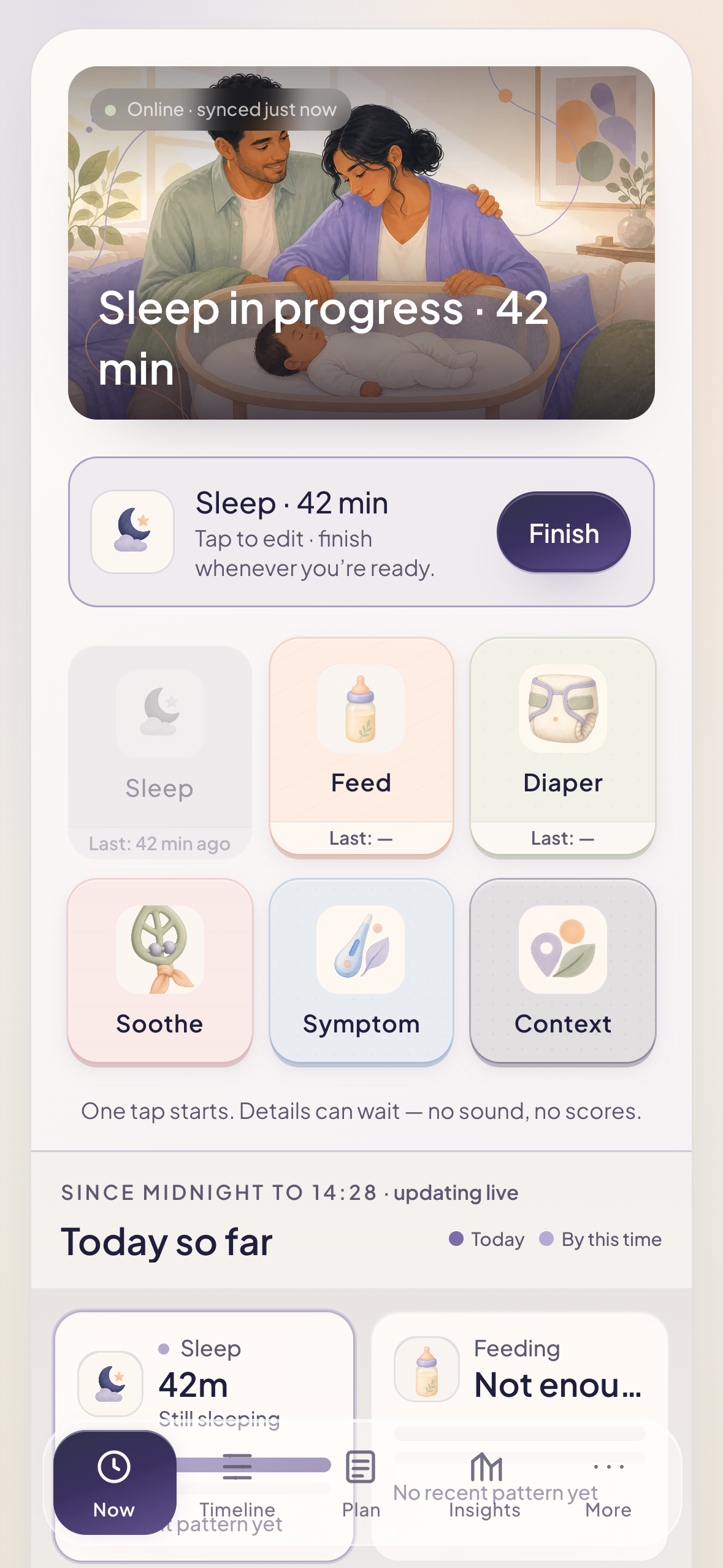
A shared baby-care app for two caregivers, live as an installable PWA after 11 active days and 159 merged PRs through the harness we install for clients.

View project
12Questions we get

What teams ask us about Multi-Agent

Straight answers from the engineers who build with it. Missing yours?

Ask an engineer

8 questions

Use multi-agent when the task splits into independent, read-heavy threads, such as broad research, or when information and tools exceed what one context window handles well. Keep a single agent for tasks with tight dependencies or many shared decisions, which includes most coding. Anthropic and Cognition, starting from opposite positions, both point to this read versus write distinction.

Anthropic measured that agents use about 4x the tokens of a chat interaction and multi-agent systems about 15x. The pattern only makes economic sense when the task's value covers that cost. Budgets per agent, smaller models for workers, and scaling the number of workers to query complexity keep spend in check.

MCP connects an agent to tools and data sources, while A2A connects agents to other agents, including ones built by other teams or vendors on different frameworks. Google launched A2A in April 2025 as a complement to MCP, and it reached a stable v1.0 under the Linux Foundation in March 2026. Many production systems use both.

LangGraph suits teams that want explicit graphs, durable state, and checkpoints. The OpenAI Agents SDK and Claude Agent SDK are lighter options tied to their providers' models and tooling, Google ADK fits Vertex AI shops, and Microsoft Agent Framework 1.0 fits .NET and Azure teams. CrewAI is quick for role-based business workflows.

No. Microsoft has archived AutoGen and advises against production use. New projects should start on Microsoft Agent Framework, which builds on AutoGen's orchestration patterns and Semantic Kernel and reached 1.0 general availability in April 2026, and Microsoft publishes a migration guide.

The MAST study analyzed more than 1,600 traces across seven frameworks and found 14 failure modes in three groups: system design issues, inter-agent misalignment, and task verification. In practice that means vague delegation, agents working on conflicting assumptions, and nobody checking the final result. Clear briefs, shared decision context, and a verification step address most of them.

Use handoffs when a specialist should take over and answer the user directly, as in support triage. Use agents as tools when a manager agent must keep control and own the final answer, as in research synthesis. The OpenAI Agents SDK supports both and lets you combine them.

Grade end states rather than exact paths, because agents can reach the same correct result in different ways. Anthropic started with about 20 real queries and an LLM-as-judge rubric covering factual accuracy, citations, completeness, source quality, and tool efficiency, then added human testing for edge cases. Per-agent traces show where tokens and failures come from.

13Sources

Multi-Agent glossary and sources

Reviewed by our engineers. Last updated 16 November 2026.

Orchestrator-worker
A pattern where a central LLM breaks a task down dynamically, delegates pieces to worker LLMs, and synthesizes their results.
Subagent
A worker agent with its own context window and tools, spawned by another agent for a focused subtask.
Handoff
Transferring the active conversation from one agent to a specialist that then responds directly.
Agents as tools
Exposing a specialist agent as a callable tool so a manager agent keeps control and owns the final answer.
Supervisor
A coordinating agent that decides which specialized agent to invoke next and controls communication between them.
Context engineering
Deciding exactly what information each model call receives, which becomes harder when context is split across agents.
A2A (Agent2Agent)
An open protocol, hosted by the Linux Foundation, for agents built on different frameworks to discover each other and exchange tasks.
Agent Card
A JSON document in A2A that describes an agent's capabilities so clients can pick the right agent for a task.
Durable execution
Persisting workflow state so long agent runs resume after crashes, restarts, or human approval pauses.
Rainbow deployment
Shifting traffic gradually between old and new versions so in-flight agent runs are not broken by a deploy.

Sources

  1. [1]How we built our multi-agent research system (Anthropic)anthropic.com ↗
  2. [2]Building effective agents (Anthropic)anthropic.com ↗
  3. [3]Don't Build Multi-Agents (Cognition)cognition.com ↗
  4. [4]How and when to build multi-agent systems (LangChain)langchain.com ↗
  5. [5]Why Do Multi-Agent LLM Systems Fail? (arXiv 2503.13657)arxiv.org ↗
  6. [6]A2A: A new era of agent interoperability (Google)developers.googleblog.com ↗
  7. [7]A2A surpasses 150 organizations (Linux Foundation)linuxfoundation.org ↗
  8. [8]Introducing Microsoft Agent Frameworkdevblogs.microsoft.com ↗
→Keep exploring

Built alongside it

  • Related hubLangGraphDurable LangGraph workflows: checkpoints, interrupts, multi-agent control.
  • Related hubOpenAI Agents SDKAgents SDK systems with handoffs, guardrails, tracing, and Realtime voice.
  • Related hubAnthropic ClaudeClaude API products: tool use, prompt caching, Agent SDK, Bedrock and Google Cloud.
  • Related hubModel Context Protocol (MCP)MCP tool servers that pass security review on the 2026-07-28 core.
  • Related hubAI Agent Evaluation & ObservabilityTraces, offline evals, and CI gates so agent quality can fail a merge.

Longer reads

  • Agentic AI: Ship Real Workflows With Guardrails That Hold UpA practical guide to agentic AI in production: boundaries, tool permissions, approval gates, failure modes, rollout stages, KPIs, and templates to ship safely.
  • LangChain vs LangGraph for Production Agents2026 decision guide: LangChain create_agent on the LangGraph runtime vs explicit StateGraph for durable branching and HITL.
  • Agent Eval, Cost, and CI GatesBuild offline eval suites, online scorers, cost budgets, and merge-blocking CI gates for production agents.
  • AI Unit Economics: Measure Cost Per Task, Not TokensLearn AI unit economics with cost per task, not tokens. Model routing, caching, retries, and observability to protect SaaS margins and conversion.

How we deliver it

  • Generative AI Solutions
  • Agentic MVP
  • Agentic SDLC
  • Hybrid Teams

Orchestration

Add agents only where they pay for themselves

Single-agent baseline, orchestrator-worker where evals justify it, budgets and traces per agent.

Apptension site footer

Taking new projects

Have a product to build, fix or scale?

Apptension is a senior-only software development company headquartered in Poznań, Poland. Since 2012 our engineers have shipped 360+ AI and SaaS products for startups, scale-ups and enterprises across the US, UK and EU: agentic MVPs, RAG and voice AI systems, multi-tenant SaaS and legacy modernization.

Projects shipped
360+
Founded
2012
Senior engineers
30+
Client CSAT
100%

Send a few lines about your product. A person from our team replies within one business day.

Start a projectScope it in Scope Studio
  • Emailcontact@apptension.com
  • Phone+48 533 352 052Poznań, Poland

  • Agentic MVP developmentNew
  • Agentic SDLC implementation
  • Product & SaaS development
  • Legacy modernization
  • Generative AI development
  • SaaS development company
  • Vibe-coded prototype to production
  • End-to-end software development
  • Senior engineering team extension
  • Product consulting & discovery
  • Tech due diligence for investors
  • All services

  • LLM application engineering
  • RAG & retrieval engineering
  • Voice AI agent development
  • MCP server development
  • LangGraph & LangChain agents
  • AI agent evaluation & observability
  • Node.js development company
  • Python & Django development
  • React & Next.js development
  • React Native app development
  • All expertise

  • Open-source SaaS Boilerplate
  • SaaS P&L model template
  • Walkthrough Studio
  • Agentic SDLC playbook
  • AI SDLC maturity assessment
  • Agentic SDLC ROI calculator
  • Founder resources
  • Events & exec dinners
  • Open source
  • Builder's Toolkit

  • Boutique vs large software house
  • Build vs buy vs partner
  • How to choose an AI & RAG partner
  • Team augmentation without chaos
  • Django vs Node.js for SaaS
  • React Native vs Flutter
  • AI in regulated industries
  • All guides

  • About Apptension
  • Case studies
  • Careers
  • Blog
  • Tech Radar
  • Agentic SDLC hub
  • Contact

Senior AI engineers shipping enterprise-grade AI and SaaS with startup speed.

Headquarters

Apptension sp. z o.o.23 Lutego 26
61-743 Poznań, Poland (opens Google Maps)

VAT-ID PL7831720203 · REGON 360404804
KRS 0000534235

Follow Apptension

Client reviews on Clutch

© 2012–2026 Apptension sp. z o.o. All rights reserved.

Privacy policySitemapllms.txt