• 01Services
  • 02Portfolio
  • 03About
  • 04Careers
  • 05Blog

Services

All services

New · AI-native delivery

Senior engineers with AI coding agents

Ship a production MVP in weeks, or install agents into the team you already have.

Agentic MVPNewA production MVP your customers can rely on. Validate in 1–2 weeks, launch in 4–8, own all of it.Explore
  • Agentic SDLCAI coding agents installed into your delivery process in two weeks, with guardrails and metrics.
Agentic SDLC hub
>_ProductScope StudioFrom an idea to a shareable PRD_> Open_> Open
Emailcontact@apptension.comCall+48 533 352 052

HQ in Poznań, Poland

Start a project
Services
About
Portfolio
Careers
Blog
Get in touch
All technology hubs

Stack hub/Reviewed 16 November 2026/15 min read

TypeScript Development

Strict TypeScript across the stack: typed APIs, validated inputs at every boundary, and monorepos that stay fast as they grow. We migrate JavaScript and Flow codebases incrementally, without freezing feature work.

Short answer

Choose TypeScript when one team ships web, mobile and backend code and you want the compiler to catch contract breaks before users do. We build and migrate TypeScript codebases with senior engineers only, strict mode on from the first commit. 360+ projects since 2012.

Clue 01#1most used language on GitHub by contributors

Shake for the next clue

Source: github.blog ↗
1 / 4
TypeScript in numbers
#1 most used language on GitHub by contributors (source: github.blog)
11.9x faster full build of the VS Code codebase on TypeScript 7 vs 6 (source: devblogs.microsoft.com)
48.8% of professional developers use TypeScript (source: survey.stackoverflow.co)
427M weekly npm downloads of the typescript package (source: api.npmjs.org)

Your route through this hub

CoversTypeScriptNode.jsReactNext.jstRPCZodTurborepopnpm

  1. Stage 1 · Understand

    Is it right for our product?

    • 01What it isThe plain-words version
    • 02Where it pays off6 proven patterns
    • 03How it fits6 steps, one request
    • 04How it got here9 milestones
  2. Stage 2 · Choose

    What would we build it with?

    • 05Toolkit16 tools mapped
    • 06Who runs it12 teams in production
    • 07Alternativesvs 2 options
  3. Stage 3 · Ship

    How do we go live without surprises?

    • 08Readiness check20 checks, scored
    • 09What breaks6 mistakes and fixes
  4. Stage 4 · Decide

    What would you do in our place?

    • 10Should you use it?Our verdict, scope and rollout
    • 11What we shipped3 case studies
    • 12Questions we get8 straight answers
    • 13Sources14 cited, 8 terms

__> Teams we have built for

TypeScript
01What it is02Where it pays off03How it fits04How it got here05Toolkit06Who runs it07Alternatives08Readiness check09What breaks10Should you use it?11What we shipped12Questions we get13Sources
01What it is

What is TypeScript?

TypeScript is a statically typed superset of JavaScript from Microsoft: you add type annotations, the compiler checks them, and the output is plain JavaScript that runs anywhere JavaScript runs. Since TypeScript 7.0 (July 2026) the compiler is a native Go port that builds large projects about 10x faster than the JavaScript-based compiler.

Why teams adopt it

In a SaaS codebase shared by web, mobile and backend teams, TypeScript turns contract changes into build errors instead of incidents, and editors can refactor safely across hundreds of packages. In 2026 the two old objections are weaker: TypeScript 7 removed most of the build-time cost, and Node.js runs .ts files directly through type stripping. GitHub reports TypeScript became the most used language on the platform by contributors in August 2025.

How it works

  1. 1

    Write typed code

    You write .ts or .tsx files with type annotations, interfaces and generics on top of standard JavaScript syntax.

  2. 2

    Configure the compiler

    tsconfig.json sets strictness, module resolution and targets. Since TypeScript 6.0, strict is on by default.

  3. 3

    Type check

    tsc builds a program from your files and dependencies and reports type errors. TypeScript 7 runs this in parallel in native code.

  4. 4

    Strip or emit

    Types are erased: a bundler, tsc, or Node.js type stripping turns the code into JavaScript. Types do not exist at runtime.

  5. 5

    Validate at runtime boundaries

    Because types vanish at runtime, schema libraries like Zod or Valibot check untrusted input and infer the static type from the same schema.

02Where it pays off

Where TypeScript pays off

The jobs it does best in real products: the problem you would have, how we would build it, and who already runs it that way.

End-to-end typed API in a monorepo

Problemstep 1
Frontend and backend drift apart and a renamed field breaks production.
Patternstep 2
Define procedures in tRPC with Zod inputs, export the router type, and import it in the client so any contract change fails the client build.
In the wildstep 3
Cal.com (packages/trpc in its monorepo)

Validated boundaries

Problemstep 1
Types are erased at runtime, so webhooks, forms and env vars can carry anything.
Patternstep 2
Parse every external input with a Zod or Valibot schema and derive the TypeScript type from it with z.infer, so validation and types never disagree.

Incremental migration from JavaScript or Flow

Problemstep 1
A large untyped codebase cannot stop shipping features for a rewrite.
Patternstep 2
Turn on allowJs, convert core modules first, auto-suppress remaining errors with @ts-expect-error, and track the count down on a dashboard.
In the wildstep 3
Yelp, Monzo and Sentry

Big-bang codemod conversion

Problemstep 1
Running two type systems side by side for years costs more than one coordinated cutover.
Patternstep 2
Prepare build, CI and tests for months, then generate the whole conversion with a codemod in one PR and merge during a repo lock.
In the wildstep 3
Stripe (3.7M lines, one weekend)

Fast monorepo CI

Problemstep 1
Type checks and builds grow with every package until CI takes longer than review.
Patternstep 2
Use pnpm workspaces with Turborepo or Nx remote caching, project references, and TypeScript 7's parallel checker so only affected packages rebuild.
In the wildstep 3
tldraw (pnpm and Turborepo)

Run TypeScript directly on Node.js

Problemstep 1
Build steps for scripts and small services add config and slow local loops.
Patternstep 2
Rely on Node.js type stripping with erasableSyntaxOnly and verbatimModuleSyntax, and keep tsc as a separate noEmit type check in CI.
03How it fits

How types flow through a TypeScript SaaS monorepo

One real request, step by step: which part of the system handles it, and why that part is there.

01 Clients02 API contract03 Validation04 Server05 Toolchain
Step 1/6·Request
Hover a part for detail
04How it got here

Is TypeScript a safe bet?

The releases and decisions that matter when you are betting a product on it, in order.

  1. 2017Apr

    Slack moves its desktop app to TypeScript

    Slack adopted gradual typing for its Electron desktop codebase and annotated most of it in about six months.

    slack.engineering
  2. 2022Mar

    Stripe converts 3.7M lines in one pull request

    Stripe migrated its Dashboard codebase from Flow to TypeScript with a codemod-generated PR over a single weekend.

    stripe.dev
  3. 2024May

    Figma retires its custom language for TypeScript

    Figma finished transpiling all of its Skew code to TypeScript, using a staged rollout with production traffic.

    figma.com
  4. 2025Mar

    Native Go port announced

    Anders Hejlsberg announced Project Corsa, a Go port of the compiler targeting about 10x faster builds.

    devblogs.microsoft.com
  5. 2025Mar

    tRPC v11 released

    tRPC v11 added TanStack Query v5 support, FormData and binary inputs, and streaming responses.

    trpc.io
  6. 2025Aug

    TypeScript tops GitHub

    GitHub's Octoverse data showed TypeScript passing Python as the most used language by monthly contributors.

    github.blog
  7. 2026Mar

    TypeScript 6.0, the last JavaScript-based release

    TypeScript 6.0 made strict the default and deprecated options like target es5, baseUrl and moduleResolution node10.

    devblogs.microsoft.com
  8. 2026Jul

    TypeScript 7.0 ships the native compiler

    TypeScript 7.0 replaced tsc with the Go port, with 8x to 12x faster builds on large open-source codebases.

    devblogs.microsoft.com
  9. 2026Oct

    TypeScript 7.1 beta brings a new compiler API

    The 7.1 beta added ES2026 support and a reworked programmatic API that tools need to move off TypeScript 6.

    devblogs.microsoft.com
05Toolkit

What you would build TypeScript with

The libraries and services we would actually put in your stack, and when each one earns its place. Filter by layer or language.

Language
  • Tooling · TypeScript

    TypeScript

    The compiler and language service; version 7 is the native Go build, installed with npm install -D typescript.

    Microsoft112k
  • SDK · TypeScript

    Zod

    The default schema validation library: define a schema once, validate at runtime and infer the static type.

    community (Colin McDonnell)44k
  • SDK · TypeScript

    Valibot

    Modular, tree-shakable schema validation; pick it when client bundle size matters.

    Open Circle9.1k
  • SDK · TypeScript

    ArkType

    Validation with TypeScript-like string syntax; a fit for teams that want validators to read like the types they produce.

    community7.9k
  • Framework · TypeScript

    tRPC

    End-to-end typed RPC between a TypeScript server and client with no codegen; best when both sides live in one monorepo.

    community41k
  • Tooling · Rust

    Turborepo

    Task runner with local and remote caching for JavaScript and TypeScript monorepos; low configuration on top of package manager workspaces.

    Vercel31k
  • Tooling · TypeScript

    Nx

    Monorepo build system with project graph, affected-only CI, generators and module boundary rules; suits larger orgs with many teams.

    Nx (Nrwl)29k
  • Tooling · TypeScript

    pnpm

    Package manager with a content-addressed store and strict dependency isolation; the common base for TypeScript workspaces.

    community37k
  • Tooling · TypeScript

    typescript-eslint

    Type-aware lint rules such as no-floating-promises and no-unsafe-*; still depends on the TypeScript 6 API until the 7.x API lands.

    community16k
06Who runs it

Who already bets on TypeScript

Companies running it in production, and what for. Every entry links to their own write-up, so you can check our homework.

  • Runs its SDK, apps and workers as a TypeScript monorepo on pnpm workspaces with Turborepo, and its codebase is one of Microsoft's TypeScript 7 benchmarks.

    github.com
  • Builds its social app in TypeScript; Microsoft lists it as a TypeScript 7 benchmark, with full builds dropping from 24.3s to 2.8s.

    devblogs.microsoft.com
  • Ships its open-source scheduling platform as a TypeScript monorepo driven by Turborepo, with a dedicated tRPC package for typed client-server calls.

    github.com
  • Moved its Prisma Console monorepo to TypeScript 7.0.2 on release day, cutting whole-repo type checks from about 74s to 24s and dropping an 8 GB Node heap flag.

    prisma.io
  • Converted its entire frontend, about 1,100 files and 95,000 lines, to TypeScript over 18 months, core modules first and leaf modules last.

    blog.sentry.io
  • Migrated hundreds of thousands of lines from CoffeeScript to TypeScript, starting with the data access layer and using a decaffeinate pass before manual typing.

    heap.io
  • Moved its web monorepo, including the BizOps customer service app, from Flow to TypeScript package by package over about two years, removing Flow in January 2024.

    infoq.com
  • Converted more than 3.7 million lines of Flow in the Dashboard codebase to TypeScript with one codemod-generated pull request, using project references to manage memory.

    stripe.dev
  • Migrated about 570 packages and 1.4 million lines from Flow to TypeScript in a Lerna monorepo, bottom-up, raising type coverage from 83% to 96%.

    engineeringblog.yelp.com
  • Replaced its custom Skew language with TypeScript using an automated transpiler and a three-phase rollout that moved production traffic gradually.

    figma.com
  • Adopted gradual typing for its desktop app, writing all new code in TypeScript within days and disallowing implicit any in pre-commit checks.

    slack.engineering
  • Built and open-sourced ts-migrate to convert JavaScript projects into compiling TypeScript at scale, then fix the generated suppressions over time.

    github.com
Startup · Collaboration / dev tools01 / 12

tldraw

Runs its SDK, apps and workers as a TypeScript monorepo on pnpm workspaces with Turborepo, and its codebase is one of Microsoft's TypeScript 7 benchmarks.

Source: github.com
07Alternatives

TypeScript vs JavaScript with JSDoc vs Flow

No option wins every row. Find the row that matters most for your product and the choice usually makes itself.

TypeScript vs JavaScript with JSDoc vs Flow
CriterionTypeScriptJavaScript + JSDoc typesFlow
Type safetyFull static checking, strict by defaultChecked by tsc via comments, more verboseFull static checking
Build stepTypes stripped by bundler, tsc or Node.jsNone, files are plain JSBabel strip step required
Compiler speedNative Go compiler since 7.0Same tsc engine as TypeScriptOCaml server, fast but separate tool
Ecosystem typingsBundled types or DefinitelyTyped for most packagesSame as TypeScriptMuch smaller library coverage
Hiring and community48.8% of pro developers use it (SO 2025)Familiar to any JS developerLarge adopters have migrated away
Best forAny SaaS codebase maintained for yearsLibraries that want no build stepLegacy codebases planning a move to TS
TypeScript vs
  • Type safety

    TypeScript

    Full static checking, strict by default

    JavaScript + JSDoc types

    Checked by tsc via comments, more verbose

  • Build step

    TypeScript

    Types stripped by bundler, tsc or Node.js

    JavaScript + JSDoc types

    None, files are plain JS

  • Compiler speed

    TypeScript

    Native Go compiler since 7.0

    JavaScript + JSDoc types

    Same tsc engine as TypeScript

  • Ecosystem typings

    TypeScript

    Bundled types or DefinitelyTyped for most packages

    JavaScript + JSDoc types

    Same as TypeScript

  • Hiring and community

    TypeScript

    48.8% of pro developers use it (SO 2025)

    JavaScript + JSDoc types

    Familiar to any JS developer

  • Best for

    TypeScript

    Any SaaS codebase maintained for years

    JavaScript + JSDoc types

    Libraries that want no build step

08Readiness check

Is your TypeScript setup ready for real traffic?

The checks teams that run it well have in place before launch. Tick what you already have and see where you stand. Your answers stay on this device.

0%

0 / 20

Tick what you already have

  • Compiler settings0/4
  • Runtime safety0/4
  • Monorepo structure0/4
  • TypeScript 7 upgrade0/4
  • Migration management0/4
Compiler settings

01 · Compiler settings

Runtime safety

02 · Runtime safety

Monorepo structure

03 · Monorepo structure

TypeScript 7 upgrade

04 · TypeScript 7 upgrade

Migration management

05 · Migration management

09What breaks

Where TypeScript projects go wrong

What we find most often when we audit or inherit a codebase, and how we fix it.

  • !

    Trusting types at runtime

    Fix · TypeScript types are erased, so an API response typed as User can be anything. Parse external data with Zod or Valibot before using it.

  • !

    Turning strict off to finish a migration faster

    Fix · Keep strict on and use per-line @ts-expect-error instead; loosening flags hides errors across the whole codebase and is hard to undo.

  • !

    Upgrading to TypeScript 7 without checking tool dependencies

    Fix · TypeScript 7.0 ships no programmatic API. Keep TypeScript 6 aliased for typescript-eslint, Volar and Angular template checking until they support 7.1's API.

  • !

    Over-clever generic types

    Fix · Deep conditional and recursive types slow the checker and confuse reviewers. Prefer simple, explicit types and measure with tsc --extendedDiagnostics.

  • !

    Path aliases that only the bundler understands

    Fix · baseUrl is gone in TypeScript 7 and Node.js ignores tsconfig paths. Use package.json subpath imports (#alias) or workspace packages.

  • !

    One giant tsconfig for the whole monorepo

    Fix · Split into per-package configs with a shared base and project references so checks are incremental and memory stays bounded.

Minimal end-to-end typed API with tRPC v11 and Zod 4

>_ $
1
2
3
4
5
6
7
8
9
10
11
12
13
14
15
16
17
18
19
20
21
22
23
24
25
26
27
28
29
30
31
32
33
34
35
36
37
38
39
40
import {
  initTRPC
} from '@trpc/server';
import {
  createHTTPServer
} from '@trpc/server/adapters/standalone';
import {
  z
} from 'zod';

const Invoice = z.object({
  id: z.uuid(),
  amountCents: z.number().int().positive(),
});
export type Invoice = z.infer < typeof Invoice > ;

const t = initTRPC.create();
const invoices = new Map < string,
  Invoice > ();

export const appRouter = t.router({
  create: t.procedure.input(Invoice).mutation(({
    input
  }) => {
    invoices.set(input.id, input);
    return input;
  }),
  byId: t.procedure.input(z.object({
    id: z.uuid()
  })).query(({
    input
  }) => invoices.get(input.id) ?? null),
});

// The client imports only this type: a server change breaks the client build.
export type AppRouter = typeof appRouter;

createHTTPServer({
  router: appRouter
}).listen(3000);
10Should you use it?

When TypeScript is the right call, and how we ship it

Our engineers' view after building on it: where it earns its place, where something simpler wins, and the rollout we run.

Strong fit

  • SaaS products with web, mobile and backend code that share types and contracts
  • JavaScript or Flow codebases that need an incremental TypeScript migration
  • Monorepos where slow type checks and builds are hurting delivery
  • Teams moving to TypeScript 7 and strict compiler defaults

Weak fit

  • Throwaway prototypes where nobody will maintain the code after a demo
  • Staffing requests that expect juniors billed as seniors
  • Projects that want TypeScript syntax but refuse strict mode and type review

What we deliver

  • 01

    End-to-end typed APIs

    tRPC, typed REST or GraphQL contracts where a backend change fails the client build, not production.

  • 02

    Runtime validation at the edges

    Zod or Valibot schemas on every request, webhook, env var and queue message, with types inferred from one source.

  • 03

    Monorepo engineering

    pnpm workspaces with Turborepo or Nx, project references and remote caching so CI stays fast as packages multiply.

  • 04

    Incremental migration

    JavaScript or Flow to strict TypeScript, package by package, with codemods, tracked suppressions and no feature freeze.

How we deliver TypeScript work

How we would roll it out

Every phase ends at a gate. Nothing moves on until it passes, so you always know what you have and what is next.

    010203Live
  1. 01

    Phase 1

    Audit and baseline

    Measure type coverage, check times and suppressions. Agree compiler settings, boundaries and the order of work.

    You walk away with

    A baseline of type coverage, check times and suppressions, with agreed compiler settings and work order.

    Gate Compiler settings and work order agreed

  2. 02

    Phase 2

    Typed vertical slice

    Ship one path end to end with shared types, validated inputs, tests and CI checks before scaling the pattern.

    You walk away with

    One path shipped end to end with shared types, validated inputs, tests and CI type checks.

    Gate CI blocks merges on type errors

  3. 03

    Phase 3

    Scale and hand over

    Roll the pattern across packages, burn down suppressions, and document conventions so your team owns the codebase.

    You walk away with

    The pattern rolled across packages, suppressions burned down and conventions your team owns.

    Live when Suppressions at the agreed target

Related projects

Projects where we did this work

Explore our portfolio
Flairs: AI knowledge hub that maps a tech team's skills
Playing

Data Management · AI Development · Mobile Development

Flairs: AI knowledge hub that maps a tech team's skills

Flairs reads code in GitHub, Bitbucket and Slack and recognises 65k technologies, so tech leads can see team skills. We took it from idea to MVP.

View project
nini.bot: shared baby-care PWA shipped in 11 days

Health · AI Development · Mobile Development

nini.bot: shared baby-care PWA shipped in 11 days

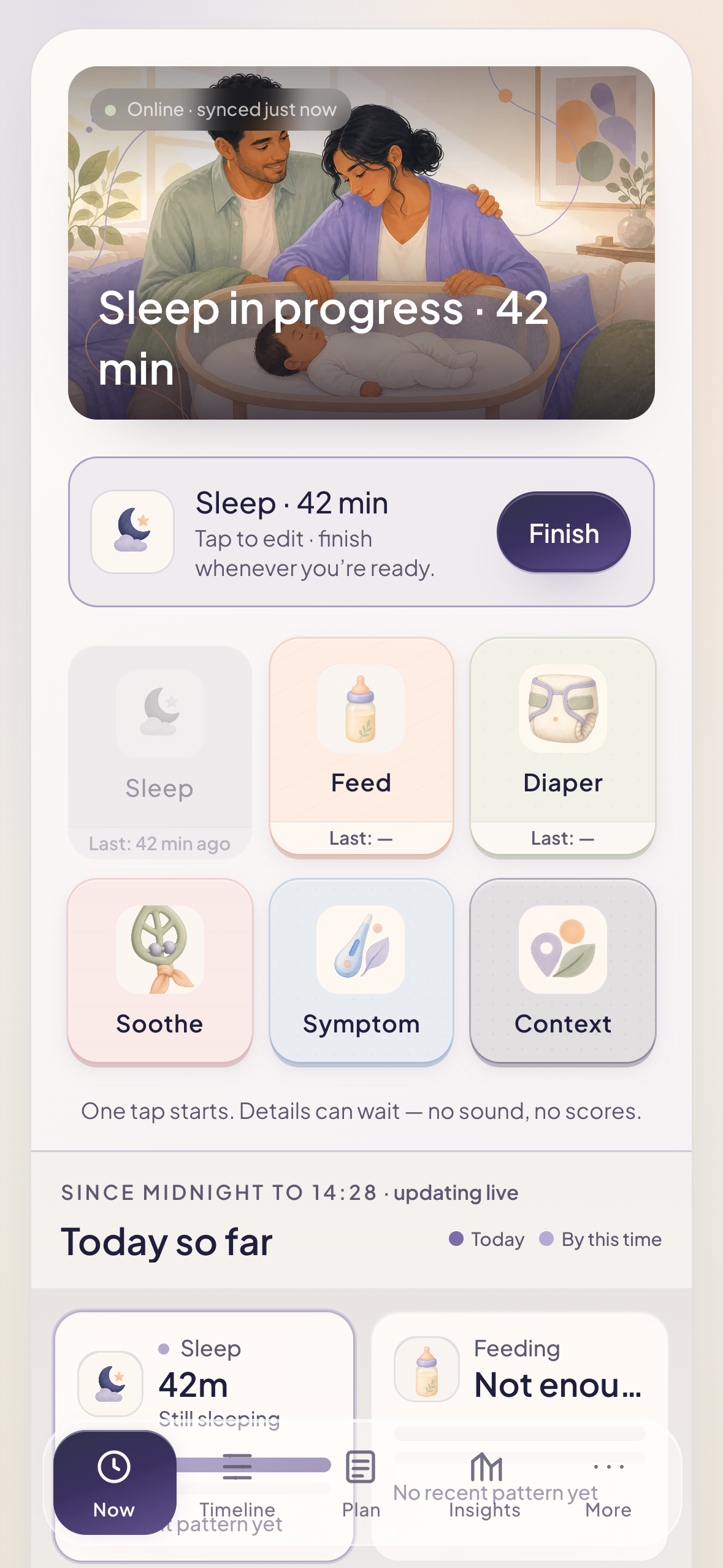
A shared baby-care app for two caregivers, live as an installable PWA after 11 active days and 159 merged PRs through the harness we install for clients.

View project
Teamdeck legacy modernization with a governed AI SDLC

SaaS · AI Development · Backend Development

Teamdeck legacy modernization with a governed AI SDLC

Teamdeck stage moved to Temporal, Pulumi and ECS in about nine weeks: 60 pull requests through written plans and CI gates, no feature freeze. Prod is next.

View project
12Questions we get

What teams ask us about TypeScript

Straight answers from the engineers who build with it. Missing yours?

Ask an engineer

8 questions

TypeScript 7.0 is the current stable release (7.0.2 on npm as of November 2026). It shipped on July 8, 2026 as the first release built on the native Go compiler. TypeScript 7.1 is in beta, with a release candidate expected about a month after the October 20 beta.

On full builds of large codebases, Microsoft measured 8.7x to 11.9x speedups with default settings, for example VS Code dropping from 125.7s to 10.6s. Real CI gains can be smaller because tsc is only part of the pipeline: Prisma reported its monorepo type check going from about 74s to 24s.

Yes, if your code compiles cleanly on TypeScript 6.0 without ignoreDeprecations, it should compile the same on 7.0. The main blocker is tooling: 7.0 has no programmatic API, so typescript-eslint, Volar-based frameworks and Angular template checking still need TypeScript 6, which you can keep installed under an npm alias.

Zod is the default choice: it has the largest ecosystem, and Zod 4 made parsing several times faster and the core bundle about 57% smaller than Zod 3. Pick Valibot or Zod Mini when client bundle size is a hard constraint, since both are built around tree-shakable functions.

Use tRPC when the server and every client are TypeScript and live in the same monorepo, because the client imports the router type directly with no codegen. If you have third-party consumers, mobile apps in other languages, or a public API, use REST with OpenAPI or GraphQL and generate typed clients.

It depends on size and approach. Sentry converted about 95,000 lines in 18 months incrementally, Monzo took about two years, and Yelp took about four years for 1.4 million lines across 570 packages. Stripe converted 3.7 million lines in one codemod PR after months of preparation, then burned down suppressions afterwards.

Turborepo is a lightweight task runner with caching that sits on top of pnpm, npm or Yarn workspaces and needs little configuration. Nx adds a project graph, code generators and enforced module boundaries, which pays off in larger organizations with many teams. Both support remote caching and affected-only CI.

Not for many cases. Node.js strips types by default since v22.18 and v23.6, and the feature is marked stable in v24.12 and v25.2. It does not type check, ignores tsconfig paths and rejects enums and other syntax that needs code generation, so keep tsc --noEmit in CI and use erasableSyntaxOnly.

13Sources

TypeScript glossary and sources

Reviewed by our engineers. Last updated 16 November 2026.

Strict mode
A tsconfig flag that enables the strictest checks, including strictNullChecks and noImplicitAny; on by default since TypeScript 6.0.
Project Corsa
Microsoft's codename for the native Go port of the TypeScript compiler, shipped as TypeScript 7.0.
tsgo
The command name of the native compiler preview (@typescript/native-preview); from 7.0 RC onward the native compiler is invoked as tsc.
Type stripping
Running TypeScript by replacing type syntax with whitespace, without type checking; Node.js does this by default since v22.18 and v23.6.
Project references
A tsconfig feature that splits a codebase into separately built projects so type checking is incremental.
End-to-end type safety
Sharing one type definition from database or API to client so a change on one side is a compile error on the other.
Standard Schema
A shared TypeScript interface spec, authored by the Zod, Valibot and ArkType maintainers, that lets tools accept any compliant validation library.
Monorepo
One repository holding many packages and apps, usually managed with workspaces and a task runner like Turborepo or Nx.

Sources

  1. [1]Announcing TypeScript 7.0 (Microsoft)devblogs.microsoft.com ↗
  2. [2]Announcing TypeScript 6.0 (Microsoft)devblogs.microsoft.com ↗
  3. [3]Announcing TypeScript 7.1 Beta (Microsoft)devblogs.microsoft.com ↗
  4. [4]A 10x Faster TypeScript (Microsoft)devblogs.microsoft.com ↗
  5. [5]microsoft/typescript-go repositorygithub.com ↗
  6. [6]Node.js: Modules: TypeScriptnodejs.org ↗
  7. [7]Introducing Zod 4zod.dev ↗
  8. [8]Announcing tRPC v11trpc.io ↗
→Keep exploring

Built alongside it

  • Related hubNode.js DevelopmentProduction Node.js APIs and real-time backends with senior ownership only.
  • Related hubReact & Next.js DevelopmentReact and Next.js product UIs that stay fast under real SaaS usage.
  • Related hubGraphQL DevelopmentGraphQL APIs for SaaS: Apollo, Yoga, Strawberry, Federation, codegen and schema governance.
  • Related hubReact Native DevelopmentCross-platform iOS and Android with production release ownership.

Longer reads

  • How to Choose a Node.js, Python, React, or React Native PartnerScore Node.js, Python/Django, React/Next.js, and React Native partners on senior ownership, stack proof, AI delivery governance, compliance, trial sprints, and handover. Senior engineers only.
  • Platform Engineering Golden Paths for Faster, Safer DeliveryPlatform engineering golden paths, policy as code, paved road CI/CD and observability by default: how they cut lead time, MTTR and change failure rate.
  • Modernize Legacy Systems Without Breaking the BusinessA practical legacy modernization strategy: strangler fig, refactor vs rewrite, data migration and cutover planning, plus zero downtime patterns and KPI targets.

How we deliver it

  • SaaS Development
  • Hybrid Teams
  • End-to-end Software Development
  • Agentic SDLC

Type-safe delivery

Make the compiler work for you

Strict TypeScript, typed APIs and migrations led by senior engineers only.

Apptension site footer

Taking new projects

Have a product to build, fix or scale?

Apptension is a senior-only software development company headquartered in Poznań, Poland. Since 2012 our engineers have shipped 360+ AI and SaaS products for startups, scale-ups and enterprises across the US, UK and EU: agentic MVPs, RAG and voice AI systems, multi-tenant SaaS and legacy modernization.

Projects shipped
360+
Founded
2012
Senior engineers
30+
Client CSAT
100%

Send a few lines about your product. A person from our team replies within one business day.

Start a projectScope it in Scope Studio
  • Emailcontact@apptension.com
  • Phone+48 533 352 052Poznań, Poland

  • Agentic MVP developmentNew
  • Agentic SDLC implementation
  • Product & SaaS development
  • Legacy modernization
  • Generative AI development
  • SaaS development company
  • Vibe-coded prototype to production
  • End-to-end software development
  • Senior engineering team extension
  • Product consulting & discovery
  • Tech due diligence for investors
  • All services

  • LLM application engineering
  • RAG & retrieval engineering
  • Voice AI agent development
  • MCP server development
  • LangGraph & LangChain agents
  • AI agent evaluation & observability
  • Node.js development company
  • Python & Django development
  • React & Next.js development
  • React Native app development
  • All expertise

  • Open-source SaaS Boilerplate
  • SaaS P&L model template
  • Walkthrough Studio
  • Agentic SDLC playbook
  • AI SDLC maturity assessment
  • Agentic SDLC ROI calculator
  • Founder resources
  • Events & exec dinners
  • Open source
  • Builder's Toolkit

  • Boutique vs large software house
  • Build vs buy vs partner
  • How to choose an AI & RAG partner
  • Team augmentation without chaos
  • Django vs Node.js for SaaS
  • React Native vs Flutter
  • AI in regulated industries
  • All guides

  • About Apptension
  • Case studies
  • Careers
  • Blog
  • Tech Radar
  • Agentic SDLC hub
  • Contact

Senior AI engineers shipping enterprise-grade AI and SaaS with startup speed.

Headquarters

Apptension sp. z o.o.23 Lutego 26
61-743 Poznań, Poland (opens Google Maps)

VAT-ID PL7831720203 · REGON 360404804
KRS 0000534235

Follow Apptension

Client reviews on Clutch

© 2012–2026 Apptension sp. z o.o. All rights reserved.

Privacy policySitemapllms.txt