• 01Services
  • 02Portfolio
  • 03About
  • 04Careers
  • 05Blog

Services

All services

New · AI-native delivery

Senior engineers with AI coding agents

Ship a production MVP in weeks, or install agents into the team you already have.

Agentic MVPNewA production MVP your customers can rely on. Validate in 1–2 weeks, launch in 4–8, own all of it.Explore
  • Agentic SDLCAI coding agents installed into your delivery process in two weeks, with guardrails and metrics.
Agentic SDLC hub
>_ProductScope StudioFrom an idea to a shareable PRD_> Open_> Open
Emailcontact@apptension.comCall+48 533 352 052

HQ in Poznań, Poland

Start a project
Services
About
Portfolio
Careers
Blog
Get in touch
All technology hubs

Stack hub/Reviewed 16 November 2026/15 min read

GraphQL Development

GraphQL APIs that stay fast and safe under real traffic: typed schemas, batched resolvers, persisted operations, and breaking-change checks in CI. We build on Apollo, GraphQL Yoga or Strawberry and pair them with generated TypeScript clients for React and React Native.

Short answer

Choose GraphQL when several clients (web, mobile, partners) need different shapes of the same data and you want one typed contract. We ship GraphQL APIs with senior ownership only: typed clients, persisted operations and schema checks from day one. 360+ projects since 2012.

Clue 0170M+weekly npm downloads of graphql (the reference graphql-js package)

Shake for the next clue

Source: api.npmjs.org ↗
1 / 4
GraphQL in numbers
70M+ weekly npm downloads of graphql (the reference graphql-js package) (source: api.npmjs.org)
33% of API teams surveyed use GraphQL, next to 93% using REST (source: postman.com)
60% of enterprises projected to use GraphQL in production by 2028, up from under 40% in 2026 (source: apollographql.com)
10M+ weekly npm downloads of @graphql-codegen/cli (source: api.npmjs.org)

Your route through this hub

CoversGraphQLApolloGraphQL YogaStrawberryGrapheneTypeScriptGraphQL CodegenPostgreSQL

  1. Stage 1 · Understand

    Is it right for our product?

    • 01What it isThe plain-words version
    • 02Where it pays off6 proven patterns
    • 03How it fits6 steps, one request
    • 04How it got here9 milestones
  2. Stage 2 · Choose

    What would we build it with?

    • 05Toolkit16 tools mapped
    • 06Who runs it13 teams in production
    • 07Alternativesvs 2 options
  3. Stage 3 · Ship

    How do we go live without surprises?

    • 08Readiness check21 checks, scored
    • 09What breaks6 mistakes and fixes
  4. Stage 4 · Decide

    What would you do in our place?

    • 10Should you use it?Our verdict, scope and rollout
    • 11What we shipped3 case studies
    • 12Questions we get8 straight answers
    • 13Sources14 cited, 10 terms

__> Teams we have built for

GraphQL
01What it is02Where it pays off03How it fits04How it got here05Toolkit06Who runs it07Alternatives08Readiness check09What breaks10Should you use it?11What we shipped12Questions we get13Sources
01What it is

What is GraphQL?

GraphQL is a query language and runtime for APIs, originally built at Facebook in 2012 and now governed by the GraphQL Foundation, in which the server publishes a typed schema and each client asks for exactly the fields it needs in a single request.

Why teams adopt it

SaaS products now serve web, mobile, partner integrations and AI agents from the same backend, and each needs a different slice of the data. GraphQL gives all of them one typed, introspectable contract, so client types can be generated and breaking changes caught in CI. Gartner, as quoted by Apollo in April 2026, projects 60% of enterprises will run GraphQL in production by 2028.

How it works

  1. 1

    Define a schema

    The server describes its data as types, fields and relationships in SDL or in code. The schema is the contract every client is checked against.

  2. 2

    Client sends an operation

    A query, mutation or subscription names the exact fields it wants, usually as an HTTP POST to one endpoint. Production clients often send a hash of a pre-registered operation instead of the full text.

  3. 3

    Validate and plan

    The server parses the operation and validates it against the schema before running anything. A federation router also builds a query plan across subgraphs.

  4. 4

    Resolve fields

    Each field has a resolver that fetches its data from a database, service or cache. DataLoader-style batching collapses repeated lookups into one call per request.

  5. 5

    Return shaped JSON

    The response mirrors the shape of the query, with partial data and a typed errors array when some fields fail.

02Where it pays off

Where GraphQL pays off

The jobs it does best in real products: the problem you would have, how we would build it, and who already runs it that way.

One API for web, mobile and partners

Problemstep 1
Each client needs a different slice of the same data, and per-client REST endpoints multiply.
Patternstep 2
A single graph acts as a unified backend-for-frontend; each client queries only the fields it renders, and generated types keep clients in sync.
In the wildstep 3
Zalando's Unified Backend-for-Frontend for web and app

Public developer API

Problemstep 1
Third-party developers need a stable, discoverable API without a new version every year.
Patternstep 2
Expose a curated slice of the internal schema, deprecate fields instead of versioning, and use usage data to decide when removal is safe.
In the wildstep 3
Buffer's public API built on its internal schema; GitHub and Linear

Typed full-stack SaaS

Problemstep 1
Backend changes silently break frontend code.
Patternstep 2
Download the schema in CI, generate TypeScript types and typed documents for every operation, and fail the build on mismatches.
In the wildstep 3
Apptension's open-source SaaS Boilerplate: Graphene-Django backend, Apollo Client 4 and GraphQL Code Generator client preset

Federated graph across domain teams

Problemstep 1
One monolithic schema becomes a merge bottleneck once several teams own different domains.
Patternstep 2
Each team ships a subgraph; a router composes them and plans queries, and a registry blocks breaking compositions before deploy.
In the wildstep 3
Expedia Group's move from schema stitching to Apollo Federation

Locked-down first-party clients

Problemstep 1
An open GraphQL endpoint accepts arbitrary, expensive queries from anyone.
Patternstep 2
Register operations at build time and let the server execute only known hashes; usage of each field becomes measurable.
In the wildstep 3
Zalando allows only persisted query IDs in production

Real-time product features

Problemstep 1
Notifications and live updates need the same auth and types as the rest of the API.
Patternstep 2
GraphQL subscriptions over WebSockets share the schema and resolvers with queries, with a pub/sub backend such as Redis.
In the wildstep 3
SaaS Boilerplate notifications via Django Channels and channels-graphql-ws
03How it fits

How a GraphQL request travels in a SaaS stack

One real request, step by step: which part of the system handles it, and why that part is there.

01 Clients02 Router03 Subgraphs04 Data access05 Sources
Step 1/6·Request
Hover a part for detail
04How it got here

Is GraphQL a safe bet?

The releases and decisions that matter when you are betting a product on it, in order.

  1. 2012

    Built inside Facebook

    Facebook developed GraphQL internally while rebuilding its native mobile apps around News Feed.

    graphql.org
  2. 2015Jul

    Spec and GraphQL.js go public

    Facebook published the first working draft of the specification together with the GraphQL.js reference implementation.

    spec.graphql.org
  3. 2016Sep

    GitHub ships a public GraphQL API

    GitHub announced its GraphQL API (v4), citing over-fetching, multiple round trips and database load from its REST API.

    github.blog
  4. 2018Nov

    GraphQL Foundation announced

    The Linux Foundation announced a neutral GraphQL Foundation, with Airbnb, GitHub, Netflix, Shopify and others listed as production users.

    graphql.org
  5. 2022Apr

    Apollo Federation 2 GA

    Apollo made Federation 2 generally available, reporting over 1M weekly downloads and 18K+ projects using Federation.

    apollographql.com
  6. 2024Oct

    Shopify goes all in on GraphQL

    Shopify marked its REST Admin API as legacy and required new App Store apps to use GraphQL from April 2025.

    shopify.com
  7. 2025Aug

    Apollo Client 4.0

    Apollo Client 4.0 split React into its own entry point, cut bundle size and replaced ApolloError with typed error classes.

    github.com
  8. 2025Sep

    September 2025 spec edition

    The first new spec edition since 2021 added OneOf input objects, schema coordinates and descriptions on operations.

    spec.graphql.org
  9. 2026Jun

    graphql-js v17

    The reference implementation shipped its first major version since v16 in 2021.

    github.com
05Toolkit

What you would build GraphQL with

The libraries and services we would actually put in your stack, and when each one earns its place. Filter by layer or language.

Language
  • Server · TypeScript

    Apollo Server

    Spec-compliant Node.js GraphQL server that also runs as a Federation subgraph; pick it when you plan to use Apollo's router and GraphOS. Version 5 is current; v4 reached end of life in January 2026.

    Apollo GraphQL14k
  • SDK · TypeScript

    Apollo Client

    Most widely used GraphQL client for React, with a normalized cache; version 4 is framework-agnostic at its core.

    Apollo GraphQL19.8k
  • Server · Rust

    Apollo Router

    High-performance Federation router that plans queries across subgraphs and enforces persisted query safelists.

    Apollo GraphQL1k
  • Server · TypeScript

    GraphQL Yoga

    Lightweight, plugin-based server built on web-standard Request/Response, so it runs on Node, Bun, Deno and edge runtimes; strong persisted-operations plugin.

    The Guild8.5k
  • Framework · Python

    Strawberry

    Code-first Python GraphQL built on dataclasses and type hints, with Django, FastAPI and Channels integrations; the modern default for new Python APIs.

    community4.7k
  • Framework · Python

    Graphene-Django

    Maps Django models to GraphQL types; mature choice for existing Django codebases and used by Apptension's open-source SaaS Boilerplate.

    community4.4k
  • SDK · TypeScript

    Relay

    Compiler-driven React client with colocated fragments and built-in persisted queries; pick it for large React apps that can follow its conventions.

    Meta19k
  • SDK · TypeScript

    urql

    Smaller, extensible client with document caching by default and an optional normalized cache.

    community9k
  • Tooling · TypeScript

    GraphQL Code Generator

    Generates typed documents, hooks and resolver types from the schema; the client preset adds fragment masking.

    The Guild11.3k
06Who runs it

Who already bets on GraphQL

Companies running it in production, and what for. Every entry links to their own write-up, so you can check our homework.

  • Exposes a public GraphQL API at api.linear.app/graphql that is the same API Linear uses internally to build its own apps.

    linear.app
  • Built its public API on the same GraphQL schema that powers its internal apps, marks public fields with a custom @public directive, and moved from Apollo Server to GraphQL Yoga with Hive for field-level usage analytics.

    the-guild.dev
  • Serves its developer API over GraphQL at api.sorare.com/graphql with per-key rate limits plus complexity, depth and payload limits.

    github.com
  • Provides access to its data through a GraphQL API (v2) for third-party developers.

    api.producthunt.com
  • Its platform API, used by the monday apps framework and integrations, is a GraphQL API.

    developer.monday.com
  • Made the GraphQL Admin API its primary API, marking REST as legacy in October 2024 and requiring new App Store apps to use GraphQL from April 2025.

    shopify.com
  • Launched GraphQL API v4 in 2016 to cut REST round trips and database load, with schema metadata for OAuth scopes and generated docs.

    github.blog
  • Runs Viaduct, an open-source GraphQL data-oriented service mesh with one central schema hosting 1.5M+ lines of business logic from 130+ teams.

    airbnb.tech
  • Runs one GraphQL Unified Backend-for-Frontend for web and mobile apps across 12+ domains and 25 to 30 feature teams.

    engineering.zalando.com
  • Moved from schema stitching to Apollo Federation with Kotlin subgraphs and cut gateway compute by about 50% in an A/B test.

    apollographql.com
  • Builds its GraphQL architecture on DGS, the Spring Boot GraphQL framework it open-sourced and maintains.

    netflix.github.io
  • Exposes Jira, Confluence, Bitbucket and other product data through one Atlassian GraphQL Gateway.

    developer.atlassian.com
  • Offers a versionless GraphQL API that its own web frontend also uses, with deprecated fields kept for at least six releases.

    docs.gitlab.com
Scale-up · Dev tools / project management01 / 13

Linear

Exposes a public GraphQL API at api.linear.app/graphql that is the same API Linear uses internally to build its own apps.

Source: linear.app
07Alternatives

GraphQL vs REST (OpenAPI) vs tRPC for SaaS APIs

No option wins every row. Find the row that matters most for your product and the choice usually makes itself.

GraphQL vs REST (OpenAPI) vs tRPC for SaaS APIs
CriterionGraphQLREST + OpenAPItRPC
ContractTyped schema, introspectableOpenAPI document, often written after the codeInferred from TypeScript router types
Client languagesAny, with mature codegenAny, with OpenAPI generatorsTypeScript only for type safety
Data fetchingClient picks fields; one round trip for nested dataServer-defined shapes; several calls or custom endpointsProcedure calls with server-defined shapes
HTTP cachingNeeds persisted GET queries or client cacheNative CDN and browser cachingPossible for queries over GET
Public third-party APIStrong fit (GitHub, Shopify, Linear)Strong fit and most familiarPoor fit; built for your own TS clients
Operational overheadHighest: cost limits, N+1, registryLowest; well-understood toolingLow inside a TS monorepo
Best forMany clients, many teams, evolving data needsSimple resources, public APIs, file and cache-heavy trafficFull-stack TypeScript apps with one team
GraphQL vs
  • Contract

    GraphQL

    Typed schema, introspectable

    REST + OpenAPI

    OpenAPI document, often written after the code

  • Client languages

    GraphQL

    Any, with mature codegen

    REST + OpenAPI

    Any, with OpenAPI generators

  • Data fetching

    GraphQL

    Client picks fields; one round trip for nested data

    REST + OpenAPI

    Server-defined shapes; several calls or custom endpoints

  • HTTP caching

    GraphQL

    Needs persisted GET queries or client cache

    REST + OpenAPI

    Native CDN and browser caching

  • Public third-party API

    GraphQL

    Strong fit (GitHub, Shopify, Linear)

    REST + OpenAPI

    Strong fit and most familiar

  • Operational overhead

    GraphQL

    Highest: cost limits, N+1, registry

    REST + OpenAPI

    Lowest; well-understood tooling

  • Best for

    GraphQL

    Many clients, many teams, evolving data needs

    REST + OpenAPI

    Simple resources, public APIs, file and cache-heavy traffic

08Readiness check

Is your GraphQL setup ready for real traffic?

The checks teams that run it well have in place before launch. Tick what you already have and see where you stand. Your answers stay on this device.

0%

0 / 21

Tick what you already have

  • Security0/5
  • Performance0/4
  • Schema governance0/4
  • Client developer experience0/4
  • Operations0/4
Security

01 · Security

Performance

02 · Performance

Schema governance

03 · Schema governance

Client developer experience

04 · Client developer experience

Operations

05 · Operations

09What breaks

Where GraphQL projects go wrong

What we find most often when we audit or inherit a codebase, and how we fix it.

  • !

    N+1 queries in resolvers

    Fix · Use DataLoader for every relationship field and check query counts per request in tests.

  • !

    Open endpoint accepts any query

    Fix · Move first-party clients to persisted operations, then enforce depth and cost limits for whatever remains open.

  • !

    Schema mirrors the database

    Fix · Design types around client use cases and domain language, not table structure, so storage can change without breaking clients.

  • !

    Breaking changes ship unnoticed

    Fix · Publish the schema to a registry and fail CI on breaking diffs that real clients still use.

  • !

    Everything returns HTTP 200

    Fix · Follow the GraphQL over HTTP response conventions and alert on the errors array, not just status codes.

  • !

    Federation too early

    Fix · Start with one well-structured schema; split into subgraphs when team ownership, not traffic, demands it.

Minimal tenant-scoped GraphQL Yoga server

>_ $
1
2
3
4
5
6
7
8
9
10
11
12
13
14
15
16
17
18
19
20
21
22
23
24
25
26
27
28
29
30
31
32
33
34
35
36
37
38
39
40
41
42
43
import {
  createServer
} from 'node:http';
import {
  createSchema,
  createYoga
} from 'graphql-yoga';

const projects = [{
    id: '1',
    tenantId: 'acme',
    name: 'Website'
  },
  {
    id: '2',
    tenantId: 'globex',
    name: 'Mobile app'
  },
];

const yoga = createYoga < {
  tenantId: string
} > ({
  schema: createSchema({
    typeDefs: `type Project { id: ID!, name: String! }
               type Query { projects: [Project!]! }`,
    resolvers: {
      Query: {
        projects: (_parent, _args, ctx) =>
          projects.filter((p) => p.tenantId === ctx.tenantId),
      },
    },
  }),
  // In production, derive the tenant from a verified session or JWT.
  context: ({
    request
  }) => ({
    tenantId: request.headers.get('x-tenant') ?? ''
  }),
});

createServer(yoga).listen(4000, () => console.log(
  'http://localhost:4000/graphql'));
10Should you use it?

When GraphQL is the right call, and how we ship it

Our engineers' view after building on it: where it earns its place, where something simpler wins, and the rollout we run.

Strong fit

  • SaaS products with web, mobile and partner clients that need different views of the same data
  • Teams that want a typed contract and generated clients instead of hand-written API calls
  • Public developer APIs that need field-level deprecation and usage visibility
  • Organizations splitting a monolith API across domain teams with Federation

Weak fit

  • Simple CRUD backends with one TypeScript client, where tRPC or REST is less work
  • File-heavy or cache-at-the-CDN APIs where plain HTTP semantics matter most
  • Teams that want GraphQL without owning schema design and query cost controls

What we deliver

  • 01

    Schema design

    Domain-first schemas with clear nullability, pagination, error types and a deprecation policy your clients can plan around.

  • 02

    Performance and safety

    DataLoader batching, persisted operations, depth and cost limits, and tracing so one query can't take down the database.

  • 03

    Typed clients

    Apollo Client, Relay or urql with GraphQL Code Generator, so React and React Native code breaks at build time, not in production.

  • 04

    Federation and governance

    Subgraphs, a router, a schema registry and breaking-change checks in CI when more than one team owns the graph.

How we deliver GraphQL work

How we would roll it out

Every phase ends at a gate. Nothing moves on until it passes, so you always know what you have and what is next.

    010203Live
  1. 01

    Phase 1

    Fit and schema

    Confirm GraphQL beats REST or tRPC for your clients, then model the core types, auth rules and tenancy boundaries.

    You walk away with

    A decision on GraphQL versus REST or tRPC, plus core types, auth rules and tenancy boundaries.

    Gate Schema draft reviewed by client teams

  2. 02

    Phase 2

    Thin vertical slice

    Ship one query and one mutation end to end: resolvers, generated client types, tests, tracing and deploy.

    You walk away with

    One query and one mutation live end to end with generated client types, tests, tracing and deploy.

    Gate Generated types build clean in CI

  3. 03

    Phase 3

    Harden and govern

    Add persisted operations, cost limits, schema checks and usage reporting. Document ownership so your team can continue without us.

    You walk away with

    Persisted operations, cost limits, schema checks in CI and usage reporting, with documented ownership.

    Live when Breaking-change check blocks merges

Related projects

Projects where we did this work

Explore our portfolio
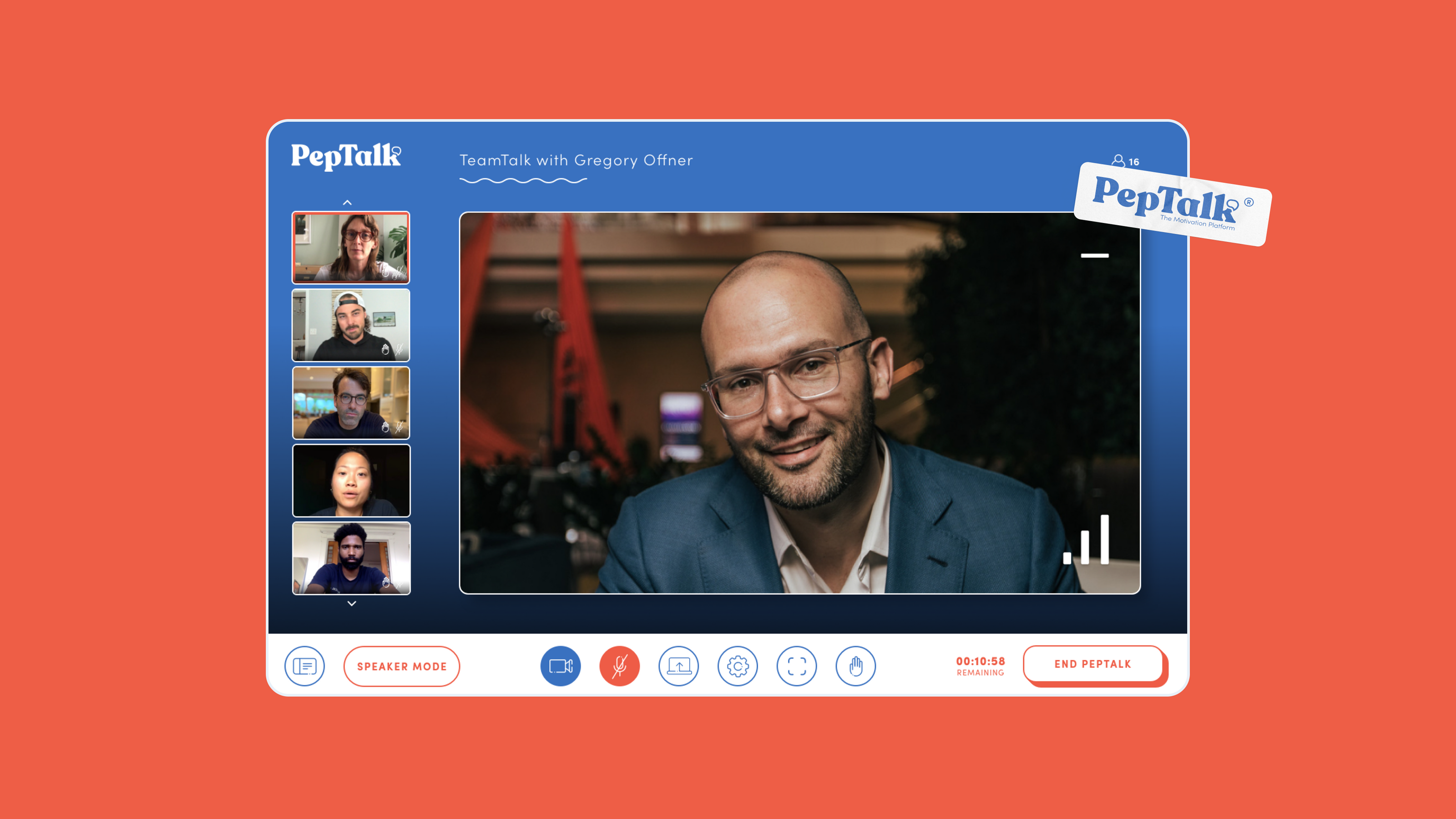
PepTalk: booking and live video platform for 400+ experts
Playing

Data Management · Web Development

PepTalk: booking and live video platform for 400+ experts

We built PepTalk's expert catalogue and live call app: 400+ experts on 40+ topics, with scheduling across time zones, Twilio video and Stripe payouts.

View project
blkbx: one-click checkout app built on SaaS Boilerplate
Playing

Finance · Mobile Development · Product Design

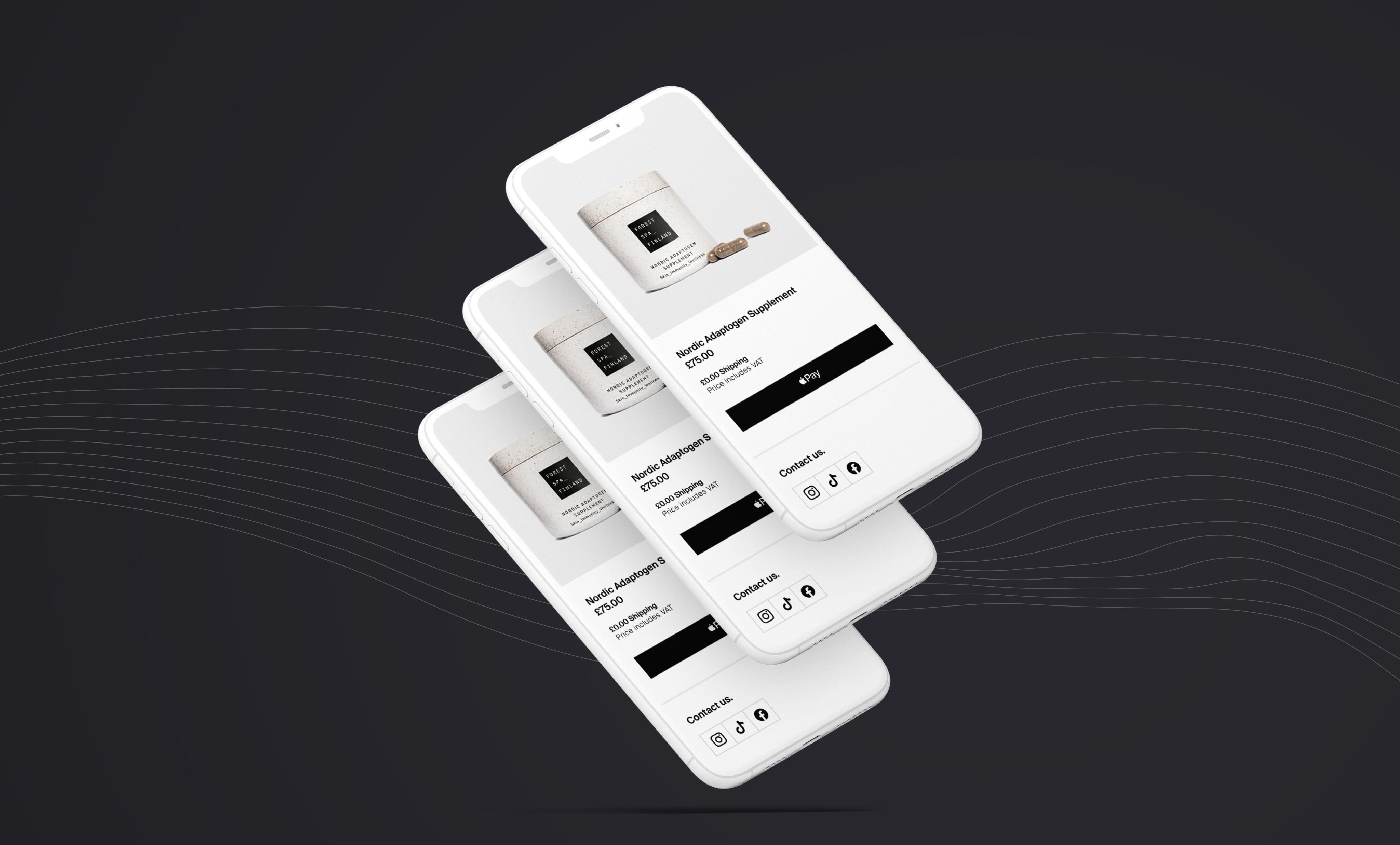
blkbx: one-click checkout app built on SaaS Boilerplate

blkbx lets sellers take payment from a link or QR code in one click with Apple Pay, Google Pay or card. We built it on our SaaS Boilerplate and Stripe.

View project
mTab Marketplace: data marketplace for market research
Playing

Data Management · Product Design · Product Discovery

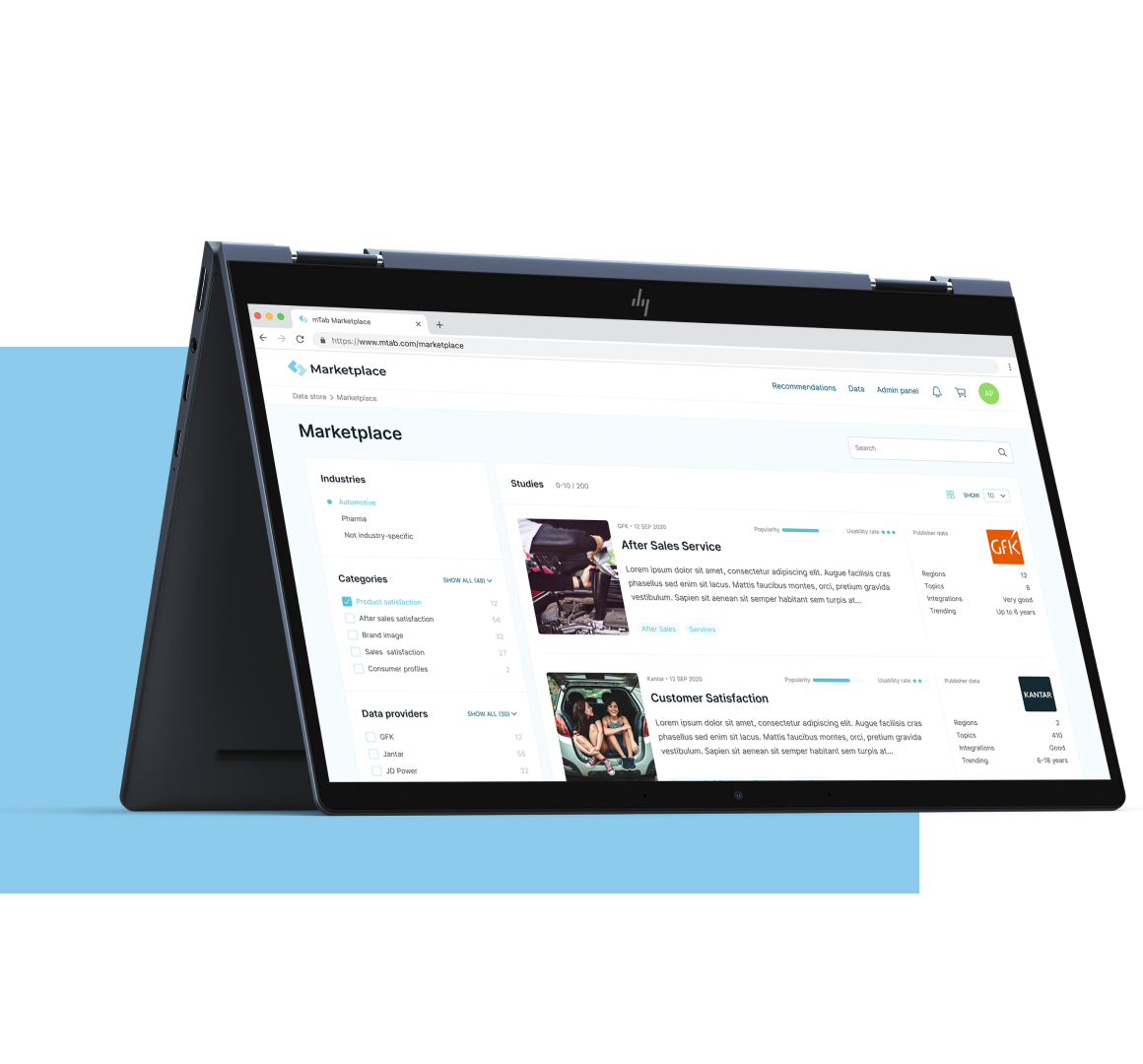
mTab Marketplace: data marketplace for market research

Since 2020 we've built mTab Marketplace on Django, React and AWS, so clients buy market research studies without mTab installing each one by hand.

View project
12Questions we get

What teams ask us about GraphQL

Straight answers from the engineers who build with it. Missing yours?

Ask an engineer

8 questions

GraphQL is better when several clients need different views of the same data and you want one typed contract with generated client code. REST is simpler when resources are flat, HTTP caching matters, or you have one client. Many SaaS teams run both: GraphQL for their own apps and REST or webhooks for simple integrations.

Use tRPC when one team owns a full-stack TypeScript app and all clients are TypeScript, because it gives end-to-end types with no schema or codegen. Use GraphQL when you have non-TypeScript clients such as native mobile apps, a public API, or several teams contributing to one graph.

Both are spec-compliant Node.js servers. Apollo Server fits teams that plan to use Apollo Federation, the Apollo Router and GraphOS. GraphQL Yoga is lighter, runs on edge runtimes and Bun, and has a strong plugin ecosystem including persisted operations; it pairs with The Guild's Hive for schema governance.

For new code, Strawberry is the modern default: it is built on type hints and dataclasses and ships Django, FastAPI and Channels integrations. Graphene-Django remains a solid, mature choice for existing Django codebases; Apptension's open-source SaaS Boilerplate uses it with Apollo Client and generated TypeScript types on the frontend.

Restrict first-party clients to persisted operations so the server rejects unknown queries. Add depth, complexity and pagination limits, authorize per object in the business layer, and scope every resolver by tenant from the authenticated context. Turn off public introspection on private APIs.

Usually not at first. Federation solves an organizational problem: several teams owning parts of one graph and shipping independently. A single well-structured schema is easier to run until team ownership boundaries make it a bottleneck.

Never remove or change a field in place; add new fields and mark old ones @deprecated. Publish the schema to a registry that checks every change against real client usage, and remove fields only when old app versions no longer query them.

Yes. We usually put a GraphQL layer in front of existing REST services, move one client screen at a time onto it, and keep REST running for integrations that depend on it. Typed clients, persisted operations and schema checks go in from the first slice.

13Sources

GraphQL glossary and sources

Reviewed by our engineers. Last updated 16 November 2026.

Schema (SDL)
The typed description of every type, field and operation an API supports, written in Schema Definition Language or generated from code.
Resolver
The function that returns the value for one field, usually by calling a database or another service.
N+1 problem
When resolving a list triggers one extra data lookup per item; DataLoader batching fixes it.
Persisted operations
Operations registered at build time so clients send only an ID or hash, which allows the server to reject anything unregistered.
APQ
Automatic persisted queries: a runtime cache of operation hashes that saves bandwidth but cannot act as a safelist.
Federation
An architecture where several subgraphs each own part of the schema and a router composes them into one supergraph.
Subgraph
A GraphQL service that owns a slice of a federated schema, typically one domain team's service.
Fragment masking
A codegen or Relay feature that limits a component to the fields its own fragment declares.
Schema registry
A service that stores schema versions, checks proposed changes for breakage and tracks field usage.
Subscription
A long-lived GraphQL operation, usually over WebSockets or SSE, that pushes events to the client.

Sources

  1. [1]GraphQL Specification, September 2025 editionspec.graphql.org ↗
  2. [2]GraphQL: A data query language (Lee Byron, 2015)graphql.org ↗
  3. [3]The Linux Foundation announces intent to form the GraphQL Foundationgraphql.org ↗
  4. [4]Postman 2025 State of the API Reportpostman.com ↗
  5. [5]Apollo GraphOS: persisted queries and safelistingapollographql.com ↗
  6. [6]Apollo Server previous versions and end-of-life datesapollographql.com ↗
  7. [7]GraphQL Yoga persisted operationsthe-guild.dev ↗
  8. [8]Strawberry GraphQL documentationstrawberry.rocks ↗
→Keep exploring

Built alongside it

  • Related hubPython & Django DevelopmentMulti-tenant SaaS on Python and Django. Same stack as our open-source boilerplate.
  • Related hubNode.js DevelopmentProduction Node.js APIs and real-time backends with senior ownership only.
  • Related hubReact & Next.js DevelopmentReact and Next.js product UIs that stay fast under real SaaS usage.
  • Related hubTypeScript DevelopmentStrict TypeScript codebases, typed APIs and JS-to-TS migrations with senior ownership only.

Longer reads

  • Designing a SaaS API for AI Integrations: Webhooks and DX BasicsA practical guide to SaaS API design for AI integrations: webhooks, pagination, idempotency, and developer experience patterns you can ship on a boilerplate.
  • Django vs Node.js for Multi-Tenant SaaSChoose Django or Node.js for multi-tenant SaaS with a clear decision table: tenancy, real-time needs, TypeScript monorepos, AI/data services, and when each backend is the wrong fit.
  • How to Choose a Node.js, Python, React, or React Native PartnerScore Node.js, Python/Django, React/Next.js, and React Native partners on senior ownership, stack proof, AI delivery governance, compliance, trial sprints, and handover. Senior engineers only.

How we deliver it

  • SaaS Development
  • Hybrid Teams
  • End-to-end Software Development
  • Agentic MVP

API delivery

Own the GraphQL contract

Typed schemas, safe queries and generated clients with senior ownership only.

Apptension site footer

Taking new projects

Have a product to build, fix or scale?

Apptension is a senior-only software development company headquartered in Poznań, Poland. Since 2012 our engineers have shipped 360+ AI and SaaS products for startups, scale-ups and enterprises across the US, UK and EU: agentic MVPs, RAG and voice AI systems, multi-tenant SaaS and legacy modernization.

Projects shipped
360+
Founded
2012
Senior engineers
30+
Client CSAT
100%

Send a few lines about your product. A person from our team replies within one business day.

Start a projectScope it in Scope Studio
  • Emailcontact@apptension.com
  • Phone+48 533 352 052Poznań, Poland

  • Agentic MVP developmentNew
  • Agentic SDLC implementation
  • Product & SaaS development
  • Legacy modernization
  • Generative AI development
  • SaaS development company
  • Vibe-coded prototype to production
  • End-to-end software development
  • Senior engineering team extension
  • Product consulting & discovery
  • Tech due diligence for investors
  • All services

  • LLM application engineering
  • RAG & retrieval engineering
  • Voice AI agent development
  • MCP server development
  • LangGraph & LangChain agents
  • AI agent evaluation & observability
  • Node.js development company
  • Python & Django development
  • React & Next.js development
  • React Native app development
  • All expertise

  • Open-source SaaS Boilerplate
  • SaaS P&L model template
  • Walkthrough Studio
  • Agentic SDLC playbook
  • AI SDLC maturity assessment
  • Agentic SDLC ROI calculator
  • Founder resources
  • Events & exec dinners
  • Open source
  • Builder's Toolkit

  • Boutique vs large software house
  • Build vs buy vs partner
  • How to choose an AI & RAG partner
  • Team augmentation without chaos
  • Django vs Node.js for SaaS
  • React Native vs Flutter
  • AI in regulated industries
  • All guides

  • About Apptension
  • Case studies
  • Careers
  • Blog
  • Tech Radar
  • Agentic SDLC hub
  • Contact

Senior AI engineers shipping enterprise-grade AI and SaaS with startup speed.

Headquarters

Apptension sp. z o.o.23 Lutego 26
61-743 Poznań, Poland (opens Google Maps)

VAT-ID PL7831720203 · REGON 360404804
KRS 0000534235

Follow Apptension

Client reviews on Clutch

© 2012–2026 Apptension sp. z o.o. All rights reserved.

Privacy policySitemapllms.txt