• 01Services
  • 02Portfolio
  • 03About
  • 04Careers
  • 05Blog

Services

All services

New · AI-native delivery

Senior engineers with AI coding agents

Ship a production MVP in weeks, or install agents into the team you already have.

Agentic MVPNewA production MVP your customers can rely on. Validate in 1–2 weeks, launch in 4–8, own all of it.Explore
  • Agentic SDLCAI coding agents installed into your delivery process in two weeks, with guardrails and metrics.
Agentic SDLC hub
>_ProductScope StudioFrom an idea to a shareable PRD_> Open_> Open
Emailcontact@apptension.comCall+48 533 352 052

HQ in Poznań, Poland

Start a project
Services
About
Portfolio
Careers
Blog
Get in touch
All technology hubs

AI system hub/Reviewed 16 November 2026/15 min read

Computer Vision Development

Vision features that work on real customer photos: detection, segmentation, OCR, and document extraction, on the device or in the cloud. We pick the model per task, label an evaluation set first, and keep a human review path for low-confidence results.

Short answer

Use a vision-language model when you need open-ended understanding and a trained detector when you need speed, cost control, or offline runs. We ship both, measured against your own labeled images before launch.

Clue 0120B+visual searches per month on Google Lens

Shake for the next clue

Source: blog.google ↗
1 / 4
Computer Vision in numbers
20B+ visual searches per month on Google Lens (source: blog.google)
2.7B devices running TensorFlow Lite (now LiteRT) across 100,000+ apps (source: developers.googleblog.com)
4.9M monthly PyPI downloads of the ultralytics package (source: pypistats.org)
63k+ GitHub stars on ultralytics/ultralytics (source: github.com)

Your route through this hub

CoversClaude / Gemini / GPT visionUltralytics YOLOSAM 3PaddleOCRDoclingCore MLLiteRTONNX Runtime

  1. Stage 1 · Understand

    Is it right for our product?

    • 01What it isThe plain-words version
    • 02Where it pays off7 proven patterns
    • 03How it fits6 steps, one request
    • 04How it got here8 milestones
  2. Stage 2 · Choose

    What would we build it with?

    • 05Toolkit17 tools mapped
    • 06Who runs it11 teams in production
    • 07Alternativesvs 3 options
  3. Stage 3 · Ship

    How do we go live without surprises?

    • 08Readiness check24 checks, scored
    • 09What breaks6 mistakes and fixes
  4. Stage 4 · Decide

    What would you do in our place?

    • 10Should you use it?Our verdict, scope and rollout
    • 11What we shipped3 case studies
    • 12Questions we get7 straight answers
    • 13Sources13 cited, 10 terms

__> Teams we have built for

Computer Vision
01What it is02Where it pays off03How it fits04How it got here05Toolkit06Who runs it07Alternatives08Readiness check09What breaks10Should you use it?11What we shipped12Questions we get13Sources
01What it is

What is Computer Vision?

Computer vision is the set of techniques that let software interpret images and video: classifying them, detecting and segmenting objects, reading text, and answering questions about what is shown. In products it ranges from general vision-language models called through an API to small specialist models running on a phone.

Why teams adopt it

Vision-language models from Anthropic, Google, and OpenAI now handle open-ended image and document questions through the same API teams already use for text, so a prototype takes days. Specialist models such as YOLO26 and SAM 3 cover the cases where cost per image, latency, or offline operation matter. On-device runtimes such as Core ML and LiteRT keep sensitive images on the phone.

How it works

  1. 1

    Capture

    A camera stream, photo upload, or scanned document enters the app, often resized and normalized on the client.

  2. 2

    Perceive

    A detector such as YOLO, a segmenter such as SAM, or an OCR model turns pixels into boxes, masks, or text.

  3. 3

    Reason

    A vision-language model or business rules interpret those outputs, or the raw image, and produce structured fields or decisions.

  4. 4

    Act and review

    The product uses high-confidence results directly and sends low-confidence ones to a person or a retry path.

  5. 5

    Learn

    Misses and corrections are logged, labeled, and fed into the next fine-tuning run and the evaluation set.

02Where it pays off

Where Computer Vision pays off

The jobs it does best in real products: the problem you would have, how we would build it, and who already runs it that way.

Document and receipt extraction

Problemstep 1
Invoices, receipts, and forms arrive as photos and PDFs that staff retype into systems.
Patternstep 2
OCR or a layout parser produces text and structure, then an LLM maps it to a validated JSON schema with field-level confidence and a review queue.
In the wildstep 3
Ramp receipt pipeline

Photo-to-listing

Problemstep 1
Sellers and hosts abandon listing flows that ask for many fields.
Patternstep 2
A VLM or classifier reads uploaded photos and pre-fills category, title, attributes, or room labels that the user confirms.
In the wildstep 3
eBay magical listing, Airbnb photo tours

Damage and condition assessment

Problemstep 1
Claims and inspections wait days for an adjuster or inspector to look at photos.
Patternstep 2
A detector and segmenter locate parts and damage, a pricing model turns them into an estimate, and edge cases go to a human.
In the wildstep 3
Tractable with Ageas

Real-time edge detection

Problemstep 1
Checkout, safety, or line monitoring cannot wait for a cloud round trip or depend on Wi-Fi.
Patternstep 2
A small YOLO-class model exported to TensorRT, Core ML, or LiteRT runs next to the camera, often fused with weight or location sensors.
In the wildstep 3
Instacart Caper Carts, USG production lines

Visual search and shopping

Problemstep 1
Users can show what they want but cannot describe it in keywords.
Patternstep 2
Detect objects in the query image, embed each crop, and search a vector index of catalog images.
In the wildstep 3
Pinterest Shop The Look, Google Lens

Accessibility and scene description

Problemstep 1
Blind and low-vision users need on-demand descriptions of their surroundings and screens.
Patternstep 2
Send the photo to a vision-language model with a task prompt, stream a spoken or written answer, and keep a human fallback.
In the wildstep 3
Be My Eyes Be My AI

Segmentation for editing and AR

Problemstep 1
Cutouts, object effects, and room previews need precise masks, not boxes.
Patternstep 2
SAM-family models produce masks from a click, box, or text prompt; masks feed editing tools or 3D reconstruction.
In the wildstep 3
Meta Marketplace View in Room
03How it fits

Where a vision request runs

One real request, step by step: which part of the system handles it, and why that part is there.

01 Capture02 Device03 Specialist04 Vision LLM05 Product
Step 1/6·Request
Hover a part for detail
04How it got here

Is Computer Vision a safe bet?

The releases and decisions that matter when you are betting a product on it, in order.

  1. 2023Nov

    Be My AI in a contact center

    Be My Eyes reports its GPT-4 vision assistant resolved 90% of Microsoft Disability Answer Desk issues it handled, in about 4 minutes versus 12.

    bemyeyes.com
  2. 2024Jul

    SAM 2 brings promptable video segmentation

    Meta releases SAM 2 under Apache 2.0, one model for image and video segmentation at about 44 frames per second.

    ai.meta.com
  3. 2024Sep

    TensorFlow Lite becomes LiteRT

    Google renames TFLite to LiteRT, citing 100,000+ apps on about 2.7 billion devices since 2017.

    developers.googleblog.com
  4. 2024Sep

    Ultralytics YOLO11

    YOLO11m reaches higher COCO mAP than YOLOv8m with 22% fewer parameters, per Ultralytics.

    docs.ultralytics.com
  5. 2025Mar

    Mistral OCR

    Mistral launches an OCR API that outputs ordered text, tables, and equations at roughly 1,000 pages per dollar.

    mistral.ai
  6. 2025Nov

    SAM 3 and SAM 3D

    Meta adds text-prompted concept segmentation in SAM 3 and uses SAM 3D for View in Room on Facebook Marketplace.

    about.fb.com
  7. 2026Jan

    Ultralytics YOLO26

    YOLO26 adds optional NMS-free inference and drops DFL, with up to 43% faster CPU ONNX inference than YOLO11n reported.

    docs.ultralytics.com
  8. 2026Mar

    SAM 3.1

    A drop-in SAM 3 update tracks up to 16 objects per forward pass, roughly doubling video throughput on one H100.

    ai.meta.com
05Toolkit

What you would build Computer Vision with

The libraries and services we would actually put in your stack, and when each one earns its place. Filter by layer or language.

Language
  • Framework · Python

    Ultralytics YOLO

    Train, validate, and export YOLO detectors, segmenters, and pose models; AGPL-3.0, so closed-source products need an Enterprise license.

    Ultralytics63k
  • Framework · Python

    RF-DETR

    A real-time transformer detector and segmenter under Apache 2.0; pick it when you need a permissive license for fine-tuning.

    Roboflow10k
  • Framework · Python

    SAM 2

    Promptable image and video segmentation with clicks, boxes, or masks under Apache 2.0; good for annotation and cutout tools.

    Meta20k
  • Framework · Python

    SAM 3

    Detects, segments, and tracks every instance of a concept from a text or exemplar prompt; check its custom license before shipping.

    Meta12k
  • SDK · C++

    OpenCV

    The standard library for image processing, camera calibration, and classic vision; still the glue around most model pipelines.

    OpenCV.org92k
  • Tooling · Python

    supervision

    Model-agnostic utilities for drawing, tracking, zone counting, and metrics on detection outputs.

    Roboflow52k
  • Framework · Python

    PaddleOCR

    A lightweight OCR and document parsing toolkit for 100+ languages; pick it for self-hosted OCR at volume.

    PaddlePaddle (Baidu)93k
  • Framework · Python

    Docling

    Converts PDFs, Office files, and images into Markdown or JSON with layout, tables, and OCR; runs locally, including air-gapped.

    LF AI & Data (started at IBM Research)71k
  • Tooling · Python

    Marker

    Fast PDF to Markdown and JSON conversion for feeding documents into RAG and LLM pipelines.

    Datalab41k
06Who runs it

Who already bets on Computer Vision

Companies running it in production, and what for. Every entry links to their own write-up, so you can check our homework.

  • Be My AI describes photos for blind and low-vision users with OpenAI's GPT-4 vision model, and in Microsoft's Disability Answer Desk resolved 90% of issues it handled.

    bemyeyes.com
  • Assesses car damage from photos, identifying affected parts and generating repair estimates with labor hours for insurers such as Ageas.

    tractable.ai
  • Runs OCR on submitted receipts and uses fine-tuned LLMs to turn the text into structured JSON, cutting receipts that need manual work by 34%.

    modal.com
  • Caper Carts fuse three basket-facing cameras with a certified scale on an NVIDIA Jetson Orin NX, with cloud VLM encoders adding context.

    nvidia.com
  • Its AI engine sorts each new listing photo into a room for the photo tour, which hosts can then adjust.

    airbnb.com
  • Applies computer vision and machine-learning models to 360-degree photos to generate 3D Home tours and interactive floor plans.

    zillow.mediaroom.com
  • Uses SAM 3D to power View in Room on Facebook Marketplace, letting buyers preview decor items in their own space.

    about.fb.com
  • Shop The Look detects products inside Pin images and retrieves matches with visual embeddings, reporting 80%+ cumulative engagement gains.

    arxiv.org
  • The magical listing tool turns a seller's photo into a draft title, description, and category, combining computer vision with Azure OpenAI models.

    innovation.ebayinc.com
  • Runs an in-house Roboflow-built model on plant hardware to catch misaligned drywall boards and grade quality, and it keeps working offline.

    roboflow.com
  • Google Lens answers more than 20 billion visual searches a month from camera and screenshot input.

    blog.google
Startup · Accessibility01 / 11

Be My Eyes

Be My AI describes photos for blind and low-vision users with OpenAI's GPT-4 vision model, and in Microsoft's Disability Answer Desk resolved 90% of issues it handled.

Source: bemyeyes.com
07Alternatives

Cloud VLM vs trained specialist model vs on-device model vs OCR and document parsers

No option wins every row. Find the row that matters most for your product and the choice usually makes itself.

Cloud VLM vs trained specialist model vs on-device model vs OCR and document parsers
CriterionCloud VLM (Claude, Gemini, GPT)Trained specialist (YOLO, RF-DETR, SAM)On-device (Core ML, LiteRT, ONNX Runtime)OCR and document parsers (PaddleOCR, Docling)
Time to first resultHours: prompt and call an APIWeeks: label, train, evaluateWeeks: train plus export and profilingDays: configure and tune
Open-ended understandingStrongOnly trained classes or promptsLimited by model sizeText and layout only
Precise boxes and masksApproximateStrongGood after tuningText regions and tables
LatencyNetwork plus model timeMilliseconds on a GPUMilliseconds, no networkFast per page, self-hosted
Cost driverTokens per imageGPU hosting and labelingEngineering time; no per-call feeCompute per page
Privacy and offlineImages leave your infrastructureSelf-hostableStays on device; works offlineSelf-hostable, including air-gapped
Cloud VLM (Claude, Gemini, GPT) vs
  • Time to first result

    Cloud VLM (Claude, Gemini, GPT)

    Hours: prompt and call an API

    Trained specialist (YOLO, RF-DETR, SAM)

    Weeks: label, train, evaluate

  • Open-ended understanding

    Cloud VLM (Claude, Gemini, GPT)

    Strong

    Trained specialist (YOLO, RF-DETR, SAM)

    Only trained classes or prompts

  • Precise boxes and masks

    Cloud VLM (Claude, Gemini, GPT)

    Approximate

    Trained specialist (YOLO, RF-DETR, SAM)

    Strong

  • Latency

    Cloud VLM (Claude, Gemini, GPT)

    Network plus model time

    Trained specialist (YOLO, RF-DETR, SAM)

    Milliseconds on a GPU

  • Cost driver

    Cloud VLM (Claude, Gemini, GPT)

    Tokens per image

    Trained specialist (YOLO, RF-DETR, SAM)

    GPU hosting and labeling

  • Privacy and offline

    Cloud VLM (Claude, Gemini, GPT)

    Images leave your infrastructure

    Trained specialist (YOLO, RF-DETR, SAM)

    Self-hostable

08Readiness check

Is your Computer Vision setup ready for real traffic?

The checks teams that run it well have in place before launch. Tick what you already have and see where you stand. Your answers stay on this device.

0%

0 / 24

Tick what you already have

  • Evaluation0/4
  • Model choice0/4
  • On-device and edge0/4
  • Cost and latency0/4
  • Privacy and safety0/4
  • Feedback loop0/4
Evaluation

01 · Evaluation

Model choice

02 · Model choice

On-device and edge

03 · On-device and edge

Cost and latency

04 · Cost and latency

Privacy and safety

05 · Privacy and safety

Feedback loop

06 · Feedback loop

09What breaks

Where Computer Vision projects go wrong

What we find most often when we audit or inherit a codebase, and how we fix it.

  • !

    Demo images instead of production images

    Fix · Build the evaluation set from real user uploads or real camera feeds. Models that score well on clean samples often drop on blur, glare, and odd angles.

  • !

    Trusting VLM coordinates and counts

    Fix · Treat VLM boxes and counts as approximate and verify them, as Anthropic's own docs advise. Use a trained detector when exact locations or counts matter.

  • !

    Missing the AGPL obligation

    Fix · Ultralytics YOLO code and weights are AGPL-3.0, which extends to SaaS use. Buy the Enterprise license or choose an Apache 2.0 model such as RF-DETR before you build around it.

  • !

    Sending full-resolution images to an API

    Fix · Downscale to the provider's maximum native resolution on the client. Oversized images are resized anyway and only add upload time and cost.

  • !

    Accuracy lost in quantization

    Fix · Re-run the evaluation set on the exported INT8 or FP16 model on the target device. Speed gains mean little if small-object recall collapses.

  • !

    No path for low-confidence results

    Fix · Define a confidence threshold per class or field and route everything below it to review or a retry. Silent wrong answers cost more than a short delay.

Minimal YOLO26 fine-tune, check, and export (Ultralytics)

>_ $
1
2
3
4
5
6
7
8
9
10
11
12
13
14
15
16
17
18
19
20
from ultralytics import YOLO

# Fine-tune a small pretrained detector on your labeled dataset (YOLO format)
model = YOLO("yolo26n.pt")
model.train(data="shelf.yaml", epochs=100, imgsz=640)

# Check per-class quality before shipping, not just the overall score
metrics = model.val()
print("mAP50:", metrics.box.map50)
print("per-class mAP50-95:", metrics.box.maps)

# Run inference and read boxes
results = model.predict("aisle.jpg", conf=0.4)
for box in results[0].boxes:
    print(model.names[int(box.cls)], round(float(box.conf), 2), box.xyxy[0].tolist())

# Export for the target runtime
model.export(format="onnx")    # ONNX Runtime on servers or the web
model.export(format="coreml")  # iOS and macOS
model.export(format="litert")  # Android (LiteRT, formerly TFLite)
10Should you use it?

When Computer Vision is the right call, and how we ship it

Our engineers' view after building on it: where it earns its place, where something simpler wins, and the rollout we run.

Strong fit

  • Products where users upload photos or documents that must become structured data
  • Mobile apps that need real-time detection or scanning without a network round trip
  • Operations teams inspecting items, shelves, vehicles, or production lines from cameras
  • Teams with an existing LLM stack that want to add image and document understanding

Weak fit

  • Use cases that need perfect precision with no budget for human review
  • Face identification or biometric surveillance features
  • Projects with no access to real images from the target environment

What we deliver

  • 01

    VLM-powered features

    Claude, Gemini, and GPT vision for description, classification, and extraction, with schema-validated output and cost per image tracked.

  • 02

    Custom detection and segmentation

    YOLO, RF-DETR, and SAM fine-tuned on your images, with per-class metrics and a labeling loop from production misses.

  • 03

    Document AI

    OCR and layout parsing for invoices, receipts, IDs, and PDFs, with field-level confidence and review queues.

  • 04

    On-device inference

    Models exported to Core ML, LiteRT, and ONNX Runtime, quantized and profiled on target phones and edge boxes.

How we deliver computer vision

How we would roll it out

Every phase ends at a gate. Nothing moves on until it passes, so you always know what you have and what is next.

    010203Live
  1. 01

    Phase 1

    Evaluation set first

    Collect and label a few hundred real images, define pass metrics per class or field, and baseline a VLM against them.

    You walk away with

    A few hundred labeled real images, pass metrics per class or field, and a VLM baseline against them.

    Gate Baseline measured against pass metrics

  2. 02

    Phase 2

    Pick model and runtime

    Choose VLM, specialist model, or a cascade based on accuracy, latency, cost per image, and privacy limits.

    You walk away with

    A chosen model and runtime with measured accuracy, latency, cost per image and privacy fit.

    Gate Accuracy and cost per image meet targets

  3. 03

    Phase 3

    Ship with a feedback loop

    Route low-confidence cases to review, log misses into the labeling queue, and retrain on a schedule your team owns.

    You walk away with

    A live feature with a review queue for low-confidence cases and a retraining schedule your team owns.

    Live when Review queue staffed and retrain scheduled

Related projects

Projects where we did this work

Explore our portfolio
Bespoke Care: emotion recognition booth for IFA 2018
Playing

Entertainment · Web Development

Bespoke Care: emotion recognition booth for IFA 2018

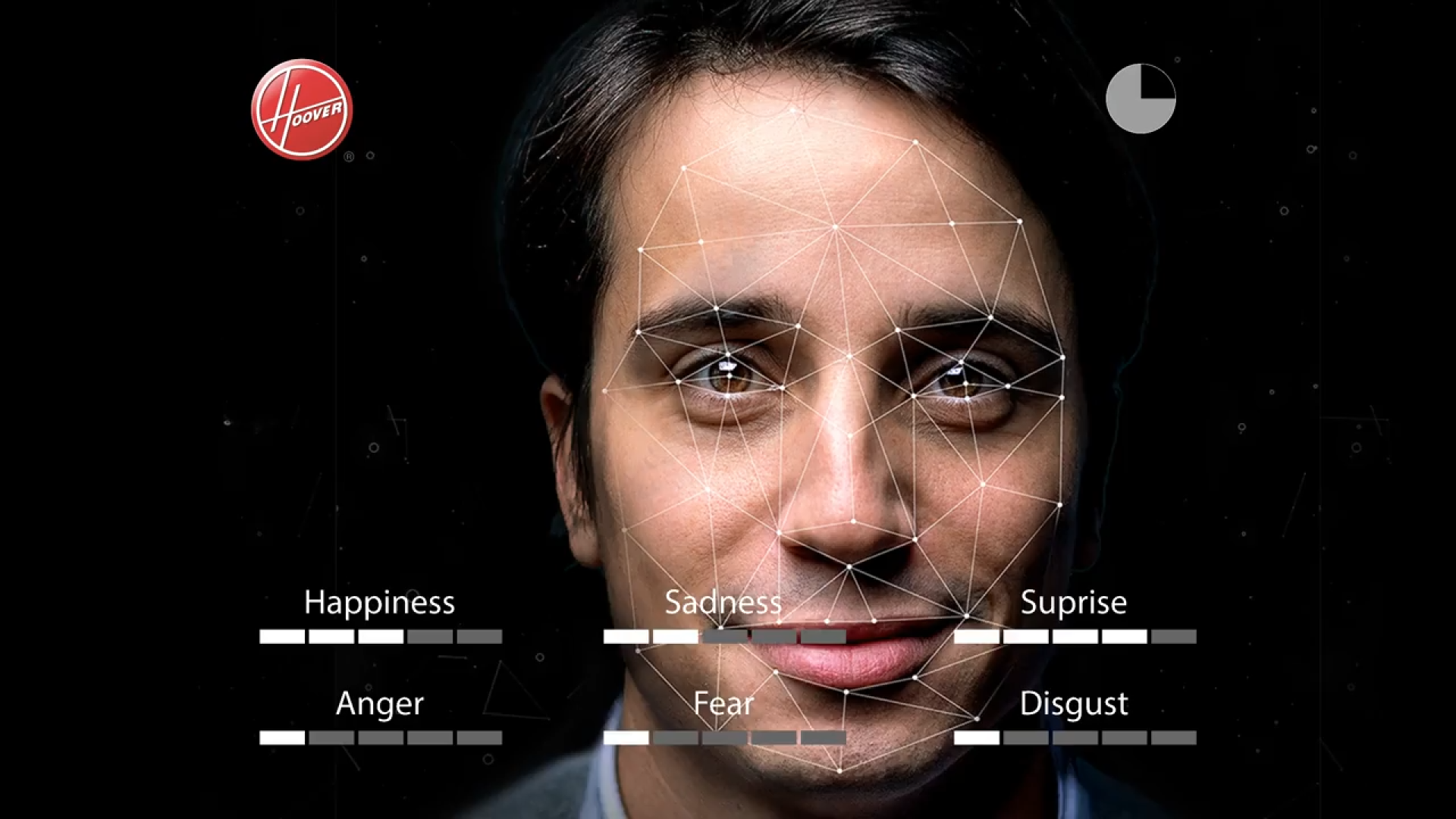
For Bonsaininja and Candy Group we built facial and emotion recognition software for an IFA Berlin 2018 booth in 6 weeks, from selfie to printed postcard.

View project
86½ years: interactive storytelling site for a book
Playing

Entertainment · Web Development

86½ years: interactive storytelling site for a book

For Clubhouse Studio and publisher Hoxton Mini Press, we built a story site with camera-based eye tracking to promote a book about East London.

View project
LEDA: AI exploratory data analysis for retail analysts
Playing

Data Management · AI Development

LEDA: AI exploratory data analysis for retail analysts

LEDA lets retail analysts run exploratory data analysis by asking questions in plain English. We built the multi-agent LLM proof of concept in 10 weeks.

View project
12Questions we get

What teams ask us about Computer Vision

Straight answers from the engineers who build with it. Missing yours?

Ask an engineer

7 questions

Start with a vision-language model when the task is open-ended, volume is modest, and a few seconds of latency is fine. Train a detector such as YOLO or RF-DETR when you need exact boxes, counts, millisecond latency, offline operation, or a low cost per image at high volume. Many production systems cascade the two: a cheap detector first and a VLM only on hard cases.

Only if you open-source your whole project under AGPL-3.0. Ultralytics states that closed-source products, internal tools, and SaaS or API use need an Enterprise license, even for models you trained yourself. If that does not fit, Apache 2.0 alternatives such as RF-DETR avoid the obligation.

Run on the device when you need real-time camera feedback, offline operation, or images that must not leave the phone. Core ML on Apple devices, LiteRT on Android, and ONNX Runtime across platforms run quantized models in milliseconds. Keep cloud inference for large models, open-ended questions, and devices without a usable accelerator.

SAM 2, released by Meta in July 2024, segments and tracks objects you point at with clicks, boxes, or masks. SAM 3, released in November 2025, adds promptable concept segmentation: give it a short phrase or an example image and it finds, masks, and tracks every matching instance. SAM 2 is Apache 2.0, while SAM 3 ships under its own license, so check the terms before production use.

For high-volume, layout-stable documents, a self-hosted OCR or parser such as PaddleOCR or Docling is cheaper and keeps data in-house. For varied layouts, handwriting, or questions that need reasoning, send the page image or the OCR text to a VLM and ask for schema-validated JSON. Ramp's receipt flow combines both: OCR first, then an LLM to structure the result.

Both bill images as input tokens. Claude counts ceil(width/28) x ceil(height/28) visual tokens, so a 1000x1000 image is about 1,296 tokens, with larger images downscaled to the model's limit. Gemini charges 258 tokens for images up to 384 pixels per side and tiles larger ones, so resizing before upload is the main cost lever.

There is no fixed number; it depends on how many classes you have, how varied the scenes are, and the accuracy target. Start by fine-tuning a pretrained model on a modest labeled set, measure per-class results on a held-out set of real images, and label more where the model fails. Production misses routed through review are the most valuable new training data.

13Sources

Computer Vision glossary and sources

Reviewed by our engineers. Last updated 16 November 2026.

Vision-language model (VLM)
A model that takes images and text as input and answers in text, such as Claude, Gemini, or GPT with vision.
Object detection
Finding each object of a known class in an image and returning a bounding box, label, and confidence.
Instance segmentation
Returning a pixel mask for each object rather than a box.
Promptable concept segmentation
SAM 3's ability to find and mask every instance of a concept named in a short text phrase or shown by an example image.
OCR
Optical character recognition: turning text in images or scanned PDFs into machine-readable characters.
Document AI
OCR plus layout, table, and field understanding that turns documents into structured data.
mAP
Mean average precision, the standard detection metric that averages precision over recall levels and classes.
NMS
Non-maximum suppression, the post-processing step that removes duplicate boxes; YOLO26 can skip it with an end-to-end head.
Quantization
Storing model weights and activations in lower precision such as INT8 to shrink size and speed up inference.
Execution provider
An ONNX Runtime backend, such as CoreML, TensorRT, or OpenVINO, that runs the model on specific hardware.

Sources

  1. [1]Claude docs: Visionplatform.claude.com ↗
  2. [2]Gemini API: Image understandingaistudio.google.com ↗
  3. [3]Ultralytics YOLO26docs.ultralytics.com ↗
  4. [4]Ultralytics licensingultralytics.com ↗
  5. [5]Meta: Segment Anything Model 3ai.meta.com ↗
  6. [6]Meta: SAM 2ai.meta.com ↗
  7. [7]Google: TensorFlow Lite is now LiteRTdevelopers.googleblog.com ↗
  8. [8]ONNX Runtime execution providersonnxruntime.ai ↗
→Keep exploring

Built alongside it

  • Related hubLLM Application EngineeringLLM features engineered for tenancy, cost, and production failure modes.
  • Related hubAnthropic ClaudeClaude API products: tool use, prompt caching, Agent SDK, Bedrock and Google Cloud.
  • Related hubReact Native DevelopmentCross-platform iOS and Android with production release ownership.
  • Related hubAI Agent Evaluation & ObservabilityTraces, offline evals, and CI gates so agent quality can fail a merge.

Longer reads

  • AI in Regulated Industries: From Prototype to Production ReadyA practical guide to AI compliance, governance, and delivery in finance, healthcare, and defense. Patterns, checklists, rollout stages, and monitoring KPIs.
  • MLOps for SaaS Teams: Deploy, Version, and Roll Back Models SafelyA practical guide to MLOps in SaaS: how to deploy, version, and roll back AI models inside a boilerplate architecture, with patterns, pitfalls, and metrics.
  • Privacy by Design for AI SaaS: PII, Retention, Compliance WorkflowsPractical privacy by design for AI SaaS: PII handling, retention, and GDPR, HIPAA, PCI-DSS workflows when shipping fast from a boilerplate in regulated teams.

How we deliver it

  • Generative AI Solutions
  • Agentic MVP
  • Hybrid Teams

Vision AI

Turn images into product features

VLMs, YOLO, SAM and document AI, measured on your own images before launch.

Apptension site footer

Taking new projects

Have a product to build, fix or scale?

Apptension is a senior-only software development company headquartered in Poznań, Poland. Since 2012 our engineers have shipped 360+ AI and SaaS products for startups, scale-ups and enterprises across the US, UK and EU: agentic MVPs, RAG and voice AI systems, multi-tenant SaaS and legacy modernization.

Projects shipped
360+
Founded
2012
Senior engineers
30+
Client CSAT
100%

Send a few lines about your product. A person from our team replies within one business day.

Start a projectScope it in Scope Studio
  • Emailcontact@apptension.com
  • Phone+48 533 352 052Poznań, Poland

  • Agentic MVP developmentNew
  • Agentic SDLC implementation
  • Product & SaaS development
  • Legacy modernization
  • Generative AI development
  • SaaS development company
  • Vibe-coded prototype to production
  • End-to-end software development
  • Senior engineering team extension
  • Product consulting & discovery
  • Tech due diligence for investors
  • All services

  • LLM application engineering
  • RAG & retrieval engineering
  • Voice AI agent development
  • MCP server development
  • LangGraph & LangChain agents
  • AI agent evaluation & observability
  • Node.js development company
  • Python & Django development
  • React & Next.js development
  • React Native app development
  • All expertise

  • Open-source SaaS Boilerplate
  • SaaS P&L model template
  • Walkthrough Studio
  • Agentic SDLC playbook
  • AI SDLC maturity assessment
  • Agentic SDLC ROI calculator
  • Founder resources
  • Events & exec dinners
  • Open source
  • Builder's Toolkit

  • Boutique vs large software house
  • Build vs buy vs partner
  • How to choose an AI & RAG partner
  • Team augmentation without chaos
  • Django vs Node.js for SaaS
  • React Native vs Flutter
  • AI in regulated industries
  • All guides

  • About Apptension
  • Case studies
  • Careers
  • Blog
  • Tech Radar
  • Agentic SDLC hub
  • Contact

Senior AI engineers shipping enterprise-grade AI and SaaS with startup speed.

Headquarters

Apptension sp. z o.o.23 Lutego 26
61-743 Poznań, Poland (opens Google Maps)

VAT-ID PL7831720203 · REGON 360404804
KRS 0000534235

Follow Apptension

Client reviews on Clutch

© 2012–2026 Apptension sp. z o.o. All rights reserved.

Privacy policySitemapllms.txt