What we've learned building SaaS, AI and mobile products
Written by the engineers, designers and product leads who do the work. How we scope MVPs, pick a stack, run AI-assisted delivery and look after products once they are live.
Integrating AI into SaaS is mostly systems work: data pipelines, evaluation, latency budgets, and guardrails. This deep-dive covers architectures, model choices, tooling, and what breaks in production.
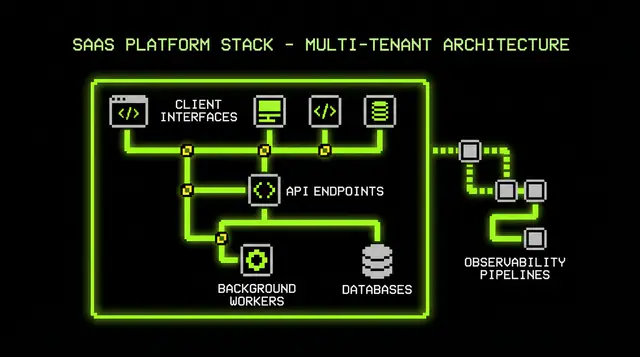
Flexible SaaS is mostly about disciplined boundaries: tenancy, data, deployments, and observability. This guide breaks down the tools and practices we use to keep growth from turning into outages and runaway costs.
Agile in SaaS is less about ceremonies and more about shipping safely, learning fast, and keeping the system stable. This guide compares proven frameworks, shows where each fails, and how to implement them with metrics and tooling.
Microservices can improve SaaS performance, but only when you treat latency, data, and observability as first-class concerns. This article covers patterns, pitfalls, and implementation details with code and operational checklists.
AI is now part of most dev workflows, but the wins depend on constraints, reviews, and tests. This article breaks down what AI helps with in 2026, where it fails, and how teams can ship safely.
SaaS in 2026 looks stable on the surface, but the technical bar is higher: security, data isolation, and reliability are expected by default. This article breaks down architecture, infra, AI features, and delivery patterns with concrete implementation details.
How a scrappy MVP team becomes a SaaS organization that can scale: hiring strategies, tech culture practices, and the move from external partners to in-house teams. We also cover how startups keep their early hustle while adding the structure growth demands.
This article, part 8 of "There's Coffee In That Nebula," explores the capabilities of a single AI agent for Exploratory Data Analysis (EDA) on a Customer Personality Analysis dataset. We compare here, three implementations-LlamaIndex, PandasAI, and LangChain-assessing their ability to handle basic data tasks. Key insights reveal the agent's strengths in data understanding and the limitations of single-agent systems. The article also touches on advanced reasoning techniques like Chain of Thought (CoT) and hints at future exploration of multi-agent systems for more complex data analysis.
Project LEDA applies LLM-driven Exploratory Data Analysis (EDA) to retail customer analysis. This series follows the development of a Conversational Retail Customer Analysis system that combines AI with human expertise. LEDA uses autonomous agents so analysts can query data the way they would ask a colleague. We cover single-agent systems, multi-agent teams, and the problems we hit along the way.
While our solution works and provides secure access to cryptographic building blocks from the React Native level, the testing aspect remains an open challenge. This method can also be shared across web versions, making it a versatile approach. Our use of manual tests, dedicated testing keys, and partial reliance on web-based testing methods has ensured stability so far.
User Acceptance Testing is a critical step in ensuring the success of any product. By following a structured and detailed approach, you can effectively validate that the product meets the users’ requirements and is ready for deployment. Engage stakeholders, design comprehensive test cases, execute tests thoroughly, and communicate findings clearly to achieve a successful UAT. Through careful planning and execution, your app will be well-positioned to deliver a secure, reliable, and user-friendly experience to your customers.
Developing effective UAT scripts is a vital step in ensuring the success of the User Acceptance Testing process. By following a structured approach and focusing on key business processes, detailed test cases, and realistic scenarios, you can create comprehensive and effective UAT scripts. Collaboration with stakeholders, regular updates, and proper training further enhance the effectiveness of UAT, leading to a higher quality software product that meets user expectations and business objectives.