Introduction
Investors don’t fund “a product.” They fund a de risked plan.
An investor ready MVP is not the smallest thing you can build. It’s the smallest thing that proves:
- A real user has a real problem
- Your solution works in a believable way
- You can ship and measure outcomes
- The next milestones are clear and cheap enough to reach
If you scope the wrong MVP, you get stuck in demo theater. Pretty screens. No proof. No baseline metrics. Then fundraising turns into opinions.
Insight: A good MVP scope is a set of decisions you can defend in one slide: who it’s for, what it does, what it does not do, and what you’ll measure.
This guide is written for founders who need to build an MVP fast without building the wrong thing fast. We’ll use concrete templates, backlog examples, and the same constraints we see in delivery work: limited time, limited budget, and high investor scrutiny.
What “fundable” looks like
In early stage meetings, the bar is usually not revenue. It’s clarity plus evidence.
Bring proof that you can execute:
- A demo that matches a real workflow
- A measurable activation event (not just page views)
- A simple funnel with drop off points you can explain
- A roadmap that starts with the demo and works backward
Proof point: Across 360+ projects delivered since 2012, the pattern is consistent: teams that instrument early make faster roadmap calls because they argue from data, not taste.
_> Delivery proof points
Numbers that matter when you promise speed
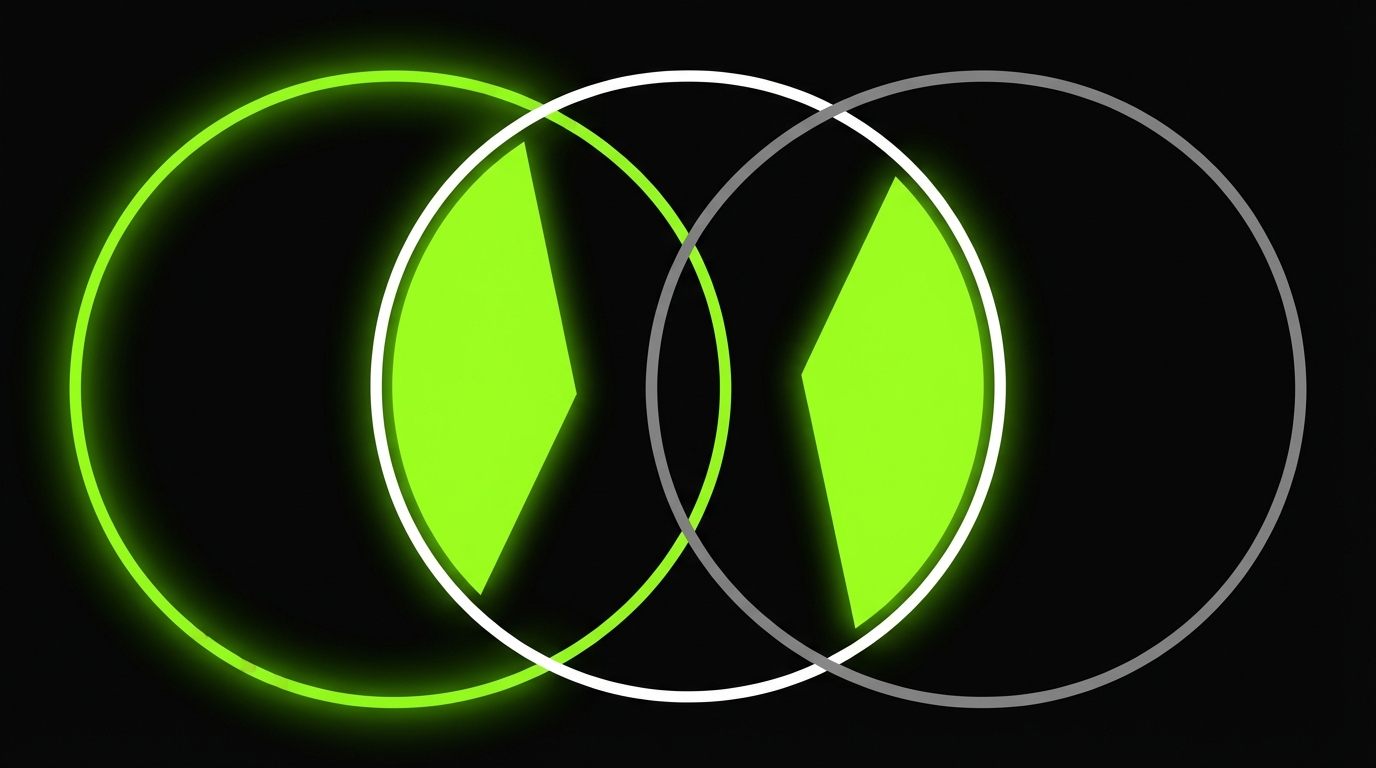
Define MVP, prototype, PoC
Founders and investors often use these words interchangeably. That’s where scope drift begins.
Here’s the clean way to separate them.
| Artifact | Goal | Audience | Must be production ready | Typical failure mode |
|---|---|---|---|---|
| PoC | Prove a technical claim is possible | Engineers, technical investors | No | Proves tech, proves nothing about users |
| Prototype | Prove UX and workflow are understandable | Users, stakeholders | No | Looks real, breaks under real data |
| MVP | Prove value with real users and measurable outcomes | Users, investors | Yes for the narrow slice | Too many features, no measurement |
A fundable MVP is often a prototype plus production constraints:
- Real auth and roles (even if simple)
- Real data flows (even if small)
- Auditability for key actions (who did what)
- Analytics baseline (what happened, not what you hope happened)
Insight: If you can’t put it in front of a user without apologizing, it’s not an MVP. It’s a prototype.
When each one is correct
Use a PoC when the core risk is technical. Example: can RAG retrieval stay accurate enough for a regulated workflow?
Use a prototype when the core risk is behavioral. Example: will operators follow this workflow, or will they bypass it?
Use an MVP when you’re ready to test value and retention. That means you need:
- A defined ICP and job to be done
- A single primary workflow
- A measurable success event
- A plan to get it into users’ hands within weeks
A quick investor litmus test
Ask yourself:
- Can I onboard a user without me on Zoom?
- Can I show a funnel from signup to success?
- Can I answer “what did users do last week” with numbers?
If the answer is no, you’re likely still in prototype land. That’s fine. Just don’t call it an investor ready MVP.
What makes an investor ready MVP
_> The minimum set that holds up under scrutiny
Narrow production slice
One workflow that works end to end with real data, not mocked screenshots.
Measurable activation
A named success event and a funnel you can show in a dashboard.
Risk controls
Basic security, audit logs for key actions, and guardrails where failure is expensive.
Demo first roadmap
Milestones planned backward from the demo, with 2 to 4 week increments and metric targets.
Ruthless feature triage
Most MVPs fail in planning, not in engineering. The scope grows because every feature sounds “small.”
Here’s the rule that holds up in investor conversations:
- One primary user
- One primary workflow
- One measurable outcome
Everything else is either:
- A dependency
- A risk control
- A nice to have
The triage questions
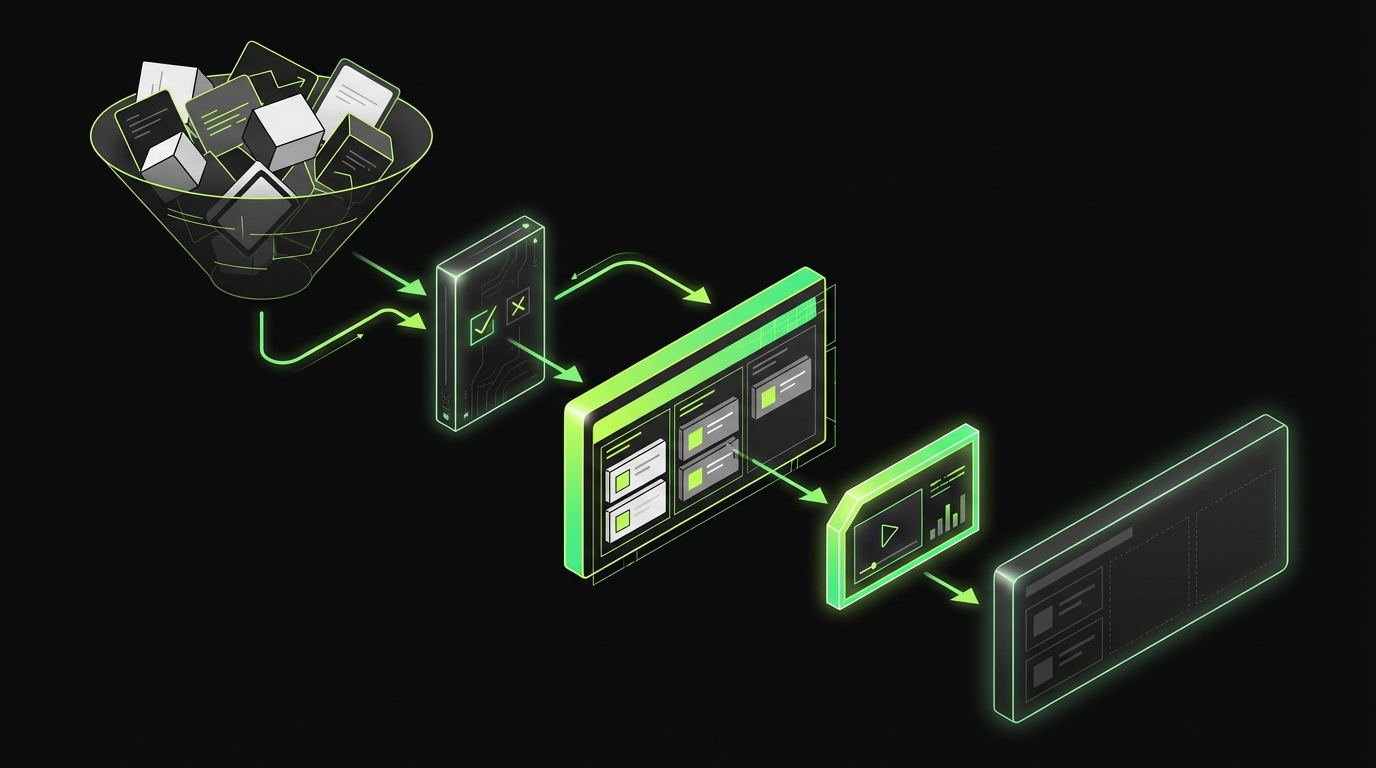
Use these questions in backlog grooming. If a feature fails two, it’s out.
- Does it directly enable the primary workflow?
- Does it reduce a known risk (security, compliance, payment failure)?
- Will it change a metric we can measure in the MVP window?
- Can we ship it in days, not weeks?
Insight: “We can add it later” is not a plan. A plan is a named milestone with a metric and a date.
Prioritization framework that stays honest
Use a simple scoring model you can explain on one slide:
- Impact: expected change in the one metric that matters (1 to 5)
- Confidence: evidence level (1 to 5)
- Effort: engineering days (1 to 5)
Score = (Impact x Confidence) / Effort
Then enforce a hard cap:
- MVP backlog: max 20 to 40 tickets
- Each ticket: 1 to 3 days
What to cut first
These features are common MVP traps:
- Multi tenant admin panels before you have tenant 2
- Custom dashboards before you know which metrics matter
- Complex permissions before you have a second role
- Mobile apps when a responsive web app would do
- Integrations before you’ve proven the workflow manually
Mitigation: keep a “later” backlog, but tie it to a trigger.
Example triggers:
- Add role based access control when you have 3+ distinct user roles in active use
- Add billing automation after the first 5 paying customers
- Add integration X after 10 weekly active users request it
Feature triage for AI products
AI MVPs need extra discipline because “smart” features are easy to demo and hard to maintain.
Keep the MVP AI scope to:
- One narrow task
- One evaluation dataset
- One acceptance threshold
If you can’t test it, you can’t promise it.
In our work on AI systems, the failure mode is predictable: teams measure usage, not outcomes. Adoption spikes, then support tickets climb because answers are wrong or inconsistent.
A better MVP question is: did the AI help the user finish the job faster or more accurately?
Benefits of scoping this way
Faster fundraising conversations
You answer investor questions with numbers and screenshots, not opinions.
Less rework
You avoid building feature clusters that don’t connect to the core workflow.
Clearer hiring plan
Once the baseline exists, you can justify who to hire next based on bottlenecks.
More predictable costs
Ticket caps and demo checkpoints reduce late surprises and scope creep.
Instrumentation investors trust
If you want investors to fund the next round of build, you need an analytics baseline from week one.
Not a perfect data warehouse. A baseline.
The MVP analytics baseline
Track four layers:
- Acquisition: where users came from
- Activation: the first success event
- Engagement: repeat usage of the core workflow
- Outcome: the business result the user cares about
Insight: Page views are not traction. Investors look for activation and repeatable outcomes.
Define one success event
Pick a single event that means “the product worked.” Examples:
- SaaS: created first project and invited a teammate
- Marketplace: posted first listing or completed first booking
- AI tool: completed a task with a cited answer and user accepted it
Then build your demo around that event.
Minimal event taxonomy
Keep it simple. You can always add later.
- signed_up
- onboarded
- created_core_object
- completed_core_action
- invited_user
- paid
Here’s a simple example you can implement in any stack.
{
  "event": "completed_core_action",
  "user_id": "u_123",
  "account_id": "a_456",
  "properties": {
    "workflow": "demo_flow_v1",
    "time_to_complete_seconds": 142,
    "result": "success"
  },
  "context": {
    "app_version": "0.1.0",
    "source": "founder_outreach"
  },
  "timestamp": "2026-02-26T10:15:00Z"
}
Example: On LEDA, an AI powered exploratory data analysis tool built in 10 weeks, correctness and reliability were core constraints. For AI products like this, instrumentation must include task success and quality signals, not only clicks.
What investors will ask
Be ready to answer these with screenshots or a simple dashboard:
- How many users reached activation last week?
- Where do they drop off?
- What’s the median time to first value?
- What do retained users do differently?
If you can’t answer yet, say so. Then show the plan and the timeline to get the baseline.
AI specific quality metrics
If your MVP includes AI, add two more layers:
- Quality: task success rate, citation rate, human acceptance rate
- Risk and cost: latency, token spend, fallback rate
Start with a small evaluation set. Even 50 to 200 examples is enough to see regressions.
From our QA work on AI systems, the practical checks that matter early are:
- Hallucination rate on known questions
- Retrieval mismatch rate in RAG flows
- Instruction conflict cases
You don’t need perfect coverage. You need a baseline you can improve.
Demo first roadmap planning
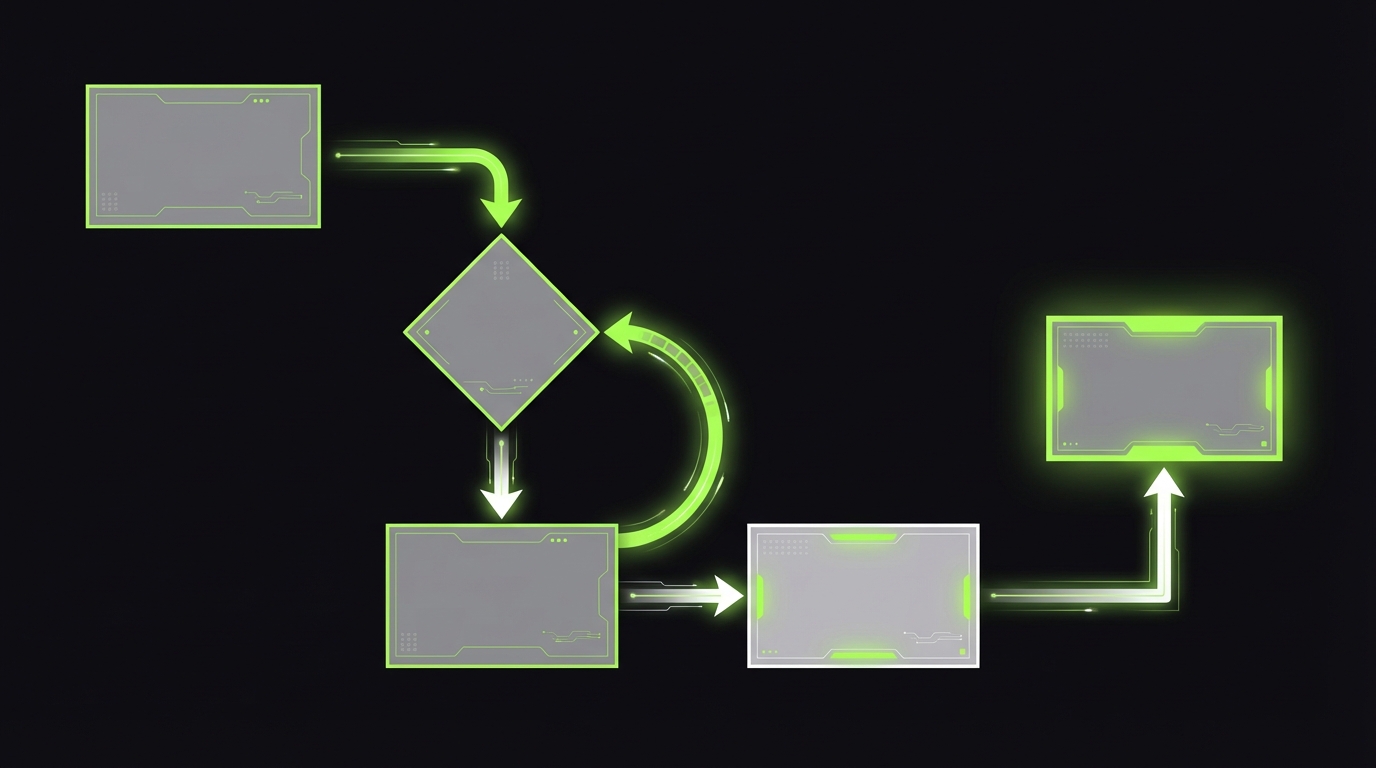
A demo first roadmap is a reverse plan. You start with what the investor will see in 5 minutes, then work backward to the smallest build that makes it real.
Build the demo spine
Write the demo as a sequence of user actions. Then turn each action into tickets.
A solid investor demo usually has:
- The problem in one sentence
- The user persona and context
- The core workflow end to end
- A measurable outcome
- The next milestone and what it unlocks
Insight: Investors fund momentum. Your roadmap should show what you can ship next in 2 to 4 week increments.
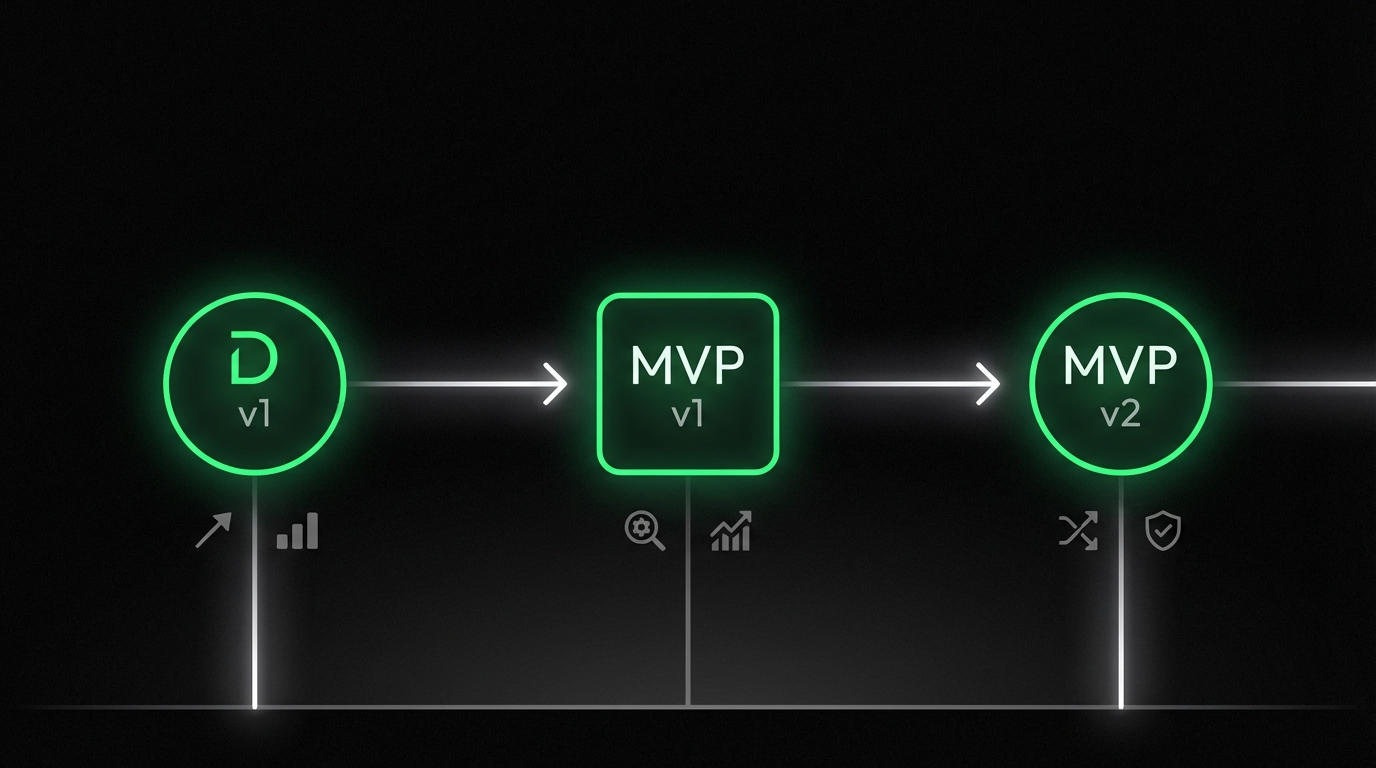
Demo first roadmap rules
Keep these constraints:
- No parallel feature tracks in MVP phase
- Every sprint ends with something demoable
- Every sprint has one metric target
Investor demo script outline
Use this outline. Don’t improvise.
- Hook: “We help [ICP] do [job] without [pain].”
- Setup: show the old way in 20 seconds
- Workflow: 3 to 5 steps, no detours
- Proof: show baseline metrics, even if small
- Risks: name the top 2 risks and how you’re testing them
- Ask: what you need to reach the next milestone (time, hires, budget)
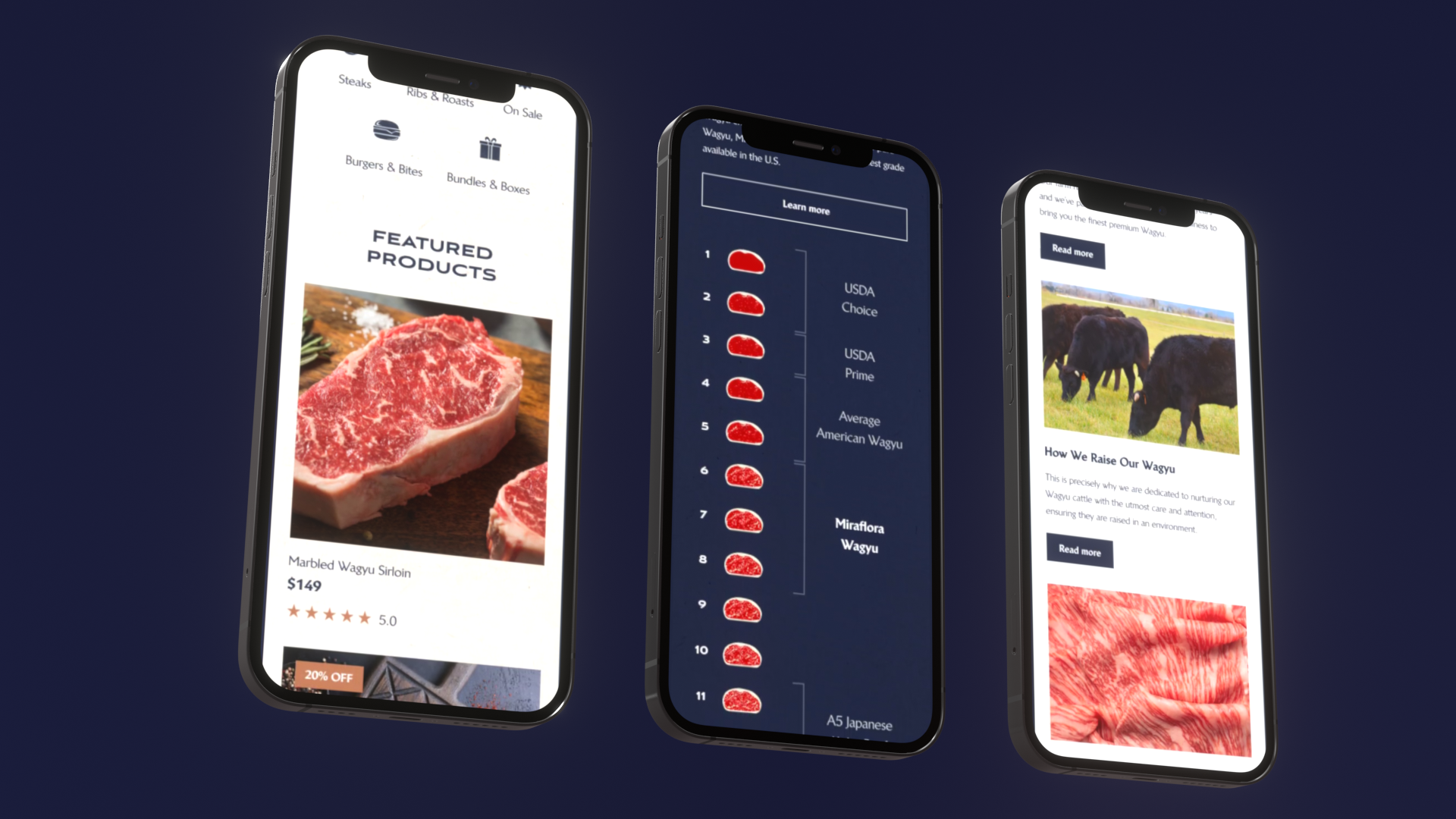
Example: On Miraflora Wagyu, a luxury Shopify build delivered in 4 weeks, the constraint was time zones and async feedback. The way to keep momentum was tight demo checkpoints and clear acceptance criteria. Different product, same lesson: demo cadence beats long spec docs.
The MVP in weeks scope template
Use this as your MVP scope template. Keep it to one page.
1) ICP and job to be done
- ICP: [who]
- Job: [what they are trying to accomplish]
- Current workaround: [tool, spreadsheet, agency]
2) Primary workflow
- Start state: [user has X]
- Success state: [user achieves Y]
- Success event: [named event]
3) MVP features (must ship)
- Feature 1: [why it enables workflow]
- Feature 2
- Feature 3
4) Non goals (explicitly out)
- Not in MVP: [billing automation, multi region, etc.]
5) Instrumentation (must ship)
- Events: [list]
- Dashboard: [what it shows]
6) Demo plan
- Demo v1 date: [date]
- Demo script: [link]
7) Risks and tests
- Risk 1: [test]
- Risk 2: [test]
8) Budget guardrails
- Cap: [number]
- Tradeoffs you accept: [list]
If this template feels too strict, that’s a sign you’re still exploring. That’s normal. Just don’t call it an investor ready MVP yet.
Backlog examples by product type
These are starter backlogs that tend to fit a 4 to 12 week MVP window. Adjust based on your domain and risk.
SaaS MVP backlog (example)
- Auth, org creation
- Create core object
- Core workflow action
- Invite teammate
- Basic roles (admin, member)
- Activity log for core actions
- Stripe checkout or manual invoicing placeholder
- Analytics events and a simple dashboard
Marketplace MVP backlog (example)
- Supply side onboarding (create listing)
- Demand side search and view listing
- Booking request and confirmation
- Messaging or structured questions
- Trust basics: identity check or phone verification
- Dispute and cancellation policy text
- Analytics: listing created, booking requested, booking completed
AI MVP backlog (example)
- One task flow (ask, retrieve, answer)
- RAG sources and citations
- Human feedback capture (thumbs up, thumbs down, reason)
- Eval dataset v1
- Quality dashboard (task success, citation rate)
- Guardrails: refusal patterns, PII redaction if needed
- Cost controls: caching, rate limits
Insight: For AI, “works in the demo” is table stakes. What matters is whether it stays correct and safe after 100 varied inputs.
Small enough to ship in weeks, but complete enough to show one workflow end to end with instrumentation. If users can’t reach a success event, it’s too small.
Only if payment is part of the core risk. Many MVPs can start with manual invoicing or a waitlist and still prove activation and retention.
Usually no. A responsive web app is faster to ship and easier to iterate. Go native when mobile specific behavior is core to the workflow.
Scope AI to one narrow task with an evaluation set and acceptance thresholds. Investors will ask how you measure correctness and how you control cost.
Conclusion
A fundable MVP is a narrow production slice with a demo that maps to a real workflow and a baseline you can measure.
If you want to scope an investor ready MVP that investors will fund, keep it simple and defensible:
- Define whether you need a PoC, prototype, or MVP and don’t blur them
- Pick one user, one workflow, one outcome
- Cut features until the MVP fits a weeks long window
- Instrument activation and outcomes from day one
- Plan the roadmap demo first, then build backward
Final check: If you can’t explain your MVP scope in 60 seconds, you will not control the investor conversation. The scope will control you.
Next steps you can do this week:
- Fill the MVP scope template in one page.
- Write the investor demo script outline and time it.
- Create the first analytics dashboard, even if it’s sparse.
- Cut your backlog to 20 to 40 tickets and assign owners.
The goal is not perfection. The goal is momentum you can prove.
Cost drivers and tradeoffs
MVP cost is not a single number. It’s a function of risk, scope, and speed.
Main cost range drivers:
- Team shape: senior only teams cost more per week, but usually ship with fewer rewrites
- Domain constraints: regulated industries add compliance by design work
- Data complexity: migrations, messy inputs, and integrations add uncertainty
- AI quality requirements: evals, guardrails, and monitoring are real work
- Polish level: custom UI and animation can double design time
Common tradeoffs that keep budgets sane:
- Start with responsive web, not native apps
- Manual ops behind the scenes instead of full automation
- One integration max in MVP
- One persona and minimal roles
If you need a number for planning, treat it as a hypothesis and validate it by breaking work into tickets and estimating in days. That estimate is what you defend to investors.