Introduction
Engineering collaboration tooling looks like an ops problem until it becomes a delivery problem.
If your team is remote, distributed across time zones, or just busy, the wrong tool pushes work into private DMs, meetings, and tribal memory. The right tool makes decisions searchable, handoffs predictable, and incident response calmer.
This article compares Slack vs Microsoft Teams vs Discord through a CTO lens. Not feature checklists. The stuff that breaks at 50 engineers, 200 engineers, and during a security review.
What we are optimizing for:
- Async communication that does not collapse into meetings
- Scalability in message volume, channels, and integrations
- Security and compliance that survives procurement and audits
- Cost and ROI that does not surprise you six months later
- Talent onboarding that does not require a buddy to translate “how we work”
A quick framing: chat is not the system of record
Chat is where work happens, but it should not be where work dies.
If you pick any of these tools and do nothing else, you will end up with:
- decisions buried in threads
- docs drifting out of sync
- onboarding that depends on who you ask
So the comparison below assumes you will pair chat with a system of record (tickets, docs, runbooks) and treat chat as the transport layer.
The engineering problems these tools must solve
Most teams start with “we need chat”. Then the org grows and the real requirements show up.
Common failure modes we see in product teams:
- Async breaks down and everything becomes a meeting
- Channels sprawl and nobody knows where to post
- Search fails because retention is limited or content is fragmented
- Incidents get noisy and critical context is lost
- Security review blocks rollout because data handling is unclear
Insight: If you cannot answer “where do decisions live?” in one sentence, your chat tool will become a liability at scale.
Scalability and performance: volume, not latency
For chat tools, “performance” is rarely about milliseconds. It is about whether the tool still works when:
- you have 500 channels
- you run 30 integrations
- you ship daily and every deploy posts updates
- you have multiple on call rotations and incident rooms
What to watch:
- message volume per day per engineer
- number of active channels per week
- integration event rate (deploy bots, CI, monitoring)
- time to find prior decisions (a simple internal metric, but brutal when it is high)
Hypothesis: Search time is a leading indicator of collaboration debt. Measure median time to find “the last decision” on a recurring topic (on call policy, release process, API contract).
Team management and hiring: onboarding is the stress test
Hiring senior engineers is hard. Keeping them productive in the first two weeks is harder.
A collaboration tool should reduce the need for synchronous handholding. In our work scaling SaaS teams post MVP, the pattern is consistent: once the team grows, you need structure or the culture becomes “ask in DM”.
Practical onboarding signals:
- Can a new hire find the architecture overview without asking?
- Can they replay the last incident timeline?
- Can they see how decisions were made, not just the final answer?
If the tool makes those three things easy, your onboarding time drops. If it makes them hard, you pay for it every time you hire.
Async by default
Protect maker time
Written updates, clear threads, and decision summaries reduce meeting load without slowing delivery.
Governance that scales
SSO, SCIM, retention
Define identity and retention up front so security reviews do not become a surprise project.
Integrations with owners
No orphaned bots
Every integration needs an owner, a permission model, and a quarterly review cadence.
Slack vs Teams vs Discord: what matters in practice
Here is the comparison we actually use when teams ask “which one should we pick?”
It is not perfect. But it is grounded in day to day engineering workflows: incidents, releases, architecture discussions, and compliance.
Quick comparison table
| Dimension | Slack | Microsoft Teams | Discord |
|---|---|---|---|
| Best fit | Product and engineering orgs with lots of integrations | Orgs standardized on Microsoft 365 and enterprise controls | Developer communities, early stage teams, voice heavy workflows |
| Async ergonomics | Strong threads, good channel norms, solid search (plan dependent) | Good for meetings and files, async can feel buried | Fast and casual, threads exist but long term knowledge can drift |
| Integrations | Deep ecosystem, mature bots and workflows | Strong with Microsoft stack, improving outside it | Limited for enterprise workflows, can be custom built |
| Compliance posture | Strong on higher tiers, common in audited companies | Strong, often easiest for regulated enterprises already on M365 | Harder to justify for regulated environments |
| Identity and access | SSO, SCIM on higher tiers | Tight Entra ID integration, policy friendly | SSO exists but enterprise identity patterns are less common |
| Cost risk | Can get expensive as you scale seats and need retention | Bundling can make costs predictable | Cheap to start, enterprise needs can force a later migration |
Insight: The best tool is the one you can keep for three years. Migrations are expensive because the cost is not licenses, it is lost context.
Slack: the integration workhorse, with predictable tradeoffs
Slack is the default in a lot of engineering led orgs because it plays well with the rest of your stack.
Where Slack tends to work well:
- rich integration ecosystem (CI, monitoring, incident tooling)
- channel based workflows that map well to teams and domains
- decent async patterns with threads and huddles when needed
Where Slack bites you:
- retention and compliance features push you into higher tiers
- channel sprawl happens fast without guardrails
- “Slack as Jira” becomes a habit unless you enforce a system of record
Mitigations that actually help:
- create a small set of channel types (team, project, incident, announcements)
- require a short decision summary posted to a decision log channel
- restrict who can install apps, and review integrations quarterly
Example: On a project where the client team was spread from Hawaii to Germany, early communication was limited to async Slack messages. The work moved, but feedback cycles were slow until we introduced a predictable cadence: daily async updates, a single decision thread per topic, and a weekly 30 minute sync for unresolved items. The tool mattered less than the operating system.
Microsoft Teams: strongest when your company already runs on Microsoft
Teams is often the rational choice when:
- identity is Entra ID
- files live in SharePoint
- meetings are already in Outlook
- security and compliance is non negotiable
Where Teams works well:
- enterprise controls and policy alignment
- meeting and calendar integration
- consistent identity management in larger orgs
Where Teams can frustrate engineering teams:
- channel and thread UX can feel heavier than Slack
- integration ecosystem is good, but not as frictionless across dev tools
- async discussions can get lost when everything looks like “another chat”
Mitigations:
- set up clear team boundaries and avoid creating channels for every micro topic
- use a dedicated “engineering announcements” channel with posting restrictions
- standardize on one place for docs (and link it, do not paste it)
If you are building for regulated environments, Teams plus a zero trust approach often makes the security review easier. That aligns with the architecture patterns we see in enterprise setups: isolate sensitive data, enforce strong identity, and keep audit trails clean.
Discord: great for voice first teams, risky as an enterprise default
Discord is underrated for some engineering cultures. It is fast, voice is excellent, and it feels like a developer space.
Where Discord shines:
- voice channels for pairing and lightweight support
- community style spaces (open source, dev rel, internal guilds)
- low friction for early stage teams
Where Discord struggles for CTO level requirements:
- compliance and governance conversations get complicated fast
- enterprise identity and policy controls are not as standard as Teams
- long term knowledge management is harder unless you add strict practices
Mitigations:
- treat Discord as a collaboration layer, not a record
- push decisions into docs and tickets immediately
- define retention expectations early, even if the tool does not enforce them well
Hypothesis: Discord can reduce meeting load if your team uses voice channels as “drop in pairing” instead of scheduled calls. Measure meeting hours per engineer per week before and after, and track whether cycle time improves.
- Integration ecosystem across CI, monitoring, incident tooling
- Channel and thread patterns that support async
- Mature admin controls on higher tiers
- Fast adoption in engineering led orgs
- Tight Entra ID and Microsoft 365 integration
- Enterprise policies, retention, and audit alignment
- Meetings and calendar built in
- Predictable costs in bundled environments
Security, compliance, and architecture: the part that blocks rollouts
If you are a Head of Engineering, you do not just pick a tool. You inherit the risk profile.
Security questions that show up in every serious evaluation:
- Where is data stored, and what is the retention policy?
- Can we enforce SSO and remove access automatically?
- Can we export data for audits and legal holds?
- Can we restrict third party apps and webhooks?
Insight: Most breaches in collaboration tooling are not “hacks”. They are misconfigurations: public links, unmanaged guests, and forgotten integrations.
A practical checklist for CTOs
Use this as a baseline, regardless of Slack vs Teams vs Discord:
Identity
- SSO required
- SCIM provisioning for joiners and leavers
- MFA enforced via your IdP
Data governance
- retention policy that matches your contracts
- eDiscovery or export plan
- clear policy for guest access
Integration safety
- allowlist approved apps
- rotate webhook secrets
- log and review bot permissions
Incident readiness
- dedicated incident channels
- runbook links pinned
- post incident summaries stored outside chat
When we built Mobegí, an internal AI knowledge assistant, the hard part was not the chat interface. It was making sure the bot could answer questions using internal documentation while maintaining data security. That same constraint applies to chat tools: the moment you connect them to internal systems, you need a clear boundary around what the tool can see and retain.
Where async meets architecture decisions
Tool choice influences architecture decisions in subtle ways.
Examples:
- If your incident workflow lives in chat, you will design alerting, runbooks, and on call rotation around that tool.
- If your approvals happen in chat, you will eventually need stronger audit trails elsewhere.
- If you rely on bots for deploy visibility, you will shape your CI and release process to publish events in a consistent format.
A simple pattern that holds up:
- event driven notifications to chat (deploys, incidents, data jobs)
- authoritative state in systems of record (Git, CI, ticketing)
- summaries and decisions pushed to docs
That pattern maps well to the architecture principles we use in scalable enterprise systems: separate concerns, keep auditability, and avoid coupling core workflows to a single UI.
Implementation playbook: how to roll this out without chaos
Most tool rollouts fail for one reason: you change the tool, but not the habits.
Here is a rollout sequence that avoids the worst traps.
- Pick one primary tool (do not run three in parallel)
- Define channel taxonomy and ownership
- Decide what must not live in chat (architecture decisions, incidents, HR)
- Standardize integrations and permissions
- Train managers on async expectations
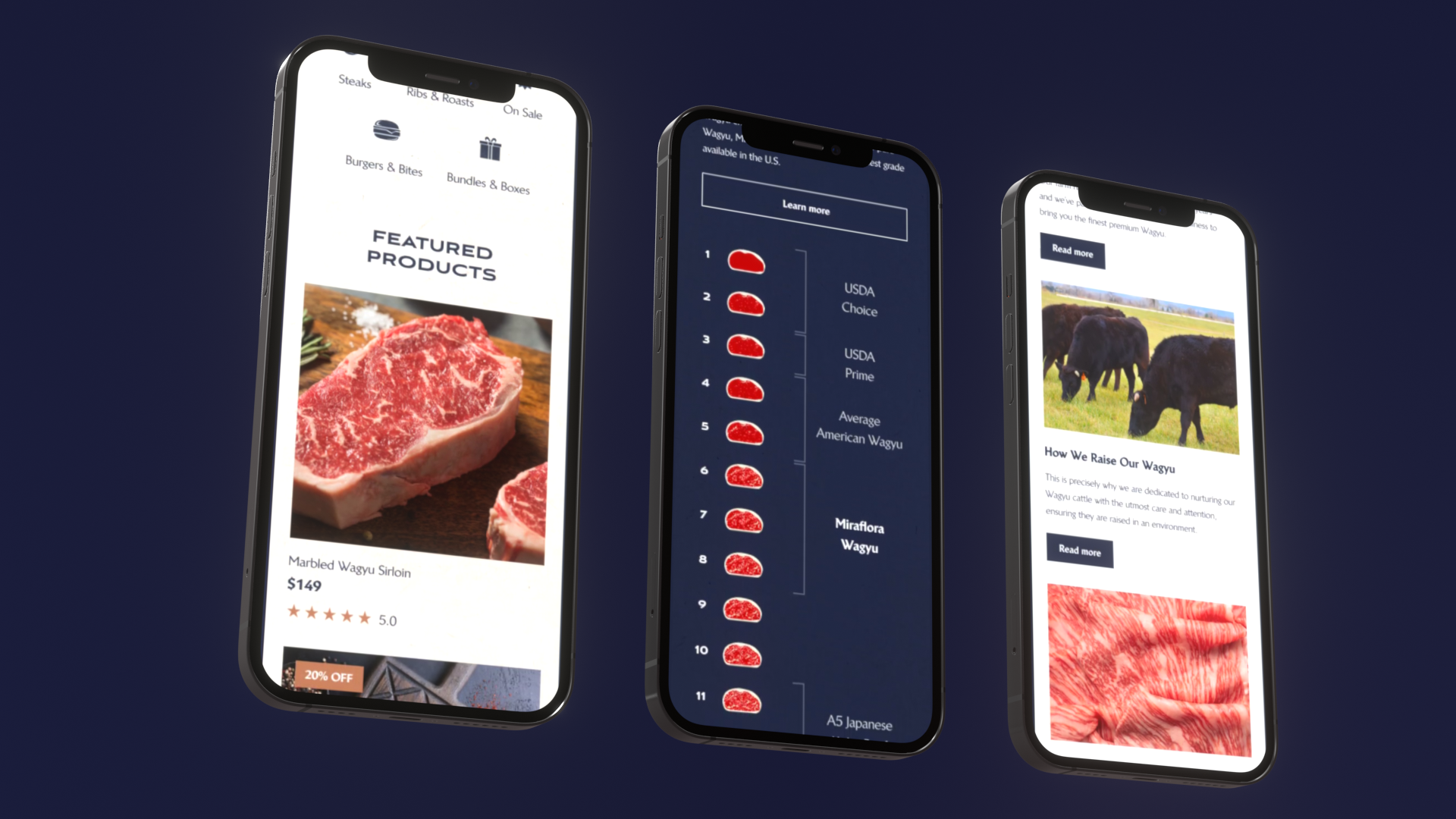
Example: During fast delivery projects like the Miraflora Wagyu Shopify build (4 weeks), async discipline mattered more than the tool. A small set of channels, predictable update windows, and decision summaries kept the feedback loop moving across time zones.
Operating rules that keep async healthy
These are boring. They also work.
- Default to public channels. DMs are for personal topics and emergencies.
- One topic per thread. If the topic changes, start a new thread.
- Decisions get a summary. One message: context, decision, owner, date.
- No screenshots of text. Link the doc or paste the snippet.
- Use status and do not disturb. Protect maker time.
A simple decision template you can paste:
Decision:
Context:
Options:
Owner:
Date:
Link:
Measure whether this helps:
- number of repeated questions in onboarding
- time to resolve incidents
- time from proposal to decision on architecture changes
Cost and ROI: what to model before you commit
Licenses are the visible cost. The hidden cost is time.
Model these before you standardize:
- seat count growth over 12 to 24 months
- retention and compliance tier requirements
- integration maintenance time (who owns bots and webhooks?)
- meeting load (does the tool reduce it or increase it?)
Hypothesis: A better async setup can cut meeting time by 10 to 20% for senior engineers. Track meeting hours per engineer, then compare cycle time and defect rate after 6 to 8 weeks.
If you are already paying for Microsoft 365, Teams can be cost predictable. Slack can be worth it if integrations and search save enough time. Discord can be cheap, but the migration cost later can erase the savings if you outgrow it.
_> Metrics worth tracking after rollout
If you cannot measure it, you will argue about it
- Week 1: Define channel taxonomy, owners, and what cannot live in chat
- Week 2: Configure SSO, SCIM, retention, guest rules, and app allowlist
- Week 3: Migrate active teams, set up incident rooms, standardize deploy and alert notifications
- Week 4: Run onboarding dry run, prune channels, review metrics, and adjust rules
Conclusion
Slack vs Teams vs Discord is not really a tool debate. It is a decision about how your engineering org communicates when nobody is online at the same time.
If you want a simple recommendation:
- Pick Teams if your enterprise identity, compliance, and file stack is already Microsoft.
- Pick Slack if you need the broadest integration ecosystem and you can support the governance.
- Pick Discord if voice first collaboration is core and your compliance needs are light, or it is a community layer.
Next steps you can run this week:
- Audit your channels and delete or archive the dead ones
- Write down your channel taxonomy in one page
- Add a decision template and require summaries for two weeks
- Review integrations and remove anything nobody owns
- Measure search time, meeting hours, and onboarding questions
Insight: The best async culture is not “no meetings”. It is fewer meetings, better written context, and clear ownership.
Q: Should we allow DMs for work discussions? A: Allow them, but do not normalize them. If a decision affects others, it must be summarized in a public channel and linked to a doc or ticket.
Q: Do we need one tool for the whole company? A: Prefer one primary tool. Exceptions can exist (for example Discord for community), but make the boundary explicit.
Q: What is the best way to keep knowledge searchable? A: Treat chat as transport. Push decisions and runbooks into docs. Link back into chat. Measure search time and repeated questions.
Q: When should we reconsider the tool? A: When compliance requirements change, when retention becomes mandatory, or when integration maintenance becomes a constant tax.