Direct answer
Tool roundups help shortlist vendors. They do not ship your SaaS. Use this comparison to cut options, then hire senior engineers who integrate the winner into production. See Python / Django expertise.
Introduction
Authentication looks like a checkbox until it becomes your product’s front door. Then it turns into a backlog: SSO deals, passwordless, MFA, suspicious logins, account recovery, audit logs, and “can we support enterprise customers by next quarter?”
If you are choosing between Auth0, Okta, and Firebase Auth, you are really choosing:
- How much identity you want to own
- How fast you need to ship
- How much enterprise pressure you expect in 6 to 18 months
- How much vendor lock in you can tolerate
Insight: The wrong identity platform rarely fails on day one. It fails when you add your second app, your first enterprise customer, or your first compliance review.
What follows is a grounded comparison. Not a feature dump. The goal is to help you pick the least painful option for your stage and constraints.
Key questions to keep in mind:
- Are you building a consumer app, a B2B SaaS, or both?
- Do you need SAML and SCIM now, or is that a “later” problem?
- Do you need fine grained authorization, or just sign in and roles?
- What happens when you need to migrate identities?
What we mean by “authentication” vs “identity”
Teams mix these terms, and it creates bad decisions.
- Authentication: proving the user is who they claim to be (password, magic link, social login, MFA)
- Identity management: the user profile, lifecycle, org membership, enterprise federation, provisioning, audit trails
- Authorization: what the user can do (roles, permissions, attribute based rules)
Auth0, Okta, and Firebase Auth overlap, but they are not interchangeable across those layers.
- Do we need SAML in the next 6 to 12 months?
- Do we need SCIM provisioning for enterprise customers?
- Will users belong to multiple organizations?
- Do we need admin impersonation? If yes, what are the audit requirements?
- Where will authorization live: tokens, backend, or both?
- How will we migrate identities if pricing or requirements change?
- What is our acceptable login latency and failure rate?
- Who owns identity operations: product engineering, platform, or IT?
The real problems you are trying to solve
Most SaaS teams start with “we need login.” Then the edge cases arrive.
Common pain points we see when products grow:
- Account recovery flows that get abused
- Multiple identity providers per customer (Google Workspace plus Microsoft Entra)
- “One user, many organizations” and messy membership logic
- Admin requirements: MFA enforcement, session timeouts, IP allowlists
- Audit logs and evidence for SOC 2 style reviews
- Support load from onboarding friction
Key Stat: Hypothesis: 20% to 40% of early support tickets in B2B SaaS come from onboarding and access issues. Measure it by tagging tickets for login, invites, SSO, and password resets.
If you do not measure this, you will optimize the wrong thing. A slick login screen does not matter if your invite flow is broken.
Here is what to track from week one:
- Sign up conversion rate (visit to verified account)
- Time to first successful login
- MFA enrollment rate (when enabled)
- Password reset rate per active user
- Support tickets per 1,000 sign ins
Where these problems show up in real builds
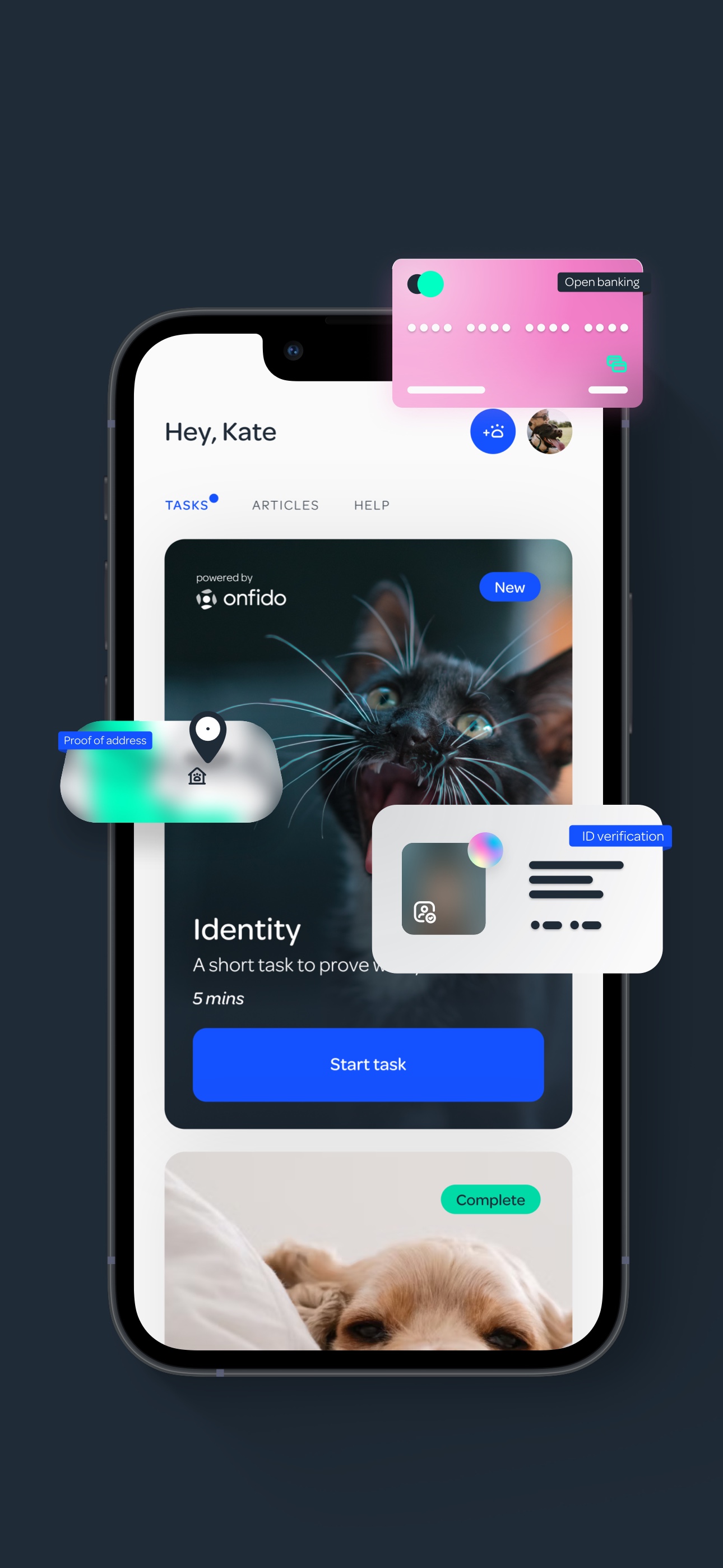
In our work on products like PetProov, onboarding was not just “create account.” The platform needed trust. Identity verification and clean onboarding mattered because it reduced fraud risk and customer disputes.
In internal tools like Mobegí, the constraint was different. The priority was data security and access control. Who can see what content, from which environment, with what audit trail. That is identity plus authorization plus operations.
Visual component: benefits
Benefits are not abstract here. If identity is done well, you should see:
- Fewer onboarding tickets
- Higher activation rate
- Faster enterprise sales cycles (because SSO and audits are not a scramble)
- Lower security incident risk
If you do not see at least one of these move, you are paying for features you are not using.
Ship speed
Time to first login
If you need a working auth flow this week, optimize for implementation time and clean defaults. You can still design for migration later.
Enterprise readiness
SSO and governance
If SAML and admin controls are on the near term roadmap, choose the platform that makes federation and policy management routine, not heroic.
Operational load
Support and incidents
Identity creates tickets and on call work. Pick the option your team can actually operate, with logs, runbooks, and predictable configs.
Auth0 vs Okta vs Firebase Auth: the practical comparison
You can build SaaS authentication on all three. The difference is what they optimize for.
- Firebase Auth optimizes for speed and mobile first apps.
- Auth0 optimizes for developer friendly identity in a product context.
- Okta optimizes for enterprise identity programs and IT control.
Insight: If you expect enterprise SSO revenue, pick the platform that makes SAML boring. Boring is good.
Comparison table: what each platform is best at
| Category | Auth0 | Okta | Firebase Auth |
|---|---|---|---|
| Best fit | B2C and B2B SaaS teams that want fast implementation with flexibility | Enterprise and B2B SaaS with heavy SSO, provisioning, governance | Consumer and mobile apps, quick MVPs, teams already deep in Google Cloud |
| Enterprise SSO (SAML) | Strong, common choice | Very strong, often the default in enterprises | Limited and usually not the reason to pick it |
| Provisioning (SCIM) | Available, depends on plan and setup | Strong, mature | Not a core feature |
| Customization | High via rules, actions, hooks | High but more admin and IT oriented | Moderate, but you will build more yourself |
| Multi tenant orgs | Possible, but you must design it | Strong patterns for enterprise orgs | You must design it |
| Time to ship | Fast | Medium | Very fast |
| Lock in risk | Medium | Medium | High if you couple to Firebase ecosystem |
What Auth0 gets right (and where it bites)
Auth0 is usually the “developer friendly” pick for SaaS.
What tends to work well:
- Quick start SDKs for common stacks
- Good support for social login, passwordless, MFA
- Flexible extensibility for custom claims and token shaping
What tends to hurt later:
- Pricing surprises as usage grows (especially if you add enterprise features)
- Complexity creep when you pile too much logic into actions
- Migration planning gets postponed until it is urgent
Mitigation tactics:
- Keep business logic out of Auth0 actions unless it is truly identity related
- Version your token claims and document them like an API
- Run a quarterly “can we migrate” exercise: export users, verify password migration constraints, test a parallel login
What Okta gets right (and where it bites)
Okta is an identity program. Not just a login widget.
What tends to work well:
- Enterprise federation is mature and predictable
- Admin controls and policy management are strong
- IT teams already know it, which reduces sales friction
What tends to hurt:
- Heavier setup and more moving parts
- Developer experience can feel slower than Auth0 for product teams
- You might pay for capabilities you do not need early on
Mitigation tactics:
- Start with a thin integration: OIDC for your app, keep your app authorization separate
- Define ownership: product team owns app auth flows, IT owns IdP policies
- Build a test harness for SSO: automated checks for metadata rotation, certificate expiry, and claim mapping
What Firebase Auth gets right (and where it bites)
Firebase Auth is fast. It is also opinionated.
What tends to work well:
- Mobile first flows are smooth
- Anonymous users and account linking are useful for consumer apps
- Tight integration with Firebase and Google Cloud
What tends to hurt:
- Enterprise requirements land awkwardly (SAML, SCIM, org policies)
- You end up building admin tooling, audit trails, and governance yourself
- Migrating away later can be painful if your whole app assumes Firebase tokens and rules
Mitigation tactics:
- Keep an abstraction layer around auth in your backend
- Store your own user profile and org membership outside Firebase
- Treat Firebase Auth as an authentication provider, not your user database
Implementation strategies that do not collapse at scale
Most identity failures are not about the provider. They are about the seams between identity, product logic, and operations.
A sane baseline architecture
At minimum, separate these concerns:
- Identity provider (Auth0, Okta, Firebase)
- Your user profile store (your database)
- Authorization model (roles, permissions, policies)
- Audit logging (append only, queryable)
Insight: If your authorization logic lives only in JWT claims, you will regret it the first time you need to revoke access immediately.
Visual component: processSteps
Process you can follow in a new SaaS build:
- Define tenants and membership rules (one user many orgs, invites, roles)
- Choose token strategy (short lived access token, refresh token rules)
- Decide where authorization lives (backend policy checks, not just frontend)
- Implement audit events for auth actions (login, logout, password reset, MFA changes)
- Add rate limiting and anomaly detection hooks
- Build an admin support console for account recovery and membership fixes
Code example: backend authorization check
Keep tokens for identity. Keep permissions in your system.
// Example: Node.js / TypeScript style middleware
// Goal: trust the IdP for identity, but authorize in your app

type AuthContext = {
  userId: string
  orgId: string
  roles: string[]
}

async function requirePermission(ctx: AuthContext, permission: string) {
  const allowed = await db.permissions.userHasPermission({
    userId: ctx.userId,
    orgId: ctx.orgId,
    permission
  })

  if (!allowed) {
    throw new Error("FORBIDDEN")
  }
}

// Usage inside a route
await requirePermission(ctx, "billing:manage")
Where our delivery experience changes the recommendation
When we help teams move from MVP to “startup muscle,” the identity needs change fast. You go from a few founders managing users manually to a support team and enterprise prospects.
That is usually the moment to:
- Stop hardcoding role logic
- Add audit logs you can actually query
- Treat SSO as a product feature with tests, not a sales promise
Visual component: featuresGrid
Key capabilities to implement regardless of provider:
- Invite based onboarding with expiry and re issue
- Session management (logout everywhere, device list)
- MFA enrollment and recovery codes
- Org scoped roles and permissions
- Admin impersonation with strict audit trail
- Webhook or event stream for auth events
_> Benchmarks worth tracking in your own product
Not universal truths. Just numbers that expose identity pain early.
Real world scenarios: what we have seen work
The best way to choose between Auth0 vs Okta vs Firebase Auth is to anchor on scenarios.
Scenario 1: B2B SaaS aiming for enterprise in 12 months
If you expect SSO requirements soon, you need to budget for it now. Not just money. Engineering time, QA time, and support training.
Good default choices:
- Okta when the buyer is IT and security
- Auth0 when the buyer is product and engineering but SSO is still required
Failure mode:
- Shipping “SSO support” without automated tests, then spending weeks on one customer’s claim mapping
Mitigation:
- Build an internal SSO playground tenant
- Track time to onboard a new SAML customer as a metric
Example: In projects where onboarding had trust requirements (like PetProov), we treated identity steps as part of the core user journey, not a bolt on. The result was fewer ambiguous edge cases later, especially around account recovery and role assignment.
Scenario 2: Consumer or mobile product that must ship fast
Firebase Auth can be a strong pick when:
- You need fast mobile sign in
- You are okay with building more admin and governance yourself
- You are already committing to Firebase for other reasons
Failure mode:
- You tie authorization to Firebase rules and then struggle when you add a second client, a partner API, or a web app
Mitigation:
- Put authorization in your backend early
- Store org membership and user profile in your database
Scenario 3: Multiple products, shared identity, and internal tools
This is where Okta tends to shine, especially if you have:
- Internal apps
- Multiple SaaS products
- A need for central policies and audit trails
This is also where teams underestimate the operational work. You will need ownership, runbooks, and monitoring.
Insight: Hypothesis: identity incidents are rarely “provider down.” They are misconfigurations, expired certificates, or broken claim mappings. Measure incident root causes and time to resolution.
Visual component: faq
Common questions we get from product teams:
Do we need SAML on day one?
- Usually no. But you should design your tenancy and roles as if you will.
Can we start with Firebase Auth and migrate later?
- Yes, but plan for it. Keep your user profile and permissions outside Firebase.
Is Auth0 enough for enterprise?
- Often yes. The real question is whether your team will maintain clean policies and avoid stuffing business logic into identity hooks.
Is Okta overkill for a startup?
- Sometimes. If you are not selling to enterprises, you may pay for governance you will not use.
Conclusion
Auth0 vs Okta vs Firebase Auth is not a “best platform” debate. It is a sequence of tradeoffs.
If you want a simple rule of thumb:
- Pick Firebase Auth when speed and mobile first flows matter most, and you accept building enterprise features yourself.
- Pick Auth0 when you want strong SaaS authentication with developer friendly customization and a reasonable path to SSO.
- Pick Okta when enterprise identity is the product requirement, not a future possibility.
Next steps that keep you out of trouble:
- Write down your 12 month identity roadmap (SSO, MFA enforcement, audit logs, SCIM)
- Decide what you will own in your app (profiles, orgs, permissions) versus the provider
- Add metrics now, not later:
- Activation rate after sign up
- Support tickets tagged auth per 1,000 sign ins
- Time to onboard a new enterprise SSO customer
- Account recovery success rate and abuse rate
Key Stat: Hypothesis: reducing onboarding friction by even 10% often beats any login UI polish. Measure it via activation rate and time to first value, not by subjective feedback.
Identity is not where you want surprises. Pick the platform that matches your next constraints, not just today’s sprint.
Auth integrated into a production SaaS foundation
Our SaaS Boilerplate ships auth patterns ready for production. Extend with Node.js or Python and Django senior engineers via SaaS development.