Introduction
LLMs don’t fail like normal software.
A button either works or it doesn’t. An LLM answer can be "fine" and still be wrong, risky, or too expensive to ship at scale. And once you put an LLM behind a SaaS feature, you’ve signed up for three moving targets: quality, latency, and cost.
If you’re leading a SaaS team, you don’t need more dashboards. You need a small set of signals that tell you:
- Are users getting the outcome they came for?
- How often do we hallucinate or break policy?
- What does each workflow cost, and why did it spike?
- What changed since last deploy?
Insight: You can’t manage LLM quality with uptime metrics. You need product metrics, prompt metrics, and model metrics in the same place.
This article is about AI observability for SaaS leaders in a boilerplate based stack. Think: a proven app skeleton, shared components, standard logging, standard CI, and a repeatable way to ship features fast. That’s the only way observability stays consistent when the team grows.
What “boilerplate based stack” means in practice
In our SaaS work (including our own product, Teamdeck), boilerplate is not a template you forget after week one. It’s the default path for:
- Auth, billing, and role based access
- Standard API patterns and background jobs
- Shared logging, tracing, and alerting
- CI checks and deployment workflow
When you add LLM features, the boilerplate should also cover:
- Prompt versioning and evaluation hooks
- Token and cost accounting
- PII and policy checks
- Safe fallback behavior
Without that, every new AI feature becomes a one off science project.
Why AI observability breaks in SaaS (and where it hurts first)
Most teams start with good intentions: log prompts, store responses, maybe add a feedback thumbs up. Then usage grows and the cracks show.
Common failure modes we see:
- Quality drift: model updates, prompt edits, or new data sources change output behavior
- Latency creep: one extra tool call turns a snappy feature into a spinner
- Cost fog: token spend grows but you can’t tie it to a workflow, customer segment, or release
- Debug dead ends: you see a bad answer but can’t reproduce the exact context
- Compliance anxiety: logs contain sensitive data, so nobody wants to store anything
Callout: If you can’t reproduce an LLM run, you can’t debug it. And if you can’t debug it, you’ll ship slower than before you added AI.
Here’s the uncomfortable truth: a lot of “LLM observability” is just better engineering hygiene. The difference is you must do it across product, data, and infra.
The three metrics that actually map to user pain
You can track a hundred things. Start with three, per workflow:
- Task success rate: did the user get a usable outcome?
- Time to first useful token: not just total latency, but perceived speed
- Cost per successful outcome: if quality drops, cost per success jumps even if token spend stays flat
Add secondary metrics only when they explain movement in the top three:
- Tool call count
- Retrieval hit rate
- Refusal rate
- Policy violation rate
- Human override rate
Hypothesis: In many SaaS workflows, improving task success by 5 points reduces support tickets more than shaving 200 ms off latency. Validate by correlating success scores with ticket volume and churn risk.
_> What we measure first
A starter set that fits most SaaS LLM workflows
What to instrument: quality, latency, and cost as first class signals
The fastest teams treat each LLM run like a traceable transaction.
At minimum, every run should emit an event with:
- workflow (feature name, like “invoice summarization”)
- tenant_id and user_id (or hashed identifiers)
- prompt_version and model
- inputs fingerprint (not raw text if it contains PII)
- tool chain (retrieval, function calls, external APIs)
- latency breakdown (queue, model, tools, post processing)
- token usage and estimated cost
- outcome label (success, partial, fail, refused)
If you only log the final answer, you’ll miss the reason it went wrong.
featuresGrid
- Trace IDs end to end: browser to API to background jobs to LLM provider
- Prompt and config diffs: what changed between versions
- Golden set evaluations: small, stable test set that runs on every change
- Guardrail telemetry: policy checks, PII redaction, jailbreak detection signals
- Fallback tracking: when you drop to a simpler model or non AI path
Insight: Latency is rarely “the model is slow.” It’s usually tool calls, retries, and cold caches. Instrument those first.
Below is a practical breakdown of what to track, and why it matters.
Quality signals: beyond thumbs up
User feedback is useful, but it’s sparse and biased. You need a mix:
- Implicit signals (high volume): copy events, edits, retries, abandon rate, time on task
- Explicit signals (high confidence): ratings, “report an issue”, support tickets tagged to AI
- Offline evals (repeatable): rubric scoring, LLM as judge with calibration, unit tests for structured outputs
A simple rubric that works well for many SaaS flows:
- Correctness (did it match the source of truth?)
- Completeness (did it cover required fields?)
- Safety (any policy or privacy issues?)
- Usefulness (would a user accept it without edits?)
Example: For a resource planning product like Teamdeck, a “useful” schedule suggestion is one that respects availability constraints and doesn’t invent capacity. Your eval should check those constraints explicitly, not just style.
Latency signals: measure where time goes
Track latency in layers:
- Client perceived: time to first token, time to usable answer
- Server: request queue time, app processing time
- LLM provider: model response time, rate limit backoffs
- Tools: retrieval time, database time, third party APIs
If you can only afford one chart, make it a stacked latency percentile chart (p50, p95) per workflow.
processSteps
- Add a trace ID at the edge (API gateway or backend entrypoint)
- Propagate it through all tool calls and background jobs
- Emit spans for retrieval, function calls, and post processing
- Store p50 and p95 per workflow and per tenant
- Alert on p95 regression after deploy, not on absolute numbers only
Cost signals: cost per outcome, not cost per request
Token spend is a vanity metric unless it ties to value.
Track:
- Tokens in and out
- Tool usage cost (search, vector DB, external APIs)
- Retries and fallbacks
- Cost per successful outcome
A pattern we like in SaaS: allocate cost to tenant and feature, then set budget thresholds.
- Budget per tenant per month
- Budget per workflow per 1,000 successful outcomes
- Alert when cost per success rises, even if total cost is stable
Hypothesis: Most cost spikes come from retries, long contexts, and tool loops. Validate by logging retry count, context size, and tool call count on every run.
A simple comparison: build it yourself vs tools vs hybrid
There’s no single right answer. The tradeoff is usually between speed of setup and control over data.
Here’s a blunt comparison table you can use in planning.
| Approach | What you get fast | What tends to fail later | Best fit |
|---|---|---|---|
| DIY on your existing observability stack | Full control, consistent with current logging and tracing | Takes time to build evals, prompt diffs, and cost attribution | Teams with strong platform engineering and strict data rules |
| Dedicated LLM observability tool | Quick dashboards for prompts, traces, token usage | Vendor lock in, data residency concerns, harder to join with product analytics | Teams optimizing for speed and willing to centralize data |
| Hybrid (recommended for many SaaS teams) | Fast start plus control over key data | Needs clear ownership and a schema that doesn’t drift | Teams shipping multiple AI workflows and needing cross system visibility |
benefits
- Hybrid keeps you honest: product analytics stays in your stack, LLM specific views can live in a tool
- You can swap models without rewriting your reporting layer
- You can audit prompts and runs without storing raw PII
Insight: If your LLM logs can’t be joined with “what the user did next,” you’re not measuring quality. You’re measuring output length.
In a boilerplate based stack, hybrid is often the easiest to standardize. Put the event schema in the boilerplate. Let teams choose visualization later.
What to standardize in the boilerplate
Standardize the parts that are expensive to change later:
- Event schema for LLM runs
- Prompt version naming and storage
- Redaction and hashing rules
- Cost calculation method
- Trace propagation
Do not standardize:
- One “best” model
- One “best” evaluation metric
Those change per workflow and over time.
Traceable runs
Reproducible debugging
Every LLM call gets a trace ID, prompt version, and context fingerprint so you can replay failures.
Quality tied to product outcomes
Not vibes
Success metrics connect to edits, retries, and downstream actions so you can see what users actually got.
Cost allocation that matches revenue
Per tenant and workflow
You can set budgets and spot margin leaks when a single feature starts burning tokens.
Examples from delivery: where observability saved us (and where it didn’t)
We’ve shipped products under tight timelines and messy constraints. Observability is what keeps “fast” from turning into “fragile.”
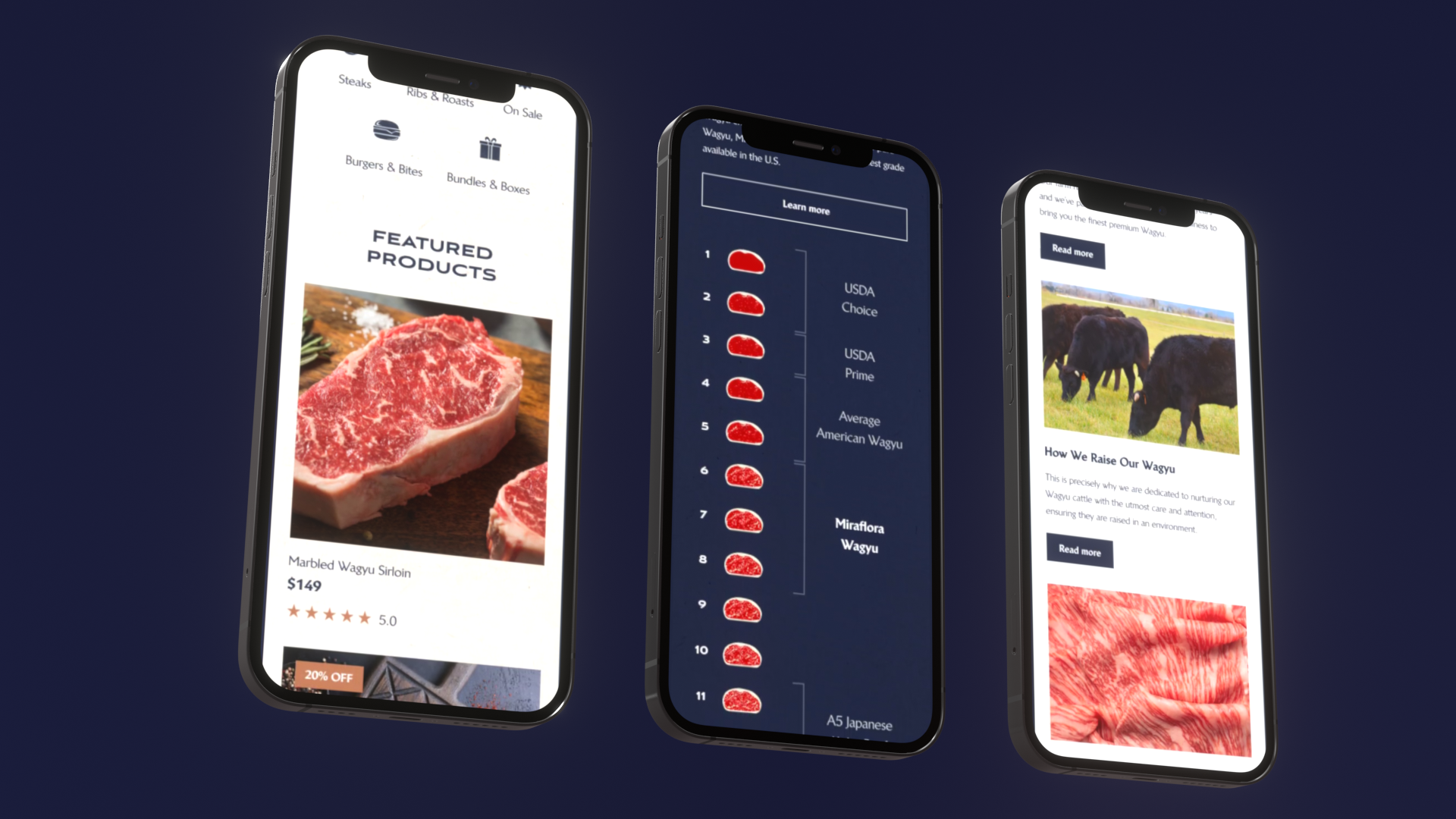
Example 1: Miraflora Wagyu and the cost of async feedback loops
In the Miraflora Wagyu build, the core challenge was time and coordination. The team was spread across time zones, with feedback mostly async. We delivered a custom Shopify experience in 4 weeks.
That kind of setup is where AI features can quietly go off the rails. Not because the model is bad, but because nobody sees the same failures at the same time.
What we’d instrument in a similar retail workflow (product copy generation, support macros, catalog enrichment):
- Prompt version tied to a release tag
- Human edit distance (how much the team rewrites AI output)
- Approval time per asset
- Cost per approved asset
Example: In async teams, “quality” often shows up as rewrite time. If rewrite time goes up after a prompt change, roll it back even if nobody complains yet.
Example 2: Expo Dubai and why p95 matters more than p50
For ExpoDubai 2020, the goal was a virtual platform connecting 2 million global visitors over a long running event. We built it in 9 months.
High traffic products teach a simple lesson: averages lie.
If you add LLM features to a high traffic experience (search assistance, content summaries, concierge flows), you must watch:
- p95 latency per workflow
- rate limits and backoffs
- graceful degradation behavior
Case note: For large audience experiences, a small percentage of slow runs becomes a lot of angry users. p95 is a product metric, not just an infra metric.
Example 3: Teamdeck and the “source of truth” problem
Teamdeck is our own resource planning and time tracking SaaS. In products like this, the LLM’s biggest risk is inventing facts.
If an assistant suggests staffing changes, the output must be grounded in:
- availability
- project dates
- role constraints
- time off
Observability here is less about pretty traces and more about grounding checks:
- retrieval coverage (did we fetch the right records?)
- citation rate (can we point to the data used?)
- constraint violations (did it suggest an impossible plan?)
Insight: In planning tools, “hallucination” is often a missing join or stale cache. Treat it like a data bug, not a prompt problem.
Where observability still won’t save you
It’s worth saying out loud: instrumentation won’t fix a bad product decision.
Observability won’t help if:
- The workflow should not be automated yet
- You don’t have a clear definition of “success”
- The feature has no safe fallback
- The team can’t ship small changes (everything is a big release)
Mitigation looks boring:
- Start with one workflow and one user segment
- Ship behind a flag
- Keep a non AI path that still works
- Treat prompts like code: reviews, diffs, rollbacks
Conclusion
AI observability is not a new dashboard category. It’s the discipline of treating LLM runs like production transactions with quality, latency, and cost attached.
If you run a SaaS product, your goal is simple: ship AI features that users trust, that feel fast, and that don’t blow up your margins.
faq
Do we need AI observability before we ship?
- You need a minimum: trace IDs, prompt versions, token and cost logging, and a basic success metric. Add deeper evals once you see real usage.
What should we alert on first?
- p95 latency regression per workflow, cost per successful outcome spikes, and policy violation rate.
Can we do this without storing user text?
- Yes. Store hashes, fingerprints, redacted snippets, and structured metadata. Keep raw text only when you have explicit consent and a clear retention policy.
How do we know our quality metric is valid?
- Correlate it with downstream behavior: edits, retries, support tickets, and retention. If it doesn’t predict anything, it’s not a useful metric.
Next steps you can execute this week
- Define 1 workflow and write a one sentence success definition
- Add an LLM run event schema to your boilerplate (workflow, model, prompt_version, latency breakdown, tokens, cost, outcome)
- Create a tiny golden set (20 to 50 cases) and run it in CI on every prompt change
- Add one guardrail you can measure (PII redaction rate, refusal rate, constraint violations)
- Put cost per successful outcome on a dashboard next to task success rate
Final takeaway: The winning setup is boring. Standard schema, repeatable evals, and fast rollbacks. That’s what keeps LLM features shippable as your SaaS grows.