Direct answer
Tool roundups help shortlist vendors. They do not ship your SaaS. Use this comparison to cut options, then hire senior engineers who integrate the winner into production. See Node.js expertise.
Introduction
Most SaaS teams don’t lose customers because of one big outage. They lose them to a slow drip of small failures.
A checkout that sometimes spins forever. A mobile app that crashes on one Android model. A background job that retries for hours and quietly burns money.
Error monitoring and observability tools are supposed to make this visible. But the tools are not interchangeable. The wrong pick can leave you with either:
- A clean error list that never explains why latency spikes
- A beautiful dashboard that never tells you which user action caused the crash
- A bill that grows faster than your traffic
We’ve shipped and operated SaaS systems where the difference between “we think it’s fixed” and “we know it’s fixed” came down to instrumentation and how we used it day to day.
Insight: Observability is not a tool purchase. It’s a habit: what you measure, who looks at it, and what happens next.
In this article, I’ll compare Sentry vs Datadog vs New Relic in the way teams actually use them: debugging, incident response, cost control, and rollout effort.
- You’ll see where each tool shines
- Where each tool wastes your time
- How to avoid the common traps
If you only read one thing: pick the tool that matches your failure mode today, not the one that looks best in a demo.
What we mean by “error monitoring” vs “observability”
People mix these up, and it causes bad decisions.
- Error monitoring answers: “What broke, for whom, and where in the code?”
- Observability answers: “What is the system doing, and why did it behave that way?” across logs, metrics, and traces.
In practice:
- Sentry is usually the fastest path to actionable application errors.
- Datadog is usually the fastest path to a unified view across infra, services, and deployments.
- New Relic often sits in the middle: strong APM, broad platform, and a pricing model you need to understand early.
Key Stat (hypothesis): If you reduce mean time to detect by 30% and mean time to resolve by 20%, you usually feel it in support volume within a month. Measure it: MTTD, MTTR, and ticket count tagged “bug” or “outage.”
The problems SaaS teams are actually trying to solve
Tool comparisons often start with feature lists. That’s backwards.
Start with the problems. Most SaaS teams we work with hit the same set as they scale past MVP.
- You ship faster, and the number of edge cases grows faster than QA coverage
- You add background workers, queues, and third party APIs, and failures become distributed
- You hire more engineers, and “tribal knowledge debugging” stops working
The failure modes we see most
- User facing crashes that only happen on one browser, one device, or one locale
- Slow endpoints that look fine in staging but degrade under production traffic
- Silent failures in jobs and webhooks that don’t crash the app but break the workflow
- Alert fatigue where everything pages, so nothing gets fixed quickly
Insight: The hardest incidents are not the loud ones. They’re the quiet ones that look like “a bit more churn this week.”
Here’s the way to translate pain into requirements:
- List your top 10 incidents from the last quarter
- For each one, write down what you lacked: error context, trace, logs, deploy marker, user replay, infra metrics
- Pick the tool that closes the biggest gaps with the least instrumentation work
- If most incidents are code exceptions with missing context, you want Sentry first.
- If most incidents are “latency is up, but we don’t know where,” you want Datadog or New Relic APM first.
- If most incidents are “something changed after deploy,” you want strong deploy correlation and service maps.
A quick reality check on “we’ll add observability later”
We’ve seen this pattern in delivery work: teams ship an MVP, get traction, then hit the scaling wall. The same thing happens with observability.
In the early hustle phase, you can get away with:
- A few logs
- A basic uptime check
- One engineer who knows where the bodies are buried
Then you grow. That engineer goes on vacation. And now every incident is a group project.
Example: In SaaS products like Teamdeck (resource planning and time tracking), you don’t just need to know “an error happened.” You need to know which workflow broke: time entry, approvals, exports, integrations. That’s the difference between a one hour fix and a week of support churn.
_> What to measure after rollout
If you can’t measure improvement, you’re just collecting data
Sentry vs Datadog vs New Relic: what each tool does best
This is the part everyone wants. But the honest answer is: it depends on what you’re optimizing for.
- Fast debugging for engineers
- Broad observability across infra and services
- Cost predictability
- Setup effort and ongoing maintenance
Below is the practical view, not the brochure view.
Sentry: best for application errors you can act on today
Sentry is the tool I reach for when the main pain is: “we have bugs in production and we need to fix them fast.”
What tends to work well:
- Great exception grouping and stack traces that engineers trust
- Release tracking so you can connect spikes to deploys
- Performance monitoring that is good enough for many teams, especially early
- User context (tags, breadcrumbs) that makes bugs reproducible
Where it can fall short:
- If your incident is mostly infra or network level, Sentry won’t replace a full observability platform
- If you don’t standardize tags and releases, the project becomes noisy fast
Mitigation we use:
- Define a tagging convention on day one (service, env, tenant, feature)
- Gate alerts by rate and user impact, not raw error count
Insight: Sentry wins when the fastest path to value is “show me the exact line of code and what the user did before it broke.”
Datadog: best for unified observability across the stack
Datadog is strong when the pain is: “we don’t know where the problem lives.”
It’s built for connecting dots across:
- Infrastructure metrics
- APM traces
- Logs
- Deploys and incidents
What tends to work well:
- Correlation between traces, logs, and metrics in one place
- Service maps that help in distributed systems
- Dashboards that are useful for on call and for product health
Where it can fail:
- Cost can drift if you ingest everything by default
- Teams sometimes build dashboards instead of fixing instrumentation gaps
Mitigation we use:
- Start with a small set of golden signals per service (latency, traffic, errors, saturation)
- Set log retention and sampling intentionally
- Put budget guardrails in place before the first big traffic spike
Key Stat (hypothesis): Most Datadog bill surprises come from logs and custom metrics, not APM. Validate by tracking daily ingest volume and cost per environment.
New Relic: strong APM with broad coverage, but mind the model
New Relic is often a solid APM choice when you want a platform feel, but you don’t want to stitch tools together.
What tends to work well:
- APM visibility into transactions, database calls, external requests
- Service level views that help with baseline performance
- A wide ecosystem that can cover infra, browser, mobile, synthetics
Where it can fail:
- If you don’t understand pricing and data ingest early, you can end up with either missing data or unexpected cost
- Some teams struggle with “where do I look first” because the platform is broad
Mitigation we use:
- Decide upfront what data is must have vs nice to have
- Create a small set of default dashboards and alert policies, then expand
Insight: New Relic can be a good middle path when you want APM depth without building your own observability stack. But you still need discipline.
Side by side comparison table
| Category | Sentry | Datadog | New Relic |
|---|---|---|---|
| Best at | App error triage and debugging | Full stack observability and correlation | APM centric performance visibility |
| Fastest time to value | Very fast for exceptions | Fast if you already run modern infra | Fast for APM, slower for full platform |
| Common trap | Noisy projects without tagging | Cost drift from logs and custom metrics | Too broad, unclear default workflows |
| Strong signals | Errors, releases, user impact | Metrics, traces, logs, infra | Transactions, external calls, service health |
| Best fit teams | Product heavy teams fixing user facing bugs daily | Teams running multiple services and cloud infra | Teams wanting a single platform with strong APM |
| What to measure | Crash free sessions, error rate by release, time to fix | MTTD, MTTR, cost per service, SLO burn rate | Apdex, p95 latency, error budgets, throughput |
What I’d pick in common SaaS scenarios
If you want a simple starting heuristic:
- You’re pre scale and bugs are the pain: start with Sentry.
- You’re running multiple services and incidents are cross cutting: start with Datadog.
- You need strong APM and a broad platform, but want one vendor: consider New Relic.
Then ask one uncomfortable question: who will maintain this?
- If nobody owns instrumentation, any tool becomes shelfware.
- If alerts are not tied to actions, you’ll get noise and burnout.
Implementation strategy that doesn’t create a monitoring junk drawer
Most implementations fail for boring reasons.
- Too many alerts
- No naming conventions
- No ownership
- No link between a signal and a decision
Here’s a rollout plan that tends to work, even when the team is busy shipping features.
- Pick one critical user journey and instrument it end to end
- Define a small set of service level indicators
- Add error tracking with release markers
- Add tracing only where it answers a real question
- Add logs only where you will actually read them
Insight: If you can’t name the question a metric answers, don’t collect it yet.
A practical checklist for the first two weeks
This is what we usually try to complete early in a SaaS build or stabilization phase.
- Define environments and naming: prod, staging, dev
- Add release version tags to errors and traces
- Set up alert routing: on call channel, escalation rules
- Create a baseline dashboard per service:
- p50 and p95 latency
- request volume
- error rate
- saturation (CPU, memory, queue depth)
- Add one business level dashboard:
- signup conversion
- checkout success rate
- webhook success rate
Key Stat (hypothesis): Teams that ship a single shared on call dashboard reduce time to first meaningful action during incidents. Measure time from page to first mitigation commit.
Example instrumentation patterns (and the mistakes to avoid)
Two patterns we use a lot:
- Tag everything with service, environment, and tenant (if multi tenant)
- Use release and deploy markers so you can answer “did this start after we shipped?”
Common mistakes:
- Logging entire payloads with personal data
- Creating alerts on average latency instead of p95 or p99
- Treating every exception as a pager event
Here’s a simple example of structured logging context you can reuse across tools:
{
  "service": "billing-api",
  "env": "prod",
  "release": "2026.02.01.1",
  "tenantId": "t_123",
  "requestId": "req_9f1c",
  "userId": "u_456",
  "route": "POST /v1/invoices",
  "latencyMs": 842,
  "status": 502,
  "errorCode": "PAYMENT_PROVIDER_TIMEOUT"
}
That payload works whether you’re sending it to Datadog logs, New Relic logs, or correlating it with Sentry breadcrumbs.
Start small
One journey
Instrument one critical workflow end to end before you expand coverage.
Make it usable
One dashboard
A shared on call view beats 20 dashboards nobody trusts.
Control cost
Ingest rules
Sampling and retention are product decisions, not afterthoughts.
Real world examples from delivery: what broke, what we watched, what changed
Case studies rarely talk about observability, but it shows up in the outcomes.
When you deliver under time pressure, you can’t afford blind spots. You need fast feedback loops.
- What failed in production
- How fast we saw it
- Whether we could reproduce it
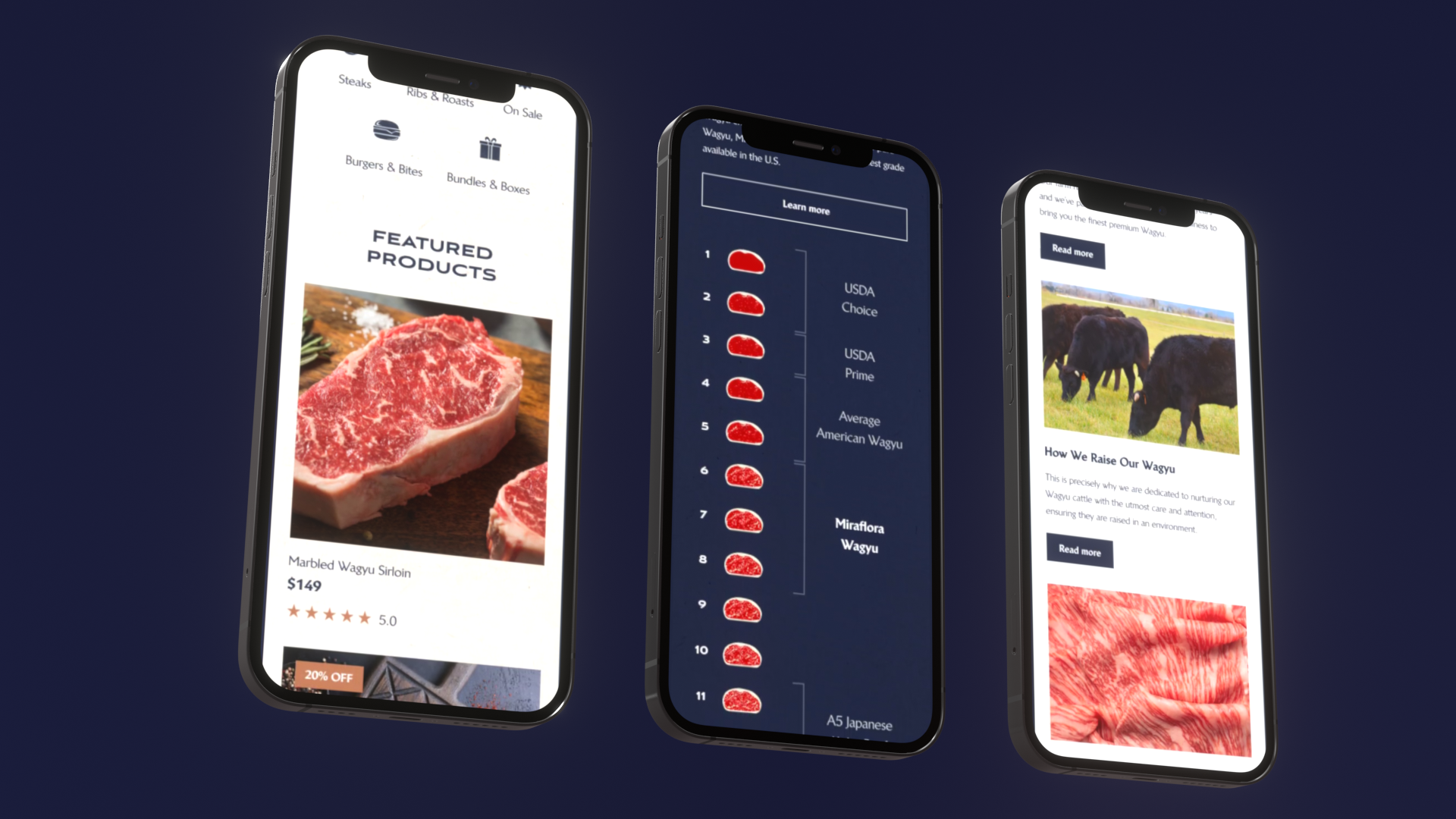
Example: In the Miraflora Wagyu Shopify build, the constraint was time. The store shipped in 4 weeks with a team spread across time zones. In that setup, you need tight release markers and clear error context, because you don’t get long synchronous debugging sessions.
Expo Dubai virtual platform: scale changes the shape of incidents
ExpoDubai 2020 was a virtual event platform that connected 2 million global visitors over a 9 month build.
At that scale, “it’s slow” is not a single bug. It’s usually one of these:
- A hot endpoint that only becomes hot under real traffic
- A slow external dependency
- A database query that was fine at 100 requests per minute and awful at 2,000
This is where APM and tracing pay for themselves.
What we’d measure in a project like this (if you want to validate your own setup):
- p95 latency per endpoint and per region
- error rate by dependency (CDN, auth provider, media pipeline)
- queue depth and job duration for background tasks
Insight: For high traffic experiences, dashboards are not vanity. They are how you decide what to fix first.
Teamdeck (our SaaS): the quiet failures matter most
In internal SaaS products like Teamdeck, you often get a different kind of pain.
- Users don’t report every issue
- They just stop trusting the product
- Support tickets arrive late, with vague descriptions
This is where error monitoring with user context is useful.
What we’d watch closely:
- crash free sessions (web and mobile if applicable)
- error rate by workflow (planning, timesheets, exports)
- regressions by release
If you don’t have those metrics today, treat this as a hypothesis and test it:
- Add workflow tags
- Track support tickets by workflow
- Compare before and after MTTR and ticket volume
Conclusion
Sentry, Datadog, and New Relic can all work. The difference is what they make easy.
- Sentry makes debugging application errors fast.
- Datadog makes cross stack correlation fast.
- New Relic gives you strong APM with a broad platform, if you keep your data plan under control.
If you’re choosing now, don’t start with the tool. Start with your last 10 incidents.
Next steps you can do this week:
- Pick one critical user journey and define success metrics
- Add release markers and consistent tags
- Reduce alerts to the ones that trigger a real action
- Track MTTD and MTTR for 30 days and review what improved
Final insight: The best observability setup is the one your team actually uses during an incident, at 2 a.m., with one person awake.
Quick decision cheat sheet
Choose Sentry if:
- You need better error grouping and faster bug fixes
- Your main pain is user facing exceptions and regressions
Choose Datadog if:
- You run multiple services and need unified logs, metrics, and traces
- You care about infra, cost, and incident response workflows
Choose New Relic if:
- You want strong APM first and a broad platform second
- You can invest time in setting sane defaults for ingest and dashboards
Observability on a production SaaS stack
We wire observability into production SaaS backends. See Node.js expertise, Python and Django, and SaaS development.