Introduction
Most project management tool debates skip the part that actually hurts: how the tool behaves once your team is under load.
When you are shipping weekly, running incident reviews, juggling product discovery, and onboarding new people, the tool becomes a system. It shapes how work enters, how it gets sliced, and how it gets finished.
This article compares three popular SaaS project management tools for software development teams: Jira vs Linear vs Asana. Not by feature bingo. By what we see in delivery: cycle time, clarity, and the amount of process you need to keep the wheels on.
Here is the framing we use when choosing a tool:
- How do we capture work without creating a backlog landfill?
- How do we plan without pretending we can predict everything?
- How do we keep engineering, product, and stakeholders aligned without status meetings?
Insight: The best tool is the one that makes your constraints visible without adding busywork.
Quick reality check before we start:
- If you are building a PoC or MVP in 4 to 12 weeks, the tool should optimize for speed and focus, not governance.
- If you are scaling a SaaS team post MVP, you will need more structure, but only where it reduces confusion.
- If you are running a larger program with multiple teams, dependencies, and compliance, you will pay the complexity tax somewhere. The question is whether the tool helps you pay it once, or every day.
What we mean by “best”
In our delivery work, “best” usually means:
- Fewer dropped balls across time zones
- Shorter lead time from idea to production
- Clear ownership for incidents and bugs
- Planning that survives changing requirements
If you want to be strict about it, pick 3 to 5 metrics and track them for 6 to 8 weeks:
- Cycle time (in progress to done)
- Lead time (created to done)
- Throughput (items done per week)
- Work in progress per engineer
- Reopen rate (done back to in progress)
Key Stat (hypothesis): Teams that track cycle time weekly tend to spot process bottlenecks within 2 to 3 sprints. Measure it and see if it holds for you.
What software teams actually struggle with (and where tools help)
Most teams do not fail because they picked the wrong tool. They fail because the tool amplifies existing ambiguity.
Common pain points we see across product builds, from fast Shopify launches to longer platform programs:
- Requirements change mid sprint, but nobody updates the ticket
- Stakeholders want dates, engineers want certainty, and everyone compromises on truth
- Bugs, support, and product work fight for the same calendar
- Cross functional work gets stuck because ownership is fuzzy
- People stop trusting the board, so they stop using it
Insight: If your board does not match reality, it becomes decoration. Then you are back to Slack archaeology.
A tool can help, but only if you decide what it is for:
- System of record for engineering work
- Planning surface for product and delivery
- Lightweight status layer for stakeholders
If you try to make it all three without clear rules, you will get the worst of each.
A concrete example: time zones and async feedback
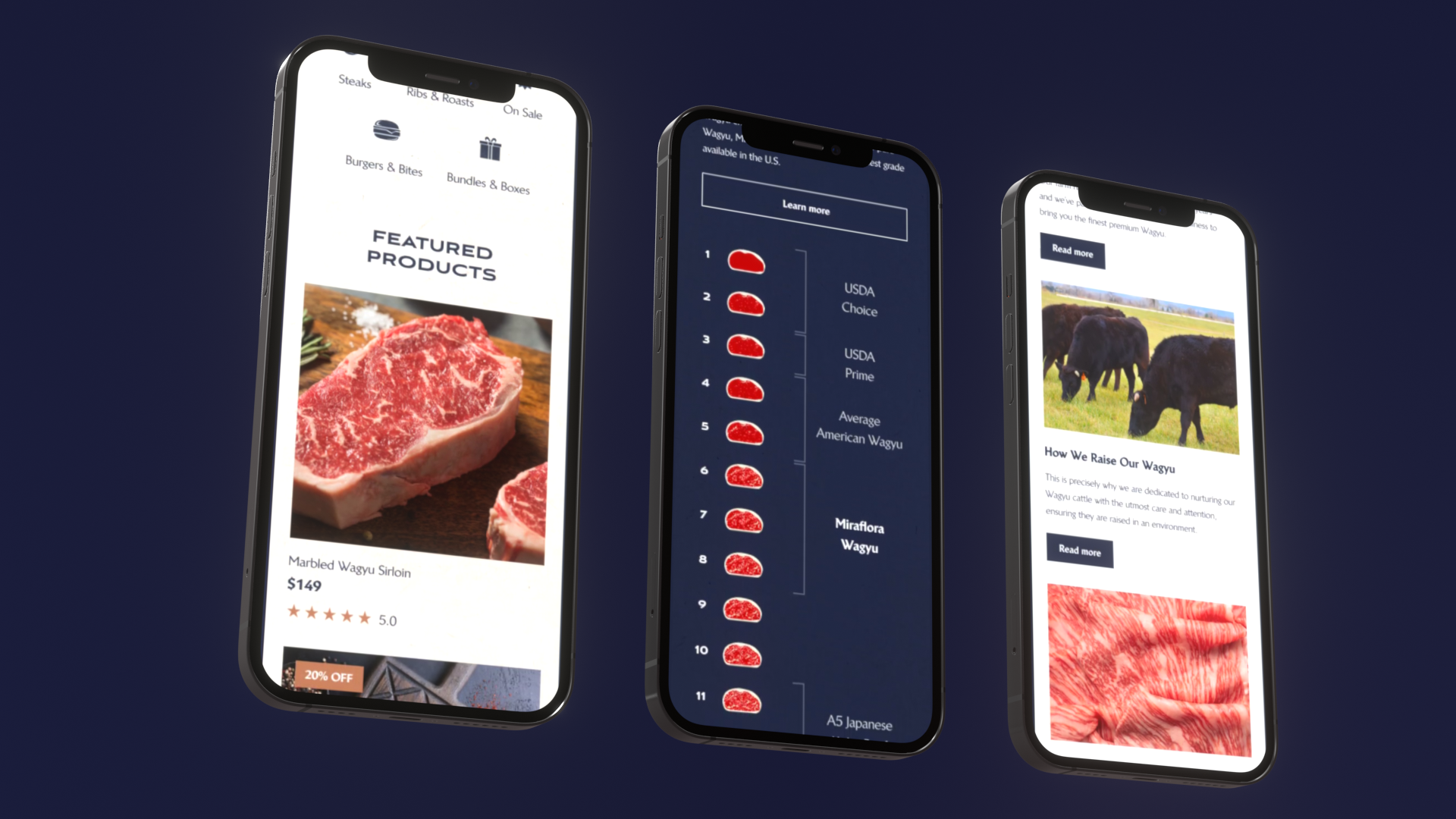
In the Miraflora Wagyu build, the timeline was tight: 4 weeks. The client team was spread across time zones, and synchronous feedback was hard.
That kind of setup punishes heavy process. You need:
- Small, well scoped tasks
- Clear acceptance criteria
- A single place where decisions are recorded
If the tool makes it annoying to keep tickets updated, your async loop breaks.
Example: When feedback is async, the ticket needs to carry the context. Otherwise the work bounces between “needs info” and “blocked” and you lose days.
Another example: evolving requirements over months
In the Theme Park Technology program, the work ran for 8 months and requirements evolved a lot, especially around designs and experience ideas.
Longer programs need a different kind of structure:
- A way to separate discovery work from delivery work
- A way to track dependencies without turning everything into a Gantt chart
- A way to keep scope changes visible, not hidden in comments
This is where Jira often earns its keep. But it also becomes a magnet for process bloat if you are not careful.
_> Delivery grounded metrics
Numbers we use to keep tool debates honest
Jira vs Linear vs Asana: the practical comparison
Here is the short version.
- Jira is strong when you need governance, multiple workflows, and reporting across teams.
- Linear is strong when you want speed, clean execution, and low friction.
- Asana is strong when the work is cross functional and not purely engineering driven.
Insight: Choose based on your failure mode. If you fail from chaos, pick structure. If you fail from process drag, pick simplicity.
Comparison table
| Category | Jira | Linear | Asana |
|---|---|---|---|
| Best for | Multi team engineering orgs, complex workflows | Product and engineering teams shipping fast | Cross functional teams, product ops, marketing plus engineering |
| Setup effort | High | Low | Medium |
| Workflow flexibility | Very high | Medium | High |
| Reporting | Strong, configurable | Good, focused | Good for portfolio views |
| Engineering ergonomics | Solid but can feel heavy | Excellent | OK, depends on setup |
| Risk | Process sprawl, slow admin overhead | Too light for complex programs | Can become a mixed bag for engineering details |
| Typical sweet spot | Scale up SaaS, regulated or dependency heavy work | MVP to growth stage SaaS | Product orgs coordinating many non engineering streams |
What to watch for in each:
- Jira: fields and workflows multiply. You end up managing Jira instead of shipping.
- Linear: you may miss deeper customization when you add more teams or compliance needs.
- Asana: engineers may treat it as “not our tool” unless you integrate it tightly with dev workflows.
Jira: when you need a system, not just a board
Jira works well when:
- You have multiple teams and shared components
- You need different issue types and workflows (bugs, incidents, discovery, delivery)
- You need auditability and consistent reporting
Where it fails:
- Too many custom fields nobody uses
- Too many statuses that do not map to real work
- Too many boards that show different truths
Mitigations that actually help:
- Start with one workflow per issue type. Add only when there is a measurable need.
- Limit required fields. If people cannot create a ticket in 30 seconds, they will not.
- Use a single source of prioritization (one backlog owner, one cadence).
Key Stat (hypothesis): If ticket creation takes more than 60 seconds, backlog quality drops fast. Measure: median ticket creation time and percentage of tickets missing acceptance criteria.
Linear: when speed and focus matter more than configurability
Linear works well when:
- You want a clean, fast interface engineers will actually use
- You run short cycles and care about cycle time
- You do not need heavy workflow branching
Where it fails:
- Large programs with lots of dependencies can outgrow it
- Teams that rely on custom fields for governance will feel constrained
Mitigations:
- Keep a separate lightweight “program layer” for dependencies (could be a doc, a weekly review, or a small set of meta issues)
- Use templates for issue quality so speed does not turn into vague tickets
A good fit we see: MVP and early scale SaaS teams that want to avoid Jira gravity.
Asana: when engineering is only part of the picture
Asana works well when:
- Product, design, marketing, and ops are driving a lot of work
- You need portfolio views and stakeholder friendly tracking
- You want flexible project structures
Where it fails for software teams:
- Engineering details can feel bolted on
- If you do not enforce conventions, projects become inconsistent
Mitigations:
- Decide what belongs in Asana vs what belongs in your engineering tracker
- Use integrations so engineers do not have to double enter work
Insight: If engineers have to update two tools, one tool will die. Usually the one that is not tied to code.
How to choose: match the tool to your delivery phase
Tool choice changes as your org changes. The mistake is locking into a tool because it worked at one stage.
Here is a simple phase based guide:
- PoC or MVP (4 to 12 weeks): optimize for focus and speed
- Post MVP scale up: add structure where it reduces confusion
- Multi team platform: invest in governance and reporting
Insight: Early on, you want fewer knobs. Later, you want the right knobs, not all of them.
A practical decision checklist:
- Do we need multiple workflows and permissioning? If yes, Jira starts to win.
- Do engineers complain about admin time? If yes, Linear is worth a serious look.
- Is most work cross functional and not code tied? If yes, Asana may fit better.
- Do we need to report across teams with consistent definitions? Jira or a disciplined Asana setup.
And here is the part people skip: write down what you will not use. Every tool has features that invite complexity.
A lightweight scoring model you can run in 30 minutes
Get 3 people in a room: an engineering lead, a product lead, and someone who deals with stakeholders.
Score each tool 1 to 5 on these criteria:
- Ticket quality enforcement (templates, required fields, clarity)
- Planning workflow (backlog grooming, sprint planning, cadence)
- Cross team visibility (dependencies, roadmaps, reporting)
- Day to day speed (creating, updating, closing work)
- Integration fit (GitHub, Slack, CI, docs)
Then pick your top 2 and run a time boxed pilot.
Key Stat (hypothesis): A 2 sprint pilot is enough to see whether cycle time improves or worsens. Measure before and after: median cycle time, WIP, and reopen rate.
Speed
Short cycles
If your bottleneck is admin overhead, pick the tool engineers enjoy using daily and keep workflows minimal.
Clarity
Shared truth
If stakeholders keep asking for status, pick the tool that makes ownership, scope, and progress visible without meetings.
Governance
Multi team coordination
If dependencies and compliance are your pain, invest in structure and reporting, then actively prune the process.
Implementation playbook: make the tool boring and reliable
Most tool rollouts fail because they start with configuration, not behavior.
This is the rollout sequence that tends to stick.
- Define your work types (bugs, product, tech debt, incidents)
- Define “done” for each type
- Define who owns prioritization and how often it changes
- Set WIP limits or at least a WIP norm
- Add automation only after the workflow is stable
Common rules that reduce chaos fast:
- Every ticket has an owner
- Every ticket has an acceptance note (even if it is short)
- No sprint starts without a backlog that is at least 1 sprint deep
- Incidents and interrupts have a dedicated lane
Insight: If you do not protect engineering capacity from interrupts, your roadmap becomes fiction.
A small technical example: define a consistent ticket template. It sounds boring. It saves hours.
Title: Verb + object (ex: Add password reset email)
Context: Why this matters, 2 to 4 sentences
Acceptance: Bullet list of checks
Out of scope: What we are not doing
Links: Figma, docs, logs
If you do UAT formally, keep it attached to the ticket. We often use UAT scripts as a checklist for acceptance, especially when stakeholders are not in the code every day.
When to add more process (and when to stop)
Add process when you see repeated failure. Not because someone wants a cleaner dashboard.
Signals you need more structure:
- Dependencies cause repeated blocking
- Stakeholders keep asking the same status questions
- Bugs reopen often because acceptance is unclear
Signals you should remove structure:
- Engineers spend more time updating tickets than writing code
- People create “meta tickets” to manage the tool itself
- Workflow steps do not map to real actions
A useful habit: every month, delete one status, one field, or one report that nobody uses. If nothing breaks, you just reduced drag.
How this shows up in AI and internal tools work
In the Mobegí build, the core challenge was accuracy and trust. The chatbot had to answer questions from internal documentation while keeping data secure.
Work like that benefits from clear issue slicing:
- Data ingestion tasks
- Evaluation tasks (what is “good enough”)
- Security and access control tasks
If your tool makes it easy to link these threads, you avoid the classic AI project problem: demos look good, but nobody can explain why.
Example: For AI features, treat evaluation like a first class workstream. Track accuracy targets, failure categories, and regression checks as tickets, not as notes in a doc.
Conclusion
Jira vs Linear vs Asana is not really about features. It is about what kind of friction you can tolerate.
- Jira gives you structure and reporting, but you must actively prevent process sprawl.
- Linear gives you speed and focus, but you need a plan for dependencies as you grow.
- Asana gives you cross functional clarity, but engineering needs tight conventions and integrations.
If you want a simple next step, do this:
- Pick 3 metrics (cycle time, WIP, reopen rate)
- Run a 2 sprint pilot with clear rules
- Keep what improves the metrics. Delete what does not.
Practical takeaways you can apply this week:
- Write a ticket template and enforce it
- Decide one owner for prioritization
- Separate interrupts from roadmap work
- Keep workflows short and tied to real actions
Insight: A good project management tool disappears in daily work. You notice it only when something goes wrong, and it helps you find out why.