Introduction
Most legacy SaaS products don’t need a rewrite. They need a way to ship new capabilities without breaking billing, auth, reporting, or the weird edge cases that keep revenue stable.
AI features add a twist: you’re not just changing code. You’re changing behavior. Outputs can drift. Costs can spike. Security reviews get harder.
A boilerplate approach helps because it forces decisions early. Not the fun ones. The boring ones that prevent a two month prototype from turning into a two year migration.
Here’s the frame we use: treat AI as a new product surface, not a sidecar script. Ship it behind flags. Measure it like you measure payments.
What this article covers:
- How to pick a migration strategy that doesn’t stall delivery
- How to use a boilerplate to standardize AI integration work
- How to roll out incrementally with clear kill switches
- What tends to fail, and how to reduce the blast radius
Insight: The fastest AI rollout is usually the one with the best rollback plan.
What we mean by boilerplate (and what we don’t)
Boilerplate is not a template that makes decisions for you. It’s a starter kit that makes the right decisions hard to avoid.
In practice, a good AI modernization boilerplate includes:
- Standard service boundaries and folder structure
- Auth, permissions, audit logs, and rate limiting patterns
- Observability defaults (traces, structured logs, cost metrics)
- Feature flags and gradual rollout hooks
- Evaluation harnesses (golden datasets, regression tests)
It should also include the stuff teams forget until production:
- Prompt versioning and change logs
- Data retention rules
- A safe fallback path when the model fails
When this approach is the right fit
This approach works best when:
- You have a working SaaS with paying users
- You can’t pause roadmap delivery for a rewrite
- You need AI features but also need compliance and predictability
It’s a weaker fit when:
- The product is pre product market fit and still changing weekly
- Your data is too messy to support AI outputs yet (no labels, no ground truth)
- You can’t instrument usage or outcomes (you’ll be flying blind)
Key Stat: 76% of consumers get frustrated when organizations fail to deliver personalized interactions.
If you’re adding AI to improve personalization, you need to measure whether it actually reduces that frustration. Otherwise you’re just adding cost.
Understand the legacy SaaS constraints before you add AI
Legacy SaaS isn’t “old code”. It’s code that already has contracts with customers, internal teams, and integrations.
The AI work will fail if you don’t map those contracts first.
Common constraints we see:
- Hidden coupling: one change in onboarding breaks invoicing
- Data gravity: the data you need lives in five systems and two spreadsheets
- Permission complexity: roles evolved over years and nobody trusts the docs
- Performance ceilings: your app is already close to its latency budget
- Compliance drift: “we’re GDPR compliant” means three different things internally
Insight: If your SaaS can’t explain why a number is on a dashboard, it can’t safely explain why an AI output is correct.
Quick diagnostic checklist
Run this before writing a single prompt:
- List the top 3 workflows where AI could remove manual work.
- For each workflow, write down:
- Input data sources
- Output destination (UI, API, email, exports)
- Who can see it (roles)
- What happens when it’s wrong
- Identify one “safe failure” behavior.
If you can’t answer those, the first sprint is discovery and instrumentation, not model selection.
Visual component: featuresGrid
featuresGrid: Legacy readiness signals
- Stable domain model: core entities don’t change weekly
- Event logs exist: you can reconstruct what users did
- Support tags are usable: you can group issues by theme
- Clear ownership: someone owns data quality, not just pipelines
- Known latency budget: you know what “too slow” means
What we learned from retail builds (and why it matters for SaaS)
In retail projects like blkbx, the product promise was simple: create a simple checkout flow that works across social, ads, and QR codes. That sounds small until you hit the real constraints: payments, retries, fraud, and edge cases.
AI modernization feels similar. The first demo looks easy. Production is where the contracts show up.
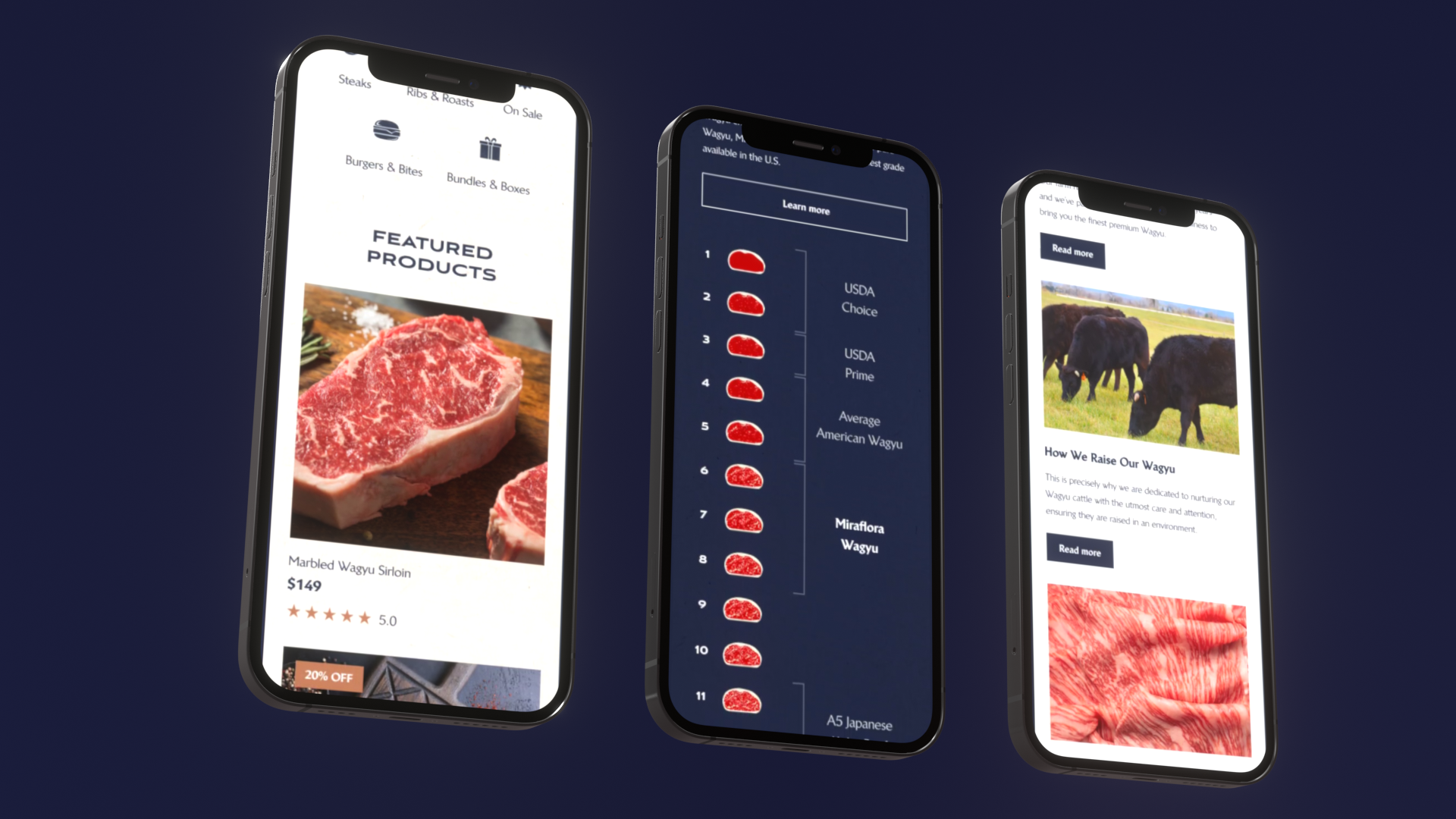
In Miraflora Wagyu, the constraint was time and async communication across time zones. The lesson is not “move faster”. It’s this: if feedback loops are slow, your rollout plan needs more guardrails, not fewer.
So for legacy SaaS: assume you will have slow feedback at some point. Build the system so it can survive that.
Where AI usually creates new risk
AI tends to add risk in places legacy systems are already weak:
- Ambiguous requirements: “make it smarter” is not a spec
- Non deterministic behavior: the same input can produce different output
- Cost variability: usage spikes can turn into a surprise bill
- Data handling: logging for debugging can become a privacy incident
Mitigation starts with naming the risk. Then you design around it:
- Put AI outputs behind a review step when correctness matters
- Add hard limits: tokens, retries, concurrency
- Log metadata, not raw sensitive text, unless you have a policy and a reason
Insight: A legacy SaaS can tolerate occasional downtime. It can’t tolerate silent wrongness.
Choose a migration strategy that supports incremental rollout
There are three practical ways to modernize a legacy SaaS with AI. Two are common. One is survivable.
The three paths (and what they cost you)
| Strategy | What it looks like | Pros | Cons | When it fits |
|---|---|---|---|---|
| Big rewrite | New platform plus AI features | Clean slate | Long freeze, high risk, hard to validate | Rarely, when the old system is collapsing |
| Sidecar AI | Separate AI service called by legacy app | Fast to pilot, isolated | Can become a messy dependency, duplicated auth and logging | Early experiments, low risk workflows |
| Strangler with boilerplate | New AI enabled slices replace old flows gradually | Controlled rollout, reusable patterns | Requires discipline and instrumentation | Most legacy SaaS with revenue |
Insight: If you can’t ship in slices, you will ship nothing but architecture diagrams.
What “boilerplate first” changes
A boilerplate approach forces you to standardize the parts that otherwise get reinvented per feature:
- How you call the model (SDK wrapper, retries, timeouts)
- How you store prompts and versions
- How you capture evaluations
- How you expose features behind flags
- How you track cost per tenant
That standardization is what makes incremental rollout possible.
Visual component: processSteps
processSteps: Picking the first AI slice
- Pick a workflow with clear inputs and a reversible output.
- Define the fallback behavior (existing logic, human review, or no output).
- Add instrumentation before shipping (latency, cost, acceptance).
- Ship to internal users first.
- Expand by tenant, not by percentage, if your customers vary widely.
Example: conversational data analysis as a product surface
In our internal work on Project LEDA (LLM driven exploratory data analysis), the core lesson was about boundaries. A conversational interface can look like “just chat”. Under the hood, it needs controlled tools, data access rules, and a way to reproduce results.
Legacy SaaS teams often skip those boundaries early, then scramble later when a customer asks: “Why did it say that?”
If you’re building AI analysis features, bake in:
- Query logs and tool call traces
- Dataset scoping per tenant
- Output citations (where the answer came from)
- A way to replay a session with the same prompt version
A simple decision rule for strategy selection
Use this rule of thumb:
- If the feature can be wrong sometimes, start with sidecar AI.
- If the feature affects money, compliance, or user permissions, use strangler with boilerplate.
- If you’re considering a rewrite, first prove the AI feature value with a slice. Then decide.
What to measure during the first slice (hypotheses if you don’t have baselines yet):
- Adoption: % of eligible users who try the feature
- Task time: median time to complete the workflow
- Quality: acceptance rate or edit distance vs human output
- Support load: new tickets per 1000 uses
- Cost: model cost per successful outcome
Key Stat (hypothesis to validate): If the AI feature reduces task time by 20% without increasing support tickets, it’s usually worth scaling. Validate it with your own data.
_> What to track in the first 30 days
If you can’t measure it, you can’t roll it out safely
Build the boilerplate: the boring parts that keep you safe
If you only build one thing before shipping AI features, build the boilerplate layer. It’s the difference between “we shipped a feature” and “we can ship ten more without panic”.
What we include in an AI modernization boilerplate
Minimum set:
- AI gateway service: one place to call models, enforce timeouts, and track cost
- Prompt registry: prompts stored with versions, owners, and change notes
- Evaluation harness: golden datasets, regression tests, and score thresholds
- Feature flags: tenant level enablement, staged rollout, kill switch
- Observability: traces across app and AI gateway, structured logs, dashboards
Nice to have (usually becomes mandatory later):
- Policy checks: PII detection, forbidden topics, output filters
- Human in the loop: review queues for high risk outputs
- Data minimization: redaction before sending text to a model
Insight: Most AI incidents are not model failures. They’re logging, permissions, or missing limits.
Code example: a thin AI gateway wrapper
This is intentionally boring. That’s the point.
# ai_gateway.py
from dataclasses import dataclass
import time

@dataclass
class AIResult:
    text: str
    model: str
    prompt_version: str
    latency_ms: int
    tokens_in: int
    tokens_out: int
    blocked: bool
    error: str | None


def generate_summary(client, prompt, prompt_version, user_context, limits):
    start = time.time()

    redacted = redact_pii(prompt)

    if not policy_allows(user_context, redacted):
        return AIResult(
            text="",
            model="",
            prompt_version=prompt_version,
            latency_ms=int((time.time() - start) * 1000),
            tokens_in=0,
            tokens_out=0,
            blocked=True,
            error=None,
        )

    try:
        resp = client.responses.create(
            model=limits.model,
            input=redacted,
            timeout=limits.timeout_seconds,
            max_output_tokens=limits.max_output_tokens,
        )

        return AIResult(
            text=resp.output_text,
            model=limits.model,
            prompt_version=prompt_version,
            latency_ms=int((time.time() - start) * 1000),
            tokens_in=resp.usage.input_tokens,
            tokens_out=resp.usage.output_tokens,
            blocked=False,
            error=None,
        )

    except Exception as e:
        return AIResult(
            text="",
            model=limits.model,
            prompt_version=prompt_version,
            latency_ms=int((time.time() - start) * 1000),
            tokens_in=0,
            tokens_out=0,
            blocked=False,
            error=str(e),
        )
You can wire this into any legacy stack because the interface is stable. That stability is what lets you modernize in slices.
Visual component: benefits
benefits: What boilerplate buys you in week 2
- Faster second feature (because auth, logging, and flags already exist)
- Safer experiments (because you can limit tenants and roll back)
- Cleaner audits (because you can show prompt versions and access logs)
- Predictable costs (because you can cap tokens and concurrency)
Where teams overbuild
Two traps show up a lot:
- Building an internal prompt editor before you have prompt owners
- Building a complex agent framework before you have one stable use case
Start smaller:
- Store prompt templates in code with version tags
- Add a lightweight registry later when ownership and review process exist
Insight: A prompt registry without ownership is just a place to hide broken prompts.
Security and compliance: practical defaults
If you work in regulated industries, you can’t treat AI like a toy. But you also can’t treat it like a full rewrite.
Practical defaults we’ve seen work:
- Zero trust mindset: every AI call is authenticated and authorized
- Tenant isolation: never let the model see cross tenant context
- Audit logs: who requested output, what prompt version, what tools were used
- Retention rules: decide what you store and for how long
If you’re using third party models:
- Document where data goes
- Decide whether you can log raw prompts
- Add redaction at the gateway, not in each feature
What to measure:
- Policy blocks per 1000 requests
- Incidents caused by mis scoped permissions
- Time to produce an audit trail for one customer request
One gateway
One way to call models
Centralize limits, redaction, retries, and cost tracking so features don’t reinvent them.
Flags first
Rollout by tenant
Ship slices behind feature flags with clear rollback triggers and staged cohorts.
Measure outcomes
Not just usage
Track acceptance, edits, task time, and support load alongside tokens and latency.
Roll out incrementally: flags, canaries, and human review
Incremental rollout is not a nice to have. It’s the only way to learn without burning trust.
A rollout plan that fits legacy SaaS reality
Use a staged plan. Keep it boring.
- Internal dogfood: support and ops use it first
- Friendly tenants: pick customers who tolerate change and give feedback
- Tenant cohort rollout: expand by similar usage patterns
- Default on for new tenants: only after you have stable metrics
In every stage, define:
- A success metric
- A failure metric
- A rollback trigger
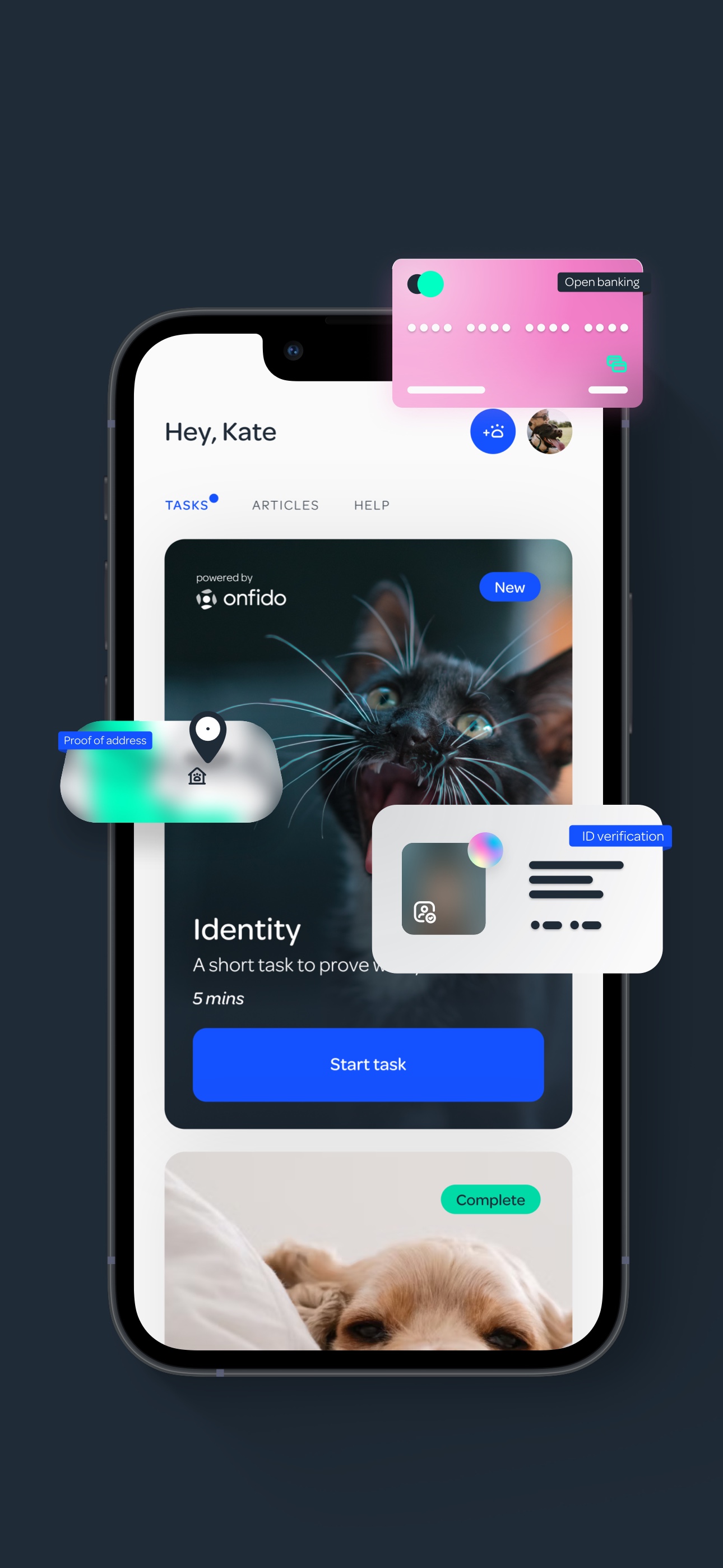
Example: In PetProov, the product depended on trust and identity verification. When trust is the product, you design flows so a user can recover from uncertainty. AI features need the same mindset: clear fallbacks and review paths.
Human in the loop without slowing everything down
Human review does not mean every output needs approval. It means you route the risky ones.
Common rules:
- Review when confidence is low
- Review when output affects money or compliance
- Review when the user is new or unverified
You can implement this with:
- A queue in your admin panel
- A “needs review” status on the record
- A diff view: AI suggestion vs final decision
Visual component: faq
faq: Incremental AI rollout questions
Should we A B test AI features? Sometimes. For workflows with clear outcomes, yes. For trust sensitive workflows, tenant based rollout is safer than random user splits.
What if the model gets worse over time? Assume it will. Lock prompt versions. Track quality metrics. Re run evaluations when you change models or prompts.
Do we need microservices first? Not always. You need clear boundaries. A sidecar AI gateway can work even if the core app is monolithic.
How do we keep costs predictable? Put budgets in code: token limits, rate limits, and per tenant caps. Track cost per successful outcome, not per request.
Key Stat (hypothesis to validate): In many SaaS products, 5% of tenants generate 50% of usage. If that’s true for you, per tenant cost caps matter more than global caps.
What to instrument on day one
If you don’t measure it, you will argue about it.
Track these for every AI call:
- Tenant id, user id, feature name
- Prompt version, model name
- Latency, error rate, retries
- Tokens in, tokens out, estimated cost
- User action after output (accepted, edited, ignored)
Then build two dashboards:
- Product dashboard: adoption, acceptance, task time
- Ops dashboard: latency, errors, cost, policy blocks
Handling slow feedback loops (time zones, stakeholders, support)
Miraflora Wagyu was delivered in 4 weeks with a team spread across time zones. The constraint was feedback speed. That constraint shows up in SaaS too, especially in enterprise accounts.
When feedback is slow:
- Prefer tenant cohort rollouts over fast percentage rollouts
- Use longer canary windows (days, not hours)
- Write down rollback criteria in advance
Small habit that helps: after every rollout stage, write a one page change log:
- What changed
- What we expected
- What we saw (numbers)
- What we’ll change next
It sounds basic. It prevents memory based decision making.
Conclusion
Modernizing a legacy SaaS with AI is mostly about constraints. The model is the easy part. The hard part is shipping behavior changes in a system that already makes money.
A boilerplate approach keeps you honest. It forces you to build the guardrails once, then reuse them. That’s how you migrate without stalling the roadmap.
Next steps you can take this week:
- Pick one workflow where AI output is reversible
- Define the fallback path in writing
- Build a thin AI gateway with logging, limits, and prompt versioning
- Ship behind tenant level flags
- Measure adoption, acceptance, cost per outcome, and support load
If you do nothing else, do this:
- Add a kill switch
- Log prompt versions
- Track cost per tenant
Insight: The goal is not to add AI. The goal is to add a capability you can operate, explain, and roll back.
When that’s true, you can modernize in slices. And you can keep shipping while you do it.