Direct answer
Python and Django are the right hire for multi-tenant SaaS when admin-heavy domain models, rapid backend CRUD, and a Python-first team are the center of gravity. Prefer Node when TypeScript end-to-end and event-driven APIs dominate. See Python/Django expertise and Django vs Node.js.
In 2026, “backend choice” is rarely about raw speed. It is about what your team can ship safely, operate under load, and explain during an incident or an audit. Multi-tenant SaaS adds pressure because every mistake scales across customers: a billing bug repeats, a permissions bug leaks data, and a migration bug breaks onboarding for everyone.
Python and Django are still a strong default for product backends when you need fast iteration, clear admin workflows, and a mature environment for data and compliance-heavy domains. They are not the best fit for every SaaS. This guide is meant to help you decide with explicit gates: when Django is the right hire, when Node.js is a better call, and what “senior” looks like for a Python and Django partner.
We will stay outcome-first. You will see concrete patterns for tenancy, admin, and regulated environments, plus a practical checklist for evaluating delivery readiness. If you are choosing a stack for a new product or re-platforming a backend that has outgrown its first version, this should reduce guesswork.
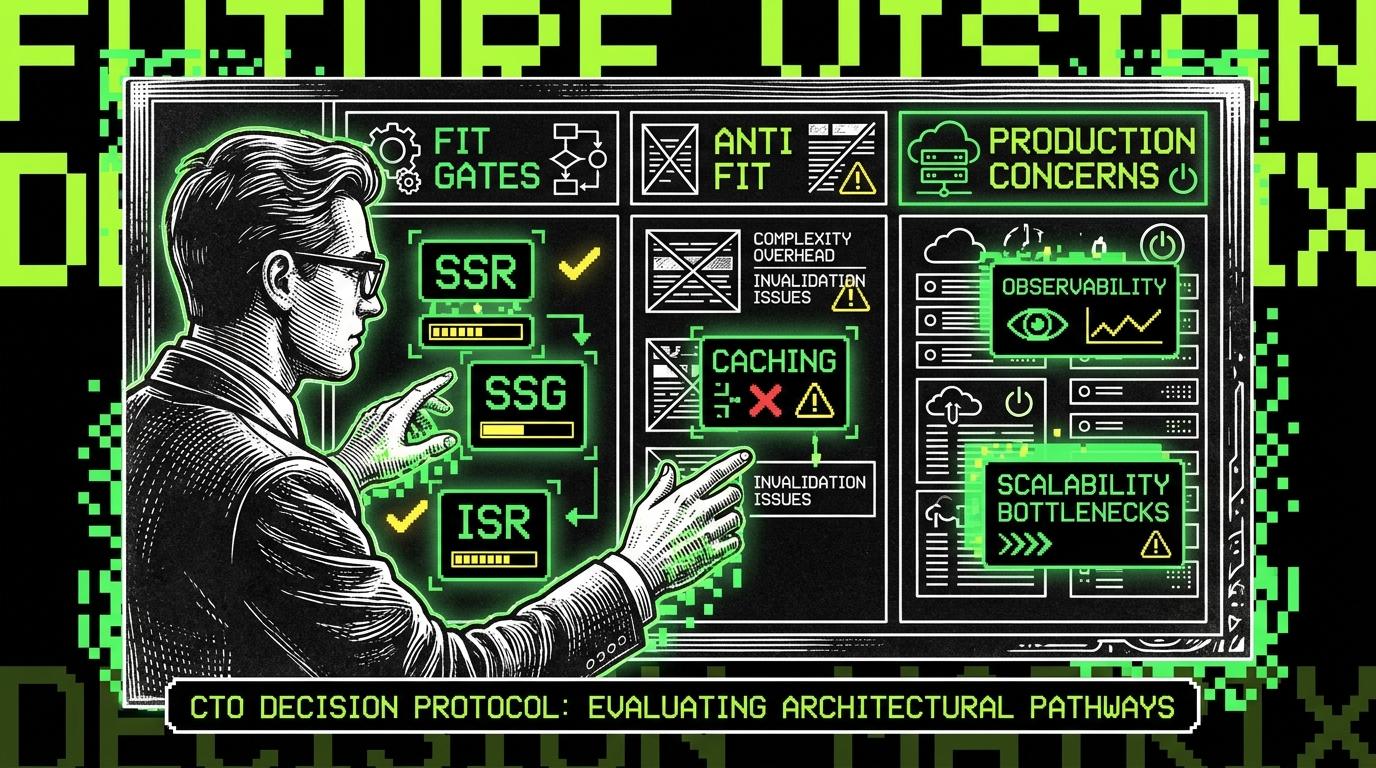
Decision gates: when Django is a good default
The fastest way to decide is to define fit gates: conditions that, if true, make Django a high-probability win. A “win” here means lower lead time to production, fewer security footguns, and a backend that remains understandable after 18 months of feature work. Django’s batteries-included approach helps when you want consistent patterns across authentication, permissions, data modeling, and admin workflows.
Start with the outcomes you care about. For multi-tenant SaaS, those outcomes are usually: tenant isolation (no cross-customer data access), fast onboarding (time from signup to “first value”), and operational stability (low incident rate and fast recovery). Translate each outcome into metrics you can track. For example, onboarding can be measured as median time from “account created” to “first successful import,” and stability as MTTR (mean time to recover) and Change Failure Rate (percentage of deploys requiring rollback or hotfix).
- Pick Django when you need strong CRUD foundations, complex relational data, and an internal admin panel that your operations team will use weekly.
- Pick Django when you expect regulated workflows (KYC steps, audit trails, approvals) and need predictable permission boundaries.
- Be cautious with Django when your product is dominated by long-lived real time connections (multiplayer, high-frequency streaming) where a Node.js-first approach may reduce complexity.
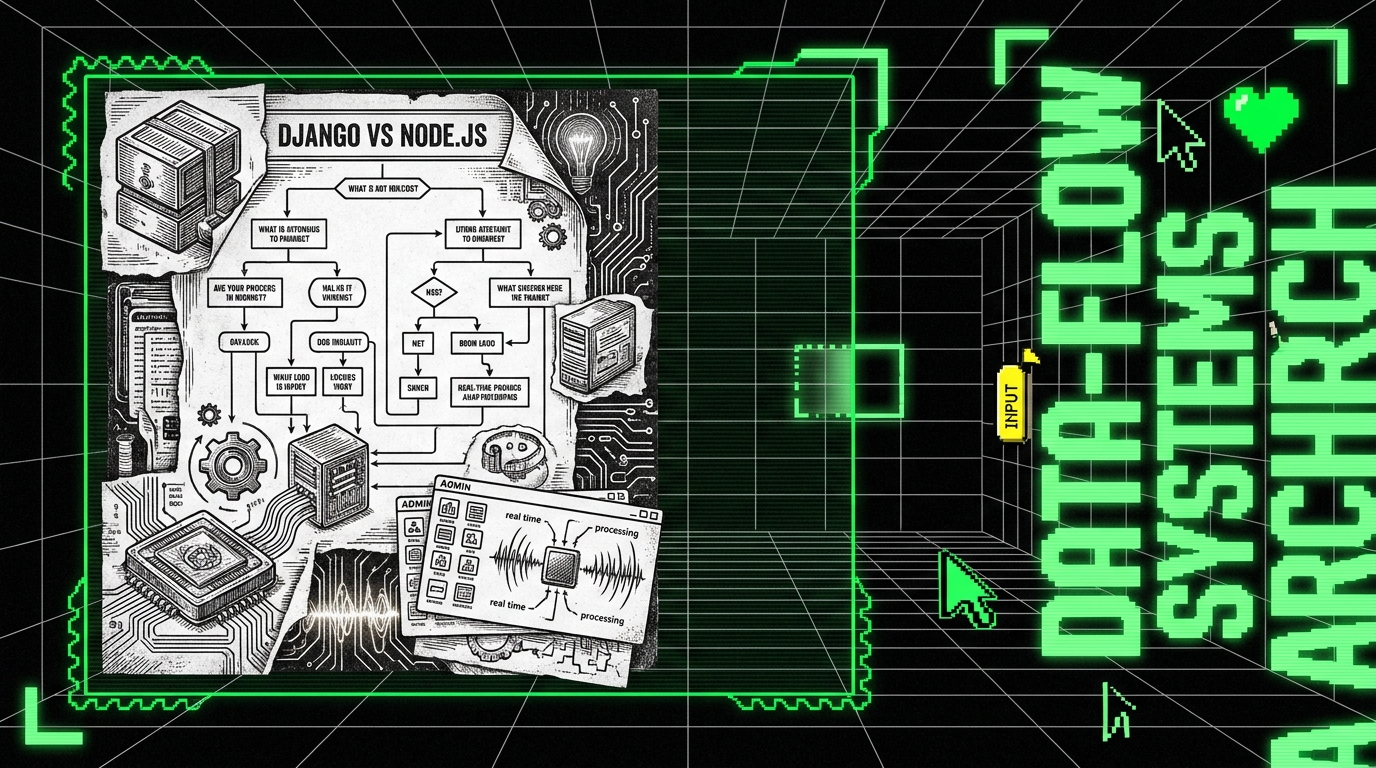
Signals you will benefit from Django’s “boring” defaults
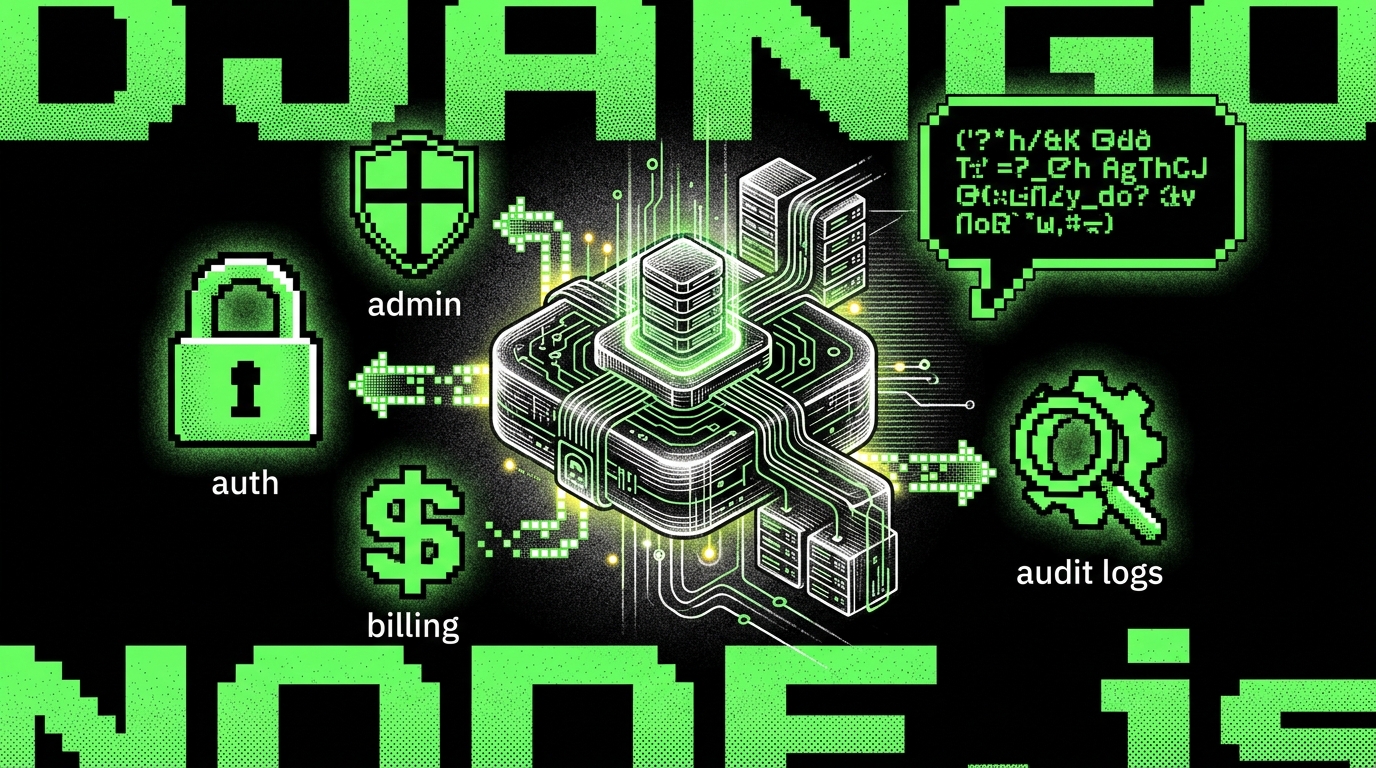
Django shines when you want a framework that forces consistency. Its ORM nudges you toward explicit models and migrations. Its authentication system gives a stable base for user management. Its admin interface turns your data model into a usable back office quickly, which matters when support and operations need tooling before your product team can afford custom internal UIs.
Look for signals such as: many-to-many relationships (users, roles, workspaces, subscriptions), workflows that require state transitions (pending, approved, rejected), and reporting needs (exportable tables, filters, audit views). If your roadmap includes “support team needs to fix customer configuration” or “finance needs to reconcile invoices,” Django admin often saves weeks and reduces the temptation to ship risky one-off scripts.
Signals Django may slow you down
Django can be a poor fit if your backend is mostly a thin proxy to other services, or if your core problems are dominated by event-driven, high-throughput real time messaging. You can build those systems in Python, but you will spend more time on async patterns, queue semantics, and performance tuning than you would with a stack designed around that from day one.
Another caution flag is a team that strongly prefers TypeScript end to end for shared types and unified tooling. You can still do strong contracts in Python using OpenAPI and code generation, but it is a different workflow. If team cohesion and hiring speed depend on “everything is TypeScript,” Node.js may reduce friction.
Django vs Node.js in 2026: practical trade-offs
This is not a language war. Both ecosystems are mature. The decision usually comes down to where you want complexity to live: in the framework conventions, in the infrastructure, or in the team’s day-to-day workflow. Django tends to centralize complexity into well-understood conventions (models, migrations, admin, permissions). Node.js tends to offer more freedom, which can be good or bad depending on your team’s discipline.
Use comparison criteria that map to real costs. Instead of “performance,” look at: Cycle Time (median time from first commit to production), Defect Escape Rate (bugs found after release per week), and On-call Load (pages per engineer per week). A stack that reduces on-call noise is often cheaper than a stack that benchmarks faster but creates fragile deployments.
- Django advantage: consistent patterns for data, auth, and admin reduce decision fatigue and codebase drift.
- Node.js advantage: strong fit for WebSocket-heavy systems and teams that want shared TypeScript types across frontend and backend.
- Shared requirement: you still need good architecture. A messy Django monolith can be as painful as a messy Node.js service mesh.
API contracts: types, validation, and change control
In Node.js, teams often standardize on TypeScript and schema validation libraries to keep contracts tight. The benefit is that frontend and backend can share types, reducing a class of integration errors. The risk is that “shared types” can become a coupling mechanism that blocks independent deploys if not handled carefully.
In Django, you can keep contracts strict using Django REST Framework serializers or schema-first approaches with OpenAPI. The operational win is that you can treat the API schema as a versioned artifact. For example, you can track “Breaking Change Rate” as the number of backward-incompatible schema changes per month, and enforce a rule that breaking changes require a new version or a migration window.
Concurrency and background work: where the real costs show up
Most SaaS backends are not CPU bound. They are I/O bound: database calls, external APIs, file storage, emails, payments. In both stacks, the hard part is background work and retries. A good system defines idempotency (safe re-run of a job) and visibility (you can see what failed and why).
For Django, a common pattern is a task queue for async work (emails, webhooks, imports) and a clear retry policy. You should measure Queue Latency (time from enqueue to start), Job Success Rate (percentage of jobs that complete without manual intervention), and DLQ Volume (dead-letter queue count per day). These metrics catch the “silent failure” class of problems that often hurts onboarding and billing.
Multi-tenancy patterns Django supports well
Multi-tenancy is not one pattern. It is a set of trade-offs between isolation, cost, and operational complexity. The wrong choice can block enterprise deals (if they require strong isolation) or blow up your operational overhead (if every tenant needs custom infra). Django’s strengths are clear data modeling, migrations, and permission boundaries, which helps you implement tenancy with fewer edge cases.
Define your tenancy requirements explicitly. “Tenant isolation” should be testable: for any request, you can prove that queries are scoped to the tenant, and that object-level permissions prevent cross-tenant access. You should also define performance expectations such as P95 API latency per tenant and “noisy neighbor” thresholds (for example, one tenant cannot consume more than X% of DB connections during peak).
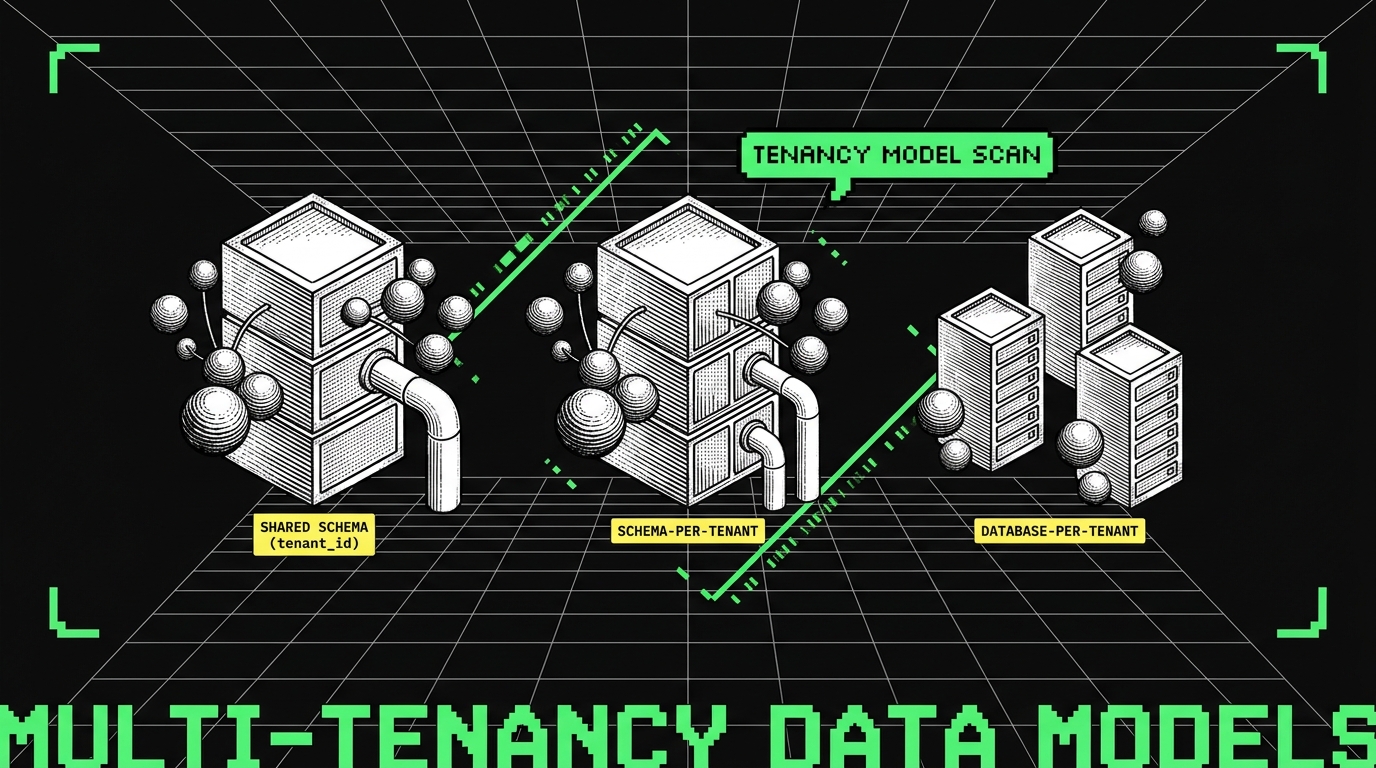
Shared database, shared schema (row-level tenancy)
This is the most common pattern for early and mid-stage SaaS: one database, one schema, and every row has a tenant_id. The main benefit is low operational overhead. Migrations run once. Reporting across tenants is straightforward (useful for internal analytics). Costs are predictable because you do not multiply databases as you grow.
The risk is data leakage from missing filters. Django helps because you can centralize scoping in model managers, querysets, and middleware. A senior team will also add automated tests that attempt cross-tenant access and expect a 404 or 403. Track “Authorization Regression Rate” as the number of permission-related bugs found in staging or production per quarter.
Schema-per-tenant (stronger isolation, harder ops)
Schema-per-tenant improves isolation without going to full database-per-tenant. Each tenant gets its own schema; the app switches schema based on the request context. This can satisfy stricter customers who want a clearer boundary while still keeping infrastructure somewhat manageable.
The cost is operational complexity: migrations must run across schemas, and you need tooling to detect drift. Your runbooks must include “tenant migration health” checks, and you should measure Migration Duration (time to apply migrations across all tenant schemas) and Migration Failure Rate (percentage of tenant schemas with failed migrations). If you cannot keep those numbers low, you will fear shipping changes.
Database-per-tenant (enterprise isolation, highest overhead)
Database-per-tenant is often driven by enterprise requirements: data residency, dedicated encryption keys, or strict blast radius control. It can also help with noisy neighbor issues because you can allocate resources per tenant. The downside is clear: provisioning, backups, monitoring, and migrations scale with tenant count.
If you choose this model, treat provisioning as a product feature. You need an automated flow that creates the database, applies migrations, seeds baseline data, and verifies health. Measure Provisioning Time (from “tenant created” to “ready”), Provisioning Failure Rate, and Backup Restore Time (how long it takes to restore a tenant database in a drill). Those numbers matter more than theoretical isolation.
Admin and internal tooling: Django’s quiet advantage
Most SaaS teams underestimate internal tooling. They build customer features first, then discover that support needs to fix misconfigurations, finance needs to inspect invoices, and compliance needs to audit changes. If you do not plan for this, engineers become the “human admin panel,” which creates interruptions and risky manual scripts.
Django admin is not pretty, but it is fast and consistent. It can cover 60 - 80% of internal needs early: user management, tenant configuration, subscription status, feature flags, and basic reporting. The outcome is fewer support escalations and faster resolution. Track Support Ticket Deflection (percentage of tickets resolved without engineering) and Time to Resolve (median time from ticket opened to closed).
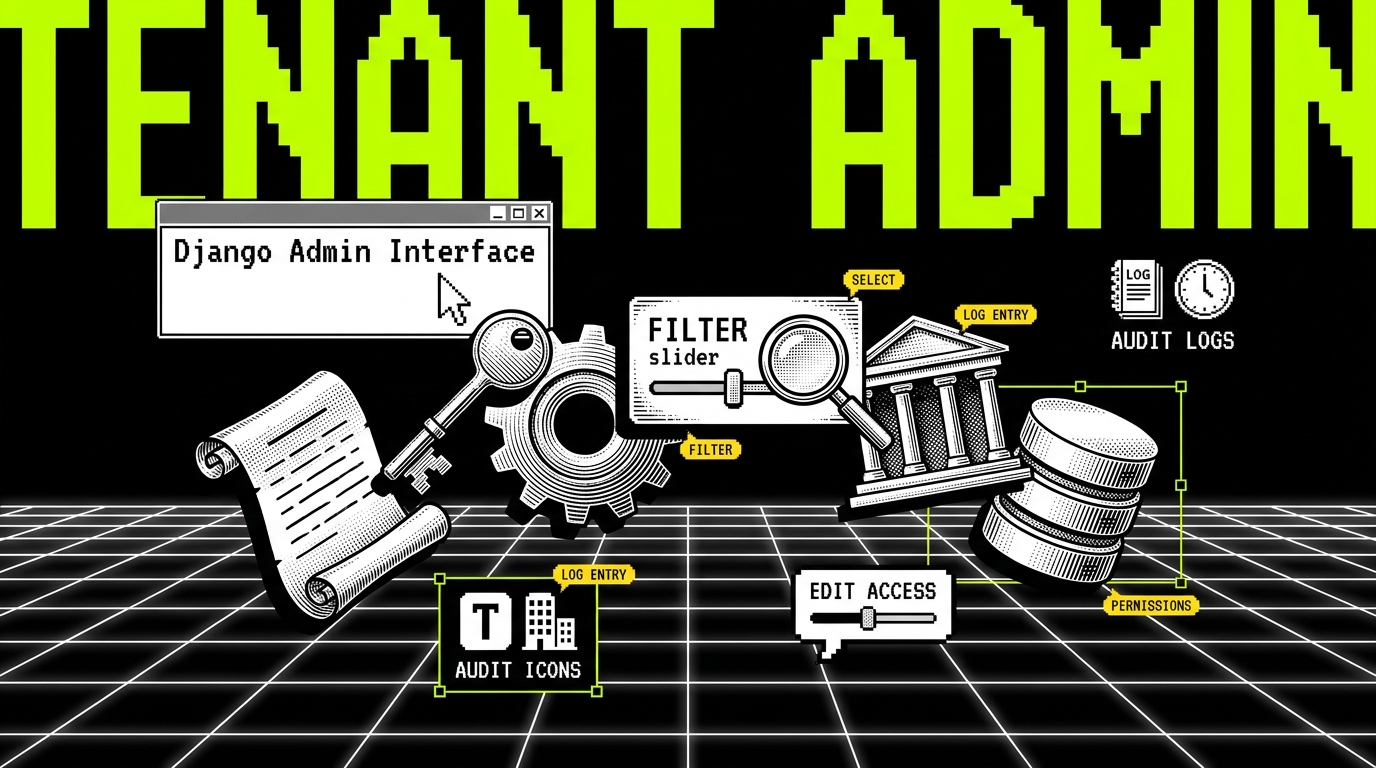
Permission models that match SaaS reality
SaaS permission models are usually layered: org roles (owner, admin, member), resource roles (project admin, viewer), and sometimes custom roles for enterprise. Django’s permission system plus explicit role tables makes these models easier to reason about than ad hoc checks scattered across handlers.
A practical approach is to define permissions as named capabilities (for example, billing.manage, users.invite, projects.delete) and map them to roles per tenant. Then you test capabilities, not UI states. Measure Permission Coverage as the percentage of endpoints with explicit permission tests, and track “Privilege Escalation Bugs” as a separate category in your incident reviews.
Audit trails and change history you can defend
When you sell to larger customers, you will be asked “who changed what, and when.” A real audit trail is not just logging. It is immutable records of state changes with actor identity, timestamps, and context (IP, request id, correlation id). Django encourages central points where you can implement this: model save hooks, service layers, and admin actions.
Make auditability measurable. Track Audit Completeness (percentage of sensitive models that write to an audit table), and run periodic checks that compare production writes to audit entries. In regulated contexts, also track Log Retention (days of searchable logs) and “Access Review Completion Rate” for internal staff who can view tenant data.
Fintech and regulated environments: patterns that work
Regulated does not mean “slow.” It means you can explain your system and prove controls. In fintech-like domains, common requirements include strong authentication, least-privilege access, encrypted data, and reliable audit trails. Django can support these requirements, but only if you treat them as first-class product constraints, not a late-stage checklist.
At a high level, you want a system that produces evidence. Evidence can be access logs, approval records, and consistent deployment records. On the engineering side, that means repeatable CI pipelines, infrastructure-as-code, and clear separation of duties (for example, production access requires approvals). Metrics matter here too: track Change Failure Rate, MTTR, and “Unauthorized Access Attempts Blocked” as a security signal.
- Authentication: MFA for staff, optional MFA for customers, and short-lived sessions for admin actions.
- Data protection: encryption at rest, field-level encryption for sensitive fields (like national IDs), and key rotation policies.
- Operational controls: approval workflows for payouts, limits, and feature toggles with audit entries.
Payments and ledger thinking: avoid “balance as a field”
If you touch money, treat balances as derived, not stored as a single mutable number. A common failure mode is a balance column updated in many code paths, leading to race conditions and reconciliation nightmares. A safer pattern is a ledger: immutable transaction entries (debit/credit) and a computed balance from the sum of entries.
You do not need to implement a full accounting system on day one, but you should adopt ledger thinking early. It improves auditability and reduces disputes. Measure Reconciliation Drift (difference between computed ledger totals and external provider totals) and “Double Charge Incidents” as a hard KPI. Even one incident can cost more than a quarter of engineering time.
PII handling: minimize, segment, and monitor
Personally identifiable information (PII) creates long term obligations. The simplest win is to minimize what you store. If you only need the last four digits of an ID for display, do not store the full value. If you need verification, store provider tokens and verification status instead of raw documents.
Segment access in code and in operations. For example, only a small set of services can read sensitive fields, and only a small set of staff roles can view them in admin. Track “PII Access Events” per week and require justification fields for manual access. This turns “we are careful” into observable behavior.
How to evaluate a senior Python and Django partner
Hiring “Python and Django” is not the same as hiring someone who can run a multi-tenant SaaS safely. You are buying judgment: tenancy boundaries, migration discipline, incident response, and the ability to ship without creating a fragile system. The evaluation should test those skills directly with scenarios, not trivia.
Use a structured scorecard. Tie it to outcomes like onboarding speed, defect rate, and operational stability. Ask for examples with numbers: “What was your median Cycle Time?” “How many deploys per week?” “What was your MTTR?” If a partner cannot talk in those terms, you will struggle to build a predictable delivery machine.
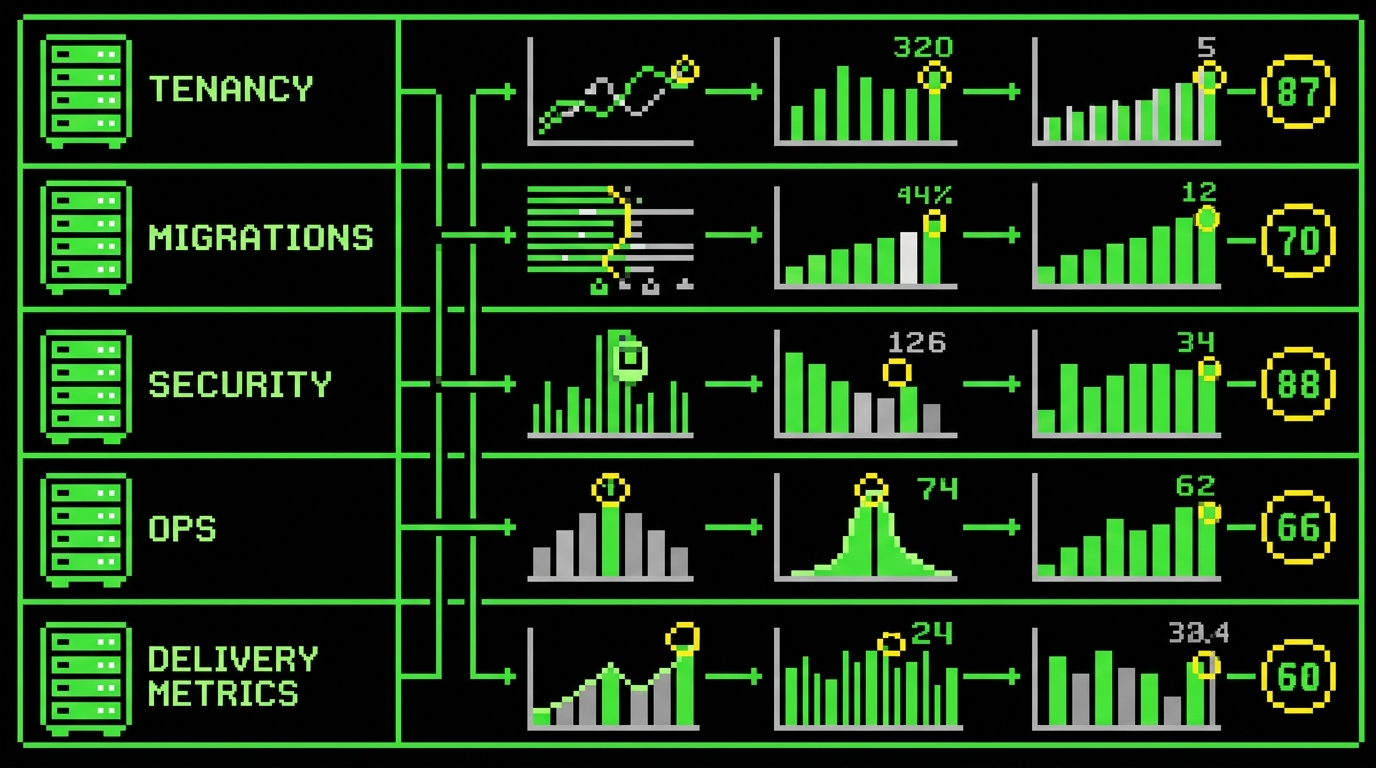
Architecture and tenancy: what to ask for
Ask them to propose a tenancy model for your product and defend it. A senior team will ask about enterprise requirements, data residency, and “noisy neighbor” risks before picking a pattern. They should also describe how they prevent cross-tenant access, such as scoped querysets, request context enforcement, and permission tests.
Concrete artifacts to request include: an example of a tenant-scoping middleware, a permission matrix (roles vs capabilities), and a test plan that includes negative cases (attempting to access another tenant’s objects). You can also ask how they handle tenant deletion and GDPR-like requests, including what happens to backups and logs.
Migrations and data changes: the part that breaks SaaS at scale
Migrations are where multi-tenant systems fail in production. A senior Django partner will talk about zero-downtime migration patterns: add nullable columns first, backfill in batches, then enforce constraints later. They will also mention how they handle long-running backfills with task queues and how they monitor progress.
Ask for their migration playbook and the metrics they watch. Good answers include: Migration Duration, Lock Time on critical tables, and rollback strategy. A red flag is “we just run migrations during deploy and hope.” That works until you have large tables, enterprise uptime expectations, or schema-per-tenant setups.
Operations: on-call, observability, and incident hygiene
For SaaS, operations is product work. Ask how they set up observability: structured logs with request ids, tracing for slow endpoints, and dashboards for P95 latency and error rates. Ask how they define SLOs (service level objectives), such as “99.9% of requests under 300 ms” for key endpoints, and what they do when SLOs are breached.
Also ask about incident hygiene. A mature team runs blameless postmortems with concrete follow-ups, such as adding a missing alert, tightening a permission check, or adding a load test for a specific endpoint. They track Repeat Incident Rate (incidents with the same root cause) and aim to drive it down over time.
How Apptension typically approaches Django SaaS builds
At Apptension, Python and Django work is usually paired with explicit SaaS constraints from day one: tenancy boundaries, admin workflows, and deployment discipline. The goal is not “a Django app.” The goal is a backend that can support onboarding, billing, support operations, and enterprise questions without constant rewrites.
In practice, that means we start by writing down the tenancy model and permission matrix before the feature backlog explodes. We also define a minimal set of delivery metrics early: Cycle Time, Deployment Frequency, Change Failure Rate, and MTTR. Those numbers tell you if the team is shipping safely, not just shipping.
- SaaS Boilerplate: a starting point for common SaaS needs like authentication, tenant structure, admin foundations, and deployment conventions, so you do not rebuild basics under pressure.
- SaaS development: end to end delivery for product backends, including data modeling, APIs, background jobs, and operational readiness.
- Regulated patterns: when needed, we align implementation with audit trails, access controls, and evidence-producing processes (for example, change approvals and environment promotion rules).
We also bring experience from shipping production systems across domains where trust and safety matter. For example, in the PetProov engagement (secure identity verification in pet transactions), the work required careful handling of identity flows, secure storage decisions, and operational monitoring. Those are the same muscles you need for fintech-style onboarding and compliance workflows, even if the domain is different.
Conclusion: choose Django when you want fewer unknowns
Python and Django are the right hire for multi-tenant SaaS backends in 2026 when your product needs strong data modeling, predictable admin tooling, and clear permission boundaries. They help most when you want to reduce operational surprises: fewer one-off scripts, fewer fragile migrations, and fewer “support needs engineering” moments. They are less compelling when your core product is dominated by long-lived real time connections or when your org requires TypeScript everywhere for shared types and hiring speed.
Make the decision with gates and metrics. Define tenancy requirements, choose an isolation model you can operate, and measure delivery and reliability with numbers like Cycle Time, Change Failure Rate, MTTR, and Support Ticket Deflection. Then evaluate partners on evidence: migration playbooks, permission testing discipline, and observability habits.
If you want a second opinion on stack fit, tenancy design, or a plan to ship a Django SaaS backend without painting yourself into a corner, Apptension’s Python and Django teams can help. We can start from a SaaS Boilerplate to reduce setup time, or take end to end ownership of backend delivery with clear operational targets.
Hire senior Python and Django engineers
Python/Django expertise · SaaS Boilerplate · SaaS development · Get in touch